
A good desktop subwoofer adds depth, impact, and realism without requiring a full-size home theater system. The right model can make music more engaging, games more immersive, and studio monitors sound fuller at low frequencies.
We compared 10 compact powered subwoofers across desktop-friendly size, amplifier power, connectivity, controls, and setup flexibility. Use the guide below to narrow the list based on your desk, speakers, room, and listening habits.
Best 10 Subwoofers for Desktop Setups Picks for 2026
Best Studio Connectivity

- 8-inch driver reaches 30 Hz
- Bluetooth 5.0 and flexible wired inputs
- Adjustable crossover and room tuning
Best For: Music production and flexible desktop audio setups
Best Budget Home Audio Upgrade
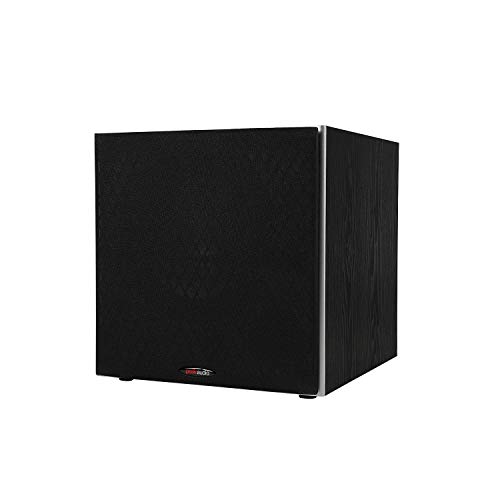
- 10-inch woofer for fuller bass
- Up to 100 watts of built-in power
- Variable 80–160 Hz crossover
Best For: Small rooms and wired home audio systems
Best Remote-Controlled Desktop Pairing

- Made for CR Series monitors
- Bluetooth, TRS, and RCA inputs
- Includes desktop volume and bypass control
Best For: Mackie CR monitor systems and computer audio
Best Powerful Compact Bass
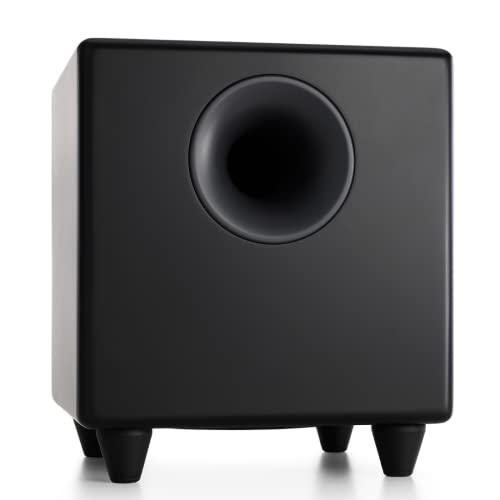
- 250-watt powered 8-inch subwoofer
- Down-firing design reaches 27 Hz
- Compact cabinet with optional W3 wireless support
Best For: Gaming, home theater, and compact studio systems
Powerhouse Pick

- 12-inch woofer with 200-watt amplifier
- 29 Hz low-frequency response
- Designed for high-output bass
Best For: Large desktop-adjacent entertainment spaces
Balanced Desktop Choice

- 8-inch active woofer with 70 watts RMS
- Low-pass filter reaches down to 38 Hz
- Automatic standby saves power
Best For: RCA-equipped desktop stereo systems
Compact Connectivity Pick
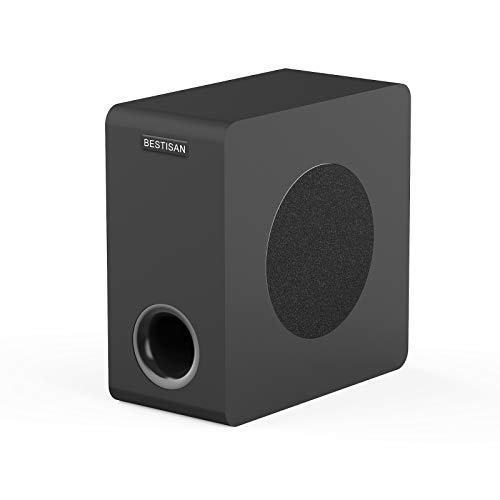
- Compact 6.5-inch side-firing woofer
- RCA, AUX, LFE, and high-level connections
- Remote control included
Best For: Space-limited setups with varied audio sources
Powerful Desktop Bass
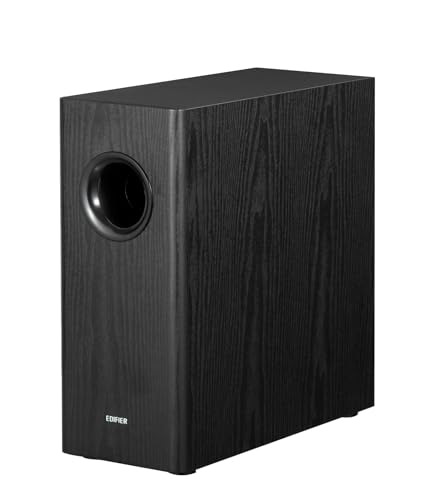
- 8-inch woofer with 70W RMS output
- 35Hz bass and adjustable crossover
- Includes RCA and 3.5mm-to-RCA cables
Best For: RCA-equipped desktop and bookshelf speaker systems
Compact USB Desktop Audio
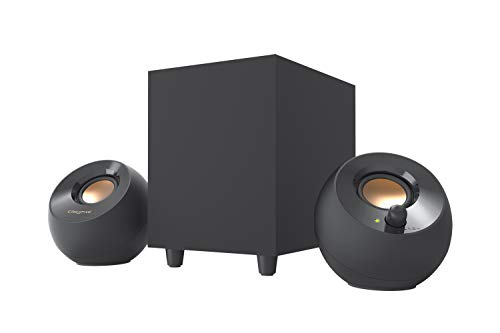
- 4-inch down-firing subwoofer
- USB-powered with 3.5mm AUX input
- Up to 8W RMS in High Gain Mode
Best For: Simple computer and laptop desktop audio
Space-Saving Active Bass

- 5.24-inch long-throw woofer
- 60W maximum output with Class-D amplification
- Includes vibration pads for shelf placement
Best For: Desktop gaming and studio audio systems
Best Studio Connectivity – PreSonus Eris Sub 8BT
The PreSonus Eris Sub 8BT is a versatile choice for subwoofers for desktop setups, especially when you want studio-focused bass with both wired and Bluetooth connections. Its 8-inch driver reaches down to 30 Hz, while adjustable crossover and tuning controls help it integrate cleanly with compact monitors.
Best For: Music production, hi-fi listening, and multimedia setups that need flexible connectivity and room-tuning controls.
Pros:
- Bluetooth 5.0 plus balanced TRS, RCA, and front-panel aux inputs
- Adjustable highpass, lowpass, and frequency-tuning controls
- 8-inch driver delivers bass down to 30 Hz
- Front headphone output and automatic power-saving mode
Cons:
- Designed primarily for compact studio monitors rather than large home-theater systems
- Requires floor or desktop-adjacent space for its 8-inch enclosure
The Eris Sub 8BT stands out when connection flexibility and accurate monitor integration matter more than simplicity. It is a particularly practical fit for creators who switch between wired studio equipment, Bluetooth devices, and headphones.
Best Budget Home Audio Upgrade – Polk Audio PSW10
The Polk Audio PSW10 is a straightforward option for subwoofers for desktop setups that also serve small home-theater or stereo rooms. Its 10-inch woofer, built-in amplifier, and continuously variable crossover are designed to add fuller bass without making system integration complicated.
Best For: Small-to-mid-size rooms, home audio systems, and listeners seeking an affordable wired bass upgrade.
Pros:
- 10-inch Dynamic Balance woofer adds bass depth and punch
- Built-in 50-watt RMS amplifier provides up to 100 watts of power
- Variable 80–160 Hz crossover supports speaker matching
- Includes speaker- and line-level connections plus a phase switch
Cons:
- Wired only, with no Bluetooth connectivity
- Larger and heavier than many compact desktop-oriented subwoofers
- Best suited to small-to-mid-size rooms rather than ultra-compact desks
The PSW10 is a sensible pick if you want substantial low-end output and broad receiver compatibility. Its 10-inch cabinet may require more careful placement near a desk, but the adjustable crossover makes it easier to blend with existing speakers.
Best Remote-Controlled Desktop Pairing – Mackie CR8SBT
The Mackie CR8SBT is purpose-built for adding bass to desktop monitors, making it a strong candidate among subwoofers for desktop setups. It connects through TRS or RCA, accepts Bluetooth input, and includes a desktop volume control with subwoofer-bypass access.
Best For: CR Series monitor owners, computer audio, and setups that benefit from convenient desktop volume and bypass controls.
Pros:
- Designed to complement Mackie CR Series monitors
- TRS, RCA, and Bluetooth connectivity support varied sources
- Adjustable crossover helps blend bass with the main monitors
- Included desktop remote provides convenient volume and bypass control
Cons:
- Its strongest system pairing is with Mackie CR Series monitors
- Large 8-inch enclosure may be substantial for a crowded desk area
- Listed frequency response begins at 40 Hz
The CR8SBT is especially convenient for desktop users who want physical control within easy reach. It offers a useful mix of monitor-oriented inputs, Bluetooth, and remote operation, though its size and CR-focused design should be considered before buying.
Best Powerful Compact Bass – Audioengine S8
The Audioengine S8 brings high claimed output and a compact down-firing design to the category of subwoofers for desktop setups. Its 8-inch driver is rated for 250 watts, reaches down to 27 Hz, and supports positioning flexibility through a compact cabinet and optional W3 wireless adapter compatibility.
Best For: Desktop, gaming, home-theater, and studio users who want deep bass from a relatively compact subwoofer.
Pros:
- 250-watt output provides substantial power headroom
- 8-inch down-firing driver reaches a listed 27 Hz
- Compact 11.26-inch-square enclosure supports easier placement
- Compatible with the Audioengine W3 wireless subwoofer adapter kit
Cons:
- Wireless functionality requires the separate W3 adapter kit
- Supplied connectivity is wired RCA
- At 30 pounds, it is not especially lightweight despite its compact footprint
The S8 is a compelling choice when deep, powerful bass is the priority but floor space is limited. Its down-firing design and compact dimensions can simplify placement, while the optional wireless adapter adds flexibility for compatible systems.
Powerhouse Pick – Klipsch R-120SW
The Klipsch R-120SW is a substantial choice for subwoofers for desktop setups when your workspace also serves as a home-theater or entertainment area. Its 12-inch woofer, 200-watt amplifier, and rear-firing bass-reflex port are built for deep, high-output bass, though its floor-standing size requires plenty of room.
Best For: Larger desktop-adjacent entertainment spaces, movies, gaming, and listeners who want powerful low-end output.
Pros:
- 12-inch high-excursion spun-copper woofer
- 200 watts of amplifier power with 400-watt peak output
- Frequency response reaches down to 29 Hz
- Wired RCA connectivity and included grille
Cons:
- Large 19.2-by-14-by-16.5-inch enclosure may overwhelm a compact desk area
- At 31 pounds, it is less convenient to reposition
The R-120SW prioritizes scale and impact over a small footprint. Choose it if your desktop setup has space for a full-size floor-standing subwoofer and you want bass that can fill more than just the immediate listening position.
Balanced Desktop Choice – Edifier T5
Edifier T5 Powered Subwoofer - 70w RMS Active Woofer with 8 inch Driver and Low Pass Filter
Check Price On AmazonThe Edifier T5 is a practical option for subwoofers for desktop setups that need added low end without stepping up to a full-size theater model. Its 8-inch driver, 70-watt RMS output, MDF enclosure, and low-pass filter make it a straightforward match for compatible RCA-equipped speakers and audio systems.
Best For: Music, gaming, and desktop stereo systems needing controlled bass from a powered subwoofer.
Pros:
- 8-inch driver provides a useful balance of size and bass performance
- Low-pass filter supports frequencies down to 38 Hz
- Dense MDF enclosure helps reduce acoustic resonance
- Automatic standby helps limit unnecessary power use
Cons:
- Connectivity is centered on wired RCA interfaces
- Its 8.65 kg weight may be more than some compact desks can comfortably accommodate
The T5 is the most broadly practical pick of the three for a conventional desktop audio system. Its adjustable low-pass design and automatic standby are useful everyday features, provided your speakers or source offer the required RCA connection.
Compact Connectivity Pick – BESTISAN SW65D
The BESTISAN SW65D suits subwoofers for desktop setups where space and connection flexibility matter. Its compact 6.5-inch side-firing woofer supports RCA, 3.5mm AUX, LFE, and high-level speaker connections, making it adaptable to computers, TVs, soundbars, and bookshelf-speaker systems.
Best For: Compact desks and mixed audio systems that need multiple input options and a smaller enclosure.
Pros:
- Space-saving 6.5-inch powered subwoofer
- Offers RCA, AUX, LFE, and high-level speaker inputs and outputs
- 35–200 Hz stated frequency response for broad low-frequency coverage
- Remote control included for convenient adjustment
Cons:
- Smaller driver may not deliver the same scale as larger subwoofers
- Best results require a source outputting no more than 850 mV, according to the supplied guidance
- One-year warranty is shorter than the Klipsch and Edifier coverage listed
The SW65D is a flexible solution when a desktop setup includes several possible sources or limited room for equipment. Its compact cabinet and varied inputs make installation easy, while expectations should remain realistic about output compared with a 12-inch model.
Powerful Desktop Bass – Edifier T5s
The Edifier T5s is a strong choice among subwoofers for desktop setups when you want deeper, fuller bass from bookshelf speakers or a home audio system. Its 8-inch front-firing woofer, 70W RMS Class-D amplifier, and 35Hz frequency response add substantial low-end impact without requiring a separate receiver.
Best For: Desktop or bookshelf speaker systems with RCA connectivity, especially users who want adjustable bass integration and powerful home audio performance.
Pros:
- 8-inch long-throw woofer delivers deep bass down to 35Hz.
- Adjustable 30Hz–160Hz low-pass filter and 0°/180° phase selector help match connected speakers.
- Compact MDF cabinet, front-firing driver, and acoustic port support clean, controlled bass.
- Built-in amplifier, auto-standby, and included RCA and 3.5mm-to-RCA cables simplify setup.
Cons:
- Requires wired RCA connections and does not support wireless audio.
- Its larger 8-inch cabinet may take more desk or floor space than compact desktop options.
- Series connection without a sub out requires main speakers with LINE IN.
Choose the T5s if bass depth and flexible tuning matter more than the smallest footprint. It is particularly practical for RCA-equipped powered speakers, though buyers should confirm connection compatibility and available space first.
Compact USB Desktop Audio – Creative Pebble Plus
The Creative Pebble Plus combines compact stereo speakers with a standalone down-firing subwoofer, making it a convenient entry-level option among subwoofers for desktop setups. USB power and a 3.5mm AUX connection keep installation simple for computers and laptops, while High Gain Mode can increase output when paired with a suitable 5V 2A USB adapter.
Best For: Computer users who want a compact, affordable 2.1 desktop speaker system with simple USB power and front-mounted volume controls.
Pros:
- Dedicated 4-inch down-firing ported subwoofer adds bass depth to desktop listening.
- USB-powered design avoids the need for a wall socket.
- 45° elevated 2-inch drivers aim sound toward the listener.
- High Gain Mode provides up to 8W RMS with a 5V 2A USB adapter.
Cons:
- The 5V 2A USB adapter needed for High Gain Mode is not included.
- Its 8W RMS total output is better suited to personal desktop listening than large rooms.
- It uses wired USB and 3.5mm connections rather than a standalone RCA subwoofer connection.
The Pebble Plus is a practical all-in-one choice when desk space, USB convenience, and straightforward computer connectivity take priority. It is less suitable for users seeking the output or connection flexibility of a full-size powered subwoofer.
Space-Saving Active Bass – Ortizan V8 Active Subwoofer
The Ortizan V8 is a compact active subwoofer designed to add more low-end weight to desktop gaming and studio audio. Its 5.24-inch long-throw woofer, 60W maximum output, Class-D amplifier, and vibration pads offer a middle ground between small computer speakers and larger home-audio subwoofers.
Best For: Desktop users and gamers who want a dedicated active subwoofer with a moderate footprint and vibration-control features.
Pros:
- 5.24-inch long-throw woofer provides a compact route to deeper bass.
- 60W maximum output and a built-in Class-D amplifier support energetic desktop playback.
- Vibration pads are included for shelf or desktop placement.
- Compact shelf-mount form factor is suited to desktop, gaming, and studio audio setups.
Cons:
- The supplied details do not specify a frequency response or adjustable crossover controls.
- Connectivity information is limited and lists Bluetooth, so buyers should verify compatibility with their setup.
- It is a subwoofer-only product and does not include matching satellite speakers.
The V8 makes sense when you want a dedicated, powered bass module without moving up to an 8-inch design. Because connection and tuning specifications are less detailed, confirm how it will integrate with your existing desktop speakers before buying.
How We Picked the Best Subwoofers for Desktop Setups
We focused on powered subwoofers that are practical for desks, small offices, bedrooms, and compact media systems. Our comparison considered driver size, stated amplifier output, low-frequency extension, connection options, crossover or level controls, and how easily each model can integrate with existing speakers.
Because desktop audio systems vary widely, the list includes compact USB-powered options, studio-oriented models, Bluetooth-capable units, and larger subwoofers better suited to nearfield listening or small rooms. Specifications are manufacturer-stated where available, but real-world bass also depends on placement, room acoustics, and the main speakers being used.
Quick Comparison
For the smallest desk footprint, look at compact models such as the Creative Pebble Plus and Ortizan options. The PreSonus, Mackie, Audioengine, and Edifier models are more natural matches for powered bookshelf speakers or studio monitors. Larger 8- and 10-inch designs, including the Polk Audio and Klipsch models, can deliver stronger room-filling bass but need more floor or shelf space.
Bluetooth and wireless-ready features can simplify connections, while wired inputs generally provide the most predictable results. Check the outputs on your existing speakers before buying: some desktop systems offer a dedicated subwoofer output, while others require line-level pass-through, a mixer, or a compatible connection method.
Key Buying Factors for Subwoofers for Desktop Setups
Size and Placement
Measure the available space before choosing a driver size. An 8-inch subwoofer can produce substantial bass, but a compact 5- or 6.5-inch model may be easier to position near a desk. Avoid blocking legroom, ventilation, or speaker ports, and leave enough clearance around the cabinet.
Power and Bass Extension
Higher wattage does not automatically mean better sound, but it can provide more headroom at louder listening levels. Pay attention to the stated frequency range as well as output power. Deeper extension is useful for electronic music, cinematic effects, and games, while controlled integration matters more than maximum volume for nearfield listening.
Connectivity and Controls
Look for inputs that match your computer, audio interface, TV, or speakers. Adjustable volume, phase, and low-pass controls make blending easier. A remote or Bluetooth support may be convenient, but should not outweigh reliable wired connectivity when the subwoofer is used for critical listening.
Integration with Main Speakers
A subwoofer should complement—not overpower—the left and right speakers. Choose a model with suitable crossover controls or use the bass-management features on your interface, receiver, or operating system. Start with a low level and gradually increase it until the system sounds fuller without becoming boomy.
Who Should Buy Which Subwoofers for Desktop Setups?
For a compact computer setup: Choose a small, easy-to-connect model such as the Creative Pebble Plus or Ortizan. These are appropriate when desk space and simplicity matter most.
For studio monitors: Consider the PreSonus Eris Sub 8 or Mackie CR8SBT, especially when crossover controls and monitor integration are priorities.
For music and general desktop listening: Audioengine and Edifier models offer a practical balance of bass extension, power, and everyday usability.
For gaming, movies, or a small home theater: The Polk Audio PSW10 or Klipsch R-120SW can provide more impactful, room-filling low end, provided you have space for a larger cabinet.