
Choosing the right desktop can make coding faster, smoother, and far less frustrating. The best desktop computers for programming balance CPU power, memory, storage, and upgrade potential for the work you actually do.
Whether you build web apps, run local databases, compile large projects, or juggle multiple monitors, the right system should keep up without wasting money on features you will not use.
Best 10 Desktop Computers for Programming Picks for 2026
AI-Ready Tower
Dell Tower Desktop with Core Ultra 7

- Intel Core Ultra 7-265 with built-in AI
- 32GB DDR5 RAM for multitasking
- Supports up to four FHD or two 4K displays
Best For: Programmers who want a modern tower with easy upgrades and multi-monitor support
Business SFF Pick

- Core i7-14700 with 20 cores and 28 threads
- Compact small form factor chassis
- DisplayPort and HDMI support dual monitors
Best For: Developers who need a compact, business-focused desktop with strong multitasking
Slim Workspace Choice
Dell Slim Desktop Core Ultra 5
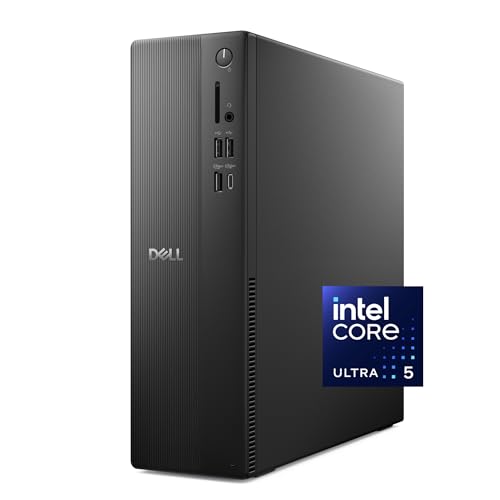
- Compact slim chassis for small desks
- Core Ultra 5 processor with AI support
- Built-in Wi-Fi, Bluetooth, and multi-monitor support
Best For: Programmers who want a space-saving desktop with modern connectivity
Refurbished Value Option

- 32GB RAM with 1TB SSD storage
- Built-in Wi-Fi and Bluetooth
- Renewed business desktop with Windows 11 Pro
Best For: Budget-conscious programmers who want lots of RAM and storage
Quiet Power Configurable Desktop
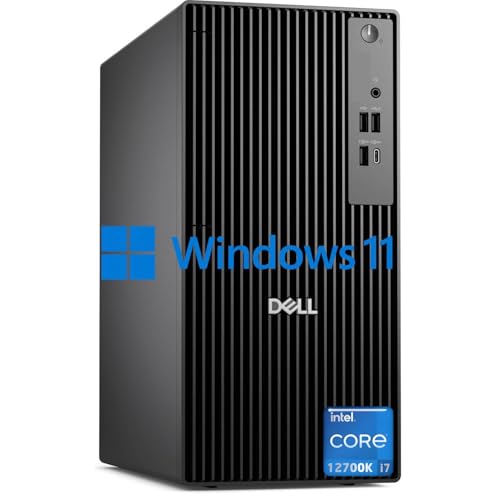
- i7-12700K with 12 cores and up to 5.0 GHz turbo
- Upgradeable to 64GB DDR5 RAM and 4TB SSD
- USB-C, HDMI, DisplayPort, and dual-monitor support
Best For: Developers who want upgrade flexibility and strong multitasking power
Budget Developer Tower

- 14th Gen Core i3 with up to 4.7 GHz turbo
- 512GB PCIe NVMe SSD for fast project storage
- Supports dual 4K monitors with modern ports
Best For: Entry-level programmers and lighter coding workflows
Ultra-Quiet Business Pick

- 14-core Intel i5-14500 for responsive multitasking
- DDR5 RAM support up to 64GB
- Quiet business tower with Wi-Fi 6 and Bluetooth
Best For: Developers who want a quiet, upgrade-friendly work desktop
Heavy Multitasking Choice
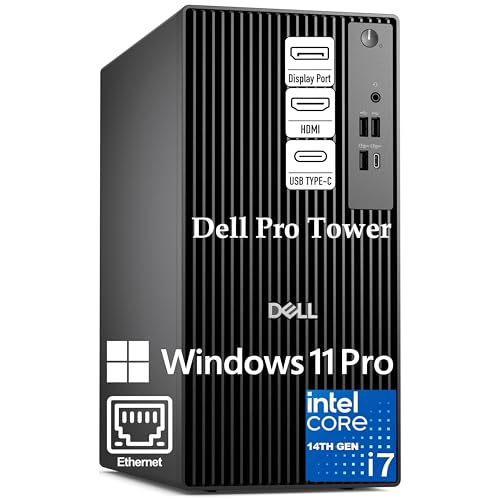
- 20-core Intel i7-14700 for demanding coding workloads
- 1TB PCIe SSD for fast launches and project storage
- Dual 4K monitor support with Windows 11 Pro
Best For: Power users running IDEs, VMs, Docker, and large codebases
Well-Rounded Upgrade Pick

- 32GB DDR5 RAM installed for heavier multitasking
- 1TB PCIe SSD for fast storage and boot times
- Wi-Fi, Bluetooth, USB-C, and dual 4K support
Best For: Programmers who want a balanced desktop with extra memory
AI-Ready Tower – Dell Tower Desktop with Core Ultra 7
If you want desktop computers for programming that can also handle everyday business work, this Dell Tower Desktop is built around the Intel Core Ultra 7-265 and 32GB of DDR5 RAM. The tower design gives you a full-size system with easy access for upgrades, plus support for multiple monitors, which is helpful when you’re juggling code, docs, and debugging tools.
Best For: Programmers who want a fast, modern tower with strong multitasking and easy upgrade access.
Pros:
- Intel Core Ultra 7 processor with built-in AI features
- 32GB DDR5 memory for smooth multitasking
- Supports up to four FHD monitors or two 4K displays
- Tool-less entry and removable side panel simplify upgrades
Cons:
- Windows 11 Home rather than Pro
- Integrated graphics only
- Full tower footprint takes more desk space than a slim model
Overall, this is a solid choice if you want a current-generation desktop that’s easy to expand and practical for a multi-monitor programming setup. It leans more toward productivity and flexibility than compactness or graphics-heavy workloads.
Business SFF Pick – HP ProDesk SFF G9 i7
For desktop computers for programming in a compact office-friendly format, the HP ProDesk SFF 400 G9 focuses on speed, reliability, and connectivity. Its Intel Core i7-14700 processor, DDR5 memory, and SSD storage are aimed at multitasking, while the small form factor chassis helps keep your desk clear.
Best For: Developers who want a compact business desktop with strong CPU performance and dual-display support.
Pros:
- Intel Core i7-14700 with 20 cores and 28 threads
- Small form factor design saves desk space
- DDR5 memory and SSD storage for responsive daily use
- DisplayPort and HDMI outputs support dual displays
Cons:
- Integrated graphics only
- Business-focused design may not suit users wanting a consumer-style tower
- Windows 11 Pro features are more than some home users need
This is a strong fit if you value CPU horsepower in a compact machine and plan to build a practical programming workstation around external monitors and peripherals. It’s especially appealing for office setups where space and reliability matter.
Slim Workspace Choice – Dell Slim Desktop Core Ultra 5
If you’re comparing desktop computers for programming and need something that fits a smaller workspace, this Dell Slim Desktop keeps the footprint light without dropping modern features. It pairs an Intel Core Ultra 5-225 with 512GB SSD storage, includes built-in Wi-Fi and Bluetooth, and supports multiple monitors for a more efficient coding setup.
Best For: Programmers with limited desk space who still want a modern, connected desktop.
Pros:
- Compact slim design suited to small workspaces
- Intel Core Ultra processor with built-in AI support
- 512GB SSD plus removable side panel for easier access
- Supports up to four FHD monitors or two 4K displays
Cons:
- Windows 11 Home instead of Pro
- Integrated graphics only
- Designed more for productivity than demanding creative workloads
For coding, browsing documentation, and running everyday development tools, this model offers a balanced mix of size, connectivity, and upgrade-friendly design. It’s a practical pick when you want a clean setup rather than a bulky tower.
Refurbished Value Option – Dell Optiplex 3060 32GB
For budget-minded buyers looking at desktop computers for programming, this renewed Dell Optiplex 3060 emphasizes memory, storage, and connectivity at a lower-cost entry point. It includes 32GB of RAM, a 1TB SSD, built-in Wi-Fi, and Windows 11 Pro, making it suitable for everyday development tasks and general home or office use.
Best For: Programmers who want a refurbished desktop with lots of RAM and SSD storage for the price.
Pros:
- 32GB RAM and 1TB SSD for roomy multitasking and storage
- Windows 11 Pro with built-in Wi-Fi and Bluetooth
- DisplayPort and HDMI output for external monitors
- Renewed option from a Microsoft Authorized Refurbisher
Cons:
- Older Intel i5-8500 platform
- Integrated graphics only
- 90-day warranty is shorter than new desktops
This is the kind of desktop that makes sense when value matters more than having the newest processor generation. It gives you plenty of memory and storage for coding workflows, but it’s best viewed as a practical refurbished system rather than a cutting-edge build.
Turbo Multitask Tower – ASUS V500 for Programming Work
If you want desktop computers for programming that feel quick and well-equipped for everyday development work, this ASUS V500 is a solid business-focused option. Its 10-core Core i7, DDR5 memory, and 1TB SSD give it the speed and storage to handle coding tools, browser tabs, and common productivity apps without feeling cramped.
Best For: Developers who want a responsive Windows 11 Pro tower for general programming, multitasking, and a dual-monitor desk setup.
Pros:
- Intel Core i7-13620H with 10 cores and up to 4.9 GHz turbo for responsive multitasking
- 16GB DDR5 RAM and 1TB SSD support quick boot times and smooth daily use
- HDMI and DisplayPort make it easy to run multiple monitors
- Windows 11 Pro adds business-ready security and management tools
Cons:
- Integrated graphics are fine for coding and office work, but not for heavy GPU tasks
- Standard 16GB memory may feel limiting for very large dev environments
This is a practical pick if your programming workflow is mostly IDEs, terminals, browser-based tools, and documentation. It balances speed, storage, and display flexibility in a way that fits a clean home office or small business workstation.
Quiet Power Configurable Desktop – Optiplex-Style Dev Tower
For desktop computers for programming that can be configured around your workload, this business tower stands out for its strong CPU, flexible memory options, and large SSD choices. The i7-12700K, DDR5 memory up to 64GB, and PCIe M.2 storage options make it a capable fit for developers who keep several tools open at once.
Best For: Programmers who want a configurable Windows 11 Pro desktop with strong multitasking headroom and dual-monitor support.
Pros:
- Intel i7-12700K with 12 cores and up to 5.0 GHz turbo handles demanding multitasking
- Up to 64GB DDR5 RAM and up to 4TB SSD offer serious upgrade flexibility
- Wide port selection includes USB-C, HDMI, DisplayPort, SD card reader, and Ethernet
- Hardware TPM, lock slot, and Windows 11 Pro support business use
Cons:
- Base configuration details vary, so buyers need to choose RAM and storage carefully
- Integrated graphics mean it is better for development than graphics-heavy work
This desktop is a strong fit if you expect your programming needs to grow. Its upgrade ceiling and broad connectivity make it especially useful for developers who want a machine that can evolve with larger projects or more demanding multitasking.
Budget Developer Tower – Dell 2026 Edition for Coding
If you are comparing desktop computers for programming on a tighter budget, this Dell tower focuses on the essentials: a 14th Gen Core i3, DDR5 memory, and a fast PCIe NVMe SSD. It is built for everyday business, developer, and general-use workloads, so it suits lighter coding environments and office-style development tasks well.
Best For: Entry-level programmers and everyday developers who need a compact Windows 11 Pro tower for coding, web work, and dual-monitor use.
Pros:
- 14th Gen Intel Core i3-14100 with 4 cores and up to 4.7 GHz turbo
- 512GB PCIe NVMe SSD delivers quick storage access for projects and files
- 8GB DDR5 RAM and support for up to dual 4K monitors
- Wi-Fi 6, Bluetooth, USB-C, DisplayPort, HDMI, and Ethernet cover modern connectivity
Cons:
- 8GB RAM is modest for larger IDEs, containers, or heavy multitasking
- Core i3 performance is better for lighter development than demanding builds
This Dell is a straightforward choice if you want a clean, space-saving desktop for coding basics and daily productivity. It offers the kind of connectivity and display support that matters in a practical programming setup, without pushing into higher-end territory.
Ultra-Quiet Business Pick – Dell Pro i5 14th Gen Desktop
If you want desktop computers for programming that stay responsive without being distracting, this Dell Pro business tower is a practical fit. The Intel Core i5-14500 brings 14 cores and 20 threads, while DDR5 memory and PCIe SSD storage help keep builds, tools, and everyday multitasking moving smoothly.
Best For: Developers who want a quiet, business-focused desktop with solid everyday coding performance.
Pros:
- Intel i5-14500 with 14 cores and 20 threads for efficient multitasking
- DDR5 memory support up to 64GB for future upgrades
- 512GB PCIe SSD for quick boot times and fast app loading
- Includes keyboard, mouse, Wi-Fi 6, and Bluetooth for an easy setup
Cons:
- Comes with 16GB RAM out of the box, which may be modest for heavier workloads
- Integrated graphics only, so it is not aimed at graphics-intensive work
This is a straightforward business desktop that covers the essentials well for programming, especially if you value quiet operation and a clean setup. It is strongest as a dependable daily driver with room to upgrade memory later.
Heavy Multitasking Choice – Dell Pro i7 Developer Tower
For desktop computers for programming that need more muscle, this Dell Pro tower is built around the Intel Core i7-14700 and a 1TB PCIe SSD. The 20-core CPU and DDR5 memory make it a strong option for coding sessions that involve multiple IDEs, virtual machines, Docker containers, and large builds.
Best For: Developers, power users, and business professionals who run demanding multitasking workloads.
Pros:
- Intel Core i7-14700 with 20 cores and 28 threads for heavy multitasking
- 1TB PCIe SSD for fast storage and plenty of project space
- Windows 11 Pro with BitLocker and remote desktop support
- Dual 4K monitor support for a productive coding workspace
Cons:
- No built-in Wi-Fi, so wireless connectivity is not included
- Only 16GB RAM installed, which may be limiting for very memory-heavy setups
This model is best when your programming workflow stretches beyond basic editing into containers, analytics, or virtual machines. It pairs strong processing power with business-oriented features, but buyers who need wireless networking should plan accordingly.
Well-Rounded Upgrade Pick – Dell i7 12700K Desktop Tower
If you are comparing desktop computers for programming and want a balanced tower with stronger memory and storage, this Dell model is a compelling middle ground. The Intel Core i7-12700K, 32GB of DDR5 RAM, and 1TB PCIe SSD give you a capable setup for advanced multitasking, development tools, and general productivity.
Best For: Programmers who want a well-equipped desktop with more RAM out of the box.
Pros:
- Intel Core i7-12700K with up to 5.0GHz speed for responsive performance
- 32GB DDR5 RAM installed for smoother multitasking
- 1TB PCIe SSD for fast boot times and generous storage
- Wi-Fi, Bluetooth, USB-C, and dual 4K monitor support included
Cons:
- Integrated graphics only, so it is not designed for graphics-heavy workloads
- Maximum RAM listed at 32GB in the details, which may limit future expansion
This tower stands out as the most ready-to-use option of the group for coding setups that benefit from extra memory. It offers a strong blend of speed, storage, and connectivity without straying into workstation-level complexity.
How We Picked the Best Desktop Computers for Programming
For this roundup, we focused on Desktop Computers for Programming that offer strong everyday responsiveness, reliable multitasking, and sensible hardware combinations for development work. We prioritized modern Intel processors, at least 16GB of RAM for most picks, fast SSD storage, and form factors that fit different desks and office setups.
We also looked at practical factors developers care about: USB and display connectivity, Wi-Fi and Bluetooth support, and how easy each system should be to live with over time.
Quick Comparison
If you want the simplest path, choose a midrange tower with an Intel Core i5 or i7, 16GB to 32GB of RAM, and a 1TB SSD. That setup is a strong fit for web development, IDE-heavy workflows, virtual machines, and general productivity.
Slim and small-form-factor systems work well when space matters, but towers usually give you better cooling and more room for future upgrades. If you expect heavier compiling, data work, or multiple apps running at once, the extra headroom is worth it.
Key Buying Factors for Desktop Computers for Programming
Processor
A fast CPU matters more than flashy extras. For most developers, a recent Intel Core i5 or i7 is enough; choose more cores if you compile often, run containers, or use VMs.
Memory
16GB is the practical floor for modern development, while 32GB is a better choice for large projects, Docker, local testing stacks, and multitasking across browsers and tools.
Storage
Pick an SSD, not a hard drive. A 512GB drive is fine for light use, but 1TB or more is safer if you install multiple SDKs, databases, and project files.
Form Factor and Upgrades
Towers generally offer better cooling and upgrade paths. Small form factor and slim desktops are fine for lighter coding setups, but check RAM slots, storage expansion, and graphics clearance if future upgrades matter.
Ports and Connectivity
Make sure the system supports your monitor setup and peripherals. Dual-monitor output, Wi-Fi, Bluetooth, and enough USB ports can make a big difference in daily comfort.
Who Should Buy Which Desktop Computers for Programming?
Choose a budget or entry-level desktop if you mainly write code, browse documentation, and use standard IDEs. Go with a 16GB to 32GB tower if you work in software development full time, use containers, or keep many apps open. Pick a compact business desktop if your workspace is tight and you value a clean desk more than expansion. If you need the most flexibility, prioritize a tower with strong CPU performance, ample RAM, and a larger SSD for long-term use.
In short, the best choice depends on your workflow, but most programmers will be happiest with a balanced tower that leaves room to grow.