
The right microphone can make an instrument sound focused, powerful, and easier to mix—without requiring a complicated setup. Dynamic models are especially useful for loud sources, live performances, and demanding rehearsal spaces.
These 10 picks cover dependable standards, guitar-cabinet specialists, vocal-and-instrument options, and budget-friendly alternatives. Use the guide below to match microphone design, pickup pattern, connectivity, and accessories to your setup.
Best 10 Dynamic Microphones for Instruments Picks for 2026
Professional All-Rounder

- Clear, presence-enhanced instrument sound
- Cardioid pattern minimizes bleed
- Rugged XLR design for stage or studio
Best For: Guitar amps, drums, brass, and general instrument miking
Guitar Amp Specialist

- Supercardioid pickup isolates the amp
- 40–18,000 Hz frequency response
- Built for guitar amps and drums
Best For: Close-miking guitar amplifiers and drums
Budget Stage Option

- Affordable XLR dynamic microphone
- Cardioid pattern for focused pickup
- Includes cable, clip, and pouch
Best For: Budget live sound, instruments, vocals, and basic recording
Ready-to-Run Amp Bundle
Sennheiser e 609 with XLR Cable
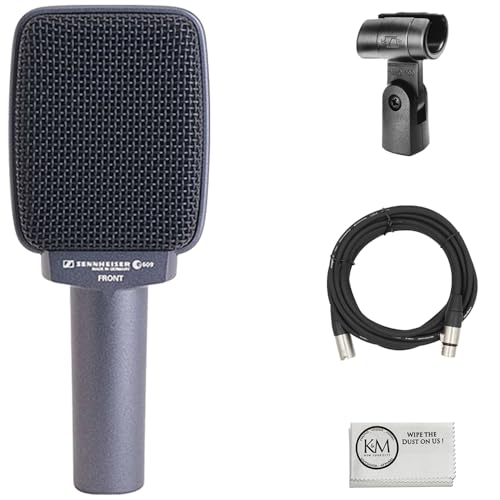
- Supercardioid e 609 instrument microphone
- Includes a 20-foot XLR cable
- Rugged metal build with hum compensation
Best For: Guitar amp miking with cable included
Guitar Amp Clarity

- Designed for guitar amps, percussion, and brass
- Super-cardioid pattern reduces noise and feedback
- Switchable filters and high signal output
Best For: Amplified instruments and vocals
Stage-Ready Versatility

- Works with electric guitar, drums, and vocals
- Super-cardioid pattern supports feedback resistance
- Rugged body with shockmount and internal windscreen
Best For: Live performers and multipurpose setups
High-SPL Instrument Workhorse

- Handles loud drums, percussion, and guitar cabinets
- Super-cardioid pattern rejects unwanted stage noise
- Rugged construction for studio and live use
Best For: Close-miking high-volume instruments
Best Value Stage Workhorse
Pyle PDMIC58 Dynamic Cardioid Microphone

- Cardioid pattern helps limit feedback and background noise
- 15-foot XLR-to-1/4-inch cable included
- Rugged passive design needs no batteries
Best For: Affordable stage, karaoke, and amplified-instrument setups
Best Refined Handheld Option
Sennheiser XS 1 Dynamic Microphone

- Cardioid dynamic design for focused pickup
- Silent mute switch for stage convenience
- Includes clip and carrying pouch
Best For: Live performers and portable XLR setups
Best Dedicated Instrument Pick
WEYMIC WM57 Dynamic Microphone

- Designed for instruments, drums, and percussion
- Cardioid unidirectional pickup pattern
- Metal body with XLR connectivity
Best For: Budget instrument and percussion miking with an existing cable
Professional All-Rounder – Shure SM57
If you need dependable dynamic microphones for instruments, the Shure SM57 is a proven choice for close-miking guitar amps, snare drums, percussion, brass, and other acoustic instruments. Its cardioid pattern helps focus on the source while its contoured response adds attack and clarity.
Best For: Recording and live-miking guitar cabinets, drums, brass, bass cabinets, and acoustic instruments.
Pros:
- Contoured response enhances attack, detail, and clarity.
- Cardioid pickup helps reduce background noise and bleed.
- Rugged construction handles high sound pressure levels and frequent transport.
- Includes a swivel stand adapter and storage bag.
Cons:
- Requires a wired XLR connection and suitable audio equipment.
- Microphone-only form factor may require a separate stand or mounting solution.
The SM57 is a versatile, recording-ready instrument microphone with a long-standing reputation for consistent performance across studio and stage applications.
Guitar Amp Specialist – Sennheiser e 609 Silver
Sennheiser Professional e 609 Silver Super-Cardioid Instrument Microphone,Wired, Wireless
Check Price On AmazonAmong dynamic microphones for instruments, the Sennheiser e 609 Silver is purpose-built for guitar amplifier miking. Its supercardioid pattern helps isolate the amp, while the 40–18,000 Hz response supports detailed capture for live or recorded guitar tones.
Best For: Close-miking guitar amplifiers and drums where focused pickup is important.
Pros:
- Supercardioid pattern provides focused instrument isolation.
- Designed specifically for guitar amplifier miking.
- Broad 40–18,000 Hz frequency response.
- Includes a microphone pouch and MZQ 100 accessory.
Cons:
- Its specialized design is less broadly positioned than an all-purpose instrument microphone.
- Requires a wired XLR setup despite the listing’s connectivity description.
The e 609 Silver is a practical pick when guitar amp placement and isolation are higher priorities than broad vocal or general-purpose use.
Budget Stage Option – Mackie EM-89D
The Mackie EM-89D offers an affordable entry point for shoppers comparing dynamic microphones for instruments. Its cardioid pattern, XLR connection, and rugged construction suit basic live sound and studio recording setups, and it includes useful starter accessories.
Best For: Budget-conscious musicians who need one microphone for instruments, vocals, live sound, or basic recording.
Pros:
- Affordable professional-quality dynamic design.
- Cardioid pattern supports focused pickup.
- Rugged construction is suited to touring use.
- Includes a mic clip, XLR cable, and zipper pouch.
Cons:
- Its listing emphasizes general-purpose use rather than a specialized instrument voicing.
- One-year warranty is shorter than some alternatives in this group.
The EM-89D is a sensible starter package when flexibility and included accessories matter more than specialized amp- or drum-miking features.
Ready-to-Run Amp Bundle – Sennheiser e 609 with XLR Cable
Sennheiser E609 Silver Instrument Microphone Bundle with 20ft XLR Cable + Cleaning Cloth (3 Items)
Check Price On AmazonThis Sennheiser e 609 bundle combines a supercardioid instrument microphone with a 20-foot XLR cable and microfiber cleaning cloth. For shoppers seeking dynamic microphones for instruments with setup essentials included, it offers the same guitar amp-focused design in a convenient package.
Best For: Guitarists and recording or live-sound users who need an e 609 plus a long XLR cable.
Pros:
- Supercardioid pattern helps isolate guitar amps and drums.
- Metal construction is rugged and reliable.
- Hum-compensating coil helps reduce electrical interference.
- Includes a 20-foot XLR cable and cleaning cloth.
Cons:
- The bundle is specialized for instrument miking rather than broad vocal use.
- Accessory quality and suitability may vary depending on the rest of the setup.
If you already want the e 609’s amp-focused sound, this bundle adds practical cable coverage and basic care accessories without changing the microphone’s core design.
Guitar Amp Clarity – Behringer B 906
If you need dynamic microphones for instruments that can handle guitar amplifiers, percussion, and brass, the Behringer B 906 is a focused option. Its super-cardioid pattern helps minimize background noise and feedback, while the switchable filtering lets you tailor the response to the source.
Best For: Guitar amps, percussion, brass instruments, and vocals in live or amplified setups.
Pros:
- Frequency response designed for guitar amplifiers, percussion, and brass.
- Super-cardioid pickup pattern helps reject background noise and feedback.
- Switchable low-cut, flat, and high-frequency boost settings provide useful tonal flexibility.
- High signal output helps the source cut through the mix.
Cons:
- Its instrument-focused voicing may be less versatile for general recording than a broader-purpose microphone.
- Requires an XLR connection and corded setup.
The B 906 is a practical choice when you want straightforward control over amplified instruments. The presence filters and high output make it especially well suited to close-miking loud sources.
Stage-Ready Versatility – SE ELECTRONICS V7
The SE ELECTRONICS V7 is a durable choice among dynamic microphones for instruments, particularly when you also need a capable vocal and live-performance microphone. Its super-cardioid pattern provides isolation and gain before feedback, while the rugged housing is designed for demanding stage use.
Best For: Electric guitar, drums, vocals, speech, broadcasting, and live performance.
Pros:
- Super-cardioid design offers strong stage-noise isolation and gain before feedback.
- Aluminum voice coil is designed for crisp, natural clarity.
- All-metal housing and spring-steel grille suit touring and frequent handling.
- Internal shockmount and switchable windscreen help reduce handling noise, wind noise, and plosives.
Cons:
- At 300 g, it is heavier than some handheld microphone options.
- Its XLR connection requires compatible audio equipment.
The V7 stands out if you want one rugged microphone that can move between instruments and vocals. Its isolation, handling-noise control, and durable construction make it a strong fit for live rigs and recording setups.
High-SPL Instrument Workhorse – CAD Audio D87
For dynamic microphones for instruments that need to handle loud sources, the CAD Audio D87 is built around a super-cardioid design and high-SPL performance. Its voicing is optimized for drums, percussion, and guitar cabinets, making it suitable for both live sound and studio work.
Best For: Drum kits, toms, snares, hand percussion, guitar amplifiers, rehearsals, and live sound.
Pros:
- Designed to handle intense sound pressure levels without distortion at close range.
- Tailored voicing emphasizes attack, clarity, and low-end impact.
- Super-cardioid pattern helps isolate the source and reject stage noise.
- Durable metal housing and low handling noise support demanding use.
Cons:
- Its instrument-focused design may be less suitable when you need a general vocal microphone.
- Requires an XLR connection and compatible audio equipment.
The D87 is a sensible pick for engineers and musicians miking loud instruments at close range. Its focused pickup and high-SPL handling make it a dependable workhorse for drums, percussion, and guitar cabinets.
Best Value Stage Workhorse – Pyle PDMIC58 Dynamic Cardioid Microphone
For shoppers comparing dynamic microphones for instruments, the Pyle PDMIC58 offers a straightforward wired setup with a unidirectional cardioid pattern, rugged metal construction, and a 15-foot XLR-to-1/4-inch cable included. Its passive design requires no batteries or external power.
Best For: Live stages, amplified instruments, karaoke setups, and budget-conscious studio users who need a ready-to-connect microphone.
Pros:
- Cardioid pickup helps minimize background noise and feedback.
- Includes a 15-foot XLR cable with a 1/4-inch connection.
- Rugged zinc-alloy body and steel mesh windscreen are built for regular use.
- Built-in pop filter helps reduce breath and popping noise.
Cons:
- Its 15 kHz frequency response is less extensive than some alternatives.
- The 600-ohm impedance may require attention when matching equipment.
The included cable and passive plug-and-play design make this Pyle a practical choice for basic instrument and stage applications, particularly when convenience matters more than advanced features.
Best Refined Handheld Option – Sennheiser XS 1 Dynamic Microphone
The Sennheiser XS 1 is a simple handheld choice among dynamic microphones for instruments, using a unidirectional cardioid pattern and a three-pin XLR connection. It includes a silent mute switch, microphone clip, and carrying pouch for flexible stage or rehearsal use.
Best For: Performers who want a recognizable Sennheiser handheld microphone for vocals, amplified setups, and general live-use applications.
Pros:
- Cardioid pattern focuses pickup toward the sound source.
- Silent mute switch supports convenient stage handling.
- Metal enclosure provides a durable handheld format.
- Includes a mic clip and carrying pouch.
Cons:
- A microphone cable is not listed among the included accessories.
- Its handheld design may be less suitable for fixed instrument-miking positions.
With its XLR connection, cardioid pickup, and useful stage accessories, the XS 1 is a sensible option for users who value straightforward operation and portable live-performance gear.
Best Dedicated Instrument Pick – WEYMIC WM57 Dynamic Microphone
The WEYMIC WM57 is explicitly positioned for instruments, drums, percussion, and vocals. This dynamic cardioid microphone uses an XLR connection and a metal construction, making it a focused budget option for shoppers seeking dynamic microphones for instruments without a cable included.
Best For: Drums, percussion, instruments, and vocal applications where a compact wired XLR microphone is already being added to an existing setup.
Pros:
- Designed for instruments, drums, percussion, and vocals.
- Unidirectional cardioid pickup helps focus on the intended source.
- Metal construction supports regular handling.
- 16 kHz frequency response and 600-ohm impedance are specified.
Cons:
- Cable is not included.
- Product details provide limited information about included accessories.
The WM57 makes the most sense for buyers who already have an XLR cable and want an inexpensive, purpose-oriented microphone for instrument or percussion duties.
How We Picked the Best Dynamic Microphones for Instruments
We focused on microphones suited to real-world instrument recording and amplification, considering pickup pattern, handling durability, frequency response, output connectivity, and placement flexibility. The selection includes established studio and stage models alongside affordable options for home recording, rehearsal, and small-venue use.
Because instrument sources vary widely, no single microphone is ideal for every job. Guitar cabinets, snare drums, brass, percussion, and amplified vocals each benefit from different voicing and placement characteristics. We also noted bundles and included cables where they add practical value.
Quick Comparison
| Best For | What to Look For | Recommended Type |
|---|---|---|
| Guitar cabinets | High SPL handling and focused midrange | Supercardioid instrument microphone |
| Snare and percussion | Durable body, tight pickup, fast transient response | Cardioid or supercardioid dynamic |
| Vocals and instruments | Balanced voicing and comfortable handheld design | General-purpose dynamic microphone |
| Home recording | XLR output and reliable off-axis rejection | Wired dynamic with a stable stand setup |
| Budget setups | Included cable, rugged construction, and simple operation | Entry-level cardioid dynamic |
Key Buying Factors for Dynamic Microphones for Instruments
Polar Pattern
Cardioid microphones reject sound mainly from the rear and are a practical choice for stages and untreated rooms. Supercardioid models can provide tighter side rejection, which is useful near loud monitors or when isolating a guitar cabinet, but placement is more sensitive.
Frequency Response and Source
Choose a microphone whose voicing complements the instrument. A focused upper-midrange response can help guitars and snares cut through a mix, while a smoother response may work better for brass, vocals, or bright amplifiers. Mic placement still has a major effect: moving closer usually increases warmth and bass through proximity effect.
SPL Handling and Durability
Dynamic microphones generally handle loud sources well, but rugged construction matters for touring, rehearsal rooms, and frequent setup changes. A secure grille, solid connector, and dependable cable connection are more valuable than decorative features.
Connection and Accessories
Most models here use a standard XLR connection and require a mixer, audio interface, or preamp. Check whether a cable, clip, pouch, or stand adapter is included. A bundle can be worthwhile if you are building a first recording or live-sound kit.
Who Should Buy Which Dynamic Microphones for Instruments?
For Guitarists and Loud Amplifiers
Choose a dedicated instrument microphone with a tight pattern and strong SPL handling. These models are easiest to position close to a speaker grille and can deliver a controlled, mix-ready guitar sound.
For Drummers and Percussionists
Prioritize rugged construction, compact placement, and effective rejection of nearby cymbals or stage noise. Cardioid and supercardioid designs are both useful depending on the kit layout.
For Singers Who Also Record Instruments
A versatile handheld dynamic microphone offers better value if it can cover vocals, speech, amps, and basic instrument tracking. Look for a balanced response and comfortable handling.
For Beginners and Occasional Users
Entry-level cardioid models or bundles with an XLR cable keep setup simple and costs predictable. Confirm that your interface or mixer supplies enough clean gain, and use a stand for consistent placement.
For the best results, start with microphone position before applying EQ: test several angles and distances, monitor the source in context, and choose the placement that needs the fewest corrections.