
Wi-Fi is convenient, but a wired connection can deliver more consistent performance for streaming, large downloads, online gaming, and video calls. The right Ethernet adapter adds that reliability without requiring a built-in network port.
We selected 10 options ranging from compact 1Gbps models to faster 2.5Gbps and 5Gbps USB-C adapters. Use the guide below to match transfer speed, compatibility, portability, and features to your setup.
Best 10 Ethernet Adapters with Gigabit Speeds Picks for 2026
Best Compact Pick
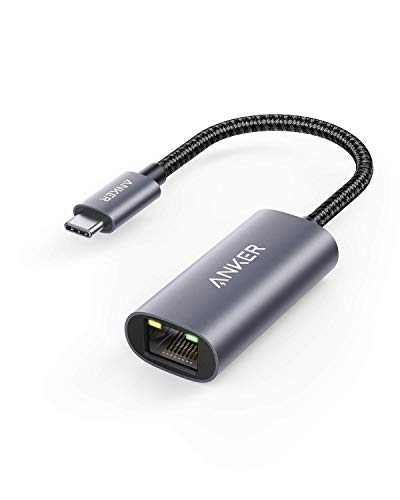
- Up to 1 Gbps wired networking
- Compact aluminum-and-nylon design
- 18-month limited warranty
Best For: Portable USB-C gigabit connectivity
Best Versatility Pick
Plugable 2.5G Dual-Connector Adapter

- Up to 2.5 Gbps performance
- USB-C and USB-A connectors
- Two-year coverage with lifetime support
Best For: Mixed-device households and 2.5Gbps networks
Best 2.5Gbps USB-C Pick
UGREEN Aluminum Ethernet Adapter

- Up to 2.5 Gbps over USB-C
- RTL8156BG chip for stable operation
- Durable aluminum housing with indicators
Best For: USB-C devices on upgraded 2.5Gbps networks
Best for Nintendo Switch

- Up to 1000 Mbps wired networking
- Nintendo Switch support
- Foldable, portable USB-A design
Best For: Nintendo Switch and USB-A devices
Top 2.5Gbps Pick
Cable Matters USB-C 2.5Gb Ethernet Adapter
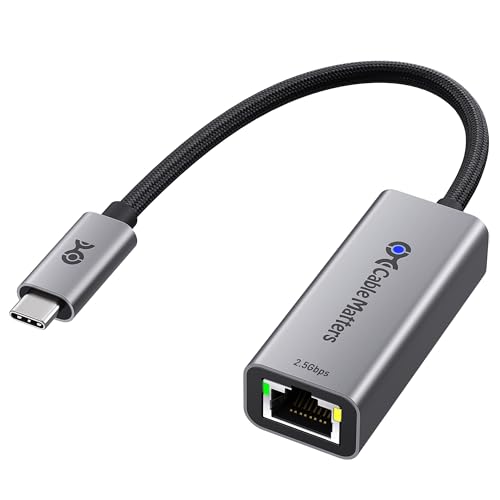
- Up to 2500Mbps network speed
- Aluminum housing with braided cable
- Supports USB-C and Thunderbolt devices
Best For: Fast USB-C networking, NAS transfers, and streaming
Best Value Gigabit Adapter
UGREEN USB 3.0 Ethernet Adapter

- Up to 1000Mbps gigabit speed
- Plug-and-play setup on major platforms
- Compatible with Nintendo Switch and Switch OLED
Best For: Affordable USB-A wired networking and gaming
Most Flexible 2.5Gbps Option
WAVLINK USB-C/USB-A Ethernet Adapter
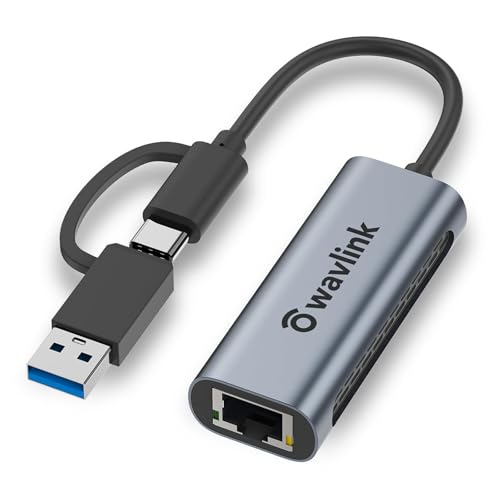
- Up to 2.5Gbps with 10/100/1000Mbps fallback
- USB-C and USB-A connectivity
- Aluminum shell with ventilation and status LEDs
Best For: Mixed-port computers, tablets, and travel setups
Best Everyday USB-C Pick
UGREEN USB-C Gigabit Ethernet Adapter

- Up to 1000Mbps wired networking
- Plug-and-play on many current systems
- Compact aluminum housing with LED
Best For: Everyday wired connectivity for USB-C laptops, tablets, and phones
Best 5Gbps Performance Pick
Cable Matters USB-C 5Gb Ethernet Adapter

- Up to 5000Mbps network speeds
- Aluminum housing with braided cable
- Supports USB-C and Thunderbolt systems
Best For: High-speed transfers, streaming, and gaming on compatible networks
Best Feature-Rich 5Gbps Pick
WAVLINK USB-C 5G Ethernet Adapter

- Up to 5000Mbps with multi-speed fallback
- Supports Wake-on-LAN and RealWoW
- Aluminum design with heat dissipation
Best For: 5Gbps setups needing remote-wake features and broad OS support
Best Compact Pick – Anker USB-C Gigabit Adapter
If you need ethernet adapters with gigabit speeds for a USB-C device, the Anker PowerExpand provides a straightforward wired connection at up to 1 Gbps. Its compact build makes it especially convenient for travel, work bags, and thin laptops or tablets.
Best For: USB-C users who want a small, dependable 1 Gbps adapter for everyday networking.
Pros:
- Supports wired connection speeds of up to 1 Gbps.
- Lightweight design weighs about as much as a AA battery.
- Aluminum exterior and braided-nylon cable offer a premium feel.
- Includes an 18-month limited warranty and customer support.
Cons:
- Uses USB-C only, with no USB-A connector listed.
- Provides one network port and does not function as a multiport hub.
The Anker is a sensible choice when portability and simple USB-C connectivity matter more than speeds beyond standard gigabit networking.
Best Versatility Pick – Plugable 2.5G Dual-Connector Adapter
The Plugable 2.5G adapter is a strong upgrade for shoppers comparing ethernet adapters with gigabit speeds and looking beyond 1 Gbps. Its interchangeable USB-C and USB-A connections support up to 2.5 Gbps when paired with compatible network equipment.
Best For: Users who need both USB-C and USB-A compatibility or want extra network headroom for a 2.5Gbps setup.
Pros:
- Supports data rates up to 2.5 Gbps with compatible switches or routers.
- Dual USB-C and USB-A design improves device compatibility.
- Works with Windows, macOS, ChromeOS, and supported iPhones.
- Includes two-year limited coverage and lifetime support.
Cons:
- Full performance requires a USB 3.0 connection and compatible network hardware.
- Actual speeds can be limited by the ISP, Ethernet cable, network, or host system.
Choose this model if flexibility is a priority. It can serve older USB-A systems while remaining ready for newer USB-C devices and faster-than-gigabit networking.
Best 2.5Gbps USB-C Pick – UGREEN Aluminum Ethernet Adapter
For shoppers seeking ethernet adapters with gigabit speeds that can also move beyond 1 Gbps, the UGREEN USB-C adapter supports up to 2.5 Gbps. It is designed for modern USB-C laptops, tablets, and phones, with compatible routers or switches.
Best For: USB-C users upgrading from gigabit networking for NAS transfers, high-resolution streaming, or gaming.
Pros:
- Supports network speeds of up to 2.5 Gbps.
- Uses an RTL8156BG chip designed for stable, lower-power operation.
- Aluminum housing and reinforced ports are built for frequent use.
- Indicator lights show transmission status.
Cons:
- Requires compatible 2.5Gbps network equipment to reach its top speed.
- Compatibility details vary by device and operating system; the listed minimums include Android 13 and Windows 11.
The UGREEN is a practical pick for a newer USB-C setup where standard gigabit feels limiting, particularly if your network includes a NAS or 2.5Gbps switch.
Best for Nintendo Switch – TP-Link UE306 Gigabit Adapter
The TP-Link UE306 is a practical option for ethernet adapters with gigabit speeds when you need USB-A connectivity and broad device support. It delivers 10/100/1000 Mbps wired networking and is specifically suited to Nintendo Switch, laptops, tablets, and other USB-powered devices.
Best For: Nintendo Switch owners and USB-A users who want simple, stable gigabit Ethernet for gaming or general connectivity.
Pros:
- Supports wired speeds up to 1000 Mbps.
- Works with Nintendo Switch and offers no-driver setup for listed Windows and Linux versions.
- Backward compatible with USB 2.0 and USB 1.1.
- Foldable connector and compact 2.8-inch design make it travel-friendly.
Cons:
- Uses USB-A rather than USB-C.
- USB 2.0 or USB 1.1 connections may not provide full gigabit performance.
- Its listed minimum operating-system requirement is Windows 10.
The UE306 stands out for straightforward console and computer use. Its foldable design and plug-and-play support make it a convenient wired-network accessory for travel or gaming setups.
Top 2.5Gbps Pick – Cable Matters USB-C 2.5Gb Ethernet Adapter
For shoppers seeking ethernet adapters with gigabit speeds and extra headroom, this Cable Matters model delivers up to 2.5Gbps over USB-C. Its aluminum housing, braided cable, and broad computer and operating-system compatibility make it a strong fit for fast file transfers, streaming, and wired networking.
Best For: USB-C and Thunderbolt users with a 2.5Gbps network, NAS, or switch.
Pros:
- Supports network speeds up to 2500Mbps.
- Works with USB-C and Thunderbolt 3, 4, and 5 devices.
- Aluminum housing and braided pigtail cable support durability and heat dissipation.
- Compatible with Windows, macOS, Linux, Chrome OS, and iOS.
Cons:
- Older operating systems or some Linux kernels may need the latest Realtek driver.
- Does not support Android devices.
- Requires a USB-C or compatible Thunderbolt port.
This is the higher-performance choice for users whose network equipment can take advantage of 2.5Gbps. It is also backward compatible with slower Ethernet networks, though actual speeds depend on the network and host device.
Best Value Gigabit Adapter – UGREEN USB 3.0 Ethernet Adapter
This UGREEN adapter is a straightforward option for shoppers who want ethernet adapters with gigabit speeds through a USB-A port. It supports up to 1000Mbps, uses USB 3.0, and offers plug-and-play setup on several common operating systems and devices.
Best For: Laptops, desktops, TV boxes, and Nintendo Switch systems with USB-A ports.
Pros:
- Supports gigabit network speeds up to 1000Mbps.
- Plug-and-play on Windows 11/10/8.1/8, macOS, and Chrome OS.
- Compatible with Nintendo Switch and Switch OLED.
- Compact design and a 24-month UGREEN warranty service.
Cons:
- Uses USB-A rather than USB-C.
- Maximum listed speed is 1Gbps, below 2.5Gbps alternatives.
- Full performance requires a USB 3.0 port and suitable network equipment.
Choose this model when reliable gigabit connectivity and simple setup matter more than multi-gigabit performance. Its small design also makes it convenient for travel or adding wired networking to a compatible console or computer.
Most Flexible 2.5Gbps Option – WAVLINK USB-C/USB-A Ethernet Adapter
The WAVLINK adapter combines 2.5Gbps Ethernet with both USB-C and USB-A connectivity, making it a flexible choice among ethernet adapters with gigabit speeds. It is backward compatible with 10/100/1000Mbps networks and includes an aluminum shell, ventilation holes, status LEDs, and a two-year warranty.
Best For: Users who switch between USB-C and USB-A computers, tablets, or notebooks.
Pros:
- Supports speeds up to 2.5Gbps and is backward compatible with slower Ethernet standards.
- USB-C-to-USB-A design supports a wider range of computers and tablets.
- Aluminum shell and ventilation holes help with heat management.
- Includes a two-year warranty and lifetime technical support.
Cons:
- USB 3.0 is required for full performance.
- Older operating systems and some macOS features may require driver installation.
- Not designed for smartphones.
This is a practical pick for households or offices with a mix of port types. Its 2.5Gbps ceiling offers room for faster networks, while the included connection options reduce the need for a separate adapter when changing devices.
Best Everyday USB-C Pick – UGREEN USB-C Gigabit Ethernet Adapter
For laptops, tablets, or phones that need dependable wired networking, the UGREEN adapter is a practical choice among ethernet adapters with gigabit speeds. It adds a 1Gbps RJ45 port through USB-C, supports backward compatibility with 100Mbps and 10Mbps networks, and works without drivers on many current operating systems.
Best For: Everyday work, streaming, gaming, and replacing a missing or unreliable Ethernet port on USB-C devices.
Pros:
- Supports wired speeds up to 1000Mbps with 100/10Mbps backward compatibility.
- Plug-and-play support for Windows 11/10/8.1/8, macOS, Chrome OS, and Android.
- Compact aluminum housing, reinforced cable tail, and status LED.
- Compatible with many laptops, tablets, smartphones, Nintendo Switch, and Steam Deck devices.
Cons:
- Windows XP/7/Vista and Linux may require a driver installation.
- It is limited to gigabit speeds rather than 5Gbps networking.
The UGREEN is a straightforward option when your network equipment supports gigabit Ethernet and you want a small, broadly compatible USB-C connection without extra setup on newer systems.
Best 5Gbps Performance Pick – Cable Matters USB-C 5Gb Ethernet Adapter
The Cable Matters adapter is designed for users moving beyond standard gigabit networking. As one of the faster ethernet adapters with gigabit speeds and above, it supports up to 5Gbps through USB-C, making it suitable for demanding transfers, high-resolution streaming, and responsive online gaming when the rest of the network supports that rate.
Best For: Large file transfers, UHD or 8K streaming, gaming, and compatible USB-C or Thunderbolt systems with 5Gb Ethernet infrastructure.
Pros:
- Supports network speeds up to 5000Mbps.
- Rugged aluminum housing and braided cable help with durability and heat dissipation.
- Compatible with Windows, macOS, Linux, Chrome OS, and iOS across USB-C, USB4, and Thunderbolt devices.
- Plug-and-play performance on current macOS and Windows versions.
Cons:
- Full 5Gbps speed requires a USB 3.2 Gen 2 or faster USB-C port and compatible network hardware.
- Older Windows releases or some Linux kernels may require the latest Realtek RTL8157 driver.
- It does not support Android devices.
This is the strongest fit for a high-throughput setup, but its 5Gbps capability only pays off when the computer port, Ethernet equipment, cabling, and service can support it.
Best Feature-Rich 5Gbps Pick – WAVLINK USB-C 5G Ethernet Adapter
The WAVLINK adapter targets users who want more than a basic wired connection. It delivers up to 5Gbps through USB-C and includes Wake-on-LAN and Wake Packet Detection support, while also falling back to 10/100/1000/2500Mbps networking when the connected equipment does not support 5Gb Ethernet.
Best For: Users with a USB 3.2 Gen 2-capable device who need 5Gbps networking, broad legacy compatibility, and remote wake features.
Pros:
- Supports up to 5000Mbps and automatically handles slower 10/100/1000/2500Mbps connections.
- Supports Wake-on-LAN, RealWoW, and Wake Packet Detection.
- Aluminum shell and internal heat-dissipation design support extended use.
- Compatible with a wide range of Windows versions and macOS systems, with driver support for older systems.
Cons:
- 5Gbps requires USB 3.1 Gen 2 or faster, CAT6 or higher cabling, and compatible 5Gb Ethernet equipment.
- Older systems may require the Realtek RTL8156 driver.
- Apple compatibility is limited to devices powered by M3 or newer chips, according to the supplied notes.
Choose the WAVLINK when remote-wake functionality and fallback speeds matter alongside 5Gbps performance. For maximum throughput, verify every part of the connection before buying.
How We Picked the Best Ethernet Adapters with Gigabit Speeds
We focused on adapters that provide a practical wired-network connection through USB-A or USB-C, with advertised speeds of at least 1Gbps. The selection includes straightforward plug-and-play models, compact travel adapters, and higher-performance options for compatible multi-gigabit networks.
We also considered host-device compatibility, USB interface requirements, operating-system support, construction, portability, and use cases such as laptops, tablets, gaming consoles, and home-office setups. A faster adapter is not automatically better if the computer, cable, router, or internet plan cannot support its rated throughput.
Quick Comparison
| Adapter type | Best suited to | Typical speed class |
|---|---|---|
| USB-A gigabit | Older laptops, desktops, and compatible gaming devices | 1Gbps |
| USB-C gigabit | Everyday laptops and tablets | 1Gbps |
| USB-C 2.5Gbps | Fast home networks, NAS, and large file transfers | 2.5Gbps |
| USB-C 5Gbps | Multi-gigabit networking and demanding transfers | 5Gbps |
Key Buying Factors for Ethernet Adapters with Gigabit Speeds
Speed and USB Connection
For ordinary broadband, a 1Gbps adapter is usually sufficient. Choose a 2.5Gbps or 5Gbps model only when your router, switch, network-attached storage, and cabling support those speeds. Also check whether the adapter uses USB-A or USB-C and whether your port provides enough USB bandwidth.
Compatibility and Drivers
Confirm support for your operating system and device before buying. Windows and macOS compatibility is common, but tablets, Chromebooks, Linux systems, and game consoles may have additional requirements. Plug-and-play support is useful when switching between devices, while some systems may require a driver installation.
Portability and Build Quality
A small adapter is ideal for travel, but a longer cable can reduce strain on crowded ports. Aluminum housings may improve durability and heat dissipation, while a fixed USB-C connector is convenient but less flexible than a detachable cable. Consider whether you need only Ethernet or a hub with extra ports.
Cable and Network Limits
Use a suitable Ethernet cable, preferably Cat5e or better for gigabit networking and Cat6 or better for many multi-gigabit installations. Actual speeds depend on the slowest component and may be lower than the advertised link rate because of protocol overhead and network conditions.
Who Should Buy Which Ethernet Adapters with Gigabit Speeds?
- Most home and office users: Choose a compact 1Gbps USB-C or USB-A adapter for reliable internet access and video calls.
- Travelers: Prioritize a lightweight, durable model with broad plug-and-play compatibility.
- Gamers and console owners: Select a compatible gigabit adapter and verify console support before purchase.
- NAS and large-file users: A 2.5Gbps adapter can be worthwhile when the entire wired network supports multi-gigabit speeds.
- Power users: Consider a 5Gbps USB-C model only if your computer and network equipment can use its additional bandwidth.