
The best memory cards for photographers balance speed, capacity, reliability, and value without exceeding your camera’s capabilities. The right card can help maintain fast burst performance, support high-bitrate video, and reduce the need to swap cards during a shoot.
Our roundup includes dependable SDXC options for casual photography, travel, professional workflows, and 4K recording. Check your camera’s supported card type and speed class before choosing.
Best 10 Memory Cards for Photographers Picks for 2026
Professional Speed Pick
Lexar Professional 1667x 128GB SD Card 2-Pack

- UHS-II read speeds up to 250MB/s
- V60 and U3 support for 4K video
- Includes two 128GB cards
Best For: UHS-II cameras and fast professional workflows
Budget Two-Card Pack
Gigastone Camera Plus 128GB SD Card 2-Pack

- Includes two 128GB SD cards
- U3 and Class 10 rated for Full HD
- Protective design and five-year warranty
Best For: Casual shooting and affordable backup storage
Fast UHS-I Performer
SanDisk Extreme PRO 128GB SD Card
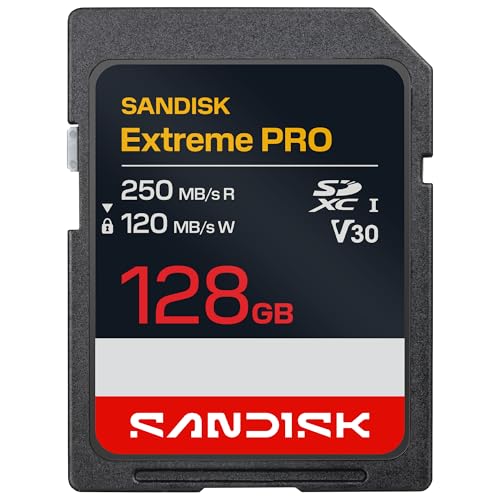
- Read speeds up to 250MB/s
- U3 and V30 support 4K UHD
- Resistant to several environmental hazards
Best For: Fast UHS-I stills and 4K workflows
Everyday Value Pick

- 64GB capacity with Class 10 performance
- Up to 80MB/s read speed
- Durable, camera-friendly design
Best For: Everyday photos and Full HD video
High-Capacity Pro Choice
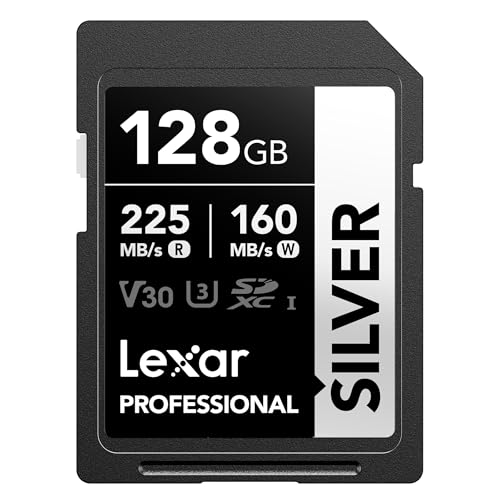
- 128GB capacity for extended shoots
- Up to 225MB/s read and 160MB/s write
- V30/U3 support for 4K 60FPS video
Best For: Professional and enthusiast photo-video workflows
Fast Burst Shooter

- Up to 90MB/s write speed
- V30/U3 support for 4K UHD video
- Up to 200MB/s reads with compatible gear
Best For: Burst photography and 4K UHD capture
Reliable Everyday Pick

- 128GB capacity for extensive photo storage
- Up to 140MB/s read speed with compatible devices
- U1/Class 10 support for Full HD video
Best For: Compact and mid-range cameras
High-Capacity 4K Choice

- 256GB storage for photos and video
- V30-rated and 4K UHD compatible
- Includes mini case and five-year warranty
Best For: High-capacity camera and DSLR workflows
Professional Speed Pick – Lexar Professional 1667x 128GB SD Card 2-Pack
For photographers who prioritize fast transfers and demanding video capture, this Lexar 128GB 2-pack is a strong option among memory cards for photographers. Its UHS-II interface and V60 rating are suited to compatible cameras used for burst shooting and 4K workflows.
Best For: Professional photographers and videographers with UHS-II-compatible equipment who want two high-speed cards.
Pros:
- UHS-II performance with read speeds up to 250MB/s
- V60 and U3 ratings support Full HD, 3D, and 4K video capture
- Two-card pack with backward compatibility for UHS-I devices
- Limited lifetime warranty
Cons:
- Maximum performance requires a compatible UHS-II device
- 128GB capacity per card may be limiting for extended shoots
This pack makes the most sense when fast offloading and sustained capture matter more than maximum individual-card capacity. Verify that your camera and reader support UHS-II before paying for its top speed.
High-Capacity Everyday Choice – SanDisk Extreme 256GB SD Card
The SanDisk Extreme 256GB balances generous capacity with useful transfer and capture speeds, making it a practical choice among memory cards for photographers. Its U3 and V30 ratings are designed for sequential bursts and 4K UHD video on compatible devices.
Best For: Photographers who want one high-capacity card for everyday stills, burst shooting, and 4K video.
Pros:
- 256GB capacity provides room for extended shooting
- Read speeds up to 180MB/s and write speeds up to 130MB/s
- U3 and V30 ratings support 4K UHD recording
- Water-, temperature-, and X-ray-proof construction
Cons:
- QuickFlow speeds require compatible devices and may require the separate PRO-READER for maximum performance
- UHS-I performance is below the speed potential of UHS-II cards
Choose this card when capacity and broad UHS-I compatibility are more important than the highest interface speed. It is a versatile fit for photographers who regularly combine stills and video.
Budget Two-Card Pack – Gigastone Camera Plus 128GB SD Card 2-Pack
This Gigastone 128GB 2-pack offers a straightforward way to add spare storage without buying cards individually. For photographers seeking practical memory cards for photographers, its U3 and Class 10 ratings support Full HD recording and general camera use.
Best For: Casual photographers, backup storage, and users who prefer having two cards available.
Pros:
- Two 128GB full-size SD cards included
- U3 and Class 10 ratings suit Full HD video recording
- Water-, temperature-, X-ray-, shock-, and magnetic-proof claims
- Five-year limited warranty
Cons:
- Slower than the other listed cards, with stated read speed up to 100MB/s
- Better suited to Full HD than demanding 4K workflows
- Supplied notes list differing transfer and media-speed figures, so real-world performance may vary
This is a sensible value-oriented backup set for everyday photography and Full HD video. Consider a faster V30 card if your camera records high-bitrate 4K or you frequently transfer large batches.
Fast UHS-I Performer – SanDisk Extreme PRO 128GB SD Card
The SanDisk Extreme PRO targets photographers who want especially quick UHS-I performance in a single 128GB card. Its stated read speed of up to 250MB/s, along with U3 and V30 ratings, makes it a compelling option among memory cards for photographers using compatible cameras and readers.
Best For: Photographers who want fast offloads, high-resolution stills, and 4K UHD capture from a UHS-I card.
Pros:
- Read speeds up to 250MB/s
- U3 and V30 ratings support 4K UHD video and high-resolution stills
- Designed to resist dust, water, temperature extremes, wear, and X-rays
- Lifetime limited warranty
Cons:
- Maximum speed depends on the host device and reader
- 128GB offers less capacity than the 256GB alternative in this roundup
- Supplied notes state a 170MB/s write speed for 256GB–1TB capacities, so that figure should not be assumed for this 128GB model
This card is a strong fit when speed matters but your setup uses UHS-I rather than UHS-II. Check the camera and reader specifications, since the advertised top read speed depends on compatible hardware.
Everyday Value Pick – SanDisk Ultra 64GB SDXC
SanDisk Ultra 64GB Class 10 SDXC UHS-I Memory Card up to 80MB/s (SDSDUNC-064G-GN6IN)
Check Price On AmazonFor photographers who need dependable storage for everyday shooting, the SanDisk Ultra 64GB is a straightforward choice among memory cards for photographers. Its Class 10 rating supports Full HD video, while read speeds up to 80MB/s help move files to a computer more quickly.
Best For: Compact and midrange point-and-shoot cameras, camcorders, and general photography.
Pros:
- 64GB capacity for photos and Full HD video.
- Up to 80MB/s read speed for quicker transfers.
- Waterproof, temperature-proof, shockproof, magnetic-proof, and X-ray-proof construction.
Cons:
- V10/Class 10 performance is less suited to demanding 4K or high-speed burst workflows.
- Maximum capacity is lower than the 128GB alternative in this roundup.
The SanDisk Ultra emphasizes broad compatibility and everyday durability rather than premium capture speeds. It is a practical budget-minded option when your camera primarily records standard photos and Full HD video.
High-Capacity Pro Choice – Lexar 128GB Silver SDXC
The Lexar 128GB Silver combines generous capacity with fast transfer and capture specifications, making it a strong contender among memory cards for photographers. Its V30 and U3 ratings support 4K 60FPS recording, while the included recovery tool and lifetime limited warranty add reassurance.
Best For: Professional photographers, videographers, and enthusiasts using compatible Canon, Sony, Nikon, and other cameras.
Pros:
- 128GB capacity provides more room for photo and video sessions.
- Up to 225MB/s read and 160MB/s write speeds.
- V30/U3 rating supports up to 4K 60FPS video recording.
- Durable build with a lifetime limited warranty and recovery tool.
Cons:
- Stated peak speeds require compatible host devices and may not apply to every camera or reader.
- Its higher-end specifications may be unnecessary for basic Full HD shooting.
With the largest capacity and fastest listed specifications here, the Lexar is aimed at demanding workflows. Check your camera and reader compatibility before expecting the advertised maximum speeds.
Fast Burst Shooter – SanDisk Extreme PRO 64GB
SANDISK 64GB Extreme PRO SDXC UHS-I Memory Card - C10, U3, V30, 4K UHD, SD Card - SDSDXXU-064G-GN4IN
Check Price On AmazonPhotographers shooting sequential bursts or 4K UHD video may appreciate the SanDisk Extreme PRO 64GB. Among memory cards for photographers, it stands out with up to 90MB/s write speeds, V30/U3 ratings, and up to 200MB/s read speeds when used with compatible equipment.
Best For: 4K UHD video, sequential burst photography, and users with compatible UHS-I cameras or readers.
Pros:
- Up to 90MB/s write speed for smooth 4K UHD capture and burst shooting.
- V30 and U3 ratings support compatible 4K UHD recording workflows.
- Up to 200MB/s read speed with QuickFlow-compatible equipment.
- Waterproof, temperature-proof, shockproof, and X-ray-proof design.
Cons:
- Maximum read speed requires compatible devices and a suitable SanDisk Professional reader.
- 64GB capacity may be limiting for extended 4K recording or long shoots.
This card is a focused performance upgrade for photographers who need faster writing and offloading than a basic Class 10 card provides. Its capacity is best matched with planned file management or shorter shooting sessions.
Reliable Everyday Pick – SanDisk Ultra 128GB SDXC
For photographers seeking practical memory cards for photographers, the SanDisk Ultra 128GB is a sensible fit for compact and mid-range cameras. It offers generous capacity for photos, up to 140MB/s read speeds with compatible devices, and U1/Class 10 support for Full HD video.
Best For: Compact to mid-range cameras and camcorders, everyday photography, and Full HD video recording.
Pros:
- 128GB capacity provides room for many photos.
- Up to 140MB/s read speed with compatible hardware.
- U1 and Class 10 ratings support Full HD video.
- Water-, temperature-, shock-, magnetic-, and X-ray-resistant design.
Cons:
- Designed for UHS-I use rather than higher-performance card standards.
- Its U1 rating is aimed at Full HD video, not specifically 4K recording.
This is a straightforward, high-capacity option for everyday stills and Full HD work, especially when dependable device compatibility matters more than professional high-bitrate video performance.
High-Capacity 4K Choice – Gigastone 256GB Camera Pro
The Gigastone 256GB Camera Pro stands out among memory cards for photographers who need substantial storage and 4K compatibility. Its V30 rating, 256GB capacity, and stated transfer speed of up to 170MB/s make it suited to cameras, DSLRs, and HD camcorders.
Best For: Photographers and videographers using digital cameras, DSLRs, or camcorders who want high capacity and 4K UHD compatibility.
Pros:
- 256GB capacity offers extensive room for photos and video.
- Compatible with 4K Ultra HD UHD video.
- V30 rating and up to 170MB/s stated transfer speed.
- Includes a mini case and five-year manufacturer warranty.
Cons:
- Actual performance depends on the host camera and other equipment.
- The supplied details list a 100MB/s read speed, which differs from the advertised transfer figure.
With the largest capacity in this roundup and a V30 rating, this card is the most suitable choice here for users balancing sizable photo libraries with 4K-capable camera workflows.
Compact 4K Value – Gigastone 64GB Camera Pro
For photographers who prefer a smaller card capacity, the Gigastone 64GB Camera Pro combines 4K UHD compatibility with a V30 rating. It is a practical option for digital cameras, DSLRs, HD camcorders, and other supported devices where regular card changes are acceptable.
Best For: Digital camera and DSLR users who want a V30-rated card for 4K-capable shooting without choosing a larger 256GB capacity.
Pros:
- V30 rating supports 4K UHD video compatibility.
- Up to 155MB/s listed read or transfer speed.
- Compatible with cameras, camcorders, PCs, and trail cameras.
- Includes a mini case and five-year manufacturer warranty.
Cons:
- 64GB capacity is more limited than the 128GB and 256GB alternatives.
- Actual speeds can vary by camera, reader, and usage conditions.
This card offers a useful middle ground for photographers who value 4K-ready performance and portability but do not need the extended storage of a higher-capacity card.
How We Picked the Best Memory Cards for Photographers
We focused on SDXC cards with clearly stated capacities, speed ratings, and intended camera uses. The selection covers UHS-I and UHS-II models, capacities from 64GB to 256GB, and cards rated for Full HD or 4K recording. We also considered sequential read and write claims, V30 or V60 video ratings, brand reputation, included multipacks, and practical value.
Advertised read speeds are usually measured under ideal conditions and may require a compatible reader. Camera performance depends primarily on the card’s sustained write speed, the camera slot, file format, and shooting mode.
Quick Comparison
- Best for professional burst shooting: Lexar Professional 1667x UHS-II V60
- Best high-capacity all-rounder: SanDisk Extreme 256GB
- Best value multipack: GIGASTONE Camera Plus 128GB 2-Pack
- Best premium UHS-I option: SanDisk Extreme PRO 128GB
- Best budget everyday card: SanDisk Ultra 64GB
- Best for 4K on a budget: GIGASTONE 4K Camera Pro V30
Key Buying Factors for Memory Cards for Photographers
Capacity
Choose capacity based on file size, shooting duration, and how often you can transfer files. A 64GB card may suit casual JPEG photography, while 128GB or 256GB is more practical for RAW files, extended travel, and 4K footage. Using several smaller cards can limit losses if one card fails, but larger cards reduce interruptions.
Write Speed and Speed Class
Write speed matters when capturing continuous RAW bursts or video. U3 and V30 cards provide a minimum sustained write-class indication suitable for many 4K cameras. V60 cards offer more headroom for demanding video and faster professional workflows. Do not select a card solely by its maximum read speed.
UHS-I Versus UHS-II
UHS-II cards have an extra contact row and can transfer data faster in compatible cameras and readers. They remain backward compatible with many UHS-I devices, but they may operate at UHS-I speeds in those slots. For everyday photography, a quality UHS-I card is often sufficient.
Compatibility and Reliability
Confirm the camera supports SDXC if buying cards larger than 32GB, and check the manufacturer’s recommended speed class. Buy from a reputable seller to reduce the risk of counterfeit storage. After important shoots, transfer and back up files promptly rather than treating a memory card as permanent storage.
Who Should Buy Which Memory Cards for Photographers?
Casual photographers and family users can choose a SanDisk Ultra card for standard photos and Full HD video. Travel photographers should consider a 128GB or 256GB Extreme or Extreme PRO card for extra space and faster transfers. Sports, wildlife, and event shooters benefit from a V30 or V60 card with stronger sustained write performance, especially when using burst modes. Hybrid photo-video creators should prioritize V30 or V60 ratings and verify the camera’s required bitrate. Budget-conscious buyers can save with a multipack, provided the cards meet the camera’s speed and capacity requirements.