
The best portable DACs with balanced output make it easier to get more from wired headphones and IEMs without carrying a full-size desktop setup. A 4.4mm balanced connection can provide additional power and channel separation, while compact USB-C designs work with phones, tablets, laptops, and more.
We selected 10 models spanning simple dongles, high-output headphone amplifiers, tube-equipped designs, and desktop-friendly units. Use the guide below to compare compatibility, output power, controls, and the features that matter most for your listening setup.
Best 10 Portable Dacs with Balanced Output Picks for 2026
Balanced Pocket Power

- Dual ESS Sabre DAC balanced circuit
- 4.4mm output with up to 241mW
- PCM 384kHz and native DSD256
Best For: USB-C listeners wanting a lightweight, high-powered balanced dongle
Tube-Warm Balanced Amp
MUSEHiFi M3 Ultra Portable Tube DAC Amp
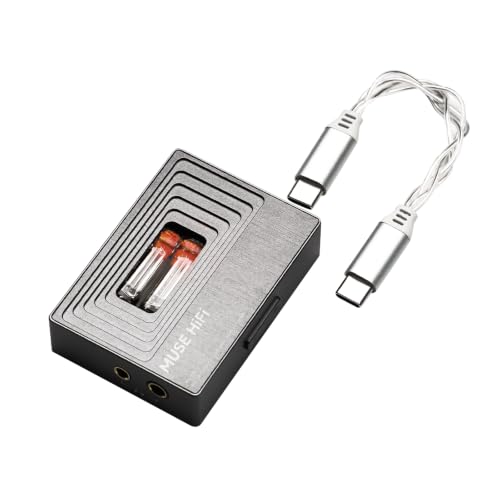
- JAN6418 vacuum tube design
- 480mW maximum 4.4mm output
- PCM 384kHz and DSD256 support
Best For: Listeners wanting tube warmth with strong balanced headphone drive
Feature-Rich Balanced Dongle

- Dual CS43131 DAC architecture
- 320mW maximum 4.4mm output
- Buttons and Android 8-band EQ
Best For: Listeners wanting balanced power plus physical controls and EQ
Adjustable-Gain Balanced Companion
TempoTec Sonata BHD Portable USB DAC

- 3.5mm and 4.4mm outputs
- Three-position hardware gain switch
- Physical volume buttons and DSD256
Best For: Portable listeners needing adjustable gain and broad device support
Best DSP-Tunable Dongle

- 4.4mm balanced and 3.5mm outputs
- Dual CS43198 DAC chips
- App-based parametric EQ
Best For: EQ-focused listeners wanting flexible portable balanced output
Best High-Power Desktop Pick

- 1100mW balanced output at 32 ohms
- USB-C and optical inputs
- Desktop preamp functionality
Best For: Desk-based headphone systems needing high balanced power
Best Feature-Rich Portable
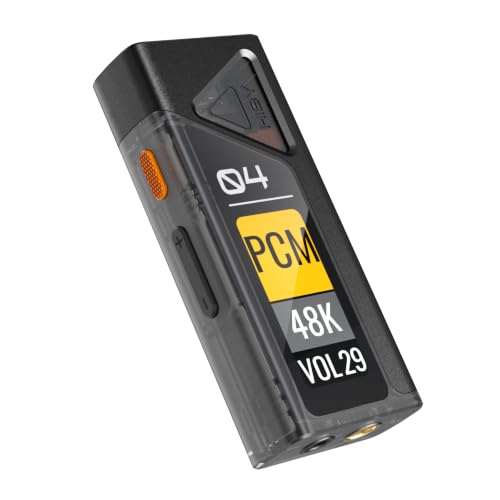
- 21g portable design with 4.4mm output
- OLED display and hardware volume control
- Dual CS43131 chips with app-based EQ
Best For: Mobile listeners wanting controls, display, and balanced output
Best All-Around Power
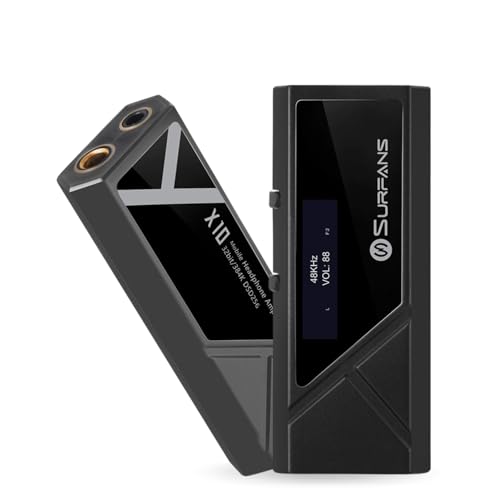
- 3.5mm and 4.4mm outputs
- Up to 522mW output
- USB-C support for phones and computers
Best For: Users wanting strong output and flexible connections
Best for Advanced Tuning

- 4.4mm balanced output
- Native DSD512 and PCM 768kHz support
- 32-band hardware-level PEQ
Best For: Critical listening, gaming, and customizable playback
Best for Simple High-Resolution Listening

- 3.5mm and 4.4mm outputs
- PCM 384kHz and DSD256 support
- 60-step physical volume control
Best For: Easy high-resolution listening from phones and computers
Balanced Pocket Power – iFi Audio Go Link Max
The iFi Audio Go Link Max is a compact choice for listeners seeking portable DACs with balanced output. Its dual ESS Sabre DAC design, 4.4mm balanced connection, and up to 241mW of power suit compatible headphones and IEMs, while USB-C plug-and-play connectivity keeps setup simple.
Best For: Listeners who want a lightweight USB-C dongle with high-resolution playback and a powerful 4.4mm balanced output.
Pros:
- Dual ESS Sabre DAC chips form a balanced circuit.
- 4.4mm output provides up to 241mW of power.
- Supports PCM up to 32-bit/384kHz and native DSD256.
- Flexible cable and 15g weight support easy portability.
Cons:
- Designed for devices with USB-C ports.
- Does not list a built-in volume control or gain adjustment.
The Go Link Max stands out for combining a very light design with a high-resolution DAC and strong balanced output. It is a practical upgrade for USB-C devices when simplicity and portability matter.
Tube-Warm Balanced Amp – MUSEHiFi M3 Ultra Portable Tube DAC Amp
The MUSEHiFi M3 Ultra brings a JAN6418 vacuum tube to the portable DAC category, making it an unusual option among portable dacs with balanced output. It offers both 3.5mm and 4.4mm connections, with up to 480mW from the balanced output and support for high-resolution PCM and DSD playback.
Best For: Listeners who prefer tube-style warmth and need substantial output for IEMs or demanding headphones.
Pros:
- JAN6418 tube is designed for rich harmonics and smoother mids.
- 4.4mm balanced output delivers up to 480mW.
- Supports PCM up to 32-bit/384kHz and DSD256.
- Triple noise-reduction system addresses tube microphonics.
Cons:
- Tube circuitry may be less straightforward than a conventional solid-state dongle.
- Its higher power output may be unnecessary for highly sensitive IEMs.
Choose the M3 Ultra if tonal character matters as much as technical capability. Its tube implementation, balanced design, and high output make it the most distinctive option here, though listeners seeking the simplest dongle may prefer a conventional design.
Feature-Rich Balanced Dongle – TRN Black Pearl USB-C DAC Amp
The TRN Black Pearl is a versatile pick among portable dacs with balanced output, pairing dual CS43131 chips with separate 3.5mm and 4.4mm connections. It adds physical controls, Android EQ support through the WALK PLAY app, and up to 320mW from the balanced port.
Best For: Users who want balanced output, on-device controls, and flexible compatibility in a compact metal-bodied DAC amp.
Pros:
- Dual CS43131 DACs support up to 130dB dynamic range and SNR.
- 4.4mm balanced output provides up to 320mW at 32Ω.
- Physical buttons control volume, playback, and track changes.
- Supports PCM up to 32-bit/384kHz and DSD256.
Cons:
- Android EQ requires the WALK PLAY app and a compatible device.
- Only one headphone output should be used at a time.
- At approximately 25g, it is heavier than some dongle alternatives.
The Black Pearl is a strong all-rounder for listeners who value hands-on operation. Its balanced power and app-based EQ add flexibility, while the 3.5mm port preserves compatibility with standard wired headsets.
Adjustable-Gain Balanced Companion – TempoTec Sonata BHD Portable USB DAC
The TempoTec Sonata BHD is a practical option for portable dacs with balanced output, offering both 3.5mm single-ended and 4.4mm balanced jacks in an 18g aluminum design. Its three-level hardware gain control and physical volume buttons make it adaptable to sensitive IEMs and more demanding headphones.
Best For: Users who want adjustable gain, independent hardware volume control, and broad Android, iOS, Mac, and Windows compatibility.
Pros:
- Includes 3.5mm single-ended and 4.4mm balanced outputs.
- Three gain levels accommodate different headphones and IEMs.
- Physical volume buttons allow independent hardware adjustment.
- Supports native DSD256 and PCM up to 32-bit/384kHz.
Cons:
- Windows support requires Windows 10 version 1703 or later.
- The supplied notes do not specify balanced-output power.
- It uses a USB-C connection, so device compatibility should be checked.
The Sonata BHD focuses on everyday usability rather than unusual features. Its gain switch, physical controls, dual outputs, and broad operating-system support make it a flexible choice for a portable listening setup.
Best DSP-Tunable Dongle – MOONDROP Dawn PRO 2
The MOONDROP Dawn PRO 2 is a strong choice for listeners seeking portable dacs with balanced output and flexible sound customization. Its 4.4mm output, dual CS43198 chips, app-based parametric EQ, and 4Vrms output give it a versatile feature set for headphones and IEMs.
Best For: Listeners who want adjustable EQ and a refined portable DAC/amp with both 3.5mm and 4.4mm outputs.
Pros:
- 4.4mm balanced and 3.5mm outputs, with up to 124 + 124mW output.
- Dual CS43198 DAC chips and three independent LDO power chips.
- MOONDROP app supports detailed parametric EQ adjustments and headphone-response references.
- Aluminum-alloy housing uses strategically placed vents for heat dissipation.
Cons:
- Its advanced EQ features may be more than casual listeners need.
- The supplied notes do not specify a built-in display or battery.
The Dawn PRO 2 stands out when tuning flexibility matters as much as decoding hardware. It is a practical pick for users who want a balanced connection without giving up detailed control over their sound.
Best High-Power Desktop Pick – Fosi Audio SK02
The Fosi Audio SK02 suits buyers comparing portable dacs with balanced output but primarily listening at a desk. It combines a 4.4mm balanced output with up to 1100mW at 32 ohms, USB-C and optical inputs, and preamp functionality for a broader desktop setup.
Best For: Desktop listeners who need powerful balanced headphone output and flexible connections for computers, TVs, CD players, or active speakers.
Pros:
- 4.4mm balanced output reaches 1100mW at 32 ohms, alongside a 3.5mm output.
- Supports PCM 32-bit/384kHz and DSD256 decoding.
- USB-C and optical inputs support multiple source devices.
- Large multifunction control knob, gain selection, and preamp operation add convenience.
Cons:
- Its 350g tabletop design is less travel-friendly than a small dongle.
- It is designed for desktop use rather than battery-powered portability.
The SK02 is the most power-oriented option here. Choose it when balanced output strength and desktop connectivity matter more than carrying the DAC in a pocket.
Best Feature-Rich Portable – HiBy Music FC4
The HiBy Music FC4 is a compact option for shoppers seeking portable dacs with balanced output, physical controls, and broad device compatibility. Its 4.4mm balanced connection is joined by a 3.5mm output, a color OLED display, app-based EQ, and support for high-resolution formats up to DSD512 and PCM 768kHz/32bit.
Best For: Mobile listeners who want a lightweight USB DAC with a display, hardware volume control, and customizable EQ.
Pros:
- 4.4mm balanced output provides up to 151mW at 32 ohms, with a 3.5mm option.
- Dual CS43131 DACs and dual crystal oscillators support high-resolution playback.
- 1.1-inch OLED display and 30-step hardware volume control improve usability.
- Works with iOS, Android, Windows, macOS, PS5, and Switch through UAC 1.0/2.0 support.
Cons:
- The balanced output is less powerful than the Fosi Audio SK02’s rated output.
- Its many EQ and playback features may require time to configure.
At 21g, the FC4 is the easiest of these picks to carry regularly. It makes the strongest case for users who value portability, on-device information, and software-based sound customization.
Best All-Around Power – Surfans X10
The Surfans X10 is a versatile pick among portable dacs with balanced output, combining 3.5mm single-ended and 4.4mm balanced connections in a compact USB-C design. Its high output rating makes it suitable for users who want extra headroom from phones, computers, and other compatible sources.
Best For: Listeners who want strong portable output, broad device compatibility, and both common headphone connection types.
Pros:
- Offers 3.5mm and 4.4mm balanced outputs.
- Provides up to 522mW of output power.
- Works with compatible iPhone, Android, PC, and Mac devices via USB-C.
- Uses an aluminum body with physical controls for travel-friendly operation.
Cons:
- Balanced output benefits require headphones or IEMs with a compatible 4.4mm cable.
- USB-C compatibility may vary by source device.
With its unusually high stated output and dual headphone ports, the X10 is a flexible choice for listeners who do not want to outgrow a small dongle amp quickly.
Best for Advanced Tuning – Fosi Audio DS3
The Fosi Audio DS3 stands out among portable dacs with balanced output for its extensive digital support and customization options. It pairs a 4.4mm balanced output with high-resolution decoding, selectable filters, and a 32-band hardware-level parametric EQ.
Best For: Critical listeners, gamers, and desktop-or-mobile users who want detailed tuning and spatial enhancement without a separate power brick.
Pros:
- Includes 3.5mm single-ended and 4.4mm balanced outputs.
- Supports up to 32-bit/768kHz PCM and native DSD512.
- Offers eight digital filters and a 32-band hardware-level PEQ.
- Supports PC, phone, PS5, and Switch use with driver-free operation.
Cons:
- Does not include a built-in microphone.
- Its advanced controls may be more than casual listeners need.
The DS3 is the most feature-focused option here, particularly for buyers who value EQ control, spatial processing, and high-resolution format support in a lightweight 16g enclosure.
Best for Simple High-Resolution Listening – Fosi Audio DS2
The Fosi Audio DS2 is a straightforward option among portable dacs with balanced output, offering 3.5mm and 4.4mm connections alongside high-resolution PCM and DSD playback. Its physical volume buttons and volume memory keep everyday operation simple.
Best For: Phone, tablet, and computer users who want a compact metal DAC amp with balanced connectivity and easy controls.
Pros:
- Provides both 3.5mm single-ended and 4.4mm balanced outputs.
- Supports PCM up to 32-bit/384kHz and DSD256.
- Delivers up to 170mW per channel at 32 ohms.
- Includes independent 60-step volume controls and volume memory.
Cons:
- Its maximum output is lower than the Surfans X10’s stated rating.
- It uses USB-C, so older source devices may require an adapter.
The DS2 makes a strong case for buyers who prioritize clean specifications and uncomplicated controls over extra processing features or extensive sound customization.
How We Picked These Portable Dacs with Balanced Output
We focused on models that include a balanced headphone output—typically 4.4mm—alongside a practical portable connection such as USB-C. The selection covers different budgets and use cases, from low-profile phone dongles to higher-powered DAC amplifiers that can also serve at a desk.
We compared advertised output power, DAC architecture, supported formats, gain controls, volume adjustment, input options, size, and operating-system compatibility. Specifications can vary by output, load, and source device, so treat power ratings as a useful comparison point rather than a guarantee of identical real-world volume.
Quick Comparison
- Best for maximum portability: Choose a compact dongle with integrated USB-C connectivity and simple plug-and-play operation.
- Best for demanding headphones: Look for a model with higher balanced-output power and selectable gain.
- Best for IEM flexibility: Prioritize low noise, precise volume control, and both 3.5mm and 4.4mm outputs.
- Best for desk-and-mobile use: Consider a unit with optical or other additional inputs, preamp functionality, or convenient hardware controls.
- Best for customization: Models with onboard EQ, digital filters, or spatial-processing features offer more ways to tailor playback.
Key Buying Factors for Portable Dacs with Balanced Output
Balanced Output and Power
A balanced output is not automatically better for every headphone, but it can offer more available power and is useful when your headphones use a compatible 4.4mm cable. Check the impedance and sensitivity of your headphones, then compare the DAC’s balanced and single-ended ratings. Never connect a balanced output to an unsuitable adapter or cable.
Device Compatibility
Confirm support for your phone, tablet, computer, or game system before buying. Android and Windows devices are usually straightforward, while iPhones and some tablets may require an adapter. Some DACs draw meaningful battery power, and a few operating systems may need settings changes for high-resolution playback.
Noise, Gain, and Controls
Sensitive IEMs benefit from a quiet background and low gain. Physical volume buttons are convenient, particularly when a phone’s software volume is limited. Gain switching is more valuable if you use both efficient IEMs and harder-to-drive over-ear headphones.
Format Support and Extras
High PCM or DSD ratings are useful only if your music source supports them. Give equal attention to build quality, cable durability, heat, app or EQ support, and whether the unit includes the adapters you need.
Who Should Buy Which Portable Dacs with Balanced Output?
Phone listeners and commuters should choose the smallest plug-and-play dongle that offers the required 4.4mm connection. IEM users should favor low noise, fine volume steps, and dual outputs. Over-ear headphone owners should prioritize balanced power and gain options. Desktop users may prefer a larger DAC amp with optical input, preamp capability, and easier front-panel controls. If you already own a balanced cable and want one device for travel and home listening, select a versatile model with both outputs and enough power for your least efficient headphones.