
A brighter projector alone may not solve a washed-out picture. The right screen can improve perceived contrast when daylight or room lights compete with your image.
These nine picks span Fresnel ALR, high-gain, fixed-frame, and portable designs. The best fit depends on your projector’s throw distance, where the light enters, and how you use the room.
Best 9 Projector Screens for Bright Rooms Picks for 2026
Best for Long-Throw Setups
Valerion 100-Inch Fresnel ALR Screen
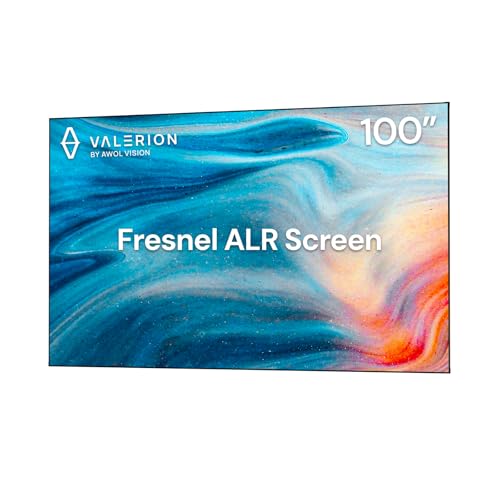
- 100-inch fixed-frame screen
- 1.8 gain; up to 85% light rejection
- 90-degree viewing angle
Best For: Daytime viewing with a long-throw projector
Best Portable Option
XINLEMY 100-Inch Foldable Screen

- Listed 1.65-pound foldable design
- 2.0x gain coating
- 160-degree stated viewing angle
Best For: Portable standard- or long-throw movie setups
Best for Ultra-Short-Throw
NexiGo 100-Inch Fresnel ALR Screen

- Built for ultra-short-throw projectors
- Rated 85% ambient-light occlusion
- 170-degree stated viewing angle
Best For: Bright living rooms with a UST projector
Best for Center Seating
IOLIEO 100-Inch Standard-Throw ALR Screen
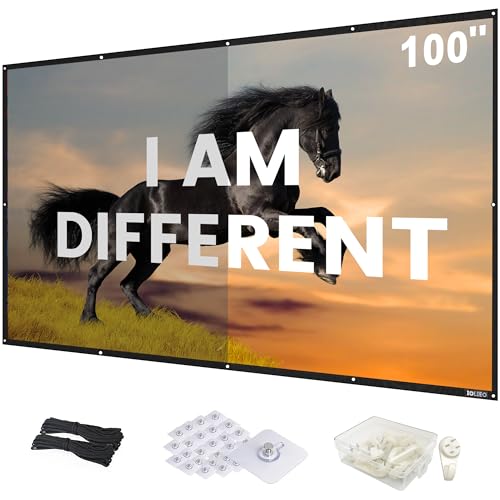
- Claims 70% ambient-light rejection
- Up to 2.7× gain at center seats
- Tape-mounted and trimmable
Best For: Small, centrally seated standard-throw setups
Best for Easy Setup
GAINVANE 100-Inch Anti-Light Screen

- Portable 100-inch, 16:9 screen
- Hook, rope, or own-tripod setup
- No stated ALR percentage or gain
Best For: Occasional presentations and portable movie nights
Best for Ultra-Short Throw
NothingProjector 120-Inch Fresnel ALR Screen

- Specified 95% ceiling-light rejection
- 1.2 gain and 120-inch image
- 90° listed viewing angle
Best For: Large ultra-short-throw setups with ceiling lights
Best High-Gain Option
SilverMagic 120-Inch Fixed Frame Screen

- Up to 2.6x gain near the projector
- Stated 30% ambient light rejection
- Fixed frame supports a flat surface
Best For: A permanent 120-inch setup focused on brightness
Best 100-Inch UST Match
NothingProjector PET Crystal ALR Screen

- Up to 85% stated ambient light rejection
- Designed for ultra-short-throw projectors
- Slim 10 mm fixed frame
Best For: A 100-inch UST setup with ambient light
Best Large-Format UST Pick
NothingProjector 132-Inch Seamless ALR Screen

- 132-inch seamless surface
- Stated 95% ceiling light rejection
- 170° stated viewing angle
Best For: A large, permanent UST projection setup
Best for Long-Throw Setups – Valerion 100-Inch Fresnel ALR Screen
For shoppers comparing projector screens for bright rooms, the Valerion is a 100-inch fixed-frame option designed specifically for long-throw projectors. Its Fresnel surface is rated to reject up to 85% of overhead and side ambient light.
Best For: A wall-mounted, long-throw home theater where daytime viewing matters more than a very wide seating arrangement.
Pros:
- 1.8 gain helps produce a brighter image.
- Rated for up to 85% overhead and side ambient-light rejection.
- Scratch-resistant, easy-to-clean surface supports everyday use.
Cons:
- Not compatible with ultra-short-throw projectors.
- Its stated 90-degree viewing angle calls for more careful seat placement.
This is the long-throw pick if controlling room light is difficult. Check your projector type and seating positions before choosing it over a wider-angle screen.
Best Portable Option – XINLEMY 100-Inch Foldable Screen
The XINLEMY is a lightweight choice among projector screens for bright rooms when you also want to pack the screen away. Its listing specifies a 2.0x gain coating and a black backing intended to reduce light interference.
Best For: Flexible indoor or outdoor movie setups using a compatible standard or long-throw projector.
Pros:
- Foldable polyester screen weighs a listed 1.65 pounds.
- Included hooks and ropes offer flexible mounting options.
- Stated 160-degree viewing angle accommodates seats spread across a room.
Cons:
- Not intended for short-throw or laser projectors.
- Shipping creases may need a light press to smooth out.
Choose this one for portability and flexible placement rather than a permanent frame. Its bright-room performance claims are manufacturer-stated, so room lighting and projector output will still matter.
Best for Ultra-Short-Throw – NexiGo 100-Inch Fresnel ALR Screen
If your search for projector screens for bright rooms centers on an ultra-short-throw projector, the NexiGo is built for that setup. Its 100-inch Fresnel screen uses an eight-layer optical structure and is rated for 85% ambient-light occlusion.
Best For: A 100-inch ultra-short-throw or laser-TV setup in a living room with ambient or ceiling light.
Pros:
- Designed for ultra-short-throw projection.
- Rated for 85% ambient-light occlusion, including ceiling light.
- Listed 170-degree viewing angle and narrow 0.35-inch bezel.
Cons:
- Its 100-inch format offers no size choice in the supplied listing.
- At a listed 26.5 pounds, mounting requires planning.
This is the purpose-built choice for a UST projector, not a substitute for a screen specified for long-throw placement. Confirm the mounting arrangement works for your room before ordering.
Best for Center Seating – IOLIEO 100-Inch Standard-Throw ALR Screen
Among projector screens for bright rooms, this 100-inch IOLIEO model is a wall-mounted option for standard-throw projectors. Its stated 70% ambient-light rejection and up-to-2.7× center-seat gain make the most sense when viewers sit near the middle.
Best For: Standard-throw setups with a small, centrally seated viewing group.
Pros:
- Claims 70% ambient-light rejection for daytime or lights-on viewing.
- Offers up to 2.7× gain from center seats, according to the manufacturer.
- Wall-safe tape installation aims for a flat, neat-edged surface; the material can be trimmed to fit.
Cons:
- Not compatible with ultra-short-throw projectors.
- Seats farther from center may see a darker image than on a normal gray screen.
Choose this screen for its center-seat brightness advantage, not for a large group spread across the room. Its tape-mounted design also suits buyers who want a flat wall display without a conventional fixed frame.
Best for Easy Setup – GAINVANE 100-Inch Anti-Light Screen
If you need projector screens for bright rooms that can also travel, this 100-inch GAINVANE screen offers a portable alternative to a permanent wall installation. The seller describes it as ambient-light rejecting and suitable for front projection in living rooms or conference rooms.
Best For: Buyers who want a packable screen for occasional indoor presentations or movie nights.
Pros:
- 100-inch diagonal, 16:9 viewing area.
- Can be hung with hooks or rope, or used with your own tripod.
- Folds into a bag for storage and transport.
Cons:
- Tripod is not listed as included; you must supply your own if you want that setup.
- The supplied details do not specify an ambient-light-rejection percentage or screen gain.
Its flexible mounting is the main reason to choose it. If bright-room performance is your top priority, note that the supplied specifications do not quantify its light rejection, so it is harder to compare directly with rated ALR screens.
Best for Ultra-Short Throw – NothingProjector 120-Inch Fresnel ALR Screen
For shoppers comparing projector screens for bright rooms with an ultra-short-throw projector, this 120-inch NothingProjector Fresnel screen is the purpose-built choice here. Its specifications list 95% ceiling-light rejection, 1.2 gain, and a wall-mounted fixed frame.
Best For: Ultra-short-throw laser-TV setups that need a large screen under ceiling lights.
Pros:
- Specified to reject 95% of ambient ceiling light.
- Fresnel structure and 1.2 gain are designed to boost perceived brightness.
- 120-inch size and slim 0.4-inch bezel create a large, minimally framed display.
Cons:
- Its stated 90° viewing angle is narrower than the 160° figures listed for the other two screens.
- Designed for ultra-short-throw projection, not as a general-purpose standard-throw option.
This is the strongest match of the three for a dedicated UST setup facing ceiling light. Check your seating layout before buying: the Fresnel design’s listed viewing angle may be less forgiving for far-side seats.
Best High-Gain Option – SilverMagic 120-Inch Fixed Frame Screen
Among projector screens for bright rooms, this 120-inch SilverMagic model is worth considering if you want a brighter image from a fixed-frame screen. Its material offers up to 2.6x gain when viewed from a position close to the projector, while the stated 30% ambient light rejection helps when lights are on.
Best For: Buyers with wall space for a permanent 120-inch screen who prioritize image brightness and a flat surface.
Pros:
- Up to 2.6x gain under the stated viewing conditions.
- Rejects a stated 30% of ambient light.
- Elastic screen material is designed to tension flat with fewer wrinkles.
Cons:
- Fixed-frame design needs dedicated wall space.
- Warranty information conflicts: the bullets say three years, while the details list one year.
This is the high-gain pick of the group, but its brightness advantage depends on where viewers sit. Confirm the warranty terms before buying.
Best 100-Inch UST Match – NothingProjector PET Crystal ALR Screen
If you use an ultra-short-throw projector, this 100-inch NothingProjector screen is one of the more specialized projector screens for bright rooms. Its PET Crystal surface is specified to reject up to 85% of ambient light and is designed for UST projection.
Best For: Ultra-short-throw projector owners who want a wall-mounted, 100-inch screen for a room with ambient light.
Pros:
- Specified to reject up to 85% of ambient light.
- Designed for UST projectors, with a stated 160° viewing angle.
- Wrinkle-resistant PET Crystal surface and slim 10 mm frame.
Cons:
- Its specialized surface is intended for UST projectors, not a general-purpose projector setup.
- Material information conflicts: the bullets call the substrate PVC-free, while the details list PVC among enclosure materials.
Choose this one for its UST-specific design and stated light rejection, rather than for claims about material composition; check with the seller if PVC content matters to you.
Best Large-Format UST Pick – NothingProjector 132-Inch Seamless ALR Screen
For buyers seeking oversized projector screens for bright rooms, this 132-inch NothingProjector model pairs a seamless HBSP surface with an ambient-light-rejecting design for ultra-short-throw projection. It offers a larger image than the 100- and 120-inch options here without a segmented screen surface.
Best For: UST projector owners with enough wall space for a permanent 132-inch screen.
Pros:
- 132-inch seamless screen surface.
- ALR design; the product details state 95% ambient ceiling light rejection.
- Stated 170° viewing angle and narrow 0.4-inch bezel.
Cons:
- Large fixed-frame format requires substantial wall space.
- The supplied notes do not explain the conditions behind the 95% rejection figure.
This is the size-first choice for a UST setup. Its seamless surface is a clear differentiator, but treat the light-rejection percentage as a manufacturer specification rather than a guarantee for every room.
How We Picked These Projector Screens for Bright Rooms
We focused on screens marketed for rooms with ambient light, then grouped them by projector compatibility, mounting style, size, gain, and stated light-rejection performance. The selection includes ultra-short-throw (UST) Fresnel screens, standard-throw ALR and high-gain screens, and a portable option. Manufacturer gain and ALR percentages are useful starting points, but they may be measured differently across brands; treat them as claims to verify, not directly comparable test scores.
Quick Comparison: Which Screen Type Fits?
- UST projector in a living room: Start with a screen explicitly designed for UST projection, such as the NexiGo or NothingProjector options. Check the exact model’s specifications before ordering.
- Standard-throw projector with overhead lights: Consider a compatible Fresnel or ALR fixed-frame screen, such as the Valerion or the listed 70% ALR model. Confirm supported throw distance and mounting orientation.
- Standard-throw setup where brightness matters most: The SilverMagic high-gain screen or the listed high-gain 100-inch screen may be worth comparing, especially if seats are near the centerline.
- Occasional indoor or outdoor use: The portable ambient-light-rejecting option is easier to relocate, though a permanent fixed frame is generally easier to keep consistently flat.
Key Buying Factors for Bright-Room Projector Screens
Throw Compatibility Comes First
Do not choose by screen size or an ALR label alone. UST projectors send light upward from close to the wall; standard-throw projectors send it from farther away. A screen engineered to reject light from one direction can also reject your projector’s light if paired or installed incorrectly. Confirm whether the screen supports UST, short throw, or standard throw, and follow its required orientation.
Match Light Rejection to the Room
Note whether troublesome light comes from windows at the side, ceiling fixtures, or both. ALR performance is directional, so a screen that handles overhead lighting well may perform differently against a window near the projector’s light path. Curtains or blinds still matter: no passive screen makes direct sunlight on the image disappear.
Balance Gain, Seating, and Size
Higher gain can make the image appear brighter from favored seats, but it may narrow the best viewing area or make brightness look less even across the screen. Check the stated viewing angle against your seating layout. A larger image spreads the projector’s light over more area; if your projector struggles in daylight, a 100-inch screen may be more practical than a 120- or 132-inch one.
Plan for Installation
Fixed frames suit dedicated wall space and help maintain a flat image. Measure the full frame, not just the diagonal, and account for wall clearance. Portable screens offer flexibility but need careful placement and tensioning. For any option, verify aspect ratio, projector alignment, and return terms before purchase.
Who Should Buy Which Projector Screens for Bright Rooms?
Buy a UST-specific ALR screen if you have a compatible UST projector and want a permanent living-room setup. Choose a standard-throw-compatible ALR screen when you cannot fully control side or overhead light. Consider high gain when centered seating and perceived brightness take priority over wide viewing angles. Choose portable only when moving or storing the screen matters more than a consistently flat, fixed installation. If your room gets direct sun, address the light first—then select the screen that matches your projector.