
Shared offices need cleaning tools that stay out of the way, handle different floor types, and cut down on daily maintenance. The best robot vacuums for shared workspaces do exactly that.
This roundup focuses on models with strong suction, smart navigation, self-emptying options, and practical controls that make them easier to manage in busy environments.
Best 10 Robot Vacuums for Shared Workspaces Picks for 2026
Office-Ready Power
Roborock Q7 M5+ Self-Empty Robot Vacuum and Mop
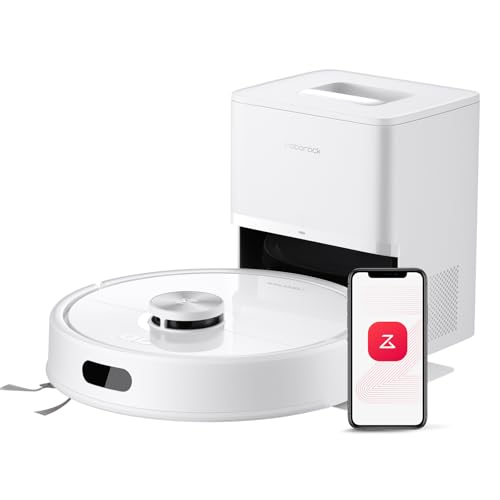
- 7-9 week self-empty dock
- 10000Pa suction with anti-tangle brush
- LiDAR mapping plus vacuum/mop combo
Best For: Shared workspaces needing strong, low-maintenance cleaning
Simple Smart Clean
Roomba 105 Vac LiDAR Robot Vacuum

- 70X power-lifting suction
- ClearView LiDAR navigation
- App scheduling with keep-out zones
Best For: Shared offices needing a simple, vacuum-only cleaner
Budget Combo Pick
Tikom G8000 Max Robot Vacuum and Mop

- 5000Pa suction for daily debris
- Vacuum and mop in one pass
- App, remote, voice, and button control
Best For: Tight-budget shared spaces needing simple combo cleaning
Hands-Free Combo
Roomba 105 Combo AE Self-Empty Robot

- Up to 75 days self-emptying
- Avoids carpets while mopping
- LiDAR navigation with custom modes
Best For: Mixed-floor shared workspaces wanting low-maintenance combo cleaning
Office-Friendly Deep Clean
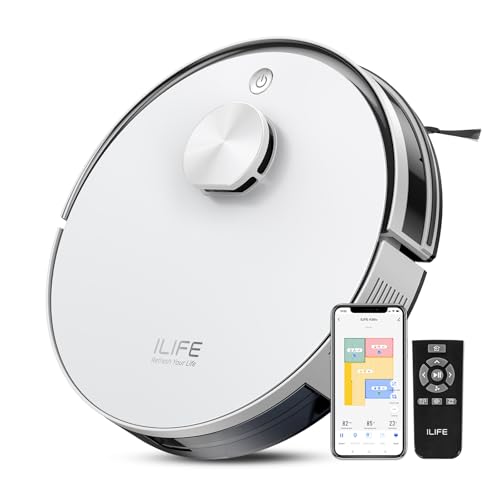
- 10,000Pa suction for crumbs, dust, and pet hair
- LiDAR mapping with no-go zones for shared areas
- Vacuum-only design with app, voice, and remote control
Best For: Shared workspaces that need strong vacuuming without mopping
Hands-Off Wet/Dry Cleaning
Roomba Plus 415X Robot Vacuum & Mop

- Vacuums and mops in one run for mixed messes
- AutoWash Dock washes, heat-dries, and empties debris
- LiDAR and obstacle avoidance help it move around clutter
Best For: Shared spaces that need the most hands-off cleaning automation
Quiet Map-and-Mop Pick
Roborock Q7 L5 Robot Vacuum and Mop

- 8,000Pa suction with vacuum-and-mop cleaning
- LiDAR mapping and multi-level maps for shared spaces
- 60 dB operation and dual anti-tangle brushes
Best For: Workspaces that want quieter mapped cleaning with light mopping
Office-Ready Automated Cleanup
Tikom L8000 Plus Self-Emptying Robot

- 90-day self-emptying dustbag reduces upkeep
- 6000Pa suction with carpet boost
- LiDAR mapping supports 5 saved floor plans
Best For: Shared offices needing hands-off cleaning and mapped zones
Simple Smart Cleaning for Common Areas

- 2-in-1 vacuum and electronically controlled mopping
- 5200Pa suction with 3 intensity levels
- App, remote, and voice control with self-charging
Best For: Smaller shared spaces needing easy, frequent cleaning
High-Capacity Coverage for Busy Floors
MONSGA MR7 PRO Self-Emptying Robot

- 8000Pa suction with automatic carpet boost
- Dual anti-tangle brushes reduce hair wrap-up
- 4L self-emptying base supports up to 90 days
Best For: Larger shared offices needing strong suction and long runtime
Office-Ready Power – Roborock Q7 M5+ Self-Empty Robot Vacuum and Mop
If you want robot vacuums for shared workspaces, this Roborock Q7 M5+ is built around low-maintenance cleaning. Its self-empty dock, LiDAR mapping, and vacuum-and-mop combo make it a practical pick for offices, studios, or coworking areas that need regular floor care with less hands-on upkeep.
Best For: Shared spaces that need strong suction, mapped cleaning, and less frequent dust-bin emptying.
Pros:
- 7-9 weeks of self-emptying can reduce day-to-day maintenance in busy spaces.
- 10000Pa suction and dual anti-tangle design help with dust, pet hair, and carpet cleanup.
- PreciSense LiDAR navigation supports efficient room mapping and cleaning paths.
- Vacuum-and-mop functionality adds an extra layer of floor cleanup.
Cons:
- App support is listed for 2.4GHz Wi-Fi only.
- At 65 dB, it is not the quietest option for very sound-sensitive offices.
Overall, this model fits shared workspaces that benefit from scheduled, mapped cleaning with minimal interruption. It leans more toward convenience and coverage than ultra-quiet operation, but the self-emptying dock makes it easier to keep a routine going.
Simple Smart Clean – Roomba 105 Vac LiDAR Robot Vacuum
For robot vacuums for shared workspaces, the Roomba 105 Vac focuses on straightforward vacuuming with smart navigation. It uses ClearView LiDAR, power-lifting suction, and app-based scheduling to cover rooms in a neat, predictable way without a lot of setup complexity.
Best For: Shared offices that want a simple vacuum-only robot with smart mapping and easy app control.
Pros:
- ClearView LiDAR maps spaces quickly and helps the robot move in neat rows.
- 70X power-lifting suction is aimed at dirt and dust pickup.
- Custom cleaning options let you target rooms, passes, suction levels, and keep-out zones.
- Recharge-and-resume behavior helps it finish larger cleaning tasks.
Cons:
- Vacuum-only design means it does not mop.
- Uses 2.4GHz Wi-Fi for setup and operation.
This is a good fit if your shared workspace needs a dependable floor vacuum more than a full wash-and-vac solution. Its strength is in easy navigation, targeted cleaning, and keeping daily debris under control.
Budget Combo Pick – Tikom G8000 Max Robot Vacuum and Mop
If you need robot vacuums for shared workspaces on a tighter budget, the Tikom G8000 Max covers the basics well. It combines vacuuming and mopping, has 5000Pa suction, and includes app, remote, voice, and button control, which can make it easy to share between different users.
Best For: Budget-conscious work areas that want a slim, easy-to-use vacuum and mop combo.
Pros:
- 5000Pa suction handles dust, pet hair, and debris on hard floors and short- to medium-pile carpet.
- Vacuum-and-mop combo can reduce cleaning time by working in one pass.
- Four control methods make it flexible for different users.
- 2.99-inch slim body and smart sensors help it clean under furniture and around obstacles.
Cons:
- It is less powerful than higher-end options in this roundup.
- Best suited to basic, routine cleaning rather than advanced mapping-heavy workflows.
This model makes sense for smaller shared areas where simplicity and value matter most. It is not the most advanced cleaner here, but it offers a practical mix of suction, mopping, and user-friendly controls.
Hands-Free Combo – Roomba 105 Combo AE Self-Empty Robot
For robot vacuums for shared workspaces that need less frequent emptying, the Roomba 105 Combo AE adds a self-empty dock to a smart vacuum-and-mop setup. It combines LiDAR navigation, strong suction, and automatic carpet detection while mopping, which helps it fit mixed flooring in offices and common areas.
Best For: Shared workspaces with mixed floors that want a self-emptying vacuum and mop combo.
Pros:
- AutoEmpty dock supports up to 75 days of hands-free cleaning.
- 70X power-lifting suction and a multi-surface brush help with dirt pickup.
- Automatically avoids carpets while mopping, which is useful in mixed-floor rooms.
- Custom cleaning settings allow vac only, mop only, or combo modes.
Cons:
- Battery life is listed at 100 minutes, which may be limiting for larger spaces.
- Uses 2.4GHz Wi-Fi for setup and operation.
This is a strong all-around option for offices that want automation without a lot of maintenance. The self-empty dock and carpet-avoidance features are especially helpful in shared environments where flooring changes from room to room.
Office-Friendly Deep Clean – ILIFE A30s Robot Vacuum
For shared workspaces, robot vacuums for shared workspaces need strong pickup, easy zone control, and simple scheduling. The ILIFE A30s fits that use case with LiDAR mapping, no-go zones, and up to 10,000Pa suction in Spot Mode, so it can handle everyday dirt, crumbs, and pet hair on hard floors and carpets.
Best For: Teams that want a straightforward vacuum-only robot with strong suction and app-based control.
Pros:
- Up to 10,000Pa suction helps pull debris from hard floors and carpets.
- LiDAR mapping plus no-go zones make it easier to manage shared areas.
- Dual anti-tangle brushes are useful where pet hair or longer debris is common.
- App, voice, and remote control give multiple ways to start a clean.
Cons:
- Vacuum-only design, so it does not mop spills or sticky messes.
- 2.4GHz WiFi support only may be limiting in some office networks.
- At 72 dB, it is not the quietest option for meetings in progress.
The A30s is a practical choice if your workspace mainly needs dependable dry debris pickup and room-by-room control. Its mapping and scheduling features are especially helpful when different areas need different cleaning rules.
Hands-Off Wet/Dry Cleaning – Roomba Plus 415X Robot Vacuum & Mop
When you need robot vacuums for shared workspaces to handle both dry debris and tracked-in messes, the Roomba Plus 415X is built for low-maintenance cleaning. It vacuums and mops in one run, then returns to a dock that empties debris for up to 90 days, washes mop pads, and heat-dries them after each use.
Best For: Busy spaces that want a largely hands-off vacuum-and-mop combo with strong dock automation.
Pros:
- Vacuum-and-mop combo handles crumbs, dust, spills, and everyday floor messes.
- AutoWash Dock self-cleans and heat-dries mop pads to help prevent buildup and odor.
- Up to 90-day self-emptying reduces how often staff need to empty the bin.
- Obstacle recognition and LiDAR mapping help it navigate cords, shoes, and toys.
Cons:
- More complex dock setup than a basic robot vacuum.
- Its wet/dry design may be more than you need if you only want dry pickup.
- At 24.1 pounds, the overall system is heavier and less compact than simpler models.
This is the most maintenance-light option in the group if your workspace has frequent spills or mixed floor messes. The self-cleaning dock makes it especially appealing where cleaning tasks need to happen often without adding more work for staff.
Quiet Map-and-Mop Pick – Roborock Q7 L5 Robot Vacuum and Mop
If you want robot vacuums for shared workspaces that balance performance with lower noise, the Roborock Q7 L5 is a strong fit. It offers 8,000Pa suction, LiDAR navigation, and multi-level mapping, plus vacuum-and-mop functionality for maintaining hard floors and carpets in one routine.
Best For: Offices and shared rooms that want quiet cleaning, smart mapping, and light mopping in one robot.
Pros:
- 8,000Pa suction is designed to lift dust, hair, and debris from carpets and cracks.
- LiDAR navigation and multi-floor mapping support efficient room-by-room cleaning.
- Dual anti-tangle brushes help reduce maintenance around hair and stringy debris.
- 60 dB noise level makes it a quieter option for active shared spaces.
Cons:
- Integrated 270 ml tank means the vacuum and mop setup is compact, not high-capacity.
- Requires 2.4GHz WiFi, which may need network adjustments in some offices.
- It uses a removable mop pad rather than a full self-washing dock system.
The Q7 L5 is a practical middle ground for workplaces that want a smart, quieter robot without stepping up to a full self-cleaning dock. Its mapping, custom zones, and low-noise operation make it easy to fit into routine office cleaning.
Office-Ready Automated Cleanup – Tikom L8000 Plus Self-Emptying Robot
If you’re comparing robot vacuums for shared workspaces, the Tikom L8000 Plus is built for low-maintenance cleaning in busy areas with hard floors, carpets, and mixed surfaces. Its self-emptying base, LiDAR mapping, and app-based zone controls make it easier to keep common rooms tidy without constant supervision.
Best For: Shared offices or coworking spaces that need longer hands-free cleaning and mapped room-by-room control.
Pros:
- 3L self-emptying dustbag supports up to 90 days of hands-free debris collection.
- 6000Pa suction boosts automatically on carpets for stronger pickup.
- 360° LiDAR navigation creates maps and supports up to 5 saved floor plans.
- App controls let you set no-go zones, no-mop zones, schedules, and room-specific cleaning.
Cons:
- In mop mode, you need to remove the mop holder or set a no-go zone to avoid carpets.
- Best suited to indoor cleaning only.
For a shared workspace, the main advantage here is reduced upkeep: it can clean, map, and empty itself with less staff involvement. The combination of strong suction and smart routing makes it a practical pick when you want predictable coverage across multiple rooms.
Simple Smart Cleaning for Common Areas – ROPVACNIC S1 Robot Combo
For robot vacuums for shared workspaces, the ROPVACNIC S1 focuses on straightforward automation and flexible cleaning control. Its 2-in-1 vacuuming and mopping setup, app and voice commands, and obstacle avoidance make it a sensible option for common areas with hard floors, low-pile carpets, and everyday foot traffic.
Best For: Smaller shared spaces that need easy scheduling, basic automation, and frequent floor refreshing.
Pros:
- 2-in-1 vacuuming and electronically controlled mopping for daily floor upkeep.
- 5200Pa suction and 3-level intensity settings help handle dust, crumbs, and dirt.
- App, remote, and voice control support Alexa and Google Assistant.
- Self-charging with obstacle avoidance reduces day-to-day oversight.
Cons:
- Runtime is listed at 120 minutes, which may be limiting for larger areas.
- Designed mainly for hardwood, hard floors, and low-pile carpets.
This is a practical everyday cleaner if your shared workspace needs regular touch-ups more than deep, all-day coverage. It keeps controls simple and adds enough automation to fit into a busy routine without much management.
High-Capacity Coverage for Busy Floors – MONSGA MR7 PRO Self-Emptying Robot
When you need robot vacuums for shared workspaces with more floor area, the MONSGA MR7 PRO brings strong suction, self-emptying convenience, and smart mapping into one package. It is designed for hard floors, carpet, and hardwood, with features that help reduce maintenance while keeping cleaning routes organized and predictable.
Best For: Larger shared offices or multi-room spaces that need longer runtime and stronger pickup.
Pros:
- 8000Pa suction handles crumbs, pet fur, and carpet debris with automatic carpet boost.
- Dual anti-tangle design helps reduce hair wrap-up and edge buildup.
- 4L self-emptying dust bag supports up to 90 days of low-maintenance cleaning.
- LiDAR mapping, 5-map memory, and app/voice control suit multi-room use.
Cons:
- 2.4GHz Wi-Fi only for app connectivity.
- Mopping is best used with attention on real wood floors to avoid excess moisture.
For shared spaces that need more than a basic robot vacuum, this model offers the mix of runtime, suction, and automation that can make routine cleaning easier to manage. Its map memory and self-emptying base are especially useful when several rooms or floors need regular coverage.
How We Picked the Best Robot Vacuums for Shared Workspaces
We focused on models that fit the realities of shared environments: frequent foot traffic, mixed debris, and limited time for upkeep. Priority went to reliable navigation, strong pickup on hard floors and low-pile carpet, obstacle avoidance, and features that reduce staff intervention such as self-emptying docks and app-based scheduling.
We also looked at noise, mapping accuracy, and maintenance demands. In Robot Vacuums for Shared Workspaces, a slightly more expensive unit can be the better value if it empties itself, avoids common clutter, and runs consistently without constant resets.
Quick Comparison
For the lightest-touch maintenance, self-emptying models are the easiest fit. If your office has mostly hard floors and a few rugs, a vacuum-first robot with strong suction and LiDAR mapping may be enough. For spaces that see spills or tracked-in dust, a vacuum-and-mop combo can help, but only if the mop system is simple to manage and won’t create extra workflow.
Key Buying Factors for Robot Vacuums for Shared Workspaces
Navigation and Mapping
LiDAR navigation is a major advantage because it helps the robot move more predictably around desks, chairs, and open meeting areas. Mapping and no-go zones matter when you need to protect cords, reception areas, or private rooms.
Maintenance and Dust Handling
Self-emptying bins, large dust capacity, and tangle-resistant brushes reduce how often someone has to service the machine. In a shared workspace, that convenience often matters more than raw suction alone.
Noise and Scheduling
Choose quieter models and set cleaning times for off-hours, lunch breaks, or low-traffic windows. Even a capable robot can become disruptive if it runs during meetings or client visits.
Floor Coverage and Surface Mix
Look at how the robot handles hard floors, entry mats, and carpet transitions. Offices with mostly smooth flooring can prioritize coverage and runtime, while mixed-surface spaces should favor stronger suction and better brush design.
Who Should Buy Which Robot Vacuums for Shared Workspaces?
If you manage a small office or clinic, a straightforward robot vacuum with app control and good mapping may be enough. For larger coworking spaces, a self-emptying model is usually the smarter choice because it lowers daily upkeep. If your shared workspace has frequent spills or tracked-in dirt, consider a vacuum-and-mop combo with simple tank and pad maintenance. Teams that want the least hands-on involvement should focus first on self-emptying capacity, dependable navigation, and easy scheduling.