
The best subwoofers for music add weight, depth, and realism without overwhelming vocals, instruments, or the rest of your listening space. The right choice depends on your room, speakers, listening habits, and how much control you want over bass response.
This roundup compares 10 options across home audio, desktop listening, soundbar systems, and compact multimedia setups, with practical guidance to help you choose a subwoofer that fits your system and budget.
Best 10 Subwoofers for Music Picks for 2026
Compact Music Upgrade
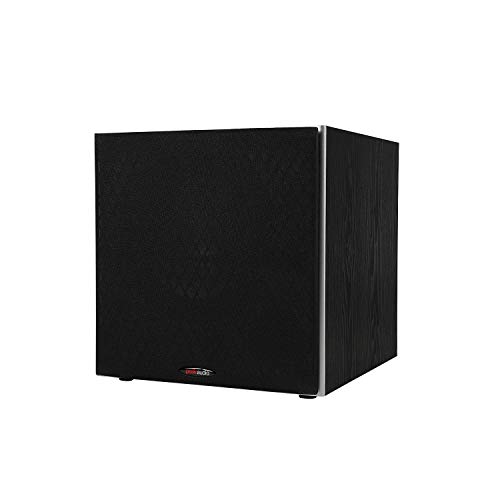
- 10-inch powered subwoofer
- Up to 100 watts of power
- 80–160 Hz adjustable crossover
Best For: Small- to mid-size rooms and wired home audio systems
All-in-One Surround Pick

- 5.1-channel Dolby Atmos system
- 300-watt peak output with wired subwoofer
- App EQ and Bluetooth 5.4
Best For: Music, movies, gaming, and simple soundbar setups
High-Output Room Filler

- 12-inch front-firing woofer
- Up to 400 watts dynamic power
- Low-pass crossover and phase control
Best For: Large rooms and powerful wired music or home theater systems
Wireless Soundbar Companion
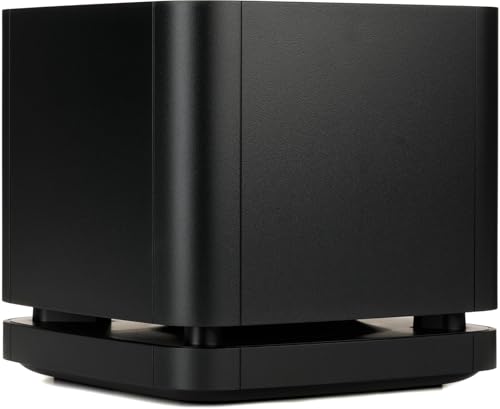
- Compact 10-inch cube design
- Wireless Bose Soundbar connection
- Adds room-filling bass
Best For: Compatible Bose Soundbar owners seeking compact wireless bass
Deep-Bass Home Theater Pick

- 10-inch long-throw driver
- Ported MDF cabinet
- Automatic signal-sensing power
Best For: Music and movie listeners wanting room-filling bass
Tight-Bass Home Theater Option
Yamaha NS-SW100BL 10-Inch Subwoofer

- 10-inch cone woofer
- Twisted flare port
- Advanced YST II technology
Best For: Home theater systems needing controlled low-end output
Best All-in-One TV Upgrade
Saiyin Sound Bar with Subwoofer
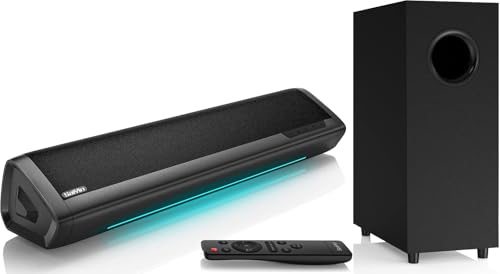
- Dedicated subwoofer for fuller bass
- Bluetooth, optical, and AUX inputs
- Includes cables, remote, and wall-mount hardware
Best For: Everyday music, TV, and gaming in a compact setup
Best for Music Production

- 8-inch driver reaches down to 30 Hz
- Crossover controls aid monitor integration
- Bluetooth, balanced TRS, RCA, and aux inputs
Best For: Home studios and detailed music listening
Best Wired Home Theater Value

- 120-watt soundbar with wired subwoofer
- Bluetooth 5.3, ARC, optical, and AUX
- Desktop or wall-mount installation
Best For: Simple bass enhancement for TVs, music, and gaming
Compact Music Upgrade – Polk Audio PSW10
The Polk Audio PSW10 is a practical powered option for shoppers seeking subwoofers for music in a small- to mid-size room. Its 10-inch woofer, 50-watt RMS amplifier, and adjustable crossover are designed to add bass depth and punch while integrating with an existing wired system.
Best For: Small- to mid-size rooms and listeners who want an easy wired bass upgrade for home audio or home theater.
Pros:
- 10-inch Dynamic Balance woofer with a directed port for added bass depth.
- Built-in amplifier provides up to 100 watts of power.
- Continuously variable 80–160 Hz crossover and phase toggle support system integration.
- Includes speaker- and line-level inputs plus speaker-level outputs.
Cons:
- Wired connectivity requires a cable connection to the system.
- Its 10-inch, 100-watt design is aimed more at compact and medium rooms than very large spaces.
The PSW10 is a straightforward choice when you want fuller low frequencies without a complicated setup. Its compact floor-standing design and flexible connection options make it particularly useful for upgrading an established stereo or home theater system.
All-in-One Surround Pick – ULTIMEA Poseidon M60
The ULTIMEA Poseidon M60 is a complete 5.1-channel soundbar system that includes a wired subwoofer, making it a broader solution than a standalone bass speaker. For shoppers comparing subwoofers for music alongside movie and gaming use, it combines a 300-watt system output, Dolby Atmos, app-based EQ controls, and a 45 Hz–18 kHz frequency response.
Best For: Buyers who want a simple soundbar-based setup for music, movies, gaming, and improved dialogue clarity.
Pros:
- Includes a dedicated wired wooden subwoofer with an 18 mm high-excursion driver.
- 5.1-channel Dolby Atmos system uses five built-in speakers and side-firing drivers.
- App offers a 10-band graphic EQ, 121 presets, and adjustable surround levels.
- HDMI eARC supports lossless Dolby Atmos audio, while Bluetooth 5.4 supports wireless streaming.
Cons:
- The subwoofer is part of an integrated soundbar system rather than a standalone upgrade.
- The included subwoofer uses a wired connection.
- Dolby Atmos and surround features may be more than listeners seeking only stereo music bass need.
The Poseidon M60 makes sense when convenience and versatility matter more than building a component-based system. Its dedicated subwoofer and extensive tuning controls give music playback added low-end support while also covering home theater and gaming.
High-Output Room Filler – Klipsch R-12SW
The Klipsch R-12SW is a large, wired subwoofer for listeners who want substantial low-frequency output from a home audio system. Its 12-inch front-firing woofer and all-digital amplifier deliver up to 400 watts of dynamic power, making it a strong candidate among subwoofers for music and movies.
Best For: Larger home theater or music setups that have room for a substantial floor-standing subwoofer.
Pros:
- 12-inch copper-spun front-firing woofer is built for powerful bass.
- All-digital amplifier delivers up to 400 watts of dynamic power.
- Low-pass crossover and phase control help tailor system integration.
- Line/LFE inputs support compatibility with most receivers.
Cons:
- The 20-by-20-by-17.75-inch cabinet requires significant floor space.
- Connectivity is wired rather than wireless.
- Its high-output design may be excessive for compact rooms.
The R-12SW is the better fit when impact and headroom take priority over a small footprint. Its crossover, phase control, and receiver-friendly inputs provide useful setup flexibility, while the 12-inch driver is suited to a more powerful system.
Wireless Soundbar Companion – Bose Bass Module 500
The Bose Bass Module 500 is a compact wireless subwoofer designed specifically to pair with compatible Bose Soundbars. For shoppers considering subwoofers for music in a streamlined setup, its 10-inch cube enclosure offers an easy placement option without adding speaker cable between the module and soundbar.
Best For: Bose Soundbar owners who want more low-end impact in a compact, easy-to-place package.
Pros:
- Wireless connection supports flexible placement with compatible Bose Soundbars.
- Compact 10-by-10-by-10-inch form factor is easy to hide or position discreetly.
- Designed to add room-filling bass to Bose Smart and Ultra Soundbars.
Cons:
- It is intended for use with Bose Soundbars rather than general-purpose receiver systems.
- Wireless compatibility is centered on the Bose ecosystem.
- Its compact design may not suit listeners seeking the output of a larger standalone subwoofer.
The Bass Module 500 is a convenient ecosystem-focused upgrade rather than a universal subwoofer. If you already use a compatible Bose Soundbar, its compact wireless design can add bass without the setup and cable demands of a traditional component system.
Deep-Bass Home Theater Pick – Fluance DB10
Fluance DB10 10-inch Low Frequency Ported Front Firing Powered Subwoofer for Home Theater & Music
Check Price On AmazonFor listeners seeking subwoofers for music with substantial low-end impact, the Fluance DB10 combines a 10-inch long-throw driver with a high-performance amplifier. Its ported wood cabinet is designed for controlled, warm bass in music and home theater setups.
Best For: Music and movie listeners who want room-filling bass from a full-size wired subwoofer.
Pros:
- 10-inch long-throw driver supports deep bass and precise reproduction.
- Ported MDF cabinet is designed for warm, distortion-free sound.
- Automatic power-on detects an audio signal and helps save energy.
- Includes a two-year manufacturer’s labor and parts warranty.
Cons:
- Wired connectivity only, with no wireless communication technology.
- Its 24.7-pound cabinet requires dedicated floor or tabletop space.
- Designed primarily for home theater, movies, and music rather than vehicle use.
The DB10 is a strong choice when musical bass extension and cinematic impact matter more than compact size or wireless convenience. Its 120-watt output and substantial enclosure make it better suited to dedicated listening spaces than small desktop systems.
Compact Desktop Value – Logitech Z313 2.1 Speaker System
The Logitech Z313 is a compact 2.1 speaker system for listeners who want an accessible entry point among subwoofers for music. Its wired subwoofer, 25-watt RMS system output, and convenient control pod make it suited to personal desktop listening.
Best For: Desktop users who want a simple, compact speaker system with dedicated low-end support.
Pros:
- Compact subwoofer fits personal listening spaces more easily than larger home theater models.
- 25 watts RMS provides a straightforward powered 2.1 setup.
- Convenient control pod makes everyday operation simple.
- Auxiliary connectivity works with desktops, MP3 players, and televisions.
Cons:
- Lower system output than the larger powered subwoofers in this roundup.
- Uses a wired subwoofer and 3.5mm auxiliary connection rather than a dedicated home theater connection.
- The supplied specifications identify it primarily as a computer speaker system.
The Z313 makes the most sense when space, simplicity, and price-conscious desktop listening are priorities. It is less appropriate for filling a large room, but its compact 2.1 format adds dedicated bass to everyday computer or personal audio.
Tight-Bass Home Theater Option – Yamaha NS-SW100BL 10-Inch Subwoofer
The Yamaha NS-SW100BL is a floor-standing powered subwoofer aimed at home theater and music systems. Its 10-inch cone woofer, Advanced YST II technology, and twisted flare port are designed to deliver clear, tight bass without requiring a wireless setup.
Best For: Home theater owners who want a stylish 10-inch subwoofer with an emphasis on tight, controlled bass.
Pros:
- 10-inch cone woofer provides dedicated low-frequency output.
- Twisted flare port is designed to contribute to clear and tight bass.
- Advanced YST II technology supports the powered subwoofer design.
- Floor-standing cabinet offers a stylish addition to a room.
Cons:
- Large 26.5-pound cabinet needs more floor space than a compact desktop subwoofer.
- Wired connectivity may be less convenient than a wireless solution.
- Supplied frequency-response specification is listed as 18–80 hertz, so integration and placement remain important.
The NS-SW100BL is a practical match for a conventional home theater or music system when controlled bass and a room-friendly appearance are priorities. Its full-size cabinet is less suitable for cramped desks or highly portable setups.
Best All-in-One TV Upgrade – Saiyin Sound Bar with Subwoofer
If you want subwoofers for music without building a separate stereo system, this Saiyin soundbar package combines a dedicated subwoofer with a compact soundbar. Its three equalizer modes, Bluetooth, optical, and auxiliary inputs make it a practical choice for everyday music, TV, and gaming.
Best For: TV listeners who also want fuller bass for music and gaming in a compact setup.
Pros:
- Dedicated subwoofer adds deeper, fuller bass.
- Supports Bluetooth, optical, and auxiliary connections.
- Includes optical and auxiliary cables, remote, and wall-mount hardware.
- Three equalizer modes help tailor sound for music, movies, or news.
Cons:
- The subwoofer must connect to the soundbar’s SUB OUT port to work.
- The included remote is not compatible with universal or TV remotes.
- It is a soundbar system rather than a dedicated music-production subwoofer.
This is a convenient, accessible option for casual music listening when you want stronger low end without adding separate speakers and an amplifier. Its bundled accessories and multiple inputs make setup straightforward.
Best for Music Production – PreSonus Eris Sub 8BT
The PreSonus Eris Sub 8BT is the most purpose-built option here for subwoofers for music. Its front-firing 8-inch driver, 30 Hz low-end extension, crossover controls, balanced inputs, and room-tuning adjustments are designed for studio monitoring and detailed music listening.
Best For: Home studios, content creators, and listeners using compact studio monitors.
Pros:
- Extends low frequencies down to 30 Hz.
- Highpass and lowpass controls help integrate it with main monitors.
- Offers Bluetooth 5.0, balanced TRS, RCA, and front-panel aux connections.
- Includes adjustable high- and low-frequency tuning and a headphone output.
Cons:
- Its studio-focused controls may be more than casual listeners need.
- Bluetooth range is listed as 10 meters.
- It is intended for floor-standing placement rather than wall mounting.
For accurate low-end monitoring, this is the strongest match of the three products. The crossover and tuning controls give you more control over integration, while Bluetooth and multiple wired inputs keep it useful for both production and general listening.
Best Wired Home Theater Value – Maraawa 120W Sound Bar
This Maraawa system is a practical pick for shoppers who want subwoofers for music alongside TV and movie playback. The 120-watt soundbar uses a wired subwoofer for consistent synchronization, while Bluetooth 5.3, ARC, optical, and AUX connections support a range of home entertainment devices.
Best For: Living rooms, bedrooms, and gaming setups needing simple wired bass enhancement.
Pros:
- 120-watt output with a dedicated wired subwoofer.
- Bluetooth 5.3, ARC, optical, and AUX connectivity.
- Wired subwoofer helps maintain stable audio synchronization.
- Can sit on a desktop or be wall-mounted with included hardware.
Cons:
- The wired subwoofer requires nearby cable placement.
- The supplied details do not specify a low-frequency extension rating.
- It is designed primarily as a TV soundbar rather than a studio monitor subwoofer.
If easy setup and broad device compatibility matter most, this system offers a straightforward way to add bass to music, shows, movies, and games. Its wired design favors dependable synchronization over a fully wireless installation.
How We Picked the Best Subwoofers for Music
We focused on powered subwoofers and complete speaker systems that can add useful low-frequency output to music-focused setups. Our comparison considers driver size, amplifier power, cabinet design, connectivity, placement flexibility, system compatibility, and overall value. We included compact models for desks and small rooms, as well as larger units suited to stereo systems and home theaters.
Because bass preferences vary, no single model is ideal for every listener. A smaller subwoofer may sound tighter and integrate more easily, while a larger cabinet can deliver greater impact and extension when the room and main speakers can support it.
Quick Comparison
| Best For | What to Look For |
|---|---|
| Desktop listening | Compact enclosure, simple controls, and low-volume clarity |
| Small rooms | 8- or 10-inch driver with adjustable crossover and phase |
| Stereo music systems | Line-level connectivity, controlled output, and flexible placement |
| Home theater and music | Higher output, deeper extension, and strong room-filling performance |
| Soundbar setups | Wireless or matching connectivity and straightforward installation |
Key Buying Factors for Subwoofers for Music
Driver Size and Output
Eight- to 10-inch models are often a practical balance for music, especially in bedrooms, offices, and medium-sized rooms. Twelve-inch subwoofers can produce more powerful low bass, but they need sufficient space and careful placement to avoid sounding excessive.
Integration Controls
Look for adjustable crossover and volume controls so the subwoofer blends with your main speakers instead of drawing attention to itself. Phase adjustment is also useful when placement causes bass cancellation or uneven response.
Connections and Compatibility
Check whether your receiver, amplifier, computer, or soundbar offers the required input. RCA and subwoofer outputs are common in stereo and home theater equipment, while soundbar systems may require a matching wireless subwoofer. Bluetooth is convenient, but it does not replace checking the full signal path and supported formats.
Room and Placement
Room size strongly affects bass performance. Place the subwoofer near the front speakers to begin, then test several positions. Avoid hiding it inside enclosed furniture, and leave room for ventilation around the amplifier panel.
Who Should Buy Which Subwoofers for Music?
Choose a compact desktop or multimedia system if you listen at a desk, use a computer as your main source, or need an affordable all-in-one solution. These setups prioritize convenience and modest bass over maximum extension.
Choose a 10-inch powered subwoofer for a balanced upgrade to bookshelf speakers or a small-to-medium stereo system. This is typically the most versatile category for music listeners who want fuller bass without a large footprint.
Choose a 12-inch model if you have a larger room, enjoy bass-heavy genres, or want music and movie performance from the same system. Make sure your main equipment provides a compatible subwoofer connection and enough space for proper placement.
Choose a soundbar package when simplicity matters most. Matching components generally make setup easier, but they may offer fewer integration controls than a standalone subwoofer paired with a traditional stereo system.