
The best wireless DJ headphones give you the freedom to move without sacrificing timing, detail, or dependable cue monitoring. The right model can handle booth work, home production, practice sessions, and everyday listening with fewer cable limitations.
We compared these 10 options across wireless performance, latency, sound quality, comfort, connectivity, and DJ-focused features to help you choose a practical fit for your setup and budget.
Best 10 Wireless Dj Headphones Picks for 2026
Most Versatile
PUPGSIS PG-MXPRO Wireless DJ Headphones

- 20ms 2.4GHz low-latency monitoring
- Up to 60 hours of Bluetooth playtime
- 2.4GHz, Bluetooth, and wired connections
Best For: Flexible studio, DJ, gaming, and home setups
Best for New DJs

- Wired monitoring plus Bluetooth listening
- Swivel earcups for one-ear cueing
- Foldable and designed for approachable DJ use
Best For: Beginning DJs and everyday wireless listening
Best Wired Alternative

- 45mm drivers with extended frequency response
- Around-ear sound isolation for loud environments
- Swiveling cups and detachable cable
Best For: Wired studio monitoring and production
Best Premium Wireless Monitoring
AlphaTheta HDJ-F10 Wireless DJ Headphones

- 9ms SonicLink wireless monitoring
- ANC and transparency modes
- SonicLink, Bluetooth, and wired fallback
Best For: Professional DJs needing low-latency wireless booth monitoring
Long-Play DJ Value

- Up to 72 hours of wireless playback
- Wired 3.5mm and 6.35mm connectivity
- Foldable over-ear design with audio sharing
Best For: Budget-conscious DJs and long listening sessions
Pro Wireless Monitoring

- Includes SonicLink transmitter for wireless booth monitoring
- Claimed 9 ms latency for responsive mixing
- ANC, transparency mode, and rugged construction
Best For: Serious DJs seeking low-latency wireless monitoring
Hi-Res Wireless Flexibility

- LDAC wireless audio with 40mm dynamic drivers
- Includes 3-meter coiled 3.5mm/6.35mm cable
- Up to 72 hours of Bluetooth playback
Best For: DJs and creators wanting wireless and wired versatility
Reliable Wired Pick
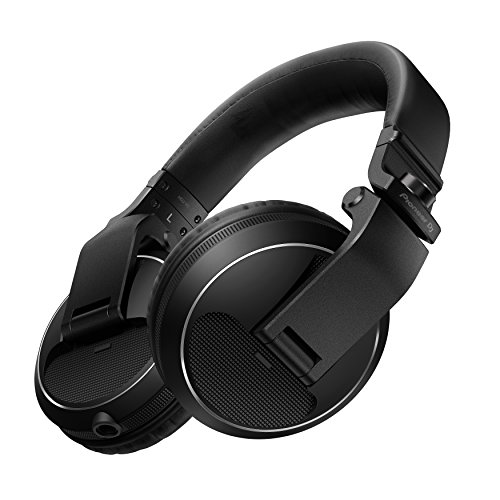
- 40 mm drivers for clear monitoring
- Swivel earcups for one-ear checks
- Durable, foldable wired design
Best For: Beginners and DJs who prioritize dependable wired monitoring
Low-Latency Wireless Pick

- Ultra-low-latency W+ Link audio
- 25-plus hours of battery playback
- Modular, customizable construction
Best For: Cable-free DJ mixing and extended performance sessions
Most Versatile – PUPGSIS PG-MXPRO Wireless DJ Headphones
If you need wireless DJ headphones that can cover studio work, gaming, and everyday listening, the PUPGSIS PG-MXPRO offers three connection options. Its 2.4GHz mode is designed for low-latency monitoring, while Bluetooth and wired connections add flexibility for other equipment and situations.
Best For: DJs, producers, and gamers who want broad connectivity, long battery life, and portable over-ear monitoring.
Pros:
- 20ms latency in 2.4GHz mode for responsive monitoring
- Up to 60 hours in Bluetooth mode and 30 hours with the 2.4GHz dongle
- Supports 2.4GHz, Bluetooth 5.3, and AUX connections, with 3.5mm and 6.35mm compatibility
- Rotating ear cups, foldable construction, and included storage case support mobile use
Cons:
- The 2.4GHz mode has shorter battery life than Bluetooth mode
- Sound isolation is listed rather than active noise cancellation
The PG-MXPRO is a particularly adaptable choice for buyers who move between DJ equipment, computers, and mobile devices. Its combination of low-latency wireless performance, wired compatibility, and extended battery life makes it well suited to varied setups.
Best for New DJs – Pioneer DJ HDJ-CUE1BT
The Pioneer DJ HDJ-CUE1BT is a practical entry point for shoppers seeking wireless DJ headphones from an established DJ brand. It combines Bluetooth listening with a wired connection for monitoring, and its swivel earcups make one-ear cueing straightforward behind the decks.
Best For: New DJs who want approachable headphones for learning to mix, commuting, and everyday wireless listening.
Pros:
- Bluetooth supports convenient wireless listening away from the booth
- Wired operation is intended for accurate DJ monitoring
- Swivel earcups simplify one-ear monitoring
- Foldable design is convenient for travel and storage
Cons:
- Uses on-ear cups rather than an over-ear design
- Bluetooth 4.2 is an older wireless standard
- It is not water resistant
For beginners, the HDJ-CUE1BT keeps the feature set focused on the essentials: wired cueing, wireless everyday use, and easy portability. It is a sensible choice when you want a straightforward pair of wireless DJ headphones without moving immediately into flagship-level features.
Best Wired Alternative – Audio-Technica ATH-M50X
The Audio-Technica ATH-M50X is not wireless, but it remains a strong option for shoppers comparing wireless DJ headphones with dependable wired studio monitoring. Its large drivers, around-ear design, detachable cable, and swiveling earcups prioritize detailed listening and practical booth use.
Best For: Producers, DJs, and engineers who prioritize wired sound quality, isolation, and durable studio functionality over wireless convenience.
Pros:
- 45mm drivers provide clarity across a 20Hz–28,000Hz range
- Around-ear cups help isolate sound in loud environments
- 90-degree swiveling earcups support one-ear monitoring
- Detachable cable and foldable design improve studio and travel practicality
Cons:
- It is wired and does not provide Bluetooth or wireless operation
- No active noise cancellation is listed
- It is not water resistant
The ATH-M50X makes the most sense when consistent wired monitoring matters more than freedom from cables. Consider it alongside wireless DJ headphones if you want a proven studio reference option for mixing, production, or backup use.
Best Premium Wireless Monitoring – AlphaTheta HDJ-F10 Wireless DJ Headphones
The AlphaTheta HDJ-F10 is aimed at DJs who want wireless monitoring with minimal delay. Its SonicLink system is rated at 9ms latency, while Bluetooth, wired fallback, active noise cancellation, and transparency modes make it a more feature-rich choice than basic wireless DJ headphones.
Best For: Working DJs who want fast wireless booth monitoring, noise-control modes, and a durable over-ear design.
Pros:
- SonicLink provides 9ms wireless monitoring latency
- 40mm PEEK drivers are designed for high-resolution audio
- Includes SonicLink, Bluetooth, and wired connection options
- Active noise cancellation, transparency mode, and MIL-STD-810H shock testing add versatility
Cons:
- SonicLink battery life is listed at 9 hours, shorter than Bluetooth battery life
- At 2.2 pounds, the listed weight may feel substantial for some users
- Its advanced feature set may be more than casual listeners need
The HDJ-F10 is the strongest fit for DJs who specifically value very low wireless latency and flexible noise control. Its multiple listening modes and rugged construction make it suitable for demanding booth, travel, and preparation workflows.
Long-Play DJ Value – OneOdio A70
The OneOdio A70 is a practical choice if you want wireless DJ headphones with extensive battery life and flexible wired connectivity. Bluetooth playback lasts up to 72 hours, while the included 3.5mm-to-6.35mm and 3.5mm-to-3.5mm cables support DJ gear, studio equipment, and everyday listening.
Best For: Budget-conscious DJs, studio monitoring, travel, and listeners who value long battery life.
Pros:
- Up to 72 hours of wireless playback, with wired use available when the battery is depleted.
- 40mm drivers, a 20Hz-40kHz frequency range, and sound-isolating over-ear construction.
- Foldable, rotatable design with memory-cotton padding and a 6.35mm adapter included.
- Supports audio sharing and includes a built-in microphone for calls.
Cons:
- Passive sound isolation does not provide active noise cancellation.
- Not water resistant.
- Bluetooth range is listed at 10 meters.
The A70 stands out for dependable all-day battery life and broad wired compatibility. It is a sensible wireless DJ headphone pick for users who want useful studio features without giving up simple everyday Bluetooth listening.
Pro Wireless Monitoring – AlphaTheta HDJ-F10-TX
The AlphaTheta HDJ-F10-TX is a premium wireless DJ headphone system that includes the HP-TX01 SonicLink transmitter. It is designed for cable-free booth monitoring with claimed latency as low as 9 ms, while Bluetooth, wired fallback, noise cancellation, and transparency modes broaden its everyday usefulness.
Best For: DJs who want low-latency wireless booth monitoring and a rugged, feature-rich headphone system.
Pros:
- Bundled SonicLink transmitter enables wireless mixer monitoring out of the box.
- Claimed 9 ms latency is intended to minimize noticeable monitoring delay.
- 40mm PEEK drivers and insulation are designed for detailed monitoring in loud booths.
- Offers active noise cancellation, transparency, Bluetooth, and water resistance.
Cons:
- The supplied specifications list no headphone jack, limiting conventional wired fallback options.
- At 2.3 pounds, it is substantially heavier than many over-ear headphones.
- SonicLink battery life is listed at 9 hours, shorter than Bluetooth playback.
The HDJ-F10-TX is the most specialized option here, prioritizing wireless booth performance over simplicity. Its transmitter, low-latency design, and noise-control features make it appealing for serious DJ setups, though the weight and system-specific approach deserve consideration.
Hi-Res Wireless Flexibility – OneOdio A70 Gen 2
The OneOdio A70 Gen 2 combines wireless DJ headphone convenience with Hi-Res LDAC support and a long coiled cable for wired monitoring. Its 40mm drivers, 72-hour battery, and included 3.5mm and 6.35mm connections make it suitable for music production, practice, gaming, and everyday listening.
Best For: DJs and music makers who want LDAC wireless audio plus straightforward wired monitoring.
Pros:
- LDAC, AAC, and SBC support with 40mm drivers and a 20Hz-40kHz frequency range.
- Includes a 3-meter coiled cable with both 3.5mm and 6.35mm plugs.
- Up to 72 hours of Bluetooth playback and a stated Bluetooth 6.0 range of up to 30 meters.
- Lightweight 270g build, over-ear cushions, multipoint pairing, and audio sharing.
Cons:
- Passive noise isolation is not the same as active noise cancellation.
- The supplied notes do not identify water resistance.
- LDAC benefits depend on a compatible source device.
The A70 Gen 2 is a versatile middle ground for buyers comparing wireless DJ headphones: it adds higher-resolution Bluetooth support while retaining the wired connections needed for controllers and instruments. Its long battery life and included case also suit portable use.
Reliable Wired Pick – Pioneer DJ HDJ-X5
The Pioneer DJ HDJ-X5 is a practical choice for DJs who want dependable monitoring without relying on wireless audio. Its 40 mm drivers, passive noise isolation, and swivel earcups support clear cueing and quick one-ear checks during practice or live use.
Best For: Beginners and DJs who prefer durable, wired wireless dj headphones alternatives for regular practice and gigs.
Pros:
- Clear, accurate sound from 40 mm dynamic drivers
- Passive noise isolation helps maintain focus in loud rooms
- Swivel earcups make one-ear monitoring easy
- Foldable, durable design with comfortable ergonomic earpads
Cons:
- Connectivity is primarily wired rather than cable-free
- At 2.1 pounds, it is heavier than some competing DJ models
The HDJ-X5 emphasizes straightforward DJ functionality and durability. Choose it if reliable wired monitoring, simple controls, and one-ear cueing matter more than wireless convenience.
Low-Latency Wireless Pick – AIAIAI TMA-2 DJ Wireless
The AIAIAI TMA-2 DJ Wireless is designed for DJs who want cable-free mixing with ultra-low-latency W+ Link audio. It also supports Bluetooth listening, offers more than 25 hours of battery playback, and uses a modular construction that can be customized or upgraded.
Best For: Performers seeking wireless dj headphones for low-latency mixing, long sessions, and flexible everyday listening.
Pros:
- Ultra-low-latency wireless audio supports precision beatmatching
- More than 25 hours of battery playback
- Strong sound isolation with memory-foam on-ear cushions
- Modular design allows parts to be customized or replaced
Cons:
- Not water resistant
- Bluetooth range is listed at 10 meters
- On-ear fit may not suit listeners who prefer circumaural headphones
The TMA-2 DJ Wireless is the most performance-focused option here for cable-free use. Its W+ Link connection, long battery life, and modular build make it especially appealing when wireless freedom must not compromise DJ control.
Long-Battery Everyday Pick – Audio-Technica ATH-M20xBT
The Audio-Technica ATH-M20xBT combines Bluetooth convenience with a familiar over-ear design and up to 60 hours of battery life. Its 40 mm drivers, collapsible build, and included detachable cable make it a flexible option for casual listening and portable use.
Best For: Buyers who want wireless dj headphones for everyday listening, travel, and occasional DJ-related use.
Pros:
- Up to 60 hours of battery life
- 40 mm drivers tuned for detail and midrange definition
- Over-ear design helps with sound isolation
- Collapsible design and detachable cable improve portability
Cons:
- Supplied notes list no dedicated noise-control feature
- Not water resistant
- Its stated primary use is gaming rather than professional DJ work
The ATH-M20xBT is a sensible hybrid for listeners who value battery longevity and Bluetooth convenience. It can serve as a versatile secondary DJ headphone, though dedicated performers may prefer a model with more explicitly DJ-focused features.
How We Picked the Best Wireless Dj Headphones
We focused on features that matter in real DJ and studio use rather than wireless capability alone. Our comparison considers connection stability, latency, wired backup options, isolation, foldability, comfort, battery expectations, and the controls needed for cueing and monitoring.
Because wireless designs vary considerably, the list includes dedicated DJ models, studio headphones with Bluetooth, and flexible hybrid options. Some prioritize ultra-low-latency wireless systems, while others are better suited to casual listening or wired production work.
Quick Comparison
- Lowest-latency performance: Look for dedicated 2.4GHz or proprietary systems such as SonicLink or W+ Link.
- Best flexibility: Hybrid headphones with both Bluetooth and a detachable wired connection work well across phones, laptops, mixers, and interfaces.
- Traditional DJ value: Foldable Pioneer DJ models offer familiar on-ear designs and practical booth features.
- Studio monitoring: Audio-Technica models are strong choices when a wired connection and balanced monitoring matter most.
- Everyday listening: Bluetooth over-ear options with modern codecs, including LDAC support, can provide better convenience and detail away from the booth.
Key Buying Factors for Wireless Dj Headphones
Latency and Connection Type
Bluetooth is convenient, but standard Bluetooth latency can be noticeable when cueing live sources or monitoring software instruments. For tighter timing, consider a low-latency transmitter system or 2.4GHz connection. A wired mode remains valuable as a fallback if the battery runs low or wireless timing is unsuitable.
Sound and Isolation
DJs need enough bass impact to judge a mix while retaining clear mids and highs for vocals, percussion, and transitions. Closed-back earcups usually provide useful isolation in noisy environments. Noise cancellation can help during travel, but it is not always essential for booth monitoring and may alter how the headphones present the mix.
Comfort, Durability, and Portability
Long sessions make clamping pressure, earcup padding, weight, and heat important. Swiveling or folding earcups are useful for one-ear monitoring and transport. Check that hinges, cables, and headband materials feel robust enough for regular setup and teardown.
Battery Life and Compatibility
Confirm how long the headphones run between charges and whether they can operate passively through a standard cable. Also check included connectors: DJ mixers commonly use 1/4-inch outputs, while phones and laptops may use 3.5mm, USB, or Bluetooth. Some low-latency systems require a dedicated transmitter.
Who Should Buy Which Wireless Dj Headphones?
Choose a dedicated low-latency model if timing is your priority for live DJing, electronic instruments, or wireless studio monitoring. Choose a Bluetooth-and-wired hybrid if you want one pair for DJ practice, travel, gaming, and music. Choose a traditional wired DJ headphone if maximum reliability, simple compatibility, and consistent monitoring matter more than cable-free movement.
For frequent travel, prioritize comfort, folding hardware, and noise control. For production and critical mixing, favor a wired-capable studio design and treat Bluetooth as a convenience feature. Before buying, verify your mixer or transmitter’s connector requirements and decide whether you need true low-latency monitoring or simply wireless playback.