
The right audio equalizer can make a system easier to tune, correct unwanted frequency buildup, and help speakers perform more naturally. The best choice depends on whether you need a compact car-audio preamp, a rack-mounted home unit, or a more advanced DSP.
We selected 10 options across those categories, emphasizing useful controls, connection flexibility, signal handling, and installation practicality. Use the guide below to narrow the list by system type and tuning goals.
Best 10 Audio Equalizer Picks for 2026
Flexible Car Tuning
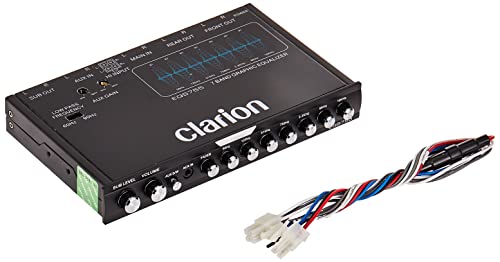
- 7-band graphic equalizer for car audio
- 8-volt front, rear, and subwoofer RCA outputs
- Front 3.5mm auxiliary and high-level inputs
Best For: Compact car-audio installations needing flexible analog connectivity
Rackmount Precision
dbx 231s Dual 31-Band Equalizer

- Dual 31-band, 1/3-octave control
- Switchable 6 dB or 12 dB boost/cut
- TRS and XLR inputs and outputs
Best For: Professional two-channel rack-based audio systems
High-Voltage Car Control
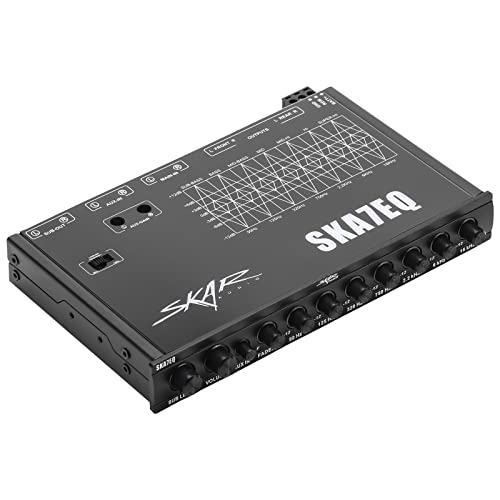
- 7-band control with ±12 dB adjustment
- Selectable main and auxiliary RCA inputs
- Up to 7V front, rear, and subwoofer outputs
Best For: Car-audio systems using multiple sources and high-voltage preamp outputs
Digital System Management
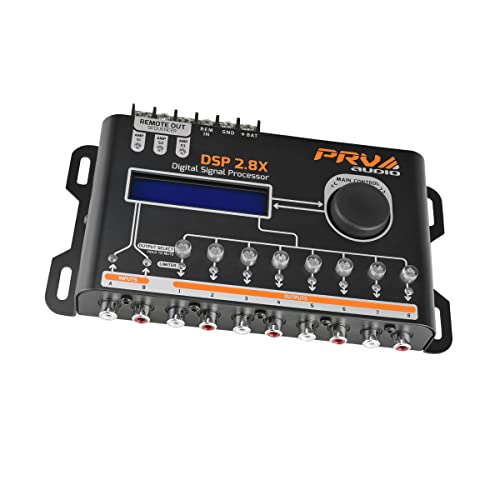
- Eight independent crossover outputs
- 15-band graphic and parametric equalization
- 12 presets with LCD-based controls
Best For: Complex car-audio systems needing advanced digital signal routing
Best Balanced Home Audio Pick

- Seven adjustable frequency bands
- XLR and RCA input/output connectivity
- Compact design with low stated distortion
Best For: Home audio setups needing simple, flexible tone control
Best Car Audio Upgrade
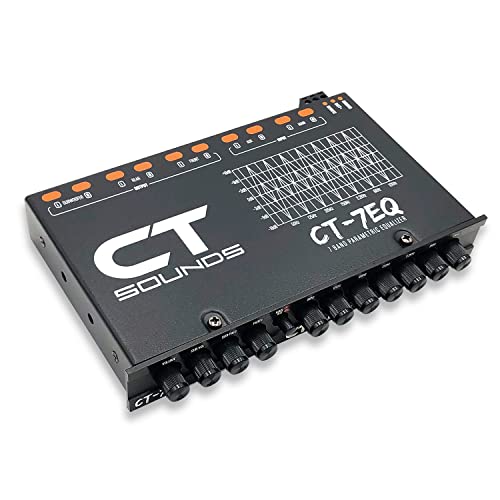
- Seven bands across 20Hz–20kHz
- Dedicated bass, mid, treble, and sub-bass controls
- Includes installation brackets and hardware
Best For: Car audio systems requiring half-DIN installation
Best for Detailed Rack Control

- Dual 15-band stereo adjustment
- Low-cut and bypass switches
- XLR and 1/4-inch TRS connectivity
Best For: Rack-based home, studio, DJ, and live audio systems
Best Car Audio Line Driver

- Seven-band EQ covers 50Hz–16kHz
- Six outputs with dedicated sub controls
- Up to 10 VRMS line-driver output
Best For: Multi-amplifier car audio systems
Best Rack-Mount Precision EQ
EQX-215S 15-Band Stereo Equalizer

- 15 bands per channel for detailed tuning
- Balanced XLR and 1/4-inch connectivity
- Low-cut control and dedicated bass output
Best For: Home, DJ, studio, and rack-mounted audio
Best Compact Car Stereo EQ

- Seven-band ±12dB graphic equalizer
- Two inputs and three RCA outputs
- Compact 12V design with fader control
Best For: Simple RCA-based car audio upgrades
Flexible Car Tuning – Clarion EQS755
The Clarion EQS755 is a practical audio equalizer for car systems that need straightforward tone shaping and multiple connection options. Its 7-band controls, front auxiliary input, RCA connectivity, and dedicated subwoofer controls suit custom installations without requiring a full digital processor.
Best For: Car-audio owners wanting a compact 1/2-DIN equalizer with front-panel access and separate front, rear, and subwoofer outputs.
Pros:
- Seven adjustable bands from 50 Hz to 16 kHz.
- Six-channel, 8-volt RCA outputs for front, rear, and subwoofer connections.
- Includes front 3.5mm auxiliary input, rear RCA auxiliary input, and high-level speaker inputs.
- Built-in low-pass filter, fader control, ground-loop isolation, and independent subwoofer level control.
Cons:
- Its 1/2-DIN chassis and 7-inch width require compatible mounting space.
- The equalizer offers seven bands rather than the finer adjustment of a 31-band unit.
- Listed power-supply details specify 8 volts, so installation requirements should be checked carefully.
The EQS755 balances useful connectivity with accessible analog controls. It is a solid choice for a conventional car-audio upgrade, especially when subwoofer adjustment and auxiliary access matter more than extensive digital tuning.
Rackmount Precision – dbx 231s Dual 31-Band Equalizer
The dbx 231s is a professional-style audio equalizer for detailed stereo system adjustment. With dual 31-band, 1/3-octave constant-Q controls, selectable boost/cut ranges, and balanced-style XLR and TRS connections, it is designed for rack-based audio setups.
Best For: Live sound, installation, or studio users who need highly detailed two-channel equalization and level monitoring.
Pros:
- Dual 31-band, 1/3-octave equalization provides fine frequency control.
- Selectable 6 dB or 12 dB boost/cut ranges support different tuning approaches.
- Front-panel bypass switch enables quick comparison with the unprocessed signal.
- Inputs and outputs support both 1/4-inch TRS and XLR connections.
Cons:
- Its 19-inch rack-style dimensions are less suitable for compact or portable setups.
- At 7.9 pounds, it is substantially heavier than the car-oriented models in this roundup.
- It is a dual-channel equalizer rather than a multichannel DSP processor.
The 231s is the strongest fit here for hands-on, precise analog control. Choose it when 31-band adjustment, rack integration, and conventional professional connectors are priorities.
High-Voltage Car Control – Skar Audio SKA7EQ
The Skar Audio SKA7EQ is a car-focused audio equalizer and preamp built around flexible signal routing. It combines seven adjustable bands with selectable main and auxiliary RCA inputs, high-voltage outputs, fader control, and a switchable low-pass filter.
Best For: Car-audio builds that need selectable sources, front-panel subwoofer adjustment, and high-voltage RCA preamp outputs.
Pros:
- Seven bands provide ±12 dB adjustment from 50 Hz to 16 kHz.
- Offers balanced and selectable main and auxiliary RCA inputs with variable auxiliary gain.
- Gold-plated front, rear, and subwoofer RCA outputs reach a stated maximum of 7 volts.
- Includes fader control, 60 Hz/120 Hz low-pass selection, mounting brackets, and hardware.
Cons:
- Seven bands allow less detailed shaping than a 31-band equalizer.
- The 1/2-DIN format requires a suitable car-audio installation location.
- Its feature set is focused on car audio rather than general-purpose rack systems.
With high-voltage outputs and source flexibility, the SKA7EQ is aimed at system builders managing multiple car-audio components. Its stated 100 dB signal-to-noise ratio and 20 dB headroom further support a clean, practical setup.
Digital System Management – PRV AUDIO DSP 2.8X
The PRV AUDIO DSP 2.8X is a digital audio equalizer and signal processor for more complex car-audio systems. It provides two inputs, eight independently configurable crossover outputs, a 15-band graphic equalizer, parametric equalization, presets, and an LCD-based control interface.
Best For: Advanced car-audio installations requiring independent output routing, crossover management, presets, and detailed digital tuning.
Pros:
- Eight-channel crossover outputs can be configured independently.
- Includes a 15-band graphic equalizer plus a parametric equalizer with frequency, gain, and bandwidth controls.
- Supports source selection from input A, input B, or a combination of both.
- Offers 12 listed presets and a sequencer feature for triggering other products through the remote connection.
Cons:
- The broader DSP feature set may be more involved than needed for a simple equalizer upgrade.
- The supplied notes do not specify connector types or output voltage.
- Operation depends on navigating the unit’s 16-by-2-character LCD interface.
The DSP 2.8X is the most capable option for multi-amplifier or multi-zone car-audio tuning in this selection. Its independent outputs and combined graphic, parametric, and crossover controls offer substantially more system management than a basic analog equalizer.
Best Balanced Home Audio Pick – Compact 7-Band EQ Preamp
The Douk Audio T7 is a practical audio equalizer for home stereo systems, amplifiers, and computer speakers. Its seven adjustable frequency bands and dual XLR/RCA connectivity make it a flexible choice for shaping sound in a compact setup.
Best For: Home listeners who want straightforward, precise tone adjustment with balanced and unbalanced connections.
Pros:
- Seven bands cover key low, mid, and high frequencies from 64Hz to 8kHz.
- Offers both XLR and RCA inputs and outputs, with simultaneous output through both connections.
- Reports an SNR above 104dB, distortion as low as 0.003%, and a 20Hz–20kHz response.
- Compact aluminum-alloy housing helps with durability and interference shielding.
Cons:
- No volume control knob; it outputs at the rated level.
- Its seven-band layout provides less adjustment detail than a 15-band equalizer.
The T7 suits buyers who value clean specifications, simple operation, and broad connection compatibility. It is especially useful when you need tone shaping without adding a bulky rack-mounted component.
Best Car Audio Upgrade – CT-7EQ Parametric Equalizer
The CT Sounds CT-7EQ is a car-focused audio equalizer designed to divide the 20Hz–20kHz range into seven segments. Its separate bass, mid, treble, and sub-bass controls provide useful tuning options for in-vehicle audio systems.
Best For: Car audio enthusiasts installing a half-DIN equalizer with dedicated tone controls and included mounting hardware.
Pros:
- Seven-band parametric design covers frequencies from 20Hz to 20kHz.
- Provides ±10dB adjustment for bass, mid, and treble.
- Includes sub-bass controls at 43Hz and 60Hz.
- Installation brackets and hardware are included.
Cons:
- Designed for car audio rather than home stereo applications.
- Its 1/2-DIN format may require a compatible dash location or installation solution.
- The supplied notes do not specify XLR or RCA connectivity.
Choose the CT-7EQ when vehicle installation and hands-on tonal adjustment matter most. The dedicated sub-bass controls and included hardware make it a focused option for customizing a car system.
Best for Detailed Rack Control – 15-Band Stereo Graphic EQ
The EQ-215S is a professional-style audio equalizer for home audio, studio, live, and installation use. Dual 15-band channels, selectable low-cut filtering, and balanced or unbalanced connections provide extensive control over system response.
Best For: Audiophiles, DJs, studios, and live setups that need detailed stereo adjustment in a standard 1U rack format.
Pros:
- Dual-channel 15-band design offers more detailed control than seven-band models.
- Each band provides an adjustable range of ±12dB.
- Low-cut switch helps reduce wind noise, floor rumble, electrical hum, and other low-frequency interference.
- Supports XLR balanced and 1/4-inch TRS unbalanced inputs and outputs.
Cons:
- Its 18.89-inch-wide 1U rack design is less suitable for compact desktop systems.
- At 4.74 pounds, it is heavier than the compact home-audio option.
- The corded-electric unit is specified for 110V operation.
The EQ-215S is the strongest fit when precise, channel-by-channel control and rack integration outweigh portability. Its bypass and low-cut switches also make it practical for troubleshooting and managing unwanted low-end noise.
Best Car Audio Line Driver – Stetsom EQX764
The Stetsom EQX764 is a practical audio equalizer for car systems that need flexible signal routing and dedicated subwoofer adjustment. Its seven bands cover key bass, midrange, and treble frequencies, while outputs up to 10 VRMS can help drive amplifiers with a stronger signal.
Best For: Car-audio installations using multiple amplifiers and a dedicated subwoofer channel.
Pros:
- Seven adjustable bands from 50Hz to 16kHz with a ±12dB range.
- Four inputs and six outputs support multiple sources and amplifiers.
- Dedicated subwoofer level and frequency controls.
- 10 VRMS line-driver output and illuminated controls.
Cons:
- Its car-audio-focused 12V installation may not suit home systems.
- The seven-band layout offers less frequency control than a 15-band unit.
Choose this model when amplifier integration and subwoofer tuning matter more than highly granular equalization. Its compact 7.25-inch design also makes it convenient for space-conscious car installations.
Best Rack-Mount Precision EQ – EQX-215S 15-Band Stereo Equalizer
The EQX-215S is a versatile audio equalizer for home audio, DJ, studio, and installation setups. With 15 adjustable bands per channel, balanced XLR and unbalanced 1/4-inch connections, and a dedicated bass output, it offers detailed control for shaping a stereo system.
Best For: Rack-mounted stereo systems, live events, studios, and users who want detailed dual-channel adjustment.
Pros:
- 15-band control per channel with an adjustable ±12dB range.
- Low-cut feature helps reduce unwanted low-end noise.
- XLR and 1/4-inch TRS connections support varied setups.
- Dedicated bass output with adjustable frequency and a 1U rack-mount design.
Cons:
- Its 18.9-inch rack-style chassis is less suitable for compact systems.
- It uses corded 110V power rather than a 12V car-audio supply.
- More controls may require additional setup time.
This is the strongest choice here for precise stereo shaping and professional-style connectivity. The bypass switch and low-cut control also make it easier to compare processed and unprocessed sound during setup.
Best Compact Car Stereo EQ – Taramps TEQ 7.4
The Taramps TEQ 7.4 is a compact audio equalizer for 12V car systems. Its seven-band graphic controls provide ±12dB adjustment, while separate MAIN and AUX inputs and FRONT, REAR, and SUB outputs make it useful for straightforward system expansion.
Best For: Drivers who want simple multi-zone tuning and RCA connectivity in a compact car-audio installation.
Pros:
- Seven adjustable bands spanning 50Hz to 12kHz.
- Two RCA stereo inputs and three RCA stereo outputs.
- Includes auxiliary gain and fader controls for system adjustment.
- Compact 4 x 3 x 1-inch design with blue lighting.
Cons:
- It has fewer bands and outputs than the Stetsom and EQX-215S models.
- Its 12V RCA design is intended for car systems rather than home audio.
- Installation should use a ventilated, accessible location away from speakers.
The TEQ 7.4 is a sensible pick when you want useful equalization without a large chassis or complex routing. Its wide 6Hz–55kHz frequency response and signal-to-noise ratio above 100dB support clean, detailed playback when properly installed.
How We Picked These Audio Equalizers
We focused on models that provide meaningful tone-shaping control rather than simple bass and treble adjustment. The lineup includes graphic equalizers, parametric-style car units, balanced home-audio preamps, professional rack equipment, and digital signal processors. We considered the number of bands, input and output options, signal-level compatibility, noise-control features, installation format, and whether the design suits a car, home stereo, DJ setup, or custom sound system.
Because these products serve different jobs, there is no single winner for every buyer. A seven-band car equalizer may be ideal for quick dashboard tuning, while a 31-band unit or DSP offers much finer control but requires more setup knowledge.
Quick Comparison
| Best For | Look For | Typical Format |
|---|---|---|
| Basic car-system tuning | Seven bands, auxiliary input, RCA outputs | Half-DIN |
| Advanced car installations | High-voltage outputs, multiple inputs, DSP features | Half-DIN or processor |
| Home stereo and computers | RCA or XLR connectivity, balanced output | Desktop or rack |
| DJ and professional audio | 15 or 31 bands, dual channels, rack mounting | 1U rack |
Key Buying Factors for an Audio Equalizer
Band Count and Control Type
More bands allow more precise correction. Seven-band models are straightforward and fast to adjust; 15- and 31-band designs provide finer control across the spectrum. Parametric or DSP units can offer deeper control over frequency, bandwidth, crossover behavior, and time alignment, but they take longer to configure.
Inputs, Outputs, and Signal Level
Check compatibility before buying. RCA connections are common in consumer systems, while XLR is useful for balanced home, studio, and professional setups. Car installations may require high-level speaker inputs, auxiliary inputs, multiple outputs, or a high-voltage line driver. Confirm the number of channels and whether a subwoofer, front/rear, or dedicated amplifier output is available.
Noise, Headroom, and Installation
Choose a unit with adequate signal headroom and practical gain controls. Noise-reduction circuitry and clean power wiring can help, but an equalizer cannot fully fix grounding or amplifier problems. Measure available dashboard or rack space, plan cable routing, and verify voltage requirements before installation.
Who Should Buy Which Audio Equalizer?
Choose a Compact Car Equalizer for Simple Tuning
Drivers upgrading a factory or aftermarket system should favor a half-DIN model with clear sliders, auxiliary connectivity, and enough outputs for the amplifiers already installed. These units are accessible and usually easier to tune than a full DSP.
Choose a DSP for a Complex Multi-Amp System
Buyers running multiple amplifiers, separate speaker zones, or demanding subwoofer integration should consider a digital processor. It is the better route when crossover control, sequencing, channel management, and detailed system calibration matter more than plug-and-play simplicity.
Choose a Rack Equalizer for Home or Pro Audio
For home stereo, DJ, or professional racks, prioritize the connector type, dual-channel operation, band count, and available rack space. A balanced model is especially suitable when longer cable runs or electrically noisy environments make signal integrity important.