
A capable field monitor can make camera operation easier by giving you a larger, clearer view than the built-in screen. The right model can also add tools such as waveform, false color, focus assistance, HDR viewing, and 3D LUT support.
We selected 10 camera field monitors with HDMI input across compact, high-brightness, touchscreen, SDI-equipped, and budget-friendly designs. Use the guide below to narrow your choice by shooting conditions, camera compatibility, and workflow needs.
Best 10 Camera Field Monitors with Hdmi Input Picks for 2026
Best Bright Outdoor Pick
FEELWORLD F6 Pro 5.5-Inch Monitor

- 1600-nit touchscreen for outdoor visibility
- 4K HDMI support with HDMI output
- Battery, sunshade, tilt arm, and case included
Best For: Outdoor filmmakers needing a bright, compact monitoring kit
Best OLED and SDI Option

- 7-inch 1200-nit OLED touchscreen
- 4K HDMI input and loop-out
- 3G-SDI input/output plus advanced scopes
Best For: Production setups requiring both HDMI and SDI
Best Lightweight Bundle
FEELWORLD S55 V3 6-Inch Monitor
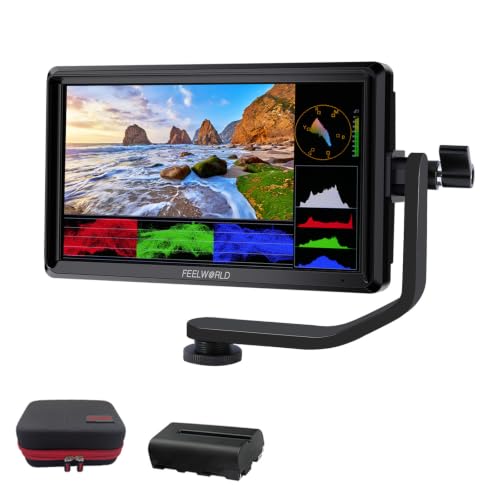
- Compact 6-inch Full HD display
- 4K HDMI input and loop-out
- Battery, case, sunshade, and tilt arm included
Best For: Handheld, gimbal, and stabilizer-based shooting
Best High-Brightness 7-Inch Pick

- 2000-nit 7-inch IPS touchscreen
- 4K HDMI loop-in and loop-out
- Dual NP-F battery support with camera power output
Best For: Outdoor shooting requiring maximum screen brightness
Best for Easy Setup
Osee T5+ 5.5-Inch 1000-Nit Monitor

- 1000-nit screen for outdoor monitoring
- 4K HDMI input with HDR/LOG preview
- Custom false color and saved MySets
Best For: Outdoor shoots needing high brightness and advanced monitoring tools
Professional Connectivity Pick
FEELWORLD FW703 7-Inch Monitor
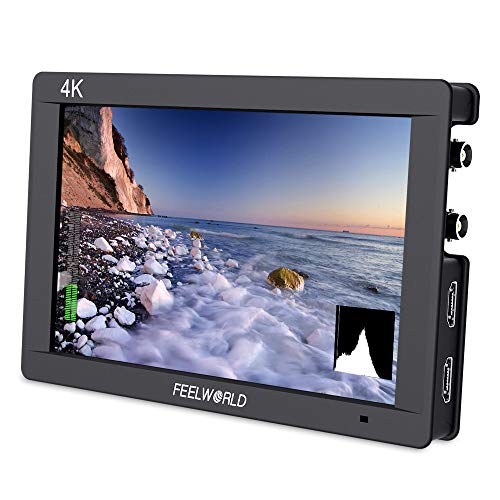
- Seven-inch 1920×1200 IPS display
- HDMI 4K and 3G-SDI connectivity
- Waveform, scopes, peaking, and custom 3D LUT
Best For: Studio and multi-camera workflows requiring HDMI and SDI
Budget Essentials Pick

- Seven-inch IPS display with 450-nit brightness
- Includes mini and micro HDMI cables
- Peaking, safe frames, and image-flip tools
Best For: Affordable DSLR and camcorder monitoring with essential tools
Best Brightness-to-Portability Pick
FEELWORLD P6XL 6-Inch Touch Monitor

- 1200-nit display for daylight shooting
- Built-in 3300mAh battery
- Waveform, focus assist, and 3D LUT support
Best For: Portable outdoor camera rigs and vlogging
Best Large Professional Monitor
FEELWORLD LUT11S 10.1-Inch 2000-Nit Monitor

- 10.1-inch 2000-nit touchscreen
- 4K 60Hz HDMI and SDI connectivity
- Supports 50 custom 3D LUTs
Best For: Professional productions and bright outdoor sets
Best Budget Starter Kit
FEELWORLD FW759 Pro 7-Inch Monitor

- 7-inch IPS touchscreen display
- Includes two F550 batteries and sunshade
- Histogram, zebra, focus assist, and false color
Best For: Beginners and lightweight creator rigs
Best Bright Outdoor Pick – FEELWORLD F6 Pro 5.5-Inch Monitor
If you need camera field monitors with hdmi input for outdoor shooting, the FEELWORLD F6 Pro stands out with a 1600-nit display, 4K HDMI support, and a broad selection of exposure and focus tools. Its included battery, sunshade, tilt arm, and carry case make it a practical ready-to-use kit.
Best For: Filmmakers and videographers who need a bright, compact monitor for outdoor DSLR, mirrorless, or camcorder work.
Pros:
- 1600-nit, 1920×1080 touchscreen for easier viewing in bright conditions
- Supports 4K HDMI signals up to 60 fps with HDMI output for another display
- Includes waveform, vectorscope, histogram, false color, focus assist, and support for 32 custom LUTs
- Bundle includes a battery, sunshade, tilt arm, mini HDMI cable, and carry case
Cons:
- Its 5.5-inch screen is smaller than the 7-inch alternatives
- Included battery charging and power accessories may require attention to charger specifications
The F6 Pro is a strong choice when outdoor visibility and professional monitoring tools matter more than having the largest screen. Its multiple power inputs and external equipment mounting design also suit compact production rigs.
Best OLED and SDI Option – NEEWER F700U 7-Inch Monitor
The NEEWER F700U is a versatile choice among camera field monitors with hdmi input, combining a 7-inch 1920×1080 OLED touchscreen with 4K HDMI loop-out and 3G-SDI input and output. It is designed for setups that need both HDMI and professional SDI connectivity.
Best For: Shooters and small production teams who want OLED contrast, HDMI loop-out, and SDI connectivity in one monitor.
Pros:
- 7-inch OLED screen with 1200-nit brightness, 100000:1 contrast, and a 160-degree viewing angle
- 4K HDMI input and loop-out allow simultaneous monitoring and signal pass-through
- 3G-SDI input and output support multiple HD formats up to 1920×1080
- Includes waveform, vectorscope, false color, zebra, histogram, audio levels, and up to 64 custom LUTs
Cons:
- SDI cable, DC 12V adapter, and SD card are not included
- The supplied package listing identifies the monitor as the included component, so accessory contents should be verified
Choose the F700U if connection flexibility is a priority. Its OLED panel and headphone output are useful for on-set viewing and audio checks, while dual NP-F750 batteries provide a convenient portable power setup.
Best Lightweight Bundle – FEELWORLD S55 V3 6-Inch Monitor
For compact rigs, the FEELWORLD S55 V3 is one of the more travel-friendly camera field monitors with hdmi input. It offers a 6-inch Full HD display, 4K HDMI input and loop-out, and a bundled battery, carry case, sunshade, and tilt arm.
Best For: Handheld, gimbal, and stabilizer users who want a compact monitor with useful exposure and focus aids.
Pros:
- Lightweight 6-inch 1920×1080 display with a 160-degree viewing angle
- Supports 4K HDMI formats and real-time HDMI loop-out
- Includes histogram, focus peaking, false color, zebra, zoom, and image flip tools
- Supports both NP-F and LP-E6 batteries and includes a rechargeable battery
Cons:
- 500 cd/m² brightness is lower than the brighter monitors in this roundup
- Its smaller display may be less comfortable for detailed viewing than a 7-inch model
- Camera power output requires a separate dummy battery or coupler
The S55 V3 makes sense when low weight and included accessories are more important than maximum brightness. Its dual battery compatibility and 360-degree tilt arm add flexibility to mobile camera setups.
Best High-Brightness 7-Inch Pick – NEEWER F700 2000-Nit Monitor
The NEEWER F700 is a strong option for anyone comparing camera field monitors with hdmi input and prioritizing screen visibility. Its 2000-nit 7-inch IPS touchscreen supports 4K HDMI loop-in and loop-out, while built-in scopes, LUT support, and dual-battery operation suit extended shoots.
Best For: Outdoor photographers and videographers who need a very bright 7-inch monitor with flexible mounting and power options.
Pros:
- 2000-nit 1920×1080 touchscreen with automatic and manual backlight control
- 4K HDMI loop-in and loop-out supports a wide range of video formats
- Includes waveform, vectorscope, histogram, false color, zebras, HDR, and focus peaking
- Supports two NP-F750 batteries, USB-C charging, and includes a camera power output
Cons:
- Its glossy screen may produce reflections in some lighting conditions
- DC power cable and SD card are not included
- Using two batteries increases the listed weight to 30.2 ounces
The F700 is the best fit here when maximum brightness and a larger screen are key considerations. Its 180-degree adjustable mounting, cooling fans, and dual-battery runtime make it well suited to demanding outdoor or extended monitoring sessions.
Best for Easy Setup – Osee T5+ 5.5-Inch 1000-Nit Monitor
For creators who need camera field monitors with hdmi input for outdoor filming, the Osee T5+ stands out with a 1000-nit display, 4K HDMI input, and a supplied sunshade. Its customizable exposure and focus tools are designed to make on-location monitoring more efficient.
Best For: Outdoor DSLR, mirrorless, and video shoots where brightness, exposure tools, and customizable workflows matter.
Pros:
- 1000-nit brightness and a 170-degree viewing angle help with outdoor viewing.
- Supports 4K HDMI input and includes HDR/LOG preview processing.
- Offers customizable false color, zebra, waveform, histogram, vector, and 3D LUT tools.
- Up to eight MySets allow quick switching between saved monitoring setups.
Cons:
- Battery is not included.
- The 5.5-inch screen is smaller than many seven-inch field monitors.
The T5+ is a strong choice when outdoor visibility and detailed monitoring controls take priority. Its 1080p display, 4K input support, and saved workflows make it especially useful for filmmakers who regularly adjust exposure and focus on location.
Professional Connectivity Pick – FEELWORLD FW703 7-Inch Monitor
The FEELWORLD FW703 is a practical option among camera field monitors with hdmi input for studio, interview, and multi-camera work. Its seven-inch Full HD IPS display combines HDMI 4K support with 3G-SDI connectivity and a broad set of focus and exposure tools.
Best For: Film sets, interviews, broadcasts, and production teams that need both HDMI and SDI connectivity.
Pros:
- Seven-inch 1920×1200 IPS display uses Rec.709 color standards.
- Supports HDMI 4K and 3G-SDI connections for flexible camera and video-system compatibility.
- Includes waveform, vector scope, RGB histogram, focus peaking, and false color.
- Supports custom 3D LUTs for previewing a shooting look while recording Log footage.
Cons:
- Its 1.85-pound weight may be less convenient for lightweight handheld rigs.
- The supplied notes do not specify battery inclusion or outdoor brightness.
Choose the FW703 if connection flexibility is central to your setup. HDMI and SDI support make it better suited to professional production environments than a basic HDMI-only monitor, while its analysis tools help with focus, exposure, and framing.
Budget Essentials Pick – NEEWER F100 7-Inch Monitor
The NEEWER F100 offers a straightforward way to add camera field monitors with hdmi input to a DSLR or camcorder setup. Its seven-inch IPS panel, included sunshade, focus assistance, and supplied HDMI cables cover the core needs of basic video monitoring.
Best For: Budget-conscious shooters who want a larger external display and essential focus and framing aids.
Pros:
- Seven-inch IPS screen provides a larger viewing area than compact monitors.
- Includes mini HDMI and micro HDMI cables, a sunshade, and a mini ball head.
- Provides peaking focus assist, pixel-to-pixel viewing, safe frames, image flip, and check-field modes.
- Supports a broad range of common 480p/480i through 1080p/1080i formats.
Cons:
- 1280×800 resolution is lower than Full HD monitors in this roundup.
- Its 450-nit brightness may be less suitable for very bright outdoor conditions.
- The listed viewing angle is 80 degrees.
The F100 is a sensible entry-level monitor for creators who prioritize screen size and useful accessories over maximum resolution or advanced scopes. It is particularly convenient for camera rigs that use mini or micro HDMI connections.
Best Brightness-to-Portability Pick – FEELWORLD P6XL 6-Inch Touch Monitor
The FEELWORLD P6XL is a practical choice among camera field monitors with HDMI input when you need a compact screen for outdoor shoots. Its 1200-nit display, built-in battery, touchscreen controls, and exposure tools make it well suited to DSLR and mirrorless camera rigs.
Best For: Outdoor videographers, vloggers, filmmakers, and creators who want a bright, lightweight monitor with built-in power.
Pros:
- 1200-nit screen improves visibility in direct sunlight.
- Built-in 3300mAh battery provides up to about 3 hours depending on brightness.
- Includes waveform, vectorscope, histogram, focus assist, HDR, and 3D LUT support.
- Compact 6-inch design with touchscreen operation and 4K HDMI input/output.
Cons:
- Built-in battery runtime is limited for extended production days.
- The 6-inch display offers less viewing area than larger field monitors.
Choose the P6XL if portability and daylight visibility matter more than having the largest possible screen. Its integrated battery also reduces the need to mount a separate power source on a compact rig.
Best Large Professional Monitor – FEELWORLD LUT11S 10.1-Inch 2000-Nit Monitor
The FEELWORLD LUT11S stands out among camera field monitors with HDMI input for productions that benefit from a large, highly visible display. Its 10.1-inch IPS panel, 2000-nit brightness, dual HDMI inputs, SDI connectivity, and advanced monitoring tools make it the most feature-rich option in this lineup.
Best For: Professional crews, studio setups, daylight production, and users who need HDMI, SDI, audio monitoring, and extensive color tools.
Pros:
- Large 10.1-inch 1920×1200 IPS touchscreen with 2000-nit brightness.
- Supports 4K 60Hz HDMI input/output plus SDI input/output.
- Loads up to 50 custom 3D LUTs and supports HDR monitoring.
- Includes waveform, focus tools, camera-specific gamma options, and customizable buttons.
Cons:
- At 1.8 pounds, it is less convenient for lightweight handheld or gimbal rigs.
- Its larger size may require more mounting space.
The LUT11S is the strongest fit when viewing area, connection flexibility, and on-set control are priorities. It is overbuilt for simple solo camera work but valuable for demanding productions and shared monitoring setups.
Best Budget Starter Kit – FEELWORLD FW759 Pro 7-Inch Monitor
The FEELWORLD FW759 Pro is a straightforward entry point for shoppers comparing camera field monitors with HDMI input. It combines a 7-inch IPS screen, touchscreen operation, essential exposure aids, flexible power options, and a useful accessory bundle for DSLR, mirrorless, and camcorder setups.
Best For: Beginners, vloggers, interview creators, livestreamers, and lightweight indoor or mobile camera rigs.
Pros:
- 7-inch 1280×800 IPS display is easier to view than a camera’s built-in screen.
- Includes histogram, zebra, focus assist, and false-color tools.
- Supports NP-F battery, DC, and Type-C power options.
- Package includes two F550 batteries, sunshade, hot-shoe mount, and HDMI cables.
Cons:
- 400-nit brightness is lower than the other monitors in this roundup.
- It has a single HDMI port and does not list 4K or SDI support.
- The 1280×800 resolution is more basic for detailed professional monitoring.
The FW759 Pro makes sense when you want a complete, affordable monitoring kit rather than advanced connectivity or maximum brightness. Its included batteries and cables let newer creators build a usable camera rig with fewer extra purchases.
How We Picked the Best Camera Field Monitors with Hdmi Input
We focused on monitors that accept HDMI video signals and provide practical benefits for DSLR, mirrorless, cinema, or production-camera setups. Our comparison considers screen size, resolution, brightness, touch controls, monitoring aids, battery arrangements, build portability, and included accessories.
Because field conditions vary, the selection includes compact 5.5- and 6-inch displays, larger 7-inch options, and a 10.1-inch monitor for more comfortable viewing. Models with SDI support are also represented for users whose workflow extends beyond HDMI.
Quick Comparison
- Best for bright daylight: Choose a monitor rated around 1,200 nits or higher, such as the FEELWORLD F6 Pro, NEEWER F700, or FEELWORLD LUT11S.
- Best compact options: The 5.5- to 6-inch models are easier to mount on smaller cameras and gimbals.
- Best for larger viewing: A 7-inch display offers a useful balance of screen area and portability, while the 10.1-inch LUT11S favors stationary or studio-style setups.
- Best for advanced workflows: Look for waveform, false color, HDR, 3D LUT, customizable presets, and SDI connectivity.
- Best for value: Lower-brightness models can work well indoors, in controlled lighting, or when a larger monitoring screen matters more than direct-sun visibility.
Key Buying Factors for Camera Field Monitors with Hdmi Input
Brightness and Outdoor Visibility
Brightness is one of the most important specifications for exterior shooting. A 400- or 450-nit screen may be adequate in shade, but 1,000 nits or more is generally better for daylight. A sun hood can further improve visibility and reduce reflections.
Resolution, Signal Support, and Latency
Confirm that the monitor accepts your camera’s HDMI format, including resolution, frame rate, and full-size or micro/mini HDMI connection requirements. A Full HD panel is typically sufficient for framing and focus, while 4K input support provides greater compatibility with modern cameras. Also check whether the monitor passes through or scales the signal as needed.
Monitoring Tools and Controls
Waveform and false color help with exposure, while focus peaking, magnification, zebras, and histogram tools assist with focus and composition. Touchscreens can speed up menu navigation, but physical buttons may be easier to use with gloves or when the display is mounted out of reach.
Power, Mounting, and Portability
Check whether the monitor uses removable batteries, a built-in battery, USB power, or an external adapter. Consider runtime, battery availability, mounting points, weight, and whether a case or sun hood is included. Larger screens improve viewing but add weight to a handheld rig or gimbal.
Who Should Buy Which Camera Field Monitors with Hdmi Input?
Run-and-gun creators and solo operators should prioritize a compact touchscreen, high brightness, simple battery support, and fast-access exposure tools. Outdoor filmmakers will benefit most from a 1,200- to 2,000-nit display and a sun hood. Studio and interview shooters may prefer a larger 7- or 10.1-inch screen, especially when the monitor stays on a tripod, cage, or director’s setup.
Professional video teams should consider models with SDI alongside HDMI, HDR support, LUT loading, and customizable monitoring presets. Budget-conscious users can choose a lower-brightness Full HD monitor if most shooting happens indoors and advanced tools are not essential. Before ordering, verify the camera’s HDMI output, battery type, mounting arrangement, and the included cables or accessories.