
Choosing among today’s DJ controllers is easier when you match the hardware to your software, performance style, and growth plans. The right model can make mixing, scratching, streaming, or playing without a laptop feel more intuitive.
We’ve assembled 10 standout options for 2026, from compact beginner decks and party-friendly controllers to advanced four-channel systems and standalone DJ setups.
Best 10 Dj Controllers Picks for 2026
Flagship Open-Format Pick

- Four-channel layout with pro-style FX
- Track Separation for live mashups
- Rekordbox, Serato, and DMX support
Best For: Serious hobbyists, mobile DJs, and professionals
Best Beginner-Friendly 2-Deck Value
Hercules DJControl Inpulse 500

- Serato and DJUCED compatibility
- Built-in audio interface and input mixer
- RGB pads, jog wheels, and fold-out feet
Best For: New and developing DJs
Best Standalone Performance System

- USB playback without a laptop
- 10.1-inch touchscreen and CDJ-style layout
- Effects, pads, and pro outputs
Best For: Home, mobile, and small-venue DJs
Best Compact Party Starter

- Lightweight USB-C controller with built-in lights
- Bluetooth MIDI for mobile DJing
- Includes Serato DJ Lite and Algoriddim djay
Best For: First-time and casual DJs
Premium Standalone Pick

- Standalone Engine DJ workflow with four-deck control
- Built-in speakers, touchscreen, and wireless streaming
- Serato DJ and VirtualDJ compatibility with extensive I/O
Best For: Laptop-free performances, mobile DJs, and advanced home setups
Best All-Rounder for Beginners
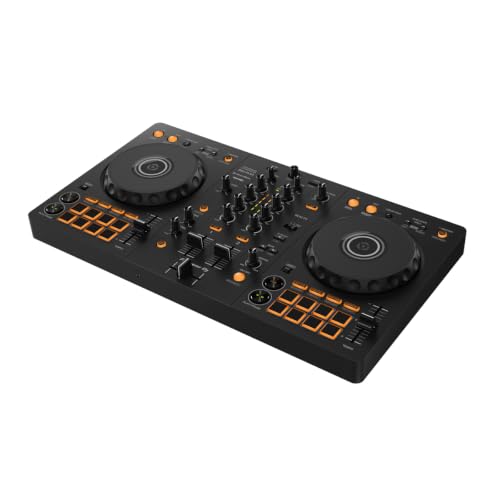
- Beginner-friendly layout with Smart Fader assistance
- 16 pads for cues, effects, beat jumps, and samples
- Works with computers, mobile devices, and major DJ platforms
Best For: Learning, livestreaming, and portable two-deck mixing
Best Compact Learning Controller
Hercules DJControl Inpulse 200 MK3
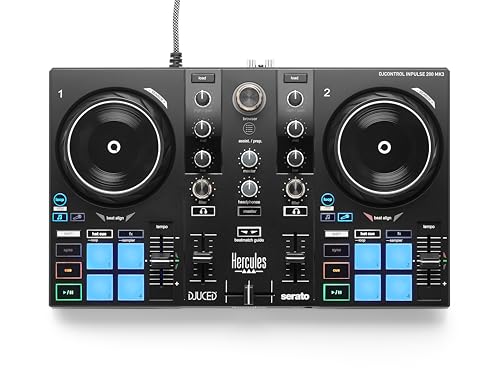
- Includes tutorials, Serato Lite, and beatmatch guidance
- Lightweight two-channel design for travel and practice
- Stem separation and multiple music-streaming services
Best For: Beginners, bedroom DJs, students, and portable streaming
Scratch Performance Pick

- Battle-style two-channel layout with full-size jog wheels
- On-jog displays help track playback position
- Supports rekordbox and Serato DJ Pro
Best For: Scratch-focused DJs and open-format performers
Budget Battle Controller

- Beginner-friendly open battle-style layout
- Includes Serato DJ Lite access
- Compact five-pound design with scratch-focused controls
Best For: Beginners learning hip-hop, scratch, and open-format DJing
Beginner Portable Pick
AlphaTheta Pioneer DJ DDJ-FLX2

- Smart Fader helps automate beatmatching
- Lightweight 2.7-pound USB-C design
- Works with rekordbox, djay, and Serato DJ Lite
Best For: New DJs mixing from phones, tablets, or computers
Flagship Open-Format Pick – Pioneer DJ DDJ-FLX10
The Pioneer DJ DDJ-FLX10 is a serious four-channel option for DJs who want a professional workflow and room to grow. Among dj controllers, it stands out for track separation, large jog wheels, rekordbox and Serato DJ Pro support, and integrated lighting control.
Best For: Serious hobbyists, mobile DJs, and professionals who need a future-ready open-format controller.
Pros:
- Four-channel layout and pro-style FX support a club-standard workflow.
- Track Separation enables live vocal, drum, and instrument manipulation.
- Large jog-wheel displays show waveforms, artwork, and playing parts.
- Works with rekordbox and Serato DJ Pro and includes DMX lighting output.
Cons:
- Its 14.8-pound build and advanced feature set may be more than beginners need.
- Requires a computer-based setup with compatible DJ software for its supported workflow.
The DDJ-FLX10 is the strongest choice here for users prioritizing four-channel control, creative stems-style mixing, and a transition-friendly professional layout.
Best Beginner-Friendly 2-Deck Value – Hercules DJControl Inpulse 500
The Hercules DJControl Inpulse 500 is a practical two-deck choice for learning and casual performance. It combines Serato and DJUCED compatibility with a built-in audio interface, responsive controls, and fold-out feet that help protect the controller from spilled drinks.
Best For: New and developing DJs who want a sturdy two-deck controller with built-in audio and helpful performance features.
Pros:
- Works with both Serato and DJUCED.
- Built-in audio interface and hardware input mixer simplify setup.
- Sixteen backlit RGB pads, vinyl mode, and loop controls support hands-on mixing.
- Large touch-detection jog wheels and retractable feet add practical usability.
Cons:
- Its two-channel design offers less expansion than four-deck controllers.
- At 11.6 pounds, it is less lightweight than compact entry-level dj controllers.
The Inpulse 500 balances approachable controls and useful hardware features, making it a sensible middle ground for learners who want more than a basic starter unit.
Best Standalone Performance System – Pioneer DJ XDJ-RX3
The Pioneer DJ XDJ-RX3 is an all-in-one system for USB-based sets without a laptop. Its 10.1-inch touchscreen, CDJ-style layout, built-in effects, and professional outputs make it one of the most performance-ready dj controllers in this roundup.
Best For: Home, mobile, and small-venue DJs who want standalone USB playback and a familiar club-style workflow.
Pros:
- Runs prepared rekordbox sets directly from USB drives.
- Large touchscreen and CDJ-style controls support an intuitive performance workflow.
- Hardware unlocks rekordbox Performance mode and supports Serato DJ Pro computer control.
- Includes Beat FX, Sound Color FX, and 16 performance pads.
Cons:
- Its 21-pound weight and large footprint make transport less convenient.
- It is a substantial investment for casual users who only need basic two-deck mixing.
Choose the XDJ-RX3 when standalone operation matters most. It delivers the most self-contained, gig-oriented experience of these four products.
Best Compact Party Starter – Numark Party Mix III
The Numark Party Mix III is a compact, approachable entry point for casual mixing and home parties. This lightweight dj controller adds USB-C, Bluetooth MIDI, built-in beat-synchronized lights, beginner guidance, and included access to Serato DJ Lite and Algoriddim djay.
Best For: First-time and casual DJs who want portable controls, wireless mobile options, and an integrated party atmosphere.
Pros:
- Compact 2.42-pound design is easy to carry and USB-powered.
- Built-in LED lights create beat-synchronized visual effects.
- Bluetooth MIDI supports wireless DJing from iOS and Android devices with djay.
- Includes eight performance pads per deck, stems controls, beat-align indicators, and Fade FX.
Cons:
- Its two-deck compact format is less suited to advanced club-style workflows.
- USB power and a main RCA output may require extra planning for a larger performance setup.
The Party Mix III is the most accessible and portable option here, especially for newcomers who value simple software support and immediate visual energy over advanced hardware depth.
Premium Standalone Pick – Denon DJ SC LIVE 4
The Denon DJ SC LIVE 4 is a versatile choice among dj controllers for performers who want a laptop-free setup with four-deck control. Its Engine DJ operating system, touchscreen, built-in speakers, streaming options, and broad connectivity make it suitable for practice, mobile gigs, streaming, and club-focused setups.
Best For: DJs who want standalone performance, wireless music access, and flexible professional connections.
Pros:
- Runs without a computer using Engine DJ OS, SD storage, and two USB inputs.
- Supports four decks, stem separation, Serato DJ, and VirtualDJ compatibility.
- Includes a 7-inch touchscreen, built-in speakers, Bluetooth audio, Wi-Fi streaming, and multiple outputs.
Cons:
- Its 28.3-inch width and 13.6-pound weight make it less portable than compact controllers.
- It requires corded power rather than battery operation.
The SC LIVE 4 is the most feature-rich option here for DJs who value independence from a laptop and want room to expand. Its larger footprint is a reasonable trade-off for the standalone workflow, four-channel layout, and extensive connectivity.
Best All-Rounder for Beginners – Pioneer DJ DDJ-FLX4
The Pioneer DJ DDJ-FLX4 is one of the most approachable dj controllers for learning the fundamentals while keeping useful upgrade paths. Its familiar two-deck layout, performance pads, Smart Fader, built-in sound card, and support for computers and mobile devices make it a practical starting point.
Best For: New DJs who want simple controls, streaming support, and a portable controller that can grow with their skills.
Pros:
- Uses a straightforward layout based on professional Pioneer DJ equipment.
- Smart Fader helps blend tracks by adjusting volume, bass, and BPM.
- Offers 16 performance pads and works with rekordbox, Serato DJ Pro, and djay.
- Connects to PC, Mac, iPhone, iPad, or Android and supports streaming and livestream MC use.
Cons:
- Its two-channel, two-deck design provides less expansion than four-channel controllers.
- It depends on a connected compatible device for its software-based workflow.
The DDJ-FLX4 balances ease of use with enough performance control to remain useful beyond a first lesson. Choose it if you want a lightweight, streaming-ready controller and do not need standalone operation or four-deck mixing.
Best Compact Learning Controller – Hercules DJControl Inpulse 200 MK3
The Hercules DJControl Inpulse 200 MK3 is a compact option among dj controllers for first-time users who want guided practice and quick setup. It includes Serato Lite, DJ Academy tutorials, beatmatch guidance, streaming-service access, and a lightweight two-channel design that fits easily into a backpack.
Best For: Beginners, students, bedroom streamers, and DJs who prioritize portability and guided learning.
Pros:
- Includes step-by-step DJ Academy tutorials and a beginner-focused layout.
- Beatmatch Guide LEDs help show when tracks are aligned.
- Supports stem separation and Intelligent Music Assistant track suggestions.
- Streams from Spotify, Apple Music, Beatport, SoundCloud Go+, TIDAL, and Beatsource.
Cons:
- Its two-channel design is more limited for complex or larger performances.
- Its compact feature set is aimed primarily at beginners rather than advanced club workflows.
At 2.2 pounds, the Inpulse 200 MK3 is the easiest model here to carry and a strong fit for building confidence. Its guided tools and streaming options make practice accessible, while stem separation adds creative possibilities as your skills develop.
Scratch Performance Pick – Pioneer DJ DDJ-REV5
For DJs comparing dj controllers for scratch routines and open-format performance, the Pioneer DJ DDJ-REV5 offers a battle-style two-channel layout with full-size jog wheels. On-jog displays, DJM-style controls, and support for both rekordbox and Serato DJ Pro make it a flexible step-up option.
Best For: Scratch-focused DJs and performers who want a more professional battle-style workflow.
Pros:
- Full-size jog wheels and a scratch-style two-channel layout.
- On-jog displays show playback position during performances.
- Includes rekordbox and Serato DJ Pro support.
- Performance Pads support samples and Hot Cues.
Cons:
- Its 14-pound weight makes it less portable than compact beginner controllers.
- The battle-oriented layout may be more specialized than needed for basic mixing.
The DDJ-REV5 is a strong choice when scratch control and advanced performance features matter more than minimal size. Streaming compatibility and dual-software support add flexibility for different setups.
Budget Battle Controller – Pioneer DJ DDJ-REV1
If you are shopping for dj controllers as a first step into scratching, the Pioneer DJ DDJ-REV1 keeps the layout focused and approachable. Its open battle-style design, tall pitch faders, and included Serato DJ Lite access are suited to beginners learning hip-hop and open-format techniques.
Best For: Beginners who want an affordable, compact controller for scratch and battle-style practice.
Pros:
- Open layout mirrors a turntable and battle-mixer setup.
- Serato DJ Lite is included for getting started.
- Tall pitch faders and quick effects controls support battle techniques.
- Tracking Scratch can trigger scratch routines with one motion.
Cons:
- It is a two-deck controller aimed at entry-level use.
- Its single USB port and compact feature set may limit more elaborate setups.
With a five-pound frame and a budget-friendly focus, the DDJ-REV1 is easy to position as a starter controller. It makes the most sense for learning core scratch and open-format skills rather than pursuing a feature-heavy professional setup.
Beginner Portable Pick – AlphaTheta Pioneer DJ DDJ-FLX2
Among dj controllers designed for quick, casual learning, the AlphaTheta Pioneer DJ DDJ-FLX2 stands out for its compact, lightweight design and Smart Fader. It can run from a phone, tablet, or computer over USB-C, while compatible apps support music streaming and beginner-friendly mixing.
Best For: New DJs who want a portable controller for learning and mixing from mobile devices.
Pros:
- Smart Fader automatically matches volume, BPM, and bass while mixing.
- Lightweight 2.7-pound design is easy to carry.
- Works with rekordbox, djay, and Serato DJ Lite.
- Supports phone, tablet, or PC/Mac use with USB-C bus power.
Cons:
- Its beginner-focused automation may be less appealing to advanced DJs.
- The compact format is built around two-channel mixing.
The DDJ-FLX2 is a practical entry point for users who want to start with the music and devices they already have. Its streaming support, flexible speaker options, and automatic beatmatching features reduce setup friction for first-time DJs.
How We Picked the Best Dj Controllers
We compared these Dj Controllers by looking at layout, software support, channel count, performance controls, portability, connectivity, and overall suitability for different experience levels. We also considered whether each model offers a clear upgrade path as your skills develop.
Because DJs have different priorities, there is no single best controller for everyone. A beginner may benefit most from guided features and a simple two-deck layout, while an experienced performer may need four channels, advanced pad modes, standalone playback, or dedicated scratch controls.
Quick Comparison
| Best For | What to Prioritize | Recommended Options |
|---|---|---|
| Beginners | Simple layout, tutorials, included software | DDJ-FLX2, DJControl Inpulse 200 MK3 |
| Bedroom and mobile DJs | Portability, flexible software support | DDJ-FLX4, DJControl Inpulse 500 |
| Scratch performance | Large jog wheels, crossfader response, pad controls | DDJ-REV1, DDJ-REV5 |
| Parties and casual use | Fast setup, visual effects, Bluetooth convenience | Numark Party Mix III |
| Advanced mixing | Four channels, track separation, professional connections | DDJ-FLX10 |
| Laptop-free performance | Standalone playback, screen, streaming access | XDJ-RX3, SC LIVE 4 |
Key Buying Factors for Dj Controllers
Channel Count and Layout
Two-channel controllers are usually easier to learn and more portable. Four-channel models provide room for layered transitions, multiple decks, external sources, and more complex live sets. Consider how quickly your setup may grow before choosing.
Software and Compatibility
Check which applications are supported and what features require paid upgrades. Serato DJ, rekordbox, DJUCED, and Engine DJ each have different workflows. Also confirm compatibility with your computer, operating system, phone, or tablet if you plan to perform without a traditional laptop.
Jog Wheels, Pads, and Faders
Responsive jog wheels matter for cueing and scratching, while performance pads support hot cues, loops, samples, stems, and effects. A smooth crossfader is especially important for scratch-focused setups. Beginners may prefer fewer controls that are clearly labeled.
Connectivity and Portability
Review the available USB ports, microphone inputs, headphone outputs, master outputs, and booth connections. Smaller controllers travel easily, but larger units may offer better hands-on control and stronger connections for events.
Standalone Features
Standalone systems can play music without a computer and may include displays, Wi-Fi, streaming services, onboard effects, and multiple inputs. They cost more, but they can simplify live performance and reduce setup clutter.
Who Should Buy Which Dj Controllers?
New DJs: Start with the DDJ-FLX2 or DJControl Inpulse 200 MK3 if you want an approachable introduction and basic mixing skills.
Growing hobbyists: Choose the DDJ-FLX4 or DJControl Inpulse 500 for a more capable two-deck setup that remains practical for home use and small gigs.
Scratch-focused DJs: The DDJ-REV1 and DDJ-REV5 are the strongest fits for battle-style layouts, pad performance, and scratch practice.
Party users: The Numark Party Mix III suits casual mixing and visual entertainment, particularly when quick setup matters.
Advanced and professional users: Consider the DDJ-FLX10 for detailed four-channel control, or choose the XDJ-RX3 or SC LIVE 4 when standalone operation is central to your workflow.