
Syncing clean production audio with multiple cameras is easier when your recorder and timecode workflow are designed to work together. The right setup can reduce drift, simplify post-production, and protect recordings with features such as 32-bit float capture.
We selected 10 field recording options for different crews and budgets, including compact camera-mounted recorders, dedicated timecode tools, and professional multichannel systems.
Best 10 Field Recorder with Timecode Generator Picks for 2026
Best Integrated Recorder
Compact 32-Bit Float Timecode Recorder

- Built-in timecode generation and sync
- Dual XLR/TRS inputs with 32-bit float recording
- Supports up to 192 kHz recording
Best For: Videographers seeking an all-in-one recorder and timecode solution
Best All-in-One Mic Recorder
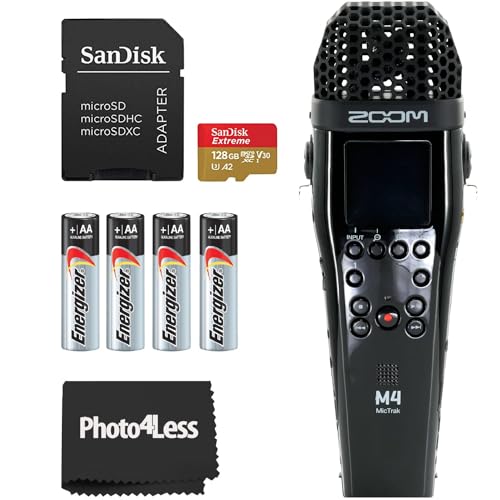
- Onboard X/Y mics plus two external mic inputs
- 32-bit float recording with no manual gain setting
- Color LCD shows four tracks and waveforms
Best For: Creators who want built-in stereo microphones and timecode
Best Wireless Timecode Hub

- Syncs up to 48 units wirelessly
- Supports 23.98–60 fps frame rates
- Offers multiple sync modes and mounting options
Best For: Multi-camera productions needing centralized timecode control
Best Modular Recorder Bundle
Zoom F3 with TCA-1 Timecode Kit

- Two locking XLR inputs with phantom power
- 32-bit float recording and low-noise preamps
- Includes 3.5 mm TRS timecode adapter
Best For: Two-channel field recording with an adapter-based sync workflow
Compact Audio Capture

- 96 kHz/24-bit PCM and FLAC recording
- Three directional built-in microphones
- 16GB memory with Bluetooth and USB microphone mode
Best For: Portable high-resolution recording without built-in timecode
Dedicated Sync Accessory

- TCXO accuracy within 0.5 frames over 24 hours
- 3.5mm TRS timecode input and output
- Designed for specified Zoom recorders
Best For: Compatible Zoom-based filmmaking and field recording setups
All-in-One Production Recorder

- Internal LTC timecode generator
- Three low-noise Kashmir preamps
- 32-bit float recording and USB-C interface
Best For: On-set and field production requiring integrated timecode and multichannel audio
Compact Timecode Kit

- Four-channel 32-bit float/96kHz recording
- Built-in timecode generator with 0.2 ppm accuracy
- Integrated X/Y mic plus two XLR/TRS inputs
Best For: Portable field recording and compact video setups
Professional Mixer Recorder

- Four ultra-low-noise Kashmir preamps
- 32-bit float recording up to 192kHz
- Internal LTC timecode with HDMI triggering
Best For: Location sound, bag rigs, and mobile studio recording
Camera-Rig Sync Recorder

- Four XLR/TRS inputs with Ultra HDDA preamps
- 32-bit float and six-track SDXC recording
- Timecode, HDMI sync, and USB-C connectivity
Best For: Camera rigs and HDMI-based video production
Best Integrated Recorder – Compact 32-Bit Float Timecode Recorder
The TASCAM FR-AV2 is a strong choice when you need a compact field recorder with timecode generator in one unit. Its dual-ADC 32-bit float recording, dual combo inputs, and built-in timecode support are designed for efficient, worry-free video production.
Best For: Videographers who want integrated timecode generation, flexible XLR/TRS connectivity, and high-resolution recording in a compact body.
Pros:
- Built-in timecode generation plus timecode input/output and sync functions.
- 32-bit float recording helps accommodate changing levels without manual gain adjustments.
- Two XLR/TRS combo inputs, Ultra HDDA preamps, and a 3.5 mm input.
- Supports 48, 96, and 192 kHz recording formats.
Cons:
- Wireless monitoring requires the optional AK-BT2 adapter.
- Uses three AA batteries, which adds a separate power consideration for longer shoots.
The FR-AV2 is particularly appealing if avoiding a separate timecode device matters to your workflow. Its compact 9.5-ounce design and broad recording options make it a practical video-focused setup.
Best All-in-One Mic Recorder – Zoom M4 MicTrak with Timecode
The Zoom M4 MicTrak combines onboard stereo microphones, external microphone inputs, 32-bit float recording, and a built-in timecode generator. For creators comparing a field recorder with timecode generator, this bundle adds a microSD card, batteries, and cloth for a ready-to-use recording kit.
Best For: Filmmakers, musicians, and video creators who want onboard stereo capture alongside external microphone support.
Pros:
- Built-in timecode generator supports audio-for-video workflows.
- 32-bit float recording helps avoid clipped or faint audio without setting gain.
- Combines onboard X/Y microphones with two additional external microphones.
- Color LCD provides four-track monitoring with a real-time waveform display.
Cons:
- The supplied notes do not specify the exact external input connector types.
- Its stereo microphone design may be less suitable when you only need two dedicated XLR channels.
The M4 is a versatile choice for run-and-gun recording because it can capture stereo sound immediately while leaving room for additional microphones. The included storage and AA batteries make the bundle convenient for getting started.
Best Wireless Timecode Hub – Saramonic TC-NEO Generator
The Saramonic TC-NEO is a dedicated timecode generator rather than an audio recorder, making it useful when your production already has recording hardware. It can coordinate multiple cameras and recorders wirelessly, so it is a flexible option for building a multi-device field recorder with timecode generator workflow.
Best For: Multi-camera crews and filmmakers who need centralized wireless synchronization across compatible cameras and recorders.
Pros:
- Supports Master Run, Auto Jam, and Jam Once and Lock synchronization modes.
- Handles frame rates from 23.98 to 60 fps.
- Controls and syncs up to 48 units through 2.4GHz or Bluetooth 5.0.
- Includes a locking 3.5 mm TRS connector and cable, with broad compatibility through optional cables.
Cons:
- It generates timecode but does not record audio itself.
- Some connections, including BNC, LEMO, USB-C, and Sony Multi-Port, require optional cables.
The TC-NEO makes the most sense as the synchronization center for a larger production rig. Its wireless control and mounting options are valuable when multiple devices must stay aligned without extensive cabling.
Best Modular Recorder Bundle – Zoom F3 with TCA-1 Timecode Kit
This Zoom F3 bundle pairs a two-channel 32-bit float field recorder with the TCA-1 timecode adapter. It is a practical alternative for shoppers who want a compact field recorder with timecode generator setup, while retaining the flexibility to connect the recorder to cameras, generators, and slates through timecode input/output.
Best For: Field recordists and production crews who need two locking XLR inputs plus an adapter-based timecode workflow.
Pros:
- 32-bit float recording with dual A/D converters and low-noise preamps.
- Two locking XLR mic/line inputs with 24/48V phantom power.
- Included TCA-1 provides 3.5 mm TRS timecode input/output when used with compatible firmware.
- Supports AA batteries, USB power, or an AD-17 AC adapter and microSD cards up to 1 TB.
Cons:
- Timecode functionality depends on the included adapter and compatible firmware.
- The two-channel design offers fewer inputs than larger production recorders.
The F3 plus TCA-1 is a sensible modular solution for clean two-channel capture and audio-video synchronization. Its locking XLR inputs and multiple power options suit changing field and production environments.
Compact Audio Capture – OM SYSTEM LS-P5 PCM Recorder
The OM SYSTEM LS-P5 is a compact choice for users who want a field recorder with timecode generator capabilities nearby in a broader production kit, while prioritizing high-resolution audio capture. Its three directional microphones, PCM and FLAC recording, and 96 kHz/24-bit support suit portable recording, interviews, and general field work, though the supplied notes do not list an onboard timecode generator.
Best For: Portable high-resolution recording when built-in timecode generation is not required.
Pros:
- Records PCM, FLAC, and MP3 audio, including 96 kHz/24-bit high-resolution sound.
- Three directional built-in microphones support stereo field recording.
- Includes 16GB of built-in memory, Bluetooth, and a composite USB microphone mode.
- Offers low-cut filtering, noise cancelling, and automatic or manual level settings.
Cons:
- The supplied specifications do not identify a timecode generator or timecode input/output.
- Uses two AAA batteries, although rechargeable batteries are included.
The LS-P5 is best viewed as a lightweight audio recorder rather than a dedicated timecode device. Choose it for flexible, high-quality standalone recording; for synchronized camera workflows, pair your setup with separate timecode hardware.
Dedicated Sync Accessory – Zoom TCA-1 Timecode Adapter
The Zoom TCA-1 is a focused solution for building a field recorder with timecode generator workflow around compatible Zoom recorders. Its temperature-compensated crystal oscillator is rated to maintain accuracy within 0.5 frames over 24 hours, while 3.5mm TRS input/output supports connections with cameras, slates, and external generators.
Best For: Filmmakers using compatible Zoom recorders who need accurate, portable timecode synchronization.
Pros:
- Provides precision timecode for film, video, and field recording workflows.
- TCXO stability is rated within 0.5 frames over 24 hours.
- 3.5mm TRS timecode input and output simplify connections to cameras and slates.
- Attaches directly to the Remote connector for a streamlined setup.
Cons:
- Compatibility is limited to specified Zoom recorders with the latest firmware installed.
- It is an adapter, not a standalone audio recorder.
The TCA-1 is a strong fit when your recorder is already part of Zoom’s supported ecosystem. Verify the recorder model and firmware before buying, since its usefulness depends on that direct compatibility.
All-in-One Production Recorder – Sound Devices MixPre-3 II
The Sound Devices MixPre-3 II is a professional-oriented field recorder with timecode generator functionality built in. It combines an internal LTC timecode generator with three Kashmir microphone preamps, 32-bit float recording, multichannel mixing, and timecode connectivity for mobile production and on-set recording.
Best For: Film crews and field recordists needing integrated timecode, high-quality preamps, and multichannel recording.
Pros:
- Includes an internal LTC timecode generator plus timecode in/out through Aux In and Stereo Out.
- Three ultra-low-noise Kashmir microphone preamps include adjustable limiters.
- Supports portable 32-bit float multichannel recording and a built-in 3 x 2 mixer.
- Functions as a 5-in, 2-out USB-C audio interface with up to 32-bit float operation.
Cons:
- Its 1.1-pound body is less minimal than a basic compact recorder.
- Battery-powered operation may require attention during longer shoots.
- The supplied notes do not specify included batteries or recording media.
For a complete production workflow, the MixPre-3 II is the most directly aligned option here: it pairs integrated LTC timecode with serious audio hardware in a portable format. It is particularly compelling for bag work, mobile recording, and home-studio use.
Compact Timecode Kit – Zoom M4 MicTrak
If you need a field recorder with timecode generator for compact production setups, the Zoom M4 MicTrak combines four-channel recording, 32-bit float/96kHz capture, and a built-in timecode generator in a portable design. Its integrated X/Y microphone and two XLR/TRS inputs cover a range of field recording needs.
Best For: Mobile creators and video teams needing compact multichannel recording with accurate timecode.
Pros:
- Records four channels in 32-bit float/96kHz quality.
- Built-in timecode generator offers stated 0.2 ppm accuracy.
- Integrated X/Y capsule and two XLR/TRS inputs provide flexible capture options.
- Body construction is designed to reduce handling noise.
Cons:
- Its four-channel design offers fewer inputs than larger multichannel recorders.
- Timecode performance is described by the supplied notes, without additional synchronization connection details.
The M4 is a practical choice when portability and straightforward timecode-supported recording matter more than extensive routing or input expansion. Its normalization function is also useful for optimizing recorded volume after capture.
Professional Mixer Recorder – Sound Devices MixPre-6 II
The Sound Devices MixPre-6 II is a versatile field recorder with timecode generator for location work, bag rigs, mobile recording, and studio use. It pairs four ultra-low-noise Kashmir microphone preamps with 32-bit float recording, flexible sample rates, mixing, and USB audio interface functionality.
Best For: Film crews, location recordists, and musicians who need premium preamps, mixing, and computer connectivity.
Pros:
- Four ultra-low-noise Kashmir preamps include adjustable limiters.
- Supports 16- to 32-bit float recording and sample rates from 44.1kHz to 192kHz.
- Built-in 6 x 2 mixer supports flexible field monitoring and mixing.
- Includes internal LTC timecode, timecode I/O, and HDMI timecode triggering.
Cons:
- The recorder has four microphone preamps despite its six-channel designation.
- Some timecode connections use the Aux In/Stereo Out and HDMI connections rather than dedicated connectors.
Choose the MixPre-6 II if clean preamps and a broad recording feature set are priorities. Its 8-in, 4-out USB interface and compact 0.6 kg build also make it useful beyond field production.
Camera-Rig Sync Recorder – TASCAM FR-AV4
The TASCAM FR-AV4 is a field recorder with timecode generator built around camera-rig workflows. It offers four XLR/TRS inputs, 32-bit float recording with dual A/D converters, HDMI synchronization, six-track recording to SDXC, and USB-C interface functionality.
Best For: Camera crews and production teams that need synchronized audio, HDMI workflows, and flexible track recording.
Pros:
- Four XLR/TRS inputs use low-noise Ultra HDDA preamps.
- 32-bit float recording and dual A/D converters provide a wide stated analog dynamic range.
- Records four input tracks plus a stereo mix to SDXC.
- Supports timecode I/O, HDMI sync and pass-through, USB timecode out, and optional Atomos Bluetooth sync.
Cons:
- Some wireless monitoring, app control, and Atomos Bluetooth features require the optional AK-BT2.
- Its HDMI and camera-focused feature set may be more than needed for simple standalone audio recording.
The FR-AV4 stands out for video-centered production, particularly when HDMI clocking, record triggering, and multiple synchronization options are important. Its built-in mixer and six-track SDXC recording add flexibility for camera-rig setups.
How We Picked the Best Field Recorder with Timecode Generator
We compared the selected products by looking at timecode compatibility, input capacity, recording resolution, synchronization options, portability, and workflow flexibility. We also considered whether each unit is best suited to a solo filmmaker, camera operator, production sound mixer, or multichannel location-recording setup.
Because this list includes both complete recorders and accessories, check the product description carefully. A timecode adapter or standalone generator may require a compatible recorder, camera, cable, or app to form a complete sync system.
Quick Comparison
- Compact two-channel recording: The TASCAM FR-AV2 and Zoom F3 are practical when you need small footprints and reliable 32-bit float capture.
- Built-in or integrated timecode workflows: The Zoom M4 MicTrak models and TASCAM FR-AV4 are aimed at crews that want recording and synchronization features in one field package.
- Professional multichannel production: The Sound Devices MixPre-3 II and MixPre-6 II provide more advanced mixing, routing, and input flexibility.
- Dedicated synchronization: The Saramonic generator and Zoom TCA-1 adapter are useful when expanding or adapting an existing camera-and-recorder setup.
- General-purpose portable recording: The OM SYSTEM LS-P5 is better suited to interviews, ambience, reference audio, and everyday field capture than complex multicamera production.
Key Buying Factors for a Field Recorder with Timecode Generator
Timecode Compatibility
Confirm which timecode standard, connector, and synchronization method your cameras use. Some systems support wireless control or Bluetooth apps, while others rely on wired connections, dedicated adapters, HDMI sync, or compatible camera inputs. Also check whether the recorder generates timecode independently or only passes it through an accessory.
Input Count and Connector Type
Two inputs may be enough for a single operator, interview, or compact camera rig. Choose four or more inputs when recording multiple microphones, a stereo pair, wireless receivers, or a boom and lavalier combination. XLR/TRS combination inputs generally offer the most flexibility for professional microphones and line-level sources.
Recording Format and Headroom
32-bit float recording can make unpredictable levels easier to manage in post, particularly for documentary, effects, and fast-moving production work. It does not replace good microphone placement, monitoring, or sensible gain structure, so prioritize reliable limiters, low-noise preamps, and clear metering as well.
Power, Media, and Mounting
Check battery type, expected runtime, USB power options, memory-card requirements, and mounting points. A lightweight recorder is convenient on a camera, but a larger mixer may be preferable for extended shoots where physical controls, durable construction, and battery options matter more.
Who Should Buy Which Field Recorder with Timecode Generator?
Choose a compact two-channel model if you are a solo filmmaker or camera operator who needs dependable audio without a large bag. Choose a Zoom M4 or TASCAM FR-AV4 when integrated timecode features and additional channels matter for mobile production. Choose a MixPre-3 II or MixPre-6 II for professional location sound, complex routing, and multiple microphones. Choose a dedicated generator or adapter if you already own compatible recording equipment and only need to add or extend synchronization. For interviews, ambience, and non-timecode assignments, a portable PCM recorder such as the LS-P5 may be the simpler and more economical choice.