
Choosing the best DJ mixer for clubs means balancing sound quality, channel flexibility, workflow, effects, and long-term reliability. The right setup should match your venue, performance style, and connected gear.
This roundup compares 10 club-ready mixers and DJ systems, including traditional mixers, Serato-focused options, standalone units, and controllers for different budgets and experience levels.
Best 10 Dj Mixer for Clubs Picks for 2026
Versatile Club Workhorse
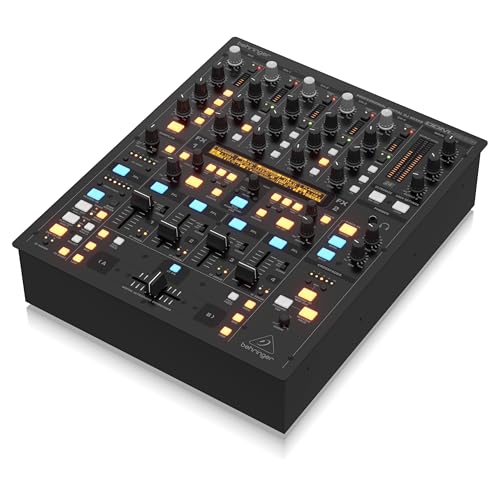
- Five channels with up to eight stereo sources
- Four multi-FX sections and built-in sampler
- MIDI, S/PDIF, and XLR output connectivity
Best For: Club DJs needing extensive inputs and onboard performance tools
Streaming-Ready All-in-One
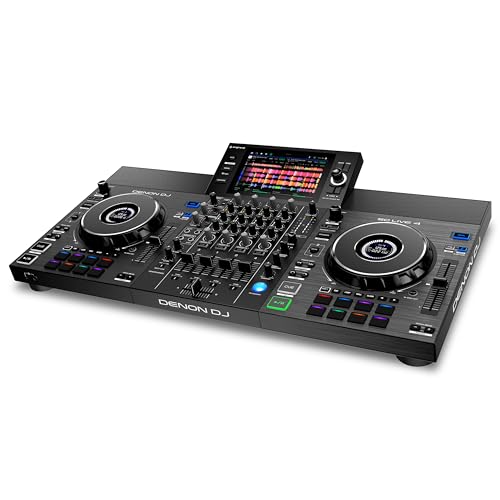
- Standalone four-deck control with Engine DJ OS
- Seven-inch touchscreen plus USB and SD inputs
- Wi-Fi, Bluetooth, speakers, and XLR main output
Best For: Mobile and club DJs seeking laptop-free flexibility
Scratch and Serato Specialist

- Two-channel Serato performance mixer
- Three adjustable MAG FOUR contactless faders
- Internal FX, MPC pads, and dual USB connections
Best For: Serato DJs and scratch-focused club performers
Compact Rekordbox System

- Two-channel all-in-one digital DJ system
- Seven-inch touchscreen and velocity pads
- USB connectivity for a streamlined setup
Best For: Rekordbox DJs wanting a compact practice or performance system
Portable Performance Pick

- USB-powered, lightweight two-channel controller
- Serato DJ Lite with four-deck control
- Built-in drum kits, sequencing, and scratch-ready platters
Best For: Mobile DJs and beginners who want portable Serato control
Club-Style Learning Pick

- Two-channel layout modeled on professional booths
- Dedicated filters and Magvel Fader
- Free rekordbox DVS upgrade included
Best For: Beginners building a separates setup
Feature-Rich Five-Channel Pick

- Five-channel design for multi-source setups
- Digital effects with adjustable parameters
- Dual auto-BPM counters and VCA crossfader
Best For: DJs needing more channels and onboard effects
Best Budget Battle Controller

- Battle-style layout for scratch practice
- Serato DJ Lite access included
- Compact, affordable two-deck design
Best For: Beginners learning scratch, hip-hop, and open-format DJing
Best Rackmount Analog-Style Mixer
Pyle PYD1964B.5 Six-Channel Mixer

- Six channels with flexible source routing
- 10-band EQ and built-in digital effects
- Rackmount design with Bluetooth connectivity
Best For: Event rigs and installations needing hands-on mixing and microphone control
Best Pro Four-Channel Controller

- Four-channel club-standard workflow
- Track Separation for live mashups
- Rekordbox, Serato, and DMX support
Best For: Experienced DJs needing advanced performance and lighting control
Versatile Club Workhorse – Behringer DDM4000
The Behringer DDM4000 is a practical choice when you need a dj mixer for clubs with extensive routing, effects, and sampling options. Its five-channel layout supports up to eight connected stereo sources, making it suitable for busy booths and varied setups.
Best For: Club DJs who need multiple inputs, onboard effects, and sampling.
Pros:
- Five-channel design accepts up to eight stereo signal sources.
- Four multi-FX sections and two microphone inputs add performance flexibility.
- Built-in sampler supports beat-controlled loops, pitch control, and sampler effects.
Cons:
- Its broad feature set may require time to learn.
- It is a corded mixer rather than a portable all-in-one system.
With MIDI, S/PDIF connectivity, XLR output, and detailed EQ and crossfader controls, the DDM4000 is geared toward DJs who value hands-on customization in a club-oriented setup.
Streaming-Ready All-in-One – Denon DJ SC LIVE 4
The Denon DJ SC LIVE 4 combines a four-deck controller with standalone operation, making it a flexible dj mixer for clubs, mobile sets, and streaming. Its touchscreen, wireless features, media inputs, and built-in speakers reduce the need for extra equipment in many situations.
Best For: DJs who want laptop-free sets, streaming access, and broad connectivity.
Pros:
- Engine DJ OS supports laptop-free performances using USB and SD media.
- Seven-inch touchscreen simplifies library browsing and track selection.
- Offers Wi-Fi streaming, Bluetooth audio input, two microphone inputs, and XLR main output.
Cons:
- Its built-in speakers and wireless features may be unnecessary for a fixed club booth.
- It is a larger all-in-one system than a traditional mixer.
Compatibility with Serato DJ and Virtual DJ, plus four-deck control and stem separation, gives the SC LIVE 4 room to adapt as your performance workflow changes.
Scratch and Serato Specialist – RANE SEVENTY
The RANE SEVENTY is a focused two-channel dj mixer for clubs built around Serato performance, responsive faders, and hands-on effects. Its solid-steel construction, contactless MAG FOUR faders, and MPC-style pads suit DJs who prioritize tactile control.
Best For: Serato DJs, scratch performers, and battle-style setups.
Pros:
- Three contactless MAG FOUR faders include adjustable crossfader tension.
- Six internal FLEX FX engines provide post-fader effects control.
- Sixteen dual-layer MPC pads support hot cues, loops, sampler functions, and transport.
Cons:
- Two channels provide less source capacity than five-channel club mixers.
- Its feature set is especially tailored to Serato-focused performance.
Two microphone inputs, dual USB connections, and a RANE TWELVE connection hub support practical booth workflows, while the included control media helps get a Serato setup started.
Compact Rekordbox System – Pioneer DJ XDJ-RR
The Pioneer DJ XDJ-RR is an all-in-one digital DJ system for performers who want a streamlined dj mixer for clubs and practice spaces. Its two-channel format, USB connectivity, seven-inch touchscreen, and velocity pads provide core controls without requiring a separate mixer and media player setup.
Best For: DJs seeking a compact Rekordbox-based all-in-one system.
Pros:
- All-in-one design combines core DJ system functions in one unit.
- Includes a seven-inch touchscreen for browsing and control.
- Velocity pads support more hands-on performance interaction.
Cons:
- Two channels offer less flexibility for larger multi-source club systems.
- The supplied notes identify USB as the primary connectivity technology.
For DJs already working with Rekordbox, the XDJ-RR offers a straightforward way to practice or perform with a focused two-channel workflow and USB-based operation.
Portable Performance Pick – Roland DJ-202
Roland DJ-202 Compact DJ Controller | A two-channel, four-deck controller that's powered via USB
Check Price On AmazonThe Roland DJ-202 is a compact, USB-powered option for DJs seeking a flexible dj mixer for clubs practice, mobile sets, or entry-level performances. Its two-channel, four-deck layout works with Serato DJ Lite and includes performance-focused pads, platters, sequencing, and built-in Roland drum sounds.
Best For: Mobile DJs and beginners who want portable Serato control with creative beat-making features.
Pros:
- Large, low-latency platters support scratching.
- Includes Serato DJ Lite and supports a Serato DJ Pro upgrade.
- Built-in TR-808, TR-909, and TR-606-inspired drum kits and a 16-step sequencer add live performance options.
- Lightweight design, USB power, RCA outputs, and a microphone input simplify setup.
Cons:
- Its two-channel controller layout may be limiting for larger club workflows.
- It relies on a computer and supported software rather than operating as a standalone mixer.
The DJ-202 is best viewed as a portable controller rather than a traditional booth mixer. Choose it when Serato integration, portability, and hands-on creative controls matter more than dedicated club-mixer hardware.
Club-Style Learning Pick – Pioneer DJM-250MK2
The Pioneer DJM-250MK2 is a practical choice for learning the workflow of a professional dj mixer for clubs. Its two-channel layout, dedicated channel filters, XLR output, and Magvel Fader provide a straightforward foundation for beatmatching, blending, and light scratching.
Best For: Beginners building a separates setup and DJs learning a familiar club-style mixer layout.
Pros:
- Two-channel club-style workflow mirrors standard professional booth layouts.
- Dedicated Sound Color FX Filter on each channel adds hands-on control.
- Magvel Fader is designed for smooth, durable blending and cuts.
- Includes a free rekordbox DVS upgrade for compatible digital setups.
Cons:
- Two channels provide less flexibility than a five-channel mixer.
- Its focused feature set may feel basic for DJs seeking extensive effects or advanced routing.
The DJM-250MK2 makes sense when you want a no-fuss mixer that teaches club-standard habits. Its simple layout and robust fader prioritize core mixing skills over a large effects section.
Feature-Rich Five-Channel Pick – Behringer DJX750
The Behringer PRO MIXER DJX750 suits DJs who need multiple inputs and built-in processing from a dj mixer for clubs. This five-channel mixer combines digital effects, an adjustable XPQ stereo surround effect, dual auto-BPM counters, and a VCA-controlled crossfader for flexible performance setups.
Best For: DJs who need five channels, onboard effects, and BPM assistance for complex or multi-source setups.
Pros:
- Five channels accommodate more sources than a two-channel mixer.
- Built-in digital effects offer adjustable parameter control.
- Dual auto-BPM counters provide time and beat-sync information.
- VCA-controlled crossfader is designed for reliable, smooth performance.
Cons:
- The larger feature set may be more than beginners need.
- Its supplied specifications list RCA and USB audio inputs but do not detail specific software compatibility.
The DJX750 is a strong fit when channel count and onboard effects take priority. It offers more routing capacity than the two-channel options here, making it better suited to multi-source DJ rigs.
Best Budget Battle Controller – Pioneer DJ DDJ-REV1
The Pioneer DJ DDJ-REV1 is a compact, affordable option for beginners seeking a dj mixer for clubs-style scratch practice, hip-hop sets, or open-format mixing. Its battle-style layout, Serato DJ Lite support, and accessible controls make it a practical starting point for learning core techniques.
Best For: Beginners focused on scratching, hip-hop, and open-format DJing.
Pros:
- Battle-style layout mirrors a turntable and mixer setup.
- Includes access to Serato DJ Lite for quick setup.
- Tall pitch faders and accessible effects suit scratch techniques.
- Compact five-pound design is easy to place or transport.
Cons:
- Two-deck design offers less channel capacity than a four-channel controller.
- Designed primarily as a beginner controller rather than a full professional club system.
The DDJ-REV1 is a sensible entry point if you want club-inspired battle controls without a large investment. Experienced DJs or users needing four-channel flexibility may want a more advanced model.
Best Rackmount Analog-Style Mixer – Pyle PYD1964B.5 Six-Channel Mixer
The Pyle PYD1964B.5 brings traditional slider-and-dial control to a six-channel dj mixer for clubs or event setups. Its rackmount format, Bluetooth connectivity, microphone EQ, and 10-band graphic equalizer give users broad control over sources, announcements, and overall output.
Best For: DJs and event operators who want rackmount construction, multiple inputs, microphone control, and analog-style mixing.
Pros:
- Six-channel layout supports flexible source routing.
- 10-band graphic equalizer provides detailed output shaping.
- Two microphone inputs include bass, mid, high, and kill-switch controls.
- Includes echo, delay, repeat, digital effects, and Bluetooth connectivity.
Cons:
- At 5U, the rackmount design requires more installation space than a compact controller.
- Its traditional mixer workflow does not provide the software-based performance features of a modern DJ controller.
This Pyle mixer is a practical fit for fixed installations and event rigs that value hands-on analog controls and extensive audio routing. It is less suited to DJs looking for jog wheels or integrated DJ software control.
Best Pro Four-Channel Controller – Pioneer DJ DDJ-FLX10
The Pioneer DJ DDJ-FLX10 is a four-channel controller designed for serious hobbyists, mobile DJs, and professionals seeking a dj mixer for clubs-style workflow. Its rekordbox and Serato DJ Pro compatibility, track separation, club-oriented layout, and DMX lighting output make it the most feature-rich option in this roundup.
Best For: Experienced DJs who want four-channel performance control, live remixing, and a workflow that translates to club-standard booths.
Pros:
- Four-channel layout closely reflects a CDJ and DJM booth workflow.
- Track Separation enables live control of vocals, drums, and instruments.
- Large jog wheels feature multicolor displays with performance information.
- Supports rekordbox, Serato DJ Pro, and DMX lighting control.
Cons:
- At 14.8 pounds, it is less portable than the compact DDJ-REV1.
- Its advanced feature set may be more than beginners need.
The DDJ-FLX10 is the strongest choice here for professional-style preparation and performance. Choose it when four-deck control, software flexibility, live track separation, and lighting integration matter more than a lightweight setup.
How We Picked the Best Dj Mixer for Clubs
We evaluated these products by looking at the features that matter most in club environments: channel count, input and output flexibility, software or standalone operation, performance controls, effects, build quality, and ease of integration with decks, media players, microphones, and sound systems.
Traditional mixers such as the Pioneer DJM-250MK2, Behringer DDM4000, and Behringer DJX750 suit setups built around separate media players or turntables. Controllers and standalone systems, including the Denon DJ SC LIVE 4, Pioneer DJ XDJ-RR, and Pioneer DJ DDJ-FLX10, combine mixing with decks and performance controls.
Quick Comparison
| Best For | Recommended Type | What to Look For |
|---|---|---|
| Club residents and multi-deck sets | Four- or five-channel mixer | Flexible routing, multiple outputs, and durable controls |
| Scratch and turntablist performance | Performance mixer | Low-latency response, crossfader quality, pads, and software integration |
| Portable club or mobile setups | Standalone system or controller | Built-in decks, computer-free operation, and compact construction |
| Beginners on a budget | Two-channel mixer or entry controller | Simple layout, familiar software support, and essential outputs |
| Advanced open-format DJs | Four-channel controller | Track separation, performance effects, and expanded deck control |
Key Buying Factors for a Dj Mixer for Clubs
Channel Count and Connectivity
Two channels are sufficient for basic transitions, but three or four channels provide room for a third deck, sampler, microphone, or backup source. Check the available line, phono, booth, master, and microphone inputs before buying.
Sound, Outputs, and Installation
Club systems often require separate master and booth outputs, while larger venues may benefit from balanced connections. Confirm that the mixer matches the venue’s amplifier, powered speakers, monitor setup, and cabling.
Workflow and Performance Features
Consider whether you prefer physical mixer controls, software-based performance pads, standalone media playback, or a combination. Built-in effects, beat controls, track separation, and sampler functions can improve live transitions but may add complexity.
Durability and Serviceability
A club mixer faces frequent use, transport, and demanding environments. Look for solid construction, dependable faders, clearly labeled controls, and a manufacturer with accessible replacement parts or support.
Who Should Buy Which Dj Mixer for Clubs?
Choose a traditional two-channel mixer if you already own media players or turntables and want a focused, familiar layout. A four- or five-channel model is better for club residents, multi-deck performers, and venues that need several sources connected at once.
Choose a standalone system if you want to perform without a laptop. A controller is often the better value for DJs who already rely on Serato DJ or another computer-based platform. Scratch-focused performers should prioritize crossfader response, pad controls, and low-latency software integration.
For beginners, prioritize straightforward controls and essential connections rather than advanced effects. For experienced open-format DJs, features such as four-deck control, track separation, multiple performance pads, and flexible routing can justify the added cost. Before purchasing, verify software compatibility, booth output availability, power requirements, and the mixer’s physical size for your intended setup.