
The best heavy-duty book binding machines make it easier to turn loose pages into organized, professional-looking books, reports, manuals, and presentations. The right model depends on your preferred binding style, punching capacity, finished document thickness, and daily workload.
This roundup compares electric and manual options across comb, coil, spiral, thermal, and press-style binding. Use the buying guide below to match machine capacity and features to your workspace.
Best 10 Heavy Duty Book Binding Machines Picks for 2026
Classroom Powerhouse
Fellowes Quasar 500 Electric Comb Binder
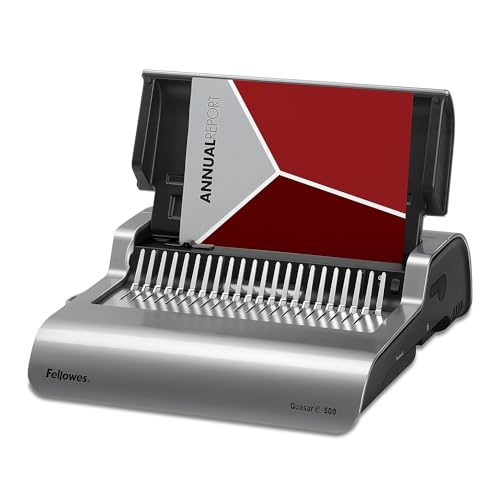
- Electric punch handles up to 20 sheets
- Binds up to 500 sheets with a 2-inch comb
- Includes guides, storage, and a 2-year warranty
Best For: High-volume classroom and office document organization
Crafting Versatility
We R Memory Keepers Universal Cinch

- Works with spiral, wire, and coil binding
- Adjustable pegs customize hole layouts
- Also serves as a 3-hole punch
Best For: Planners, scrapbooks, and handmade books
Adjustable Coil Workhorse

- Punches up to 20 sheets per cycle
- Manual binding capacity reaches 440 sheets
- Electric coil inserter and 46 disengageable dies
Best For: Medium-volume coil binding across multiple paper sizes
Heavy-Duty Finishing Press

- Applies up to 3,306 pounds of pressure
- Steel frame and dual balance bars improve stability
- Flattens books, documents, and craft projects
Best For: Flattening and finishing bound books and documents
Best Electric Coil Binder
MAKEASY Spiral Coil Binding Machine

- Electric coil insertion for faster binding
- Punches up to 20 sheets of 80 gsm paper
- 46 adjustable pins support multiple paper sizes
Best For: Small offices, schools, and homeschool coil projects
Best High-Capacity Comb Binder
TIANSE 450-Sheet Comb Binding Machine

- Binds documents up to 450 sheets
- Metal housing with high-leverage manual handle
- Includes 100 starter comb spines
Best For: Thick reports and everyday office or classroom comb binding
Best Thermal Binder for Thick Documents
Hoqqf 500-Sheet Thermal Binding Machine

- Handles up to 500 pages per cycle
- Supports Letter, A3, A4, and A5 sizes
- Temperature-control features support consistent bonding
Best For: Thick reports, contracts, presentations, and business paperwork
Best Electric Coil Option
TIANSE Spiral Coil Binding Machine
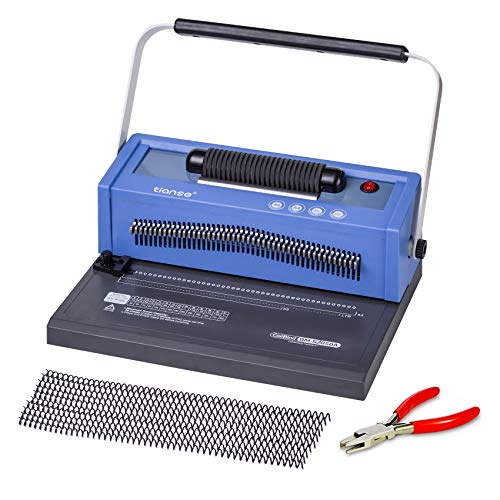
- Electric coil inserter speeds up binding
- Punches up to 20 sheets
- Adjustable A4, A5, and Letter setup
Best For: Small offices and varied plastic-coil projects
Best Heavy-Duty Pick
Amazon Basics Comb Binding Machine

- Binds up to 350 sheets
- Punches 12 sheets per cycle
- Carbon steel blade and adjustable margin
Best For: Thick office and school documents
Best for Classrooms
Fellowes Pulsar+ Comb Binding Machine

- Punches up to 20 sheets
- Binds up to 300 sheets
- Includes alignment and storage features
Best For: Teachers making workbooks and lesson planners
Classroom Powerhouse – Fellowes Quasar 500 Electric Comb Binder
For high-volume projects, the Fellowes Quasar 500 is one of the most substantial heavy duty book binding machines in this roundup. Its electric punch handles up to 20 sheets at once, while the binding mechanism supports documents up to 500 sheets with a 2-inch plastic comb.
Best For: Classrooms, offices, and anyone organizing thick portfolios, textbooks, or year-long planners.
Pros:
- Electric punching reduces manual effort and handles up to 20 sheets per cycle.
- Binds documents up to 500 sheets with a large 2-inch comb.
- Includes an accuracy edge guide, measurement tool, and comb storage tray.
- Backed by a 2-year warranty.
Cons:
- At 25.8 pounds, it is relatively heavy for a desktop binding machine.
- Its comb-binding format may not suit users who prefer spiral or wire binding.
The Quasar 500 is a strong choice when capacity and reduced punching effort matter more than portability. Its automatic operation and document-guidance features are especially useful for repeated school or office binding tasks.
Crafting Versatility – We R Memory Keepers Universal Cinch
The We R Memory Keepers Universal Cinch is a flexible option among heavy duty book binding machines for makers who want more than one binding style. It supports spiral, wire, and coil projects, with adjustable pegs for customized hole layouts.
Best For: Beginners and experienced crafters making notebooks, planners, scrapbooks, and handmade books.
Pros:
- Supports spiral, wire, and coil binding.
- Adjustable pegs allow skipped holes and personalized layouts.
- Also functions as a traditional 3-hole punch.
- Precision guides help with accurate spiral-coil projects.
Cons:
- The listed sheet capacity is 30 sheets, lower than several high-capacity machines.
- Its 1,200-gram weight and craft-focused design may be less suitable for demanding production work.
This machine stands out for versatility rather than maximum document capacity. Choose it if you value creative control and multiple binding formats for smaller handmade projects.
Adjustable Coil Workhorse – Electric Coil Binding Machine
This coil binding machine combines a manual punch with an electric coil inserter, making it a practical choice among heavy duty book binding machines for medium-volume work. It punches up to 20 sheets and can bind up to 440 sheets manually, with adjustable margins and disengageable dies for flexible layouts.
Best For: Offices, schools, and print rooms binding coil documents in letter, legal, tabloid, or A4 sizes.
Pros:
- Electric coil insertion speeds up finishing, while manual binding supports up to 440 sheets.
- Offers adjustable depth and side-margin controls for alignment.
- Includes 46 fully disengageable pins for smaller-than-letter pages.
- Open punch throat accommodates larger sheets, and the unit has a 2-year warranty.
Cons:
- Electric binding capacity is listed as up to 190 sheets, lower than its manual capacity.
- It uses a manual punching process, so punching still requires handle effort.
- The machine is limited to 20 punched sheets per cycle.
Its combination of adjustable punching and electric coil insertion makes this a well-rounded medium-volume solution. It is especially useful when document size and hole-layout flexibility are important.
Heavy-Duty Finishing Press – Manual A4 Book Binding Press
The ToolHaven Manual A4 Book Binding Press serves a different role from punch-and-bind equipment. Among heavy duty book binding machines, it is designed to flatten and press documents or bound books, generating up to 3,306 pounds of pressure through a reinforced screw-and-nut mechanism.
Best For: Flattening bound books, documents, invoices, stamps, and craft projects at home, school, or in an office.
Pros:
- Generates up to 1,500 kilograms, or 3,306 pounds, of pressing force.
- Thick steel frame, 8mm base plate, dual balance bars, and non-slip feet support stability.
- Guide rods and a main screw distribute pressure evenly.
- Three-sided guide baffles help prevent slipping and misalignment.
Cons:
- It is a flattening press, not a hole-punching or comb-insertion binding machine.
- At 27.5 pounds, it is substantial and may require dedicated workspace.
- The listed size is A4/standard size rather than a stated range of paper formats.
This press is best viewed as a finishing and flattening tool for bookbinding workflows. It makes sense when consistent compression and stability are the priority, rather than automated punching or binding.
Best Electric Coil Binder – MAKEASY Spiral Coil Binding Machine
For shoppers comparing heavy duty book binding machines, the MAKEASY stands out as an electric coil option for faster document production. It punches up to 20 sheets of 80 gsm paper at once and includes a coil starter kit and crimper.
Best For: Small offices, schools, and homeschool users binding coil documents in multiple paper sizes.
Pros:
- Electric coil insertion helps reduce manual effort on larger workloads.
- 46 disengaging pins accommodate Letter, legal, tabloid, A4, A5, and other sizes.
- Adjustable margins of 2.5mm, 4.5mm, and 6.5mm support precise alignment.
- Includes 5/16-inch coils and a coil crimper.
Cons:
- Its punching capacity is limited to 20 sheets of approximately 20 lb paper.
- At 17 pounds, it is less portable than lighter manual models.
The MAKEASY is a practical choice when electric coil insertion and flexible hole placement matter more than maximum punching capacity. Its included accessories add convenience for getting started.
Best High-Capacity Comb Binder – TIANSE 450-Sheet Comb Binding Machine
The TIANSE is a manually operated choice among heavy duty book binding machines, combining a metal housing with a high-leverage punch handle. It punches up to 12 sheets at a time and binds documents up to 450 sheets with a 2-inch plastic comb.
Best For: Offices, classrooms, and users who need affordable comb binding for thick documents in common paper sizes.
Pros:
- Supports up to 450-sheet documents with 2-inch comb bindings.
- Compatible with Letter, A4, A5, and smaller paper sizes.
- Includes 100 3/8-inch, 21-ring PVC comb spines.
- Lightweight 6.3-pound design is easy to move around a workspace.
Cons:
- Manual punching is limited to 12 sheets of approximately 20 lb paper per cycle.
- It cannot punch laminated paper.
- The handle must be pressed fully and without pausing to help prevent paper jams.
The TIANSE offers strong document capacity without an electric motor, making it suitable for routine comb binding on a budget. Its starter kit and compact weight further improve its everyday practicality.
Best Thermal Binder for Thick Documents – Hoqqf 500-Sheet Thermal Binding Machine
For adhesive-based projects, the Hoqqf thermal model is one of the heavy duty book binding machines designed for thick documents. It supports up to 500 pages per cycle, with the manufacturer recommending 350 to 400 pages for stronger adhesive penetration and a cleaner finish.
Best For: Professional-looking reports, contracts, presentations, ledgers, and other thick documents.
Pros:
- Supports up to 500 pages or 50mm thickness per cycle.
- Works with Letter, A3 short edge, A4, and A5 paper sizes.
- CPU temperature control, PTC ceramic heating, and infrared detection promote consistent heating.
- Includes 10 trial 6mm cover sheets, each designed for 35 to 50 pages.
Cons:
- Included cover sheets are intended for trial use, so additional supplies may be needed.
- For optimal bonding, the notes recommend staying below the stated 500-page maximum.
- Thermal binding requires compatible adhesive cover materials rather than combs or coils.
The Hoqqf is the strongest fit here for users prioritizing thick, polished adhesive-bound documents. Its capacity and temperature-control features make it well suited to substantial office or business paperwork.
Best Electric Coil Option – TIANSE Spiral Coil Binding Machine
For heavier home or small-office workloads, the TIANSE Spiral Coil Binding Machine combines manual punching with an electric coil inserter. Its adjustable guides, disengaging pins, and open throat make it a flexible choice among heavy duty book binding machines for A4, A5, Letter, and custom-sized projects.
Best For: Users who want faster plastic-coil insertion and adjustable punching for varied document sizes.
Pros:
- Electric coil inserter reduces hands-on effort during larger jobs.
- Punches up to 20 sheets of 80 gsm paper at a time.
- Supports A4, A5, and Letter formats with adjustable margins and disengaging pins.
- Includes 100 black 5/16-inch PVC coils and crimper pliers.
Cons:
- Cannot punch laminated paper.
- Plastic coils and pliers are starter accessories, so additional supplies may be needed.
- Requires initial lubricant cleanup before use.
Choose this model if reducing coil-insertion work matters as much as punching capacity. Its metal construction and customization options add versatility, while the included starter kit helps you begin binding immediately.
Best Heavy-Duty Pick – Amazon Basics Comb Binding Machine
The Amazon Basics Comb Binding Machine is a straightforward manual option for assembling thick documents. With a 350-sheet binding capacity, carbon steel punch blade, and adjustable margin, it is a practical pick among heavy duty book binding machines for routine office or school use.
Best For: Users who need high-capacity plastic-comb binding with a simple all-in-one design.
Pros:
- Binds documents up to 350 pages with a suitable plastic comb.
- Punches up to 12 sheets at a time.
- Durable carbon steel blade and heavy-duty construction.
- Fixed paper slider helps prevent hole offset.
Cons:
- Plastic comb spines are not included.
- Manual operation requires repeated punching and binding effort.
- Its punch capacity is lower than its overall binding capacity.
This is a sensible choice when document thickness is the priority and electric operation is unnecessary. Its integrated punch-and-bind mechanism keeps the workflow simple, though you will need to purchase combs separately.
Best for Classrooms – Fellowes Pulsar+ Comb Binding Machine
The Fellowes Pulsar+ is designed for repeated classroom and school-document projects. Its 20-sheet manual punch capacity, 300-sheet binding capacity, alignment guide, and integrated storage make it a useful contender among heavy duty book binding machines for workbooks, lesson planners, and student portfolios.
Best For: Teachers and school users producing batches of organized, plastic-comb-bound materials.
Pros:
- Punches up to 20 sheets at once for faster batch preparation.
- Binds up to 300 sheets with a 1.5-inch plastic comb.
- Vertical loading path and edge guide support consistent alignment.
- Includes a 10-pack starter kit and built-in comb storage.
Cons:
- Manual punching requires user effort.
- Its stated binding capacity is below the 350-sheet capacity of the Amazon Basics model.
- Designed for plastic combs rather than spiral coils.
For classroom organization, the Pulsar+ balances substantial capacity with helpful setup features. The storage tray and document measurement tool are especially useful when switching between frequent workbook and planner projects.
How We Picked the Best Heavy Duty Book Binding Machines
We compared these heavy-duty book binding machines by looking at their binding methods, punch capacity, maximum document thickness, operating speed, adjustability, and ease of use. We also considered whether each machine suits occasional office work, classroom projects, creative bookmaking, or frequent high-volume production.
Capacity claims can vary by paper weight, cover thickness, and binding supplies, so treat maximum-sheet figures as general guidelines rather than guarantees. Electric punching and coil insertion can reduce repetitive effort, while manual machines may offer greater control and lower maintenance.
Quick Comparison
| Binding Style | Best For | Typical Advantages |
|---|---|---|
| Comb | Reports, manuals, and training materials | Pages can be added or removed easily |
| Coil or spiral | Workbooks, planners, and presentations | Pages turn smoothly and lie relatively flat |
| Wire | Professional presentations and client documents | Clean, polished appearance |
| Thermal | Book-style documents and finished reports | Neat appearance with no punched holes |
| Binding press | Bookmaking and document flattening | Strong compression and manual control |
Key Buying Factors for Heavy-Duty Book Binding Machines
Binding Method and Document Style
Choose comb binding if you expect to revise documents frequently. Coil and spiral systems are better for notebooks, workbooks, and pages that need to open flat. Thermal binding creates a more book-like finish, while wire binding generally offers a sharper presentation for business documents.
Punch Capacity and Binding Capacity
Punch capacity describes how many sheets the machine can perforate in one cycle; binding capacity describes the total thickness it can finish. A machine that punches 20 sheets may still bind several hundred sheets, depending on the spine or coil size. For regular large jobs, prioritize electric punching, cooling or duty-cycle guidance, and sturdy construction.
Adjustability and Paper Compatibility
Adjustable side margins, disengageable punching pins, multiple paper-size settings, and depth controls help prevent uneven holes and damaged pages. Check compatibility with A4, letter, A5, cover stock, and laminated sheets before buying.
Workspace, Supplies, and Maintenance
Measure the available desk space and allow room for paper loading and finished documents. Confirm that compatible combs, coils, wire elements, thermal covers, and replacement parts are readily available. Electric models may save time but require access to a suitable outlet and generally need more care than simple manual units.
Who Should Buy Which Heavy Duty Book Binding Machines?
For offices and schools: A dependable comb binder is practical when documents need frequent updates or reuse. Look for a generous punch capacity and a starter kit.
For studios and bookmaking: Coil, spiral, or wire-capable machines provide more creative flexibility. Adjustable margins and disengageable pins are especially useful for mixed paper sizes.
For high-volume production: Choose an electric punch or electric coil inserter to reduce hand fatigue and speed up repetitive jobs. Verify the recommended duty cycle before committing.
For book-style finishing: A thermal binder is a good choice when a clean spine and polished presentation matter more than easy page replacement.
For occasional heavy compression work: A manual binding press can suit users who need controlled flattening or book assembly without relying on an electric motor.