
Finding the right recorder is less about spending the maximum and more about matching storage, microphone quality, transcription tools, and everyday usability to your workflow. The best voice recorders under $300 range from compact AI note takers to simple USB-rechargeable devices for lectures and interviews.
We selected these 10 models for their recording capacity, playback options, portability, voice activation, noise-reduction features, and potential to simplify note-taking. Use the guide below to compare the most important differences before choosing.
Best 10 Voice Recorders Under 300 Picks for 2026
Best AI Voice Recorder
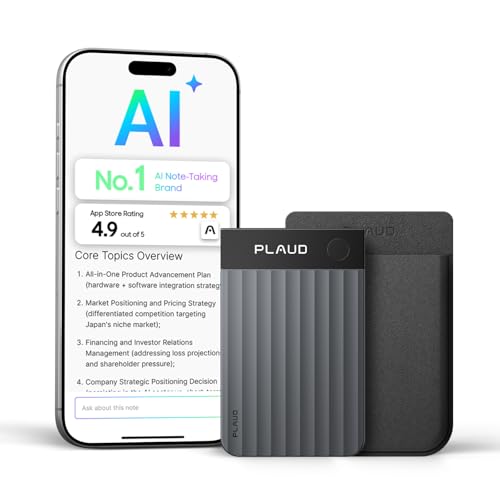
- Records in-person conversations, calls, and online meetings
- Transcribes in 112 languages with summaries and speaker labels
- Ultra-slim design with 64GB storage and 30-hour recording time
Best For: Professionals who want AI-generated meeting notes
Best Simple Recorder
Sunlan 16GB Digital Voice Recorder
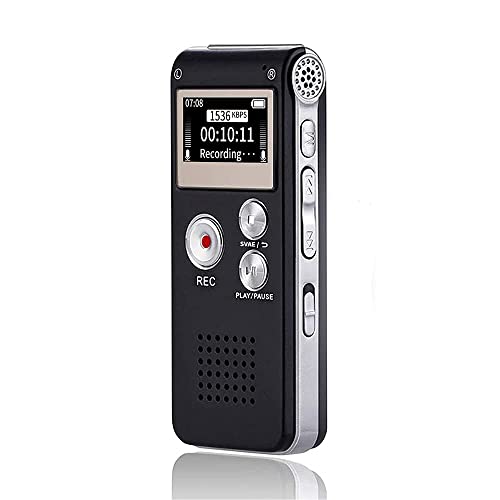
- Simple REC, STOP, and PLAY controls
- Up to 30 hours of recording with 16GB storage
- Voice activation and USB file-transfer functionality
Best For: Students and users who want basic recording and playback
Best High-Capacity Recorder

- 128GB storage with up to 33 hours of recording
- AI transcription in 113 languages with summaries and speaker tools
- Password lock, voice activation, and wired OTG transfer
Best For: Users needing extensive storage and app-based AI features
Best Compact Recorder

- Ultra-slim aluminum body weighs about 0.8 ounces
- 32GB storage and 35–40 hours of recording time
- Voice activation, noise reduction, and USB-C file management
Best For: Portable recording for classes, meetings, and interviews
Best High-Capacity Pick
Tonfarb 136GB Digital Voice Recorder

- Up to 9,775 hours of storage
- 68-hour continuous recording claim
- 1536 kbps PCM with noise reduction
Best For: Students, journalists, and extended recording sessions
Best Simple Budget Option
HoTiyan 8GB Digital Voice Recorder

- Simple three-button operation
- Voice activation and stereo recording
- A-B repeat and variable playback speed
Best For: Students and casual lecture recording
Best Feature-Rich Pick
Tonfarb 64GB Digital Voice Recorder

- 64GB storage for long recordings
- 1536 kbps PCM with noise reduction
- Scheduled and external recording modes
Best For: Flexible lecture, interview, and field recording
Best for Maximum Storage

- 136GB capacity stores up to 18,800 hours
- Up to 100 hours of continuous recording
- AI noise filtering and USB-C file transfer
Best For: Long-term recording, hands-free use, and extensive file storage
Best for Organized Lecture Recording

- 128GB storage for up to 9,296 hours
- Selectable MP3 and high-quality WAV formats
- Voice activation, folders, and password protection
Best For: Lectures, meetings, interviews, and organized file management
Best Compact Budget Option

- Lightweight 1.6-ounce portable design
- Up to 20 hours of continuous recording
- A-B repeat, variable speed, and MP3 playback
Best For: Students and casual users needing simple portable recording
Best AI Voice Recorder – Plaud Note Pro
For shoppers comparing voice recorders under 300, the Plaud Note Pro is a productivity-focused option that records in-person conversations, phone calls, and online meetings. Its AI tools can transcribe in 112 languages, identify speakers, and organize recordings into summaries, decisions, and follow-ups.
Best For: Professionals who want an integrated recording, transcription, and meeting-notes workflow.
Pros:
- Supports in-person, phone-call, and online-meeting recording.
- AI transcription includes 112 languages, speaker labels, and structured summaries.
- Compact 0.12-inch design with a 0.95-inch AMOLED display and magnetic accessories.
- Includes 64GB storage, 30-hour recording time, and a free 300-minute monthly starter plan.
Cons:
- Many advanced AI minutes require a Pro or Unlimited upgrade.
- Its feature-rich workflow may be more than needed for basic recording and playback.
- Users should notify others and follow applicable recording and privacy laws.
The Note Pro stands out when the goal is turning conversations into usable work, rather than simply saving audio files. It is a strong fit for meetings and calls, provided you are comfortable using its app-based AI workflow.
Best Simple Recorder – Sunlan 16GB Digital Voice Recorder
If you want a straightforward choice among voice recorders under 300, this Sunlan model keeps the controls simple: press REC to start, STOP to finish, and PLAY to review. It also provides noise reduction, voice activation, and direct USB file transfer for lectures, interviews, and meetings.
Best For: Students and everyday users who prioritize uncomplicated recording and playback.
Pros:
- One-button recording and built-in speaker make it easy to operate.
- 16GB storage and up to 30 hours of continuous recording.
- Voice activation can reduce silent sections and conserve storage.
- Functions as a music player and removable USB storage device.
Cons:
- Stores less data than the 128GB and 32GB alternatives in this roundup.
- Its microphone operation is mono rather than stereo.
- Playback and file management rely on the device or USB connection rather than an AI notes app.
This recorder is a practical pick when reliability and ease of use matter more than smart transcription. It offers the basic tools needed to capture and review spoken audio without adding a complicated setup.
Best High-Capacity Recorder – EVISTR L359 AI Voice Recorder
The EVISTR L359 combines traditional digital recording with AI-assisted transcription, making it an appealing option among voice recorders under 300 for people who need substantial storage. It records HD audio, supports voice activation, and works with the AI DVR Link app for transcription, summaries, mind maps, speaker identification, and Ask AI insights.
Best For: Students and professionals who need high storage capacity plus AI processing through a phone app.
Pros:
- 128GB storage can hold up to 9,216 hours at 32kbps.
- AI features support transcription in 113 languages, summaries, and speaker identification.
- Up to 33 hours of continuous recording with a lightweight 2.24-ounce body.
- Password encryption, a HOLD switch, and wired OTG transfer add practical security and convenience.
Cons:
- AI processing requires the AI DVR Link app and a compatible phone connection.
- OTG transfer is wired rather than Bluetooth-based.
- The large storage figure depends on the selected recording bitrate.
The L359 is a versatile middle ground between a basic dictaphone and an AI note-taking system. Its standout advantage is the combination of 128GB capacity, long battery life, and app-assisted organization.
Best Compact Recorder – Vandlion V15
For buyers seeking a small, durable option among voice recorders under 300, the Vandlion V15 emphasizes portability and quick operation. Its aluminum-alloy body is only about one-quarter inch thick, while noise reduction, voice activation, and a slide switch support recording in classes, meetings, and interviews.
Best For: People who want a lightweight recorder with long battery life and simple physical controls.
Pros:
- Ultra-slim 0.8-ounce aluminum design is easy to carry.
- 32GB storage can hold up to 2,240 hours of audio files.
- Provides 35–40 hours of continuous recording after a charge.
- One-button operation, voice activation, and USB-C file management are convenient for everyday use.
Cons:
- Voice activation is off by default and must be enabled according to the manual.
- Playback and file management require a USB-C connection to a compatible device.
- It does not provide the AI transcription and summarization features found on the AI-focused models.
The V15 is best viewed as a pocketable, no-fuss recorder rather than a smart note-taking platform. Its low weight, metal construction, and extended battery make it especially practical for frequent recording away from a desk.
Best High-Capacity Pick – Tonfarb 136GB Digital Voice Recorder
For shoppers comparing voice recorders under 300, the Tonfarb A20 stands out for its large storage capacity, long battery life, and high-resolution PCM recording. It offers one-click recording, automatic noise reduction, voice activation, and a USB-C connection for transferring files.
Best For: Students, journalists, interviewers, and anyone who needs extended recording time for lectures, meetings, or classes.
Pros:
- 136GB total storage supports up to 9,775 hours of MP3 or WAV recordings.
- Up to 68 hours of continuous recording on one charge.
- 1536 kbps PCM recording, dual microphones, and automatic noise reduction.
- One-touch recording, voice activation, A-B repeat, and password protection.
Cons:
- The 1.44-inch screen is compact.
- Its extensive storage may be more than casual users need.
The A20 is a strong choice when recording endurance and storage matter most. Its metal body and 97-gram weight also make it practical for carrying between classes, meetings, and interviews.
Best Simple Budget Option – HoTiyan 8GB Digital Voice Recorder
If you want one of the more straightforward voice recorders under 300, this HoTiyan model focuses on essential recording and playback functions. It includes stereo recording, voice activation, A-B repeat, variable playback speed, and file transfer through its supplied Micro USB cable.
Best For: Students and casual users recording lectures, meetings, interviews, or personal notes.
Pros:
- Simple three-button operation for recording, saving, and playback.
- Voice-activated recording can reduce silent sections and conserve storage.
- Supports MP3 and WAV files, plus playback as an MP3 player.
- Includes password protection, timestamps, variable playback speed, and A-B repeat.
Cons:
- Storage is limited to 8GB compared with the other listed models.
- Continuous recording is rated at up to 20 hours.
- File transfers use Micro USB rather than USB-C.
This recorder is a practical fit for buyers who prefer simple controls and useful study features over maximum storage. Its compact design and 3.5mm headphone jack make reviewing recordings convenient.
Best Feature-Rich Pick – Tonfarb 64GB Digital Voice Recorder
Among voice recorders under 300, the Tonfarb A12 offers a broad set of recording and playback tools in a portable design. Its 64GB storage, one-click controls, voice activation, scheduled recording, file segmentation, and PCM audio support make it versatile for everyday and professional use.
Best For: Users who want flexible recording modes for lectures, interviews, meetings, travel, music projects, or sound archiving.
Pros:
- 64GB storage supports up to 4,600 hours of recordings.
- 1536 kbps PCM recording with automatic noise reduction.
- One-click recording, scheduled recording, internal and external recording, and file segmentation.
- Includes voice activation, password protection, bookmarking, A-B loop playback, and MP3 playback.
Cons:
- Battery specifications vary in the supplied details, with up to 32 hours listed for average battery life and up to 48 hours for recording at a stated setting.
- The device uses a 1.44-inch screen for navigation.
The A12 is a well-rounded option for buyers who value recording flexibility more than a minimalist interface. Its included cables and two-year warranty add practical value for regular use.
Best for Maximum Storage – 136GB Magnetic Voice Recorder
If you need voice recorders under 300 with exceptionally large storage, this compact model stands out with 136GB of internal space and up to 100 hours of continuous recording. Its magnetic design, one-touch controls, USB-C transfer, and AI noise filtering make it practical for meetings, interviews, classes, and everyday use.
Best For: Professionals, students, journalists, and anyone who needs long-term recording storage with hands-free placement.
Pros:
- 136GB storage holds up to 18,800 hours of recording files.
- Double-sided magnets support hands-free recording on metal surfaces.
- AI noise filtering and DSP processing help reduce background interference.
- USB-C and OTG support simplify transfers to compatible phones and computers.
Cons:
- The feature-rich design may be more than needed for basic recording.
- Magnetic mounting is most useful only where a suitable metal surface is available.
Choose this recorder if storage capacity and flexible placement matter most. It combines a very large file library with portable recording and modern USB-C connectivity.
Best for Organized Lecture Recording – EVIDA 128GB Voice Recorder
For shoppers comparing voice recorders under 300 for lectures, meetings, and interviews, the EVIDA recorder offers 128GB of storage, selectable recording formats, voice activation, and playback. Password protection and four-folder organization also make it useful when recordings need to stay easy to manage.
Best For: Students, teachers, business users, and anyone who wants organized recordings with adjustable quality settings.
Pros:
- 128GB storage accommodates up to 9,296 hours of recording files.
- Supports MP3 at 128 or 192kbps and WAV at 1536kbps.
- Voice activation can reduce blank sections and quieter snippets.
- Includes password protection, A-B repeat, bookmarks, and four-folder storage.
Cons:
- Battery life is listed at up to 54 hours, which is less than its total storage capacity might suggest for uninterrupted use.
- The supplied details list USB 2.0 rather than USB-C connectivity.
- No headphones jack is listed in the product details.
This is a practical choice when file organization and recording controls are as important as capacity. Its multiple formats and playback features suit study and professional review.
Best Compact Budget Option – 16GB Voice Activated Recorder
This 16GB model is a straightforward option among voice recorders under 300, offering simple three-button operation, voice activation, stereo recording, and MP3/WAV support. Its small 1.6-ounce body and rechargeable battery make it convenient for classes, meetings, interviews, and portable playback.
Best For: Students and casual users who want an affordable, lightweight recorder with essential playback and organization features.
Pros:
- Compact 1.6-ounce design is easy to carry.
- Voice activation can reduce silent sections and whisper fragments.
- Supports stereo recording, MP3/WAV files, and up to 20 hours of continuous recording.
- Includes A-B repeat, variable playback speed, timestamps, and password protection.
Cons:
- Its 16GB capacity is much smaller than the other listed recorders.
- Continuous recording is limited to up to 20 hours per charge.
- File transfer uses the supplied Micro USB cable rather than USB-C.
Pick this recorder when portability, simple controls, and core recording functions matter more than maximum capacity. It is well suited to routine classes, meetings, and short recording sessions.
How We Picked the Best Voice Recorders Under 300
We focused on features that affect real-world recording rather than capacity numbers alone. Each model was considered for audio capture, built-in or companion-app transcription, storage, battery convenience, playback, portability, and controls. We also looked for useful extras such as voice activation, password protection, USB-C connectivity, magnetic mounting, and noise reduction.
Because recording needs vary, this list includes both straightforward digital dictaphones and newer AI-focused note takers. A simple recorder may be the better choice for dependable local files, while an AI model can save time when meetings or interviews need searchable summaries.
Quick Comparison
| Best For | Features to Prioritize | Models to Consider |
|---|---|---|
| Meetings and calls | AI transcription, summaries, clear microphones | Plaud Note Pro; EVISTR AI model |
| Lectures and interviews | Long battery life, playback, voice activation | 16GB and 128GB digital recorders |
| Maximum storage | High capacity, simple file transfer | Tonfarb 136GB; 136GB magnetic recorder |
| Discreet portability | Small body, magnetic attachment, easy controls | Vandlion V15; magnetic voice recorder |
Key Buying Factors for Voice Recorders Under 300
Recording Quality and Microphones
Look for clear microphone pickup and noise-reduction processing if you record in classrooms, conference rooms, or busy public spaces. Stereo or multi-microphone designs can help capture multiple speakers, but placement still matters. For the clearest results, position the recorder near the main speaker and avoid covering its microphone.
Storage and File Management
Storage claims can be very high, but practical file management is equally important. Confirm that recordings can be transferred easily over USB and check whether the device supports common audio formats. More capacity helps when recording long lectures or leaving voice activation enabled for extended periods.
Battery, Playback, and Connectivity
A rechargeable battery is convenient for daily use, while long stated recording times are helpful for travel or multi-day events. Built-in playback lets you review files without another device. USB-C is generally preferable for newer accessories, although USB-A compatibility can be useful with older computers.
Transcription, Privacy, and Controls
AI transcription and summaries can reduce manual note-taking, but review the service requirements, language support, subscription terms, and privacy policies before relying on them for sensitive conversations. Password protection is useful for stored files, while physical buttons may be more dependable than app-only controls when you need to start recording quickly.
Who Should Buy Which Voice Recorders Under 300?
Choose an AI recorder if you regularly record meetings, calls, interviews, or brainstorming sessions and want transcripts or summaries. Choose a high-capacity traditional recorder if you need extended recording time and prefer managing files yourself. Choose a compact or magnetic model for discreet placement, mobile interviews, or hands-free recording. Choose a basic 8GB or 16GB device if you mainly record occasional lectures, reminders, or conversations and want a lower-complexity option.
Before buying, verify local recording-consent laws, especially for calls and in-person conversations. Then prioritize the feature you will use most—transcription, battery endurance, storage, or portability—rather than paying for specifications that do not fit your routine.