
If you’re digitizing old negatives and slides, resolution matters. The best high resolution film scanners can reveal fine grain, preserve color detail, and make restoration far easier later.
This roundup focuses on scanners that balance image quality, format support, and everyday usability, whether you want a simple all-in-one model or a more advanced 35mm workflow.
Best 10 High Resolution Film Scanners Picks for 2026
Flatbed All-Rounder
Epson Perfection V550 Color Photo Scanner

- 6400 dpi optical resolution for enlargements
- Built-in transparency unit for slides and negatives
- Digital ICE and Easy Photo Fix aid restoration
Best For: Home archiving with film, photo, and document scanning
Compact Standalone
Magnasonic FS71 24MP Film Scanner

- 24MP output with no computer needed
- 5-inch LCD and HDMI for easy previewing
- Supports multiple film and slide formats
Best For: Quick, computer-free home scanning
High-Detail Flatbed
Epson Perfection V600 Photo Scanner

- 6400 x 9600 dpi for detailed enlargements
- Scans 35mm and medium-format film
- DIGITAL ICE and Easy Photo Fix included
Best For: Archiving film and medium-format originals with detail
Easy Preview Scanner
KODAK Slide N Scan 22MP Film Scanner

- 22MP output with simple one-touch editing
- 5-inch LCD preview screen with gallery mode
- Fast loading trays for continuous scanning
Best For: Simple slide and negative scanning with quick previews
Professional 35mm Scanner
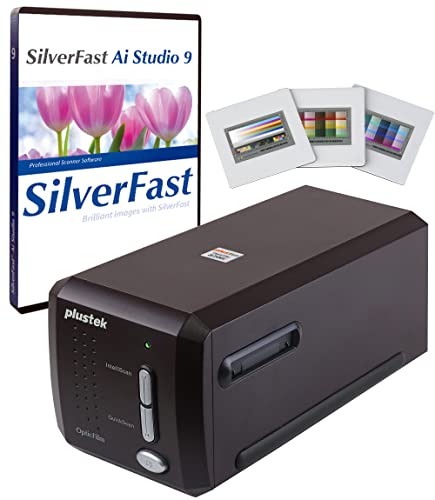
- 7200 dpi CCD scanning for 35mm film
- Includes SilverFast 9 Ai Studio and IT8 target
- Built-in infrared tools for dust and scratch reduction
Best For: photographers and enthusiasts digitizing 35mm slides and negatives
All-in-One Home Scanner
22MP Film & Slide Scanner with 5" LCD

- Scans multiple film formats including 35mm, 110, 126, and Super 8
- 5-inch LCD supports preview, playback, and simple controls
- USB-C, HDMI, and SD card options for easy saving and sharing
Best For: casual users digitizing mixed film formats at home
Premium 35mm Digitizer
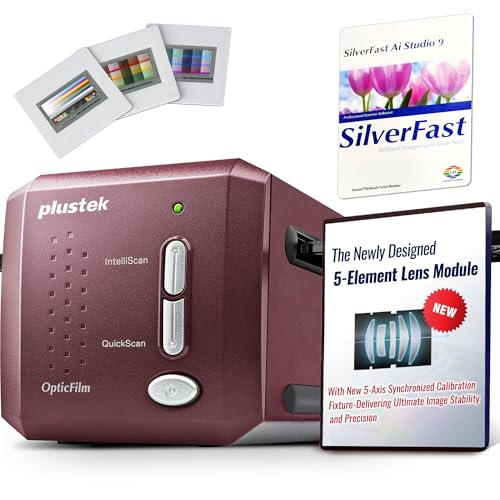
- 7200 dpi optical resolution with a 5-element lens
- Five-axis calibration and SilverFast Ai Studio included
- Infrared dust and scratch removal for cleaner scans
Best For: serious 35mm archiving and color-critical workflows
Compact High-Resolution Everyday Scanner

- Scans up to 24MP with a CMOS sensor.
- Large 5-inch LCD helps with previews.
- Supports 135, 126, 110, Super 8, slides, and negatives.
Best For: Home users who want simple, fast film scanning
Pro 35mm Detail Scanner

- 7200 dpi output for 35mm film and slides.
- Infrared channel helps remove dust and scratches.
- Includes SilverFast SE Plus 9 software bundle.
Best For: 35mm film photographers who want detailed scans and cleanup tools
Versatile One-Touch Film Converter

- Supports 135mm, 110mm, and 126mm film.
- Saves directly to SD/SDHC cards up to 32GB.
- One-touch editing keeps scanning simple.
Best For: Families and casual users archiving mixed film formats
Flatbed All-Rounder – Epson Perfection V550 Color Photo Scanner
If you’re comparing high resolution film scanners for mixed photo archiving, the Epson Perfection V550 gives you a versatile flatbed setup with 6400 dpi optical resolution and a built-in transparency unit. It handles 35mm slides, negatives, film, photos, and documents, so it works well when you need one scanner for both restoration and everyday digitizing.
Best For: Home users who want a versatile scanner for film, photos, and documents with restoration tools.
Pros:
- 6400 dpi optical resolution for sharp enlargements up to 17 x 22 inches
- Built-in transparency unit scans 35mm slides, negatives, and film
- Digital ICE helps reduce the appearance of dust and scratches on film
- ReadyScan LED technology means no warmup time
Cons:
- Requires a computer connection via Hi-Speed USB 2.0
- Bulkier than compact dedicated film-only scanners
This is a strong choice if you want a scanner that balances image quality with flexibility. It is especially appealing for anyone restoring older prints and film while also needing OCR for documents.
Compact Standalone – Magnasonic FS71 24MP Film Scanner
For buyers focused on high resolution film scanners that are simple to use, the Magnasonic FS71 converts negatives and slides into 24MP JPEG files without requiring a computer. Its 5-inch LCD, HDMI output, and SD card saving make it a practical option for fast home scanning sessions.
Best For: Users who want a compact, computer-free film scanner for quick digitizing and easy viewing.
Pros:
- Converts 35mm, 110, 126, and Super 8 film plus several slide formats
- 24MP output with manual brightness and RGB color correction
- 5-inch LCD screen and HDMI support for previewing scans
- Scans and saves directly to SD card with no driver installation required
Cons:
- Built-in memory is limited to 128MB, so SD card storage matters
- Resolution is lower than high-end flatbed scanners for large enlargements
This scanner makes sense when convenience matters more than advanced editing or maximum optical detail. It is a straightforward way to preserve old film quickly, especially if you prefer an all-in-one device.
High-Detail Flatbed – Epson Perfection V600 Photo Scanner
If you want one of the more capable high resolution film scanners for detailed restoration, the Epson Perfection V600 delivers 6400 x 9600 dpi and a built-in transparency unit. It handles 35mm and medium-format slides and negatives, plus prints and documents, making it a strong choice for deeper photo archiving projects.
Best For: Detail-focused users scanning film, slides, and medium-format originals for archiving or enlargements.
Pros:
- 6400 x 9600 dpi resolution supports enlargements up to 17 x 22 inches
- Transparency unit scans 35mm mounted slides and negatives
- Handles medium-format film up to 6 x 22 cm
- Includes DIGITAL ICE and Easy Photo Fix for cleanup and restoration
Cons:
- Needs a USB connection to a computer
- Larger flatbed design is less portable than dedicated film scanners
For users who value scan quality and restoration tools, the V600 is a very well-rounded option. It is especially useful if your archive includes more than just 35mm film.
Easy Preview Scanner – KODAK Slide N Scan 22MP Film Scanner
Among high resolution film scanners, the KODAK Slide N Scan is built for simple conversion of old negatives and slides into digital files. It offers 22MP output, a 5-inch LCD for previewing, and straightforward one-touch editing, so it fits users who want a fast, uncluttered workflow.
Best For: People who want a user-friendly scanner for slides and negatives with quick on-device editing.
Pros:
- 22MP output for digital conversion of negatives and slides
- 5-inch LCD with gallery mode for previewing and sharing
- Easy-load trays support fast continuous scanning
- One-touch editing adjusts color, brightness, and date/time
Cons:
- Supports SD or SDHC cards up to 32GB, which are not included
- Film compatibility is focused on 135, 110, and 126 formats
This is a practical pick if you want a simple standalone scanner with quick results and minimal setup. It is less about advanced control and more about ease of use for family photo projects.
Professional 35mm Scanner – Plustek OpticFilm 8300i Ai
If you want high resolution film scanners for serious 35mm work, the Plustek OpticFilm 8300i Ai is built around speed, color calibration, and software-driven restoration. Its 7200 dpi CCD design, bundled SilverFast 9 Ai Studio, and included IT8 target make it a strong fit for photographers who want a more controlled digitizing workflow.
Best For: photographers and film enthusiasts who want a 35mm scanner with pro-level software and calibration tools.
Pros:
- 7200 dpi optical resolution with 16-bit color depth for detailed 35mm scans.
- Includes SilverFast 9 Ai Studio, Quick Scan Plus, and advanced IT8 calibration target.
- Built-in infrared features like iSRD and HDRi help reduce dust and improve restoration.
- New chip design scans up to 38% faster than the previous model.
Cons:
- Made for 35mm slides and negatives, so it is not a general-purpose film scanner.
- Relies on bundled software and calibration for the best results, which adds setup steps.
This is a specialized option for users who value scan quality and fine control over convenience. If your priority is accurate 35mm digitization with strong correction tools, the 8300i Ai is a compelling choice.
All-in-One Home Scanner – 22MP Film & Slide Scanner with 5" LCD
For buyers looking at high resolution film scanners in a simple tabletop format, this 22MP unit focuses on convenience over advanced editing. It handles a wide range of formats, includes a 5-inch LCD for instant preview, and lets you save directly to memory or an SD card without needing a computer for basic scanning.
Best For: families and casual users who want a straightforward way to convert mixed film formats to digital.
Pros:
- Supports 35mm/135, 110, 126 negatives, 50mm slides, and Super 8 film.
- 5-inch LCD makes previewing and playback easy.
- One-touch scanning keeps the process simple and fast.
- Can output via USB-C or HDMI and save to internal memory or SD card.
Cons:
- 1080P output and 24-bit color depth are more modest than dedicated pro film scanners.
- Best suited to straightforward scanning rather than deep restoration or calibration work.
This model is appealing if you want an easy, self-contained way to digitize old film at home. It trades pro-level flexibility for speed, simplicity, and broad format support.
Premium 35mm Digitizer – Plustek OpticFilm 9000i Ai
If you are comparing high resolution film scanners for demanding 35mm digitizing, the Plustek OpticFilm 9000i Ai is aimed at users who want speed, precision, and color accuracy. It pairs 7200 dpi optical resolution with a 5-element lens, five-axis calibration, and SilverFast Ai Studio for a workflow geared toward detailed, consistent results.
Best For: serious photographers and studios scanning 35mm negatives and slides with color calibration needs.
Pros:
- True 7200 dpi optical resolution captures fine film detail and grain.
- 5-element lens and five-axis factory calibration support stable, consistent scans.
- SilverFast Ai Studio, QuickScan Plus, and IT8 target help with accurate color reproduction.
- Infrared dust and scratch removal through SilverFast iSRD reduces manual cleanup.
Cons:
- Designed specifically for 35mm film, so it is not a multi-format scanner.
- Professional software and calibration features may be more than casual users need.
Overall, this is the most feature-rich option here for users who care about precise 35mm archiving. It is best suited to those who will take advantage of its calibration tools and software bundle.
Compact High-Resolution Everyday Scanner – BEONEGLOBAL ClearScan S5
The BEONEGLOBAL ClearScan S5 is a practical pick for anyone comparing high resolution film scanners for fast, simple home digitizing. It scans 135, 126, 110, Super 8, negatives, and slides up to 24MP, while the 5-inch LCD and front-panel controls keep the process easy to manage without a computer-heavy workflow.
Best For: Home users who want a straightforward scanner with a large screen and broad film-format support.
Pros:
- 24MP output from a 1/2.3-inch CMOS sensor for detailed scans.
- 5-inch LCD makes previewing and adjusting images simple.
- Supports several common film formats, including negatives and slides.
- One-touch operation and direct save options to built-in memory or SD card.
Cons:
- Built-in memory is limited to 128MB.
- SD card support tops out at 32GB and the card is not included.
- Best suited to quick digitizing rather than advanced manual control.
Overall, the ClearScan S5 focuses on convenience and broad compatibility more than pro-level editing depth. If you want a compact scanner that keeps film conversion simple, it is an easy model to consider.
Pro 35mm Detail Scanner – Plustek OpticFilm 8200i SE
The Plustek OpticFilm 8200i SE is aimed at buyers who want a more specialized option among high resolution film scanners for 35mm negatives and mounted slides. Its 7200 dpi output, infrared dust and scratch removal, and bundled SilverFast software make it a strong choice for detailed archiving and image cleanup.
Best For: 35mm film users who want higher-detail scans and built-in defect removal.
Pros:
- 7200 x 7200 dpi output for very detailed 35mm scans.
- Infrared channel helps detect dust and scratches on the film surface.
- Includes SilverFast SE Plus 9 and Plustek software support.
- Supports Windows and Mac systems with broad OS compatibility.
Cons:
- Designed specifically for 35mm negatives and mounted slides.
- Uses USB and relies on desktop software, so it is less portable.
- Can be more involved than simple one-touch tray-style scanners.
If your priority is maximum detail from 35mm film and better cleanup tools, this Plustek model stands out. It is less versatile than multi-format scanners, but it is built for sharper, more controlled results.
Versatile One-Touch Film Converter – KODAK Slide N Scan Max
The KODAK Slide N Scan Max is a user-friendly option for people shopping high resolution film scanners that keep digitizing quick and organized. It supports 135mm, 110mm, and 126mm film, saves directly to SD/SDHC cards, and uses a smooth-moving tray plus one-touch editing to simplify scanning old slides and negatives.
Best For: Families and casual archivists who want easy multi-format film scanning without a computer.
Pros:
- Supports multiple formats, including 135mm, 110mm, and 126mm.
- Direct SD card saving makes it easy to work without a computer.
- One-touch editing keeps the workflow simple for beginners.
- 13MP CMOS sensor with up to 22MP interpolation for large files.
Cons:
- Optical resolution is listed at 3200, so it is not the highest-resolution option here.
- SD/SDHC cards are supported only up to 32GB.
- Best for convenience rather than advanced scanning controls.
This KODAK scanner is a strong choice if you value easy operation and broad film-format support. It balances convenience and decent image output well for everyday home archiving.
How We Picked the Best High Resolution Film Scanners
We prioritized scan quality, optical resolution, supported film formats, ease of use, and practical features like dust correction, preview displays, and software quality. For buyers comparing High Resolution Film Scanners, the goal is not just raw DPI claims but real-world detail retention and consistent results.
We also considered whether each scanner is better suited to quick home archiving or more demanding work with dense negatives, color correction, and long-term preservation.
Quick Comparison
Flatbed models are more versatile for mixed media and larger originals, while dedicated film scanners usually deliver better 35mm detail and sharper film-focused performance. LCD-equipped scanners are often the easiest for beginners because they let you preview and digitize without relying heavily on a computer.
If your priority is maximum image quality from 35mm film, dedicated units tend to be the stronger choice. If you need an all-purpose scanner for photos, documents, and film, a flatbed is usually more practical.
Key Buying Factors for High Resolution Film Scanners
Optical Resolution Vs. Advertised Resolution
Look for true optical resolution first. This is more important than inflated marketing numbers, especially if you want clean enlargements or detailed restoration work.
Film Formats Supported
Match the scanner to your archive. Some models handle only 35mm film and slides, while others support 110, 126, and Super 8. If you have mixed media, broader compatibility can save time and money.
Image Cleanup Features
Infrared dust and scratch removal can make a major difference on older negatives. Color restoration and exposure tools are also useful, but they should support, not replace, good source scans.
Workflow and Software
Consider whether you prefer computer-based editing or a standalone device with a built-in screen. Advanced software can improve results, but simple controls may be better for casual users who want fast, repeatable scans.
Speed and Ease of Use
Higher-detail scanning usually takes more time. If you are digitizing a large archive, a scanner that balances quality with manageable workflow will be the most practical investment.
Who Should Buy Which High Resolution Film Scanners?
Choose a flatbed scanner if you want one device for film, prints, and documents. Choose a dedicated film scanner if your main goal is the sharpest possible 35mm output. Choose an LCD-based scanner if you want a straightforward, computer-light setup for family archives.
For enthusiasts and archivists, models with stronger software, better alignment, and dust removal are worth the extra cost. For occasional use, a simpler scanner can be the better value as long as it supports the formats you actually own.