
Old slides and negatives can fade, but the memories do not have to. The right scanner makes it easy to turn family archives into shareable digital files without a complicated setup.
In this roundup, we focus on portable film scanners that balance convenience, format support, and image quality for home users who want a simple way to preserve film.
Best 10 Portable Film Scanners Picks for 2026
Classic 5" LCD Film Digitizer
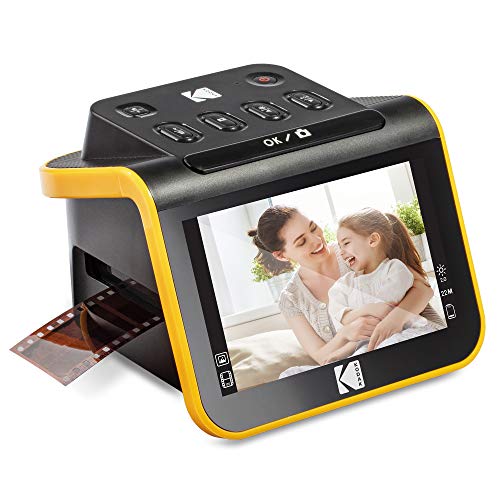
- 22MP scanner with 5" LCD preview
- Handles 135, 110, 126 film and 50mm slides
- Saves directly to SD card, no complex setup
Best For: Simple standalone digitizing of mixed old film and slide collections
All-in-One Photo Archive Scanner

- Scans slides, negatives, printed photos, and business cards
- Standalone design with 5" HD screen
- Includes 8GB SD card and accessory bundle
Best For: Digitizing a mixed family archive with minimal setup
High-Resolution 24MP Film Scanner

- 24MP output for detailed JPEG scans
- Works with 35mm, 110, 126, and Super 8 film
- 5" LCD plus HDMI viewing options
Best For: High-detail scanning of varied film and slide formats
Large-Screen Max Film Digitizer

- 7" display with one-touch editing
- Supports 135, 110, and 126 slides and negatives
- Direct SD/SDHC saving up to 32GB
Best For: Faster home scanning with a larger screen and simple controls
Versatile Family Scanner
22MP All-in-One Film & Slide Scanner

- Supports 35mm, 110, 126, slides, and Super 8
- 5-inch LCD with preview, playback, and basic edits
- USB-C and HDMI outputs for transfer or TV viewing
Best For: Families digitizing multiple film formats with minimal setup
Touchscreen Pick
HPFS500 Touchscreen Film & Slide Scanner
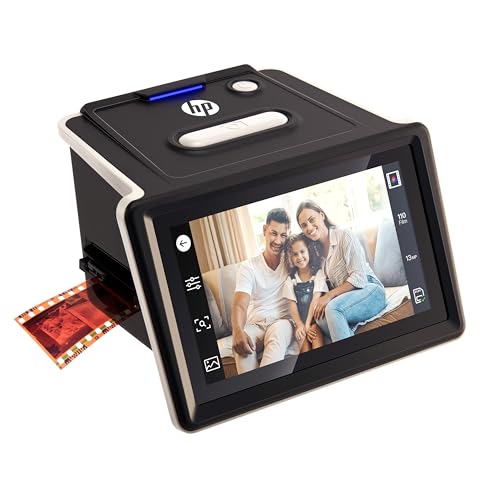
- 5-inch touch screen with preview and editing
- 13MP CMOS sensor with 22MP interpolation
- Supports 135, 126, 110 negatives and slides
Best For: Anyone who wants a simple, touch-based scanner for common formats
Classic Kodak Option
KODAK SCANZA Film & Slide Converter
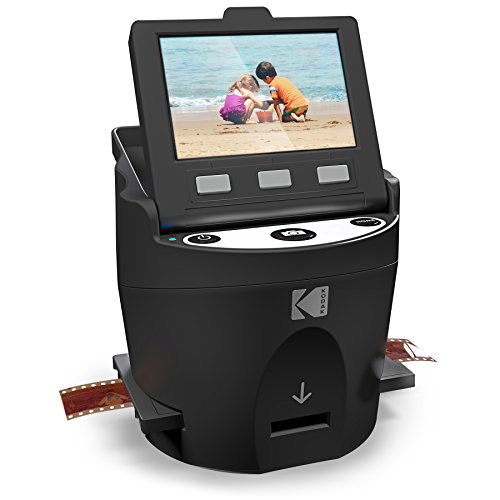
- Supports 35mm, 126, 110, Super 8, and 8mm
- 3.5-inch LCD with adjustable brightness and tilt
- Includes adapters, cables, and cleaning brush
Best For: People digitizing older film formats who want simple, quick JPEG conversion
Compact Smartphone Scanner
TCNEWCL 35mm Foldable Slide Scanner

- Supports 35mm slides and negatives.
- Foldable body is easy to store and carry.
- Uses your smartphone camera and a free app.
Best For: smartphone users digitizing 35mm film on a budget
Standalone LCD Digitizer
DigitConvert 35mm Scanner with 2.4" Screen

- 2.4-inch LCD allows preview and image adjustment.
- No PC, software, or drivers needed.
- Saves scans directly to SD card.
Best For: buyers who want a simple standalone 35mm scanner
Multi-Format High-Resolution Scanner
PORTTA 5" LCD Film & Slide Scanner

- Supports 135, 126, 110, and Super 8 photo frames.
- Choose 16MP or enhanced 22MP output.
- 5-inch LCD and HDMI output improve viewing.
Best For: households with mixed film formats who want easy standalone scanning
Classic 5" LCD Film Digitizer – KODAK Slide N Scan
If you want portable film scanners that keep the process simple, the KODAK Slide N Scan is a practical pick for converting old negatives and slides at home. It supports 135, 110, and 126 film formats, plus 50mm slides, and saves directly to an SD card so you can digitize memories without a computer workflow.
Best For: Home users who want a straightforward standalone scanner for mixed slide and negative collections.
Pros:
- 22MP output with a 5″ LCD for previewing and editing on-device
- Supports 135, 110, and 126 negatives plus 50mm slides
- Quick-feed tray design helps make scanning faster
- Includes slide holder, film adapters, cleaning brush, USB, and HDMI cables
Cons:
- SD card is not included
- Maximum supported card size is limited to 32GB
- Windows 7 is listed as the minimum system requirement for computer connection
Overall, this is a user-friendly film scanner for people who want clear output and simple controls more than advanced software tools. Its built-in screen and direct-to-card saving make it a convenient option for preserving a family archive.
All-in-One Photo Archive Scanner – DigitPro M129A
For shoppers comparing portable film scanners, this DigitPro model stands out because it handles more than just negatives and slides. It converts 35mm slides, 135 and 110 negatives, printed photos, and business cards into JPEGs, making it a flexible choice for broad household archiving.
Best For: Families who want one device for photos, slides, negatives, and small paper items.
Pros:
- All-in-one support for slides, negatives, printed photos, and business cards
- 5″ HD viewing screen with wide viewing angles
- Standalone operation with one-touch buttons and no software to install
- Includes an 8GB SD card, holders, trays, cleaning brush, adapter, and USB cable
Cons:
- Resolution is listed as 1080P rather than a higher megapixel spec
- SD card is included, but transfer still relies on the card or USB connection
- Heavier than some compact scanners at 1.5 kg
This is a solid pick if you want one machine that can handle multiple legacy formats without a computer. The included accessory bundle and 3-year warranty add extra value for long-term use.
High-Resolution 24MP Film Scanner – Magnasonic FS71
Among portable film scanners, the Magnasonic FS71 is built for users who want high-resolution digitizing with minimal fuss. It converts 35mm, 110, 126, and Super 8 film, along with 135, 126, and 110 slides, and lets you save files to an SD card without relying on editing software.
Best For: Users who want a compact standalone scanner for multiple film formats and crisp JPEG output.
Pros:
- 24MP output for detailed digital JPEG files
- Supports 35mm, 110, 126, and Super 8 film plus multiple slide formats
- 5″ LCD and HDMI output for on-device or TV/monitor viewing
- Fast-loading trays and simple controls make scanning quick
Cons:
- SD card is not included
- Built-in memory is only 128MB, so external storage is essential
- Minimum system requirement listed is Windows 7 for computer use
It’s a good fit if you care more about resolution and broad film compatibility than extras. The no-computer workflow and fast scan times make it easy to work through a stack of old media.
Large-Screen Max Film Digitizer – KODAK Slide N Scan Max
If you’re shopping portable film scanners for faster batch-style work, the KODAK Slide N Scan Max is designed to streamline the process. It supports 135, 110, and 126 film plus slides and negatives, and its smooth-moving tray helps reduce constant repositioning while scanning.
Best For: Users who want a larger-screen Kodak scanner with easy direct-to-card saving.
Pros:
- 7″ display and one-touch editing simplify previews and adjustments
- Supports 135mm, 110mm, and 126mm film in slide and negative form
- Saves directly to SD/SDHC cards up to 32GB
- 13MP sensor with 22MP interpolation for large digital files
Cons:
- SD/SDHC card is not included
- Maximum supported card size is limited to 32GB
- Windows 7 is the listed minimum system requirement for computer use
This model makes sense if you want a larger screen and a more streamlined workflow than smaller basic scanners provide. The tray system and direct saving help keep digitizing old media efficient and uncomplicated.
Versatile Family Scanner – 22MP All-in-One Film & Slide Scanner
If you want a practical portable film scanner for mixed archives, this DigitPro model covers a wide range of formats and keeps the process simple. It supports 35mm/135, 110, 126 negatives, 50mm slides, and Super 8 film, then lets you preview scans on the built-in 5-inch LCD before saving.
Best For: Home users digitizing several film and slide formats without needing a computer-first workflow.
Pros:
- Supports multiple formats, including 35mm/135, 110, 126, slides, and Super 8
- 5-inch LCD provides instant preview, playback, and basic on-device editing
- One-touch scanning keeps the process straightforward for non-technical users
- USB-C and HDMI outputs make it easy to transfer files or view scans on a TV
Cons:
- Uses built-in 128MB memory unless you add an external SD card
- SD card is not included
- Resolution is listed as 1080P, which may not suit users seeking the highest-end detail capture
This is a solid pick if you value simplicity, broad format support, and a self-contained scanning experience. The included accessories and straightforward controls make it especially approachable for family photo conversion projects.
Touchscreen Pick – HPFS500 Touchscreen Film & Slide Scanner
This HP film scanner is built for people who want a compact, portable film scanner with a touchscreen workflow. It handles 135, 126, and 110 negatives and positive slides, and the 5-inch all-angle LCD lets you preview and edit images directly on the device.
Best For: Users who want a simple touchscreen scanner for common slide and negative formats.
Pros:
- 5-inch touch screen makes previewing and editing easy on the device
- 13MP CMOS sensor with 22MP interpolation for clear digitization
- Supports 135, 126, and 110 film strips plus positive slides
- USB-C powered and can save directly to an SD card
Cons:
- Format support is narrower than some all-in-one scanners
- SD card is required for saving scans and is not included in the notes
- Best suited to direct, device-based scanning rather than advanced computer workflows
Overall, this is a user-friendly choice for straightforward photo digitization. The touchscreen layout and SD-card saving make it convenient for quick projects and small archives.
Classic Kodak Option – KODAK SCANZA Film & Slide Converter
The KODAK SCANZA is a practical portable film scanner for converting older negatives and slides into JPEG files quickly. It supports 35mm, 126, 110, Super 8, and 8mm formats, and the built-in 3.5-inch LCD plus one-touch buttons make it easy to scan without extra complexity.
Best For: Users who want a compact, brand-name scanner for common film formats and quick JPEG output.
Pros:
- Converts multiple formats, including 35mm, 126, 110, Super 8, and 8mm
- Built-in 3.5-inch LCD with adjustable brightness and tilt for easy viewing
- One-touch buttons and included adapters simplify scanning
- Includes HDMI, USB power cable, AC adapter, video cable, and cleaning brush
Cons:
- SD card is not included, though it supports cards up to 128GB
- Does not support film types outside the listed formats
- Uses a smaller display than some competing scanners
In practice, this scanner fits buyers who want a familiar interface and broad compatibility with older home film formats. The included accessories and simple operation make it a dependable choice for digitizing a backlog of media.
Compact Smartphone Scanner – TCNEWCL 35mm Foldable Slide Scanner
If you want a simple entry point into portable film scanners, this TCNEWCL model keeps the process basic and affordable. It works with 35mm slides and negatives using your smartphone camera, so it is a practical choice for casual home archiving and quick sharing.
Best For: Smartphone users who want a foldable, low-cost way to digitize 35mm slides and negatives.
Pros:
- Works with 35mm slides and film negatives.
- Foldable design stores easily and travels well.
- Built-in LED backlight helps with scanning.
- Free app support for capture, editing, and sharing.
Cons:
- Scan quality depends on your phone camera resolution.
- Designed specifically for 35mm media.
- Requires a smartphone for use.
For buyers who want a lightweight film digitizing tool without complicated setup, this scanner delivers the basics in a very portable package. It is best suited to everyday memory-saving rather than high-end restoration work.
Standalone LCD Digitizer – DigitConvert 35mm Scanner with 2.4" Screen
This DigitConvert option is a strong pick in portable film scanners if you want a standalone workflow without a computer. The built-in 2.4-inch LCD lets you preview and edit as you go, while one-click saving to SD card keeps the process straightforward.
Best For: Users who want a no-PC film scanner with built-in preview and SD card saving.
Pros:
- Built-in 2.4-inch LCD screen for preview and adjustments.
- No computer or drivers required.
- Supports 35mm film and slides with batch scanning.
- Saves directly to SD card for easy storage.
Cons:
- SD card is not included.
- Resolution is listed at 5MP, so it may not suit users seeking very high detail.
- Best suited to 35mm and 135 film formats.
For anyone who wants a compact digitizer that feels closer to an appliance than a tech project, this model is appealing. Its screen-based workflow makes it especially convenient for quick family archiving and easy sharing.
Multi-Format High-Resolution Scanner – PORTTA 5" LCD Film & Slide Scanner
Among portable film scanners, this PORTTA model stands out for supporting more film formats and offering a large 5-inch preview screen. It scans 135, 126, 110, and Super 8 photo frames, making it a flexible choice for households with mixed slide and negative archives.
Best For: Families or hobbyists with multiple film formats who want a larger screen and higher-resolution output.
Pros:
- Supports 35mm (135), 126, 110, and Super 8 photo frames.
- Offers 16MP or enhanced 22MP output.
- Large 5-inch LCD screen helps with previewing and alignment.
- Can save to SD card and output to a TV via HDMI.
Cons:
- Super 8 support is for photo only.
- Uses USB connection but operates without a computer.
- Bulkier than small foldable or smartphone-based scanners.
If you need a more versatile home digitizing tool, this scanner offers the broadest format support in the group. The larger screen and higher-resolution options make it a good fit when clarity and convenience matter more than minimizing size.
How We Picked the Best Portable Film Scanners
We looked for Portable Film Scanners that are easy to use, compact enough for home storage, and practical for common archiving tasks. Priority went to models with clear built-in displays, broad film compatibility, and straightforward digitizing controls. We also considered file-saving flexibility, connection options, and whether the scanner is better suited to quick family photo preservation or more regular batch scanning.
Quick Comparison
Among Portable Film Scanners, the main differences usually come down to supported formats, screen size, resolution, and workflow. Larger displays tend to make framing and previewing easier, while higher megapixel ratings can help capture more detail from older originals. HDMI output, USB-C, and simple memory-card saving can also matter if you want a smoother transfer process.
Key Buying Factors for Portable Film Scanners
Film and Slide Compatibility
Check which formats are supported before buying. Some scanners are focused on 35mm negatives and slides, while others also handle 110, 126, Super 8, or 8mm film. If your archive includes mixed media, wider compatibility can save you from needing multiple devices.
Resolution and Image Quality
Higher resolution does not automatically guarantee better results, but it can help when digitizing smaller frames or damaged originals. Look for a scanner that pairs usable resolution with decent color handling and a reliable preview screen.
Display and Ease of Use
A built-in screen makes Portable Film Scanners much easier for beginners. A 5-inch display is often more comfortable for cropping, alignment, and reviewing scans than a smaller panel, especially when you are working through many images.
Workflow and Output
Think about how you want to save and transfer files. Some scanners are designed for quick standalone use, while others lean on a TV, computer, or memory card workflow. Simple export options are usually best for casual users and family archiving projects.
Who Should Buy Which Portable Film Scanners?
If you are digitizing a box of family slides or negatives, choose a model with broad format support and a larger screen for easier handling. If you want the simplest plug-and-play experience, look for one-button scanning and built-in saving. If you are preserving a larger archive, prioritize faster handling, reliable controls, and output options that fit your editing or backup routine. For occasional home use, a compact scanner with basic controls may be all you need; for ongoing archiving, a more feature-rich unit is worth the extra cost.
In short, the best choice depends on whether you value speed, compatibility, display size, or output convenience most. Matching those priorities to your collection will help you get the most from Portable Film Scanners in 2026.