
If you edit photos on a laptop, extra screen space can make a bigger difference than a faster mouse or a nicer bag. A second display helps keep your image, tools, and reference panels visible at the same time.
This roundup of laptop screen extenders for photo editing focuses on portability, image quality, mounting flexibility, and everyday workflow comfort for creators who work at home, in the studio, or while traveling.
Best 10 Laptop Screen Extenders for Photo Editing Picks for 2026
Detachable Vertical Workflow
FLYTOCCA 15.6" Screen Extender

- Detachable 15.6-inch FHD IPS display
- Supports vertical mounting
- Single-cable Type-C with USB-A/HDMI backup
Best For: Editors who want flexible orientation and travel-friendly portability
Ultra-Light Travel Editor
14.2" Ultra-Portable Screen Extender

- 1.87-lb ultra-slim build
- 14.2-inch 1080p IPS display
- Extend, mirror, and portrait modes
Best For: Mobile editors who prioritize the lightest possible setup
No-Fuss Everyday Extender
ROYY 14" Laptop Screen Extender

- 14-inch 1080p IPS display
- Driver-free plug-and-play setup
- Extend, mirror, landscape, and portrait modes
Best For: Anyone who wants a simple second screen for daily editing
Color-Accurate Dual Screen

- 100% sRGB IPS panel supports color-sensitive editing
- Detachable design and 4-in-1 modes add flexibility
- 100W PD charging helps during long sessions
Best For: Photo editors who want a portable, color-aware second screen
Triple-Screen Workspace
15.6" Ultra-Slim Travel Monitor
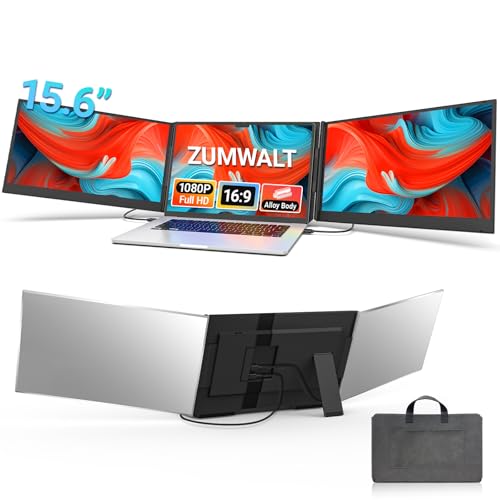
- Two 15.6" panels create a triple-screen editing setup
- Simplified cabling helps reduce desk clutter
- Aluminum shell and carry bag suit travel
Best For: Editors who need lots of screen space for multitasking
Highly Adjustable Editing Rig
15.6" Detachable Triple Screen
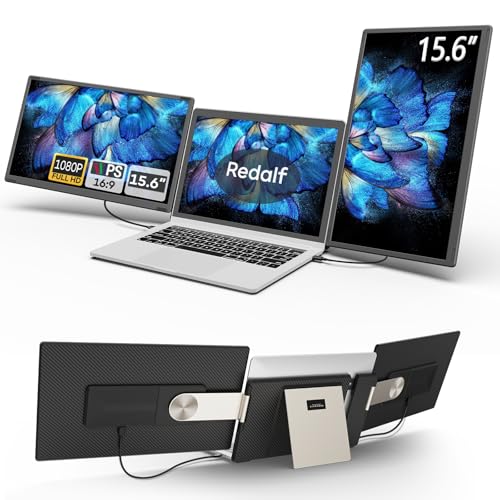
- 235° rotation and 90° vertical tilt support flexible layouts
- 15.6" IPS panels include anti-glare and low-blue-light features
- Detachable sides can be used independently
Best For: Photo editors who want flexible positioning and detachable screens
Triple-Screen Workstation
Triple 15.6" FHD Portable Monitor Extender

- Triple-screen layout for editing tools and reference images
- Two 15.6-inch FHD panels with 280 nits brightness
- Clipless mount and plug-and-play cable setup
Best For: Creators who want a portable triple-display editing workspace
Compact Editing Companion

- 14-inch FHD IPS screen with 300 nits and anti-glare finish
- Adjustable stand helps create a stable editing setup
- Works with Windows, Mac, Chrome, Android, Linux, Dex, and Switch
Best For: Editors who want a smaller, travel-ready dual monitor
Dual 15.6" Editing Workspace – KYY 15.6" Laptop Screen Extender
If you’re comparing laptop screen extenders for photo editing, this KYY option is built for users who want a larger, more organized workspace without a complicated setup. The dual 15.6-inch 1080p IPS panels give you plenty of room for tool palettes, reference images, and timeline-style workflows, while the one-cable USB-C connection helps keep your desk or travel setup clean.
Best For: Photo editors, designers, and mobile professionals who want a dual-screen workflow with a simple cable setup.
Pros:
- Two 15.6-inch FHD IPS screens for expanded editing space
- One-cable USB-C connection for a cleaner setup
- 178° viewing angle and 300 cd brightness for flexible viewing
- Built-in stand and 0° to 360° screen rotation for adaptable positioning
Cons:
- Drivers must be downloaded first
- Not compatible with PS5, Xbox Series X, or gaming consoles
- Larger dual-screen design may be less minimal than single-panel options
For photo editing, this model stands out when you want lots of usable screen area and an easy extension workflow. Its strength is the combination of twin 15.6-inch panels, broad compatibility, and a travel-friendly design that still feels workstation-ready.
Detachable Vertical Workflow – FLYTOCCA 15.6" Screen Extender
Among laptop screen extenders for photo editing, the FLYTOCCA model is appealing if you want flexibility as much as screen space. Its 15.6-inch FHD IPS display gives you a sharp extra canvas, and the detachable design with vertical mounting can be useful when you need to review tall image stacks, chat panels, or editing references side by side.
Best For: Editors who want a detachable, portable extender with vertical orientation options.
Pros:
- 15.6-inch 1080p IPS screen with 1920×1080 resolution
- Detachable screen and vertical mount support
- Single Type-C connection plus USB-A/HDMI backup option
- Folds slim for easier travel and bag storage
Cons:
- No-drivers claim may still depend on your laptop’s port support
- Best fit is limited to 13-inch to 17.3-inch laptops
- More versatile than specialized, color-critical studio displays
This is a practical choice if you want to reposition your workflow quickly between home, office, and travel. The detachable screen and vertical mode add real utility, while the 15.6-inch panel keeps everyday editing tasks comfortably in view.
Ultra-Light Travel Editor – 14.2" Ultra-Portable Screen Extender
If portability matters most, this laptop screen extender is a strong fit for photo editing on the move. The 14.2-inch 1080p IPS display keeps the setup compact, while the lightweight 1.87-pound, ultra-slim design makes it easier to carry than many larger dual-screen options.
Best For: Travelers, remote workers, and students who want a lightweight extra display for editing anywhere.
Pros:
- Very portable at 1.87 lbs and 0.27 inches thin
- 1080p IPS panel with 300 nits brightness
- Supports extend, mirror, and portrait modes
- Works with USB-C or HDMI plus USB-A setups, with cables included
Cons:
- Smaller 14.2-inch screen than 15.6-inch alternatives
- Less screen real estate for heavy multi-panel editing
- Best suited to portable workflows rather than full-time studio use
For photo editing, this model is about convenience and quick deployment. It gives you a clear second screen without adding much weight, making it a smart pick when you need editing space in airports, coffee shops, or temporary workstations.
No-Fuss Everyday Extender – ROYY 14" Laptop Screen Extender
For photo editing, this ROYY laptop screen extender keeps things straightforward: a 14-inch 1080p IPS panel, driver-free setup, and support for extend or mirror modes. It is a good fit if you want an extra screen for reviewing images, keeping editing tools visible, or reducing constant window switching without carrying a larger system.
Best For: Users who want an easy, no-fuss extender for everyday editing and multitasking.
Pros:
- 14-inch FHD IPS screen with 300 nits brightness
- Driver-free plug-and-play setup
- Supports extend, mirror, landscape, and portrait modes
- Includes Type-C, HDMI, and USB-C to USB-A cables
Cons:
- Smaller display than 15.6-inch competitors
- Color coverage is listed as 72% NTSC rather than higher-end creator specs
- Older devices may need port compatibility checked first
This is the most straightforward pick in the group if your priority is speed and simplicity. It won’t be the most expansive option, but it offers a clean, practical way to add a second screen to your photo-editing workflow.
Color-Accurate Dual Screen – 15.6" FHD Detachable Extender
If you want laptop screen extenders for photo editing, this 15.6-inch model gives you extra room for palettes, folders, and reference images without crowding your main canvas. Its 1080p IPS panel, 100% sRGB coverage, and anti-glare finish make it a strong fit for color-sensitive tasks, while the detachable design and 4-in-1 modes help you adapt it to different editing setups.
Best For: Editors and creators who want a color-accurate, travel-friendly dual-screen setup with flexible positioning.
Pros:
- 15.6″ FHD IPS display with 100% sRGB for more reliable color work
- Detachable screen and extend, mirror, or portrait modes for flexible workflows
- 100W PD reverse charging helps reduce battery drain during long editing sessions
- Lightweight, thin build makes it easier to carry between studio and travel work
Cons:
- Single-screen extension may be less expansive than triple-screen options
- Best features depend on USB-C DP Alt Mode or the right HDMI/USB-A setup
- At 2.75 lbs, it is portable but not the lightest option in the category
Overall, this is a practical pick if your photo editing work benefits from accurate color, reduced eye strain, and a second display that can move between desk and travel use. The combination of wide compatibility, plug-and-play setup, and adjustable stand support makes it a versatile daily driver.
Triple-Screen Workspace – 15.6" Ultra-Slim Travel Monitor
For laptop screen extenders for photo editing, this triple-screen setup is built for creators who want lots of workspace for tool panels, asset browsing, and side-by-side comparisons. The twin 15.6-inch 1080p displays, 280-nit brightness, and 178-degree viewing angle give you a large, clean canvas, while the simplified cabling is aimed at keeping your desk or travel setup less cluttered.
Best For: Photo editors who want maximum screen space for multitasking and comparison work on the go.
Pros:
- Two 15.6″ FHD displays create a triple-screen workflow for heavy multitasking
- Only needs two USB-C to USB-C cables when your device supports full functionality
- Ultra-slim aluminum shell and carry bag make travel easier
- Plug-and-play use with extend, mirror, and portrait modes
Cons:
- Some laptops need an H5-T cable, HDMI, USB-A, and external power
- Compatibility is more demanding on non-full-featured USB-C devices and M1/M2/M3 MacBooks
- Heavier than simpler single-panel extenders at 4 lbs
This is the best fit when your editing process is more about workspace than portability alone. If you regularly juggle photos, folders, and adjustment tools at once, the added screen real estate can make a noticeable difference in speed and organization.
Highly Adjustable Editing Rig – 15.6" Detachable Triple Screen
This model stands out among laptop screen extenders for photo editing because it gives you a highly adjustable layout for different editing stages. With 235-degree horizontal rotation, 90-degree vertical rotation, and detachable single-sided use, it can shift between landscape review, portrait edits, and split-screen comparison work while keeping the 15.6-inch 1080p IPS panels easy to view.
Best For: Creators who want maximum positioning flexibility and the option to separate the screens for travel or sharing.
Pros:
- 235-degree horizontal and 90-degree vertical rotation support many editing layouts
- 15.6″ FHD IPS panels with anti-glare, flicker-free, and low-blue-light features
- Detachable design lets you use each side independently when needed
- Plug-and-play support for USB-C, USB-A, or HDMI connections
Cons:
- Mac compatibility excludes M1/M2/M3 chips according to the notes
- HDMI use requires an extra USB-A to USB-C cable for power
- Triple-screen layouts may be more than casual editors need
If your photo editing process changes from project to project, this extender is a strong fit because it adapts with you. Its flexible stand and detachable screens make it easier to build the exact workspace you need without sacrificing portability.
Triple-Screen Workstation – Triple 15.6" FHD Portable Monitor Extender
If you want laptop screen extenders for photo editing, this triple-screen setup gives you a lot of usable space for palettes, timelines, reference shots, and inboxes without constant window switching. The two 15.6-inch FHD panels offer 1080p resolution, 280 nits of brightness, and a wide viewing angle, so your editing workspace stays clear and consistent across multiple screens. It’s also designed to mount without clips, which helps reduce stress on your laptop hinge during long sessions.
Best For: Creators, analysts, and multitaskers who want a portable triple-display layout for editing and workflow management.
Pros:
- Triple-screen design creates separate zones for editing tools, reference images, and communication.
- Two 15.6-inch 1080p displays with 280-nit brightness support clear visuals for photo work.
- Clipless mount, aluminum shell, and 180° adjustable angle add stability and comfort.
- Plug-and-play connectivity with included USB-C, HDMI, and USB-A cables.
Cons:
- Heavier than some portable options at 4 pounds.
- Best fit depends on your laptop’s video output and power delivery support.
- May be more display than needed if you only want a simple second screen.
For photo editing workflows that benefit from lots of screen real estate, this model is a strong fit because it combines dual extra panels with straightforward setup. The tradeoff is size and weight, but the payoff is a much more organized editing workspace.
Travel-Friendly Dual Display – Ultra-Thin 15.6" IPS Extender
For laptop screen extenders for photo editing, this 15.6-inch dual-monitor option focuses on portability and clean visuals. Its IPS panel, 1080p FHD resolution, 280-nit brightness, and 178° viewing angle are a practical match for checking image detail and keeping colors consistent from different positions. At 0.27 inches thin and 2.8 pounds, it’s easy to carry between home, office, and travel setups.
Best For: Editors and mobile workers who want a slim dual-monitor setup that travels easily.
Pros:
- 15.6-inch IPS display with 1080p resolution and 280 nits for clear image viewing.
- 178° viewing angle helps maintain visibility when sharing or comparing photos.
- Ultra-thin 0.27-inch profile keeps it backpack-friendly.
- Supports Windows, macOS, ChromeOS, and Android, with plug-and-play connectivity.
Cons:
- Dual-screen setup gives less workspace than triple-screen extenders.
- Color gamut is listed at 45, so it may not suit users needing wider-gamut editing workflows.
- Best use depends on having the right HDMI/USB-C port combination.
This is a sensible pick if you want extra room for photo-editing controls without carrying a bulkier attachment. It prioritizes portability and broad compatibility over maximum screen count.
Compact Editing Companion – 14" FHD Portable Dual Monitor
If you’re comparing laptop screen extenders for photo editing, this 14-inch model is a compact way to add a second workspace without overwhelming your desk or travel bag. The FHD IPS panel, 300-nit brightness, and 178° viewing angle are tuned for sharp, easy-to-read visuals, while the matte anti-glare finish and independent brightness controls help make longer editing sessions more comfortable. The adjustable telescopic stand also makes it easier to set the screen at a practical angle beside your laptop.
Best For: Editors who want a smaller, travel-ready dual monitor with eye-care features.
Pros:
- 14-inch FHD IPS display with 300 nits offers sharp visuals in a compact footprint.
- Matte anti-glare coating and independent brightness controls support long sessions.
- Adjustable telescopic stand provides a stable fit for 13-17.3 inch laptops.
- Plug-and-play connectivity with support for Windows, Mac, Chrome, Android, Linux, Dex, and Switch.
Cons:
- Smaller 14-inch screen offers less working area than 15.6-inch alternatives.
- Dual-screen layout may feel limiting for users who want multiple editing zones.
- Compatibility can depend on having the right full-featured Type-C or HDMI ports.
For photo editing on the go, this model stands out for being compact, bright, and easy to position. It’s a strong choice when portability and eye comfort matter more than maximum screen size.
How We Picked the Best Laptop Screen Extenders for Photo Editing
We looked for portable laptop displays that make photo work easier without adding unnecessary bulk. The best options in this category balance panel sharpness, color consistency, setup simplicity, and reliable attachment to common laptop sizes. We also considered whether a model supports a practical editing layout, since portrait or detachable configurations can be especially useful in Lightroom, Photoshop, and similar apps.
Quick Comparison
For most photographers, a 15.6-inch FHD panel offers the best mix of workspace and portability. Smaller 14-inch models are easier to travel with, while triple-screen designs are better for users who want a full command-center setup. If you move between locations often, prioritize lightweight builds and plug-and-play connectivity. If you edit for longer sessions, look for a stable hinge or mount and a screen that stays aligned with your laptop lid.
Key Buying Factors for Laptop Screen Extenders for Photo Editing
Display Quality
Look for 1080p resolution at minimum, IPS viewing angles, and a panel that presents consistent brightness across the screen. While most portable extenders are not professional reference monitors, stronger image clarity helps when checking focus, masks, and fine details.
Color and Editing Accuracy
For Laptop Screen Extenders for Photo Editing, color coverage and factory tuning matter more than marketing terms. If you work on color-sensitive projects, choose a model that can be calibrated and avoid relying on overly vivid default modes.
Size and Workflow Fit
Pick a display size that matches your editing habits. A 15.6-inch screen gives more room for timelines, tool panels, and reference images. A 14-inch screen is a better choice if you need a lighter travel setup or work mostly on location.
Mounting and Adjustability
Detachable panels, rotation support, and multiple viewing modes can improve comfort during long editing sessions. A stable fit is important because even slight wobble can be distracting when zooming in for retouching work.
Compatibility and Power
Check laptop size support, USB-C or HDMI compatibility, and whether the extender is truly plug and play with your device. The easier the connection, the faster you can start reviewing images and comparing versions.
Who Should Buy Which Laptop Screen Extenders for Photo Editing?
Choose a 15.6-inch single or dual-screen model if you want the most balanced setup for everyday photo editing. Go with a lighter 14-inch extender if portability matters more than maximum workspace. If you regularly manage multiple panels, export queues, and reference images at once, a triple-screen option may be worth the extra size and weight. For travelers and remote creators, slim detachable designs are usually the most practical choice.