
A laptop screen extender can make spreadsheets, video calls, and side-by-side research easier without committing to a desk setup. But a larger display is not automatically the better travel companion: mounting fit, cable requirements, and weight matter just as much.
These 10 options span compact 14-inch screens and roomier 15.6- to 16-inch models, including detachable designs. Use the guide below to narrow the field before checking the details of each product.
Best 10 Laptop Screen Extenders Picks for 2026
Best for Vertical Workspace
16-Inch 1200P Triple-Screen Extender

- Two 16-inch, 1920 × 1200 IPS screens
- 350-nit displays with a 16:10 aspect ratio
- Two-cable setup needs two full-featured USB-C ports
Best For: Documents, spreadsheets, and code with more vertical room
Most Flexible Layout
Detachable 15.6-Inch Dual Extender
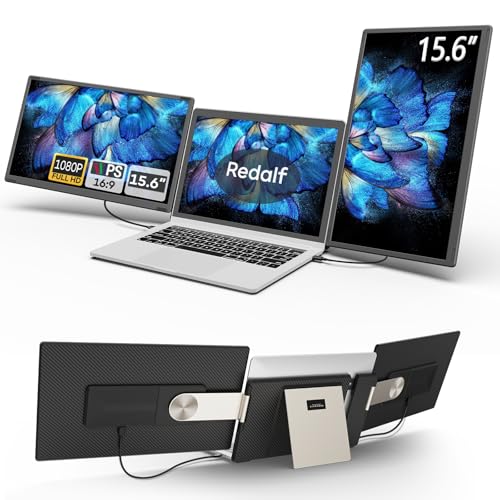
- Two detachable 15.6-inch 1080p screens
- 235° horizontal and 90° vertical rotation
- Base M1, M2, and M3 Macs are not supported
Best For: Presentations and frequently changing screen layouts
Best Travel Bundle
Slim 15.6-Inch Triple-Screen Extender
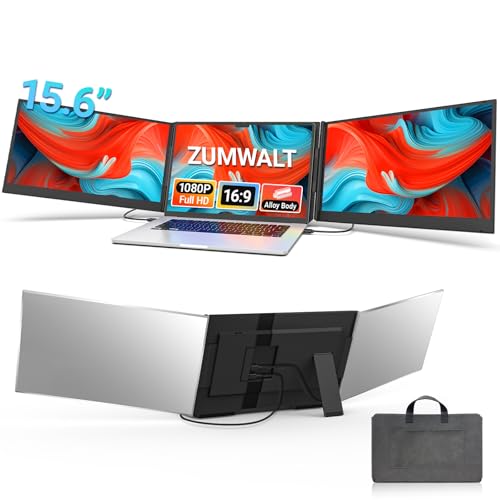
- Two 15.6-inch 1080p displays
- Carry bag, cables, and power adapter included
- Simple setup requires full-featured USB-C
Best For: Travelers seeking two large extra displays
Lightest Single-Screen Pick

- One 14.2-inch 1080p IPS display
- Listed at 1.87 pounds and 0.27 inches thin
- USB-C or HDMI plus USB-A connection
Best For: Frequent travelers who need one extra screen
Flexible Single-Screen Pick
KEFEYA 14-Inch Laptop Screen Extender

- One 14-inch 1080p IPS display
- USB-C or HDMI connectivity
- HDMI setup needs separate USB power
Best For: Travelers who need one extra screen
Lightweight Triple-Screen Pick
Vixtan 14-Inch Triple Screen Extender

- Triple-screen 1080p IPS setup
- Stated weight of 3.0 pounds
- M-series MacBooks need an adapter for two added screens
Best For: Traveling multitaskers seeking two extra displays
Larger-Screen Travel Pick
Synnov 15.6-Inch Triple Monitor Extender

- Larger 15.6-inch 1080p IPS screens
- No-clip design with metal stand
- Requires full-featured USB-C; excludes M1/M2/M3 MacBooks
Best For: Larger portable workspace on compatible laptops
Best Freestanding Design
15.6-Inch Dual-Screen Extender
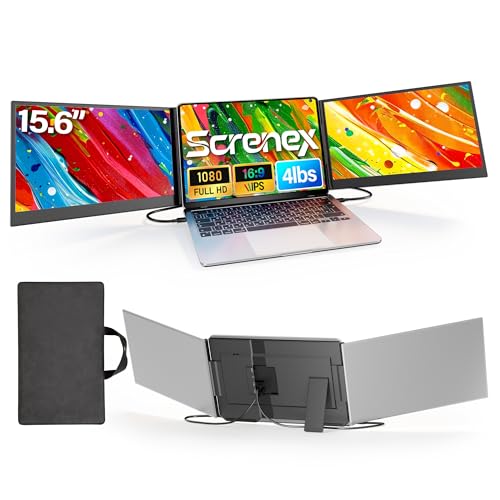
- Two 15.6-inch 1080p IPS screens
- Stand avoids laptop-lid mounting
- Two-cable setup with compatible USB-C ports
Best For: Large extra screens without hinge strain
Best Single-Cable Option
Ultra-Thin 15.6-Inch Triple Screen

- One USB-C laptop connection when compatible
- Two thin 1080p IPS panels
- Driver and possible extra power required
Best For: Mobile setups with fewer laptop cables
Most Flexible Setup
Detachable 15.6-Inch Screen Extender

- Detachable screens for varied layouts
- Each separate screen weighs 1.5 pounds
- Driver-free setup with suitable connections
Best For: Switching between triple-screen and standalone use
Best for Vertical Workspace – 16-Inch 1200P Triple-Screen Extender
Among laptop screen extenders, this model stands out for its two 16-inch, 1920 × 1200 IPS displays. Their 16:10 shape gives you more room for documents, spreadsheets, and code than a standard 1080p screen.
Best For: Laptop users who prioritize larger screens and extra vertical workspace.
Pros:
- Dual 16-inch displays create a triple-screen workspace with your laptop.
- 350-nit brightness and 1920 × 1200 resolution support clear, spacious viewing.
- Open-frame aluminum design avoids clamps and hooks.
Cons:
- The advertised two-cable setup requires two full-featured USB-C ports on your laptop.
- At 4.6 pounds, it adds noticeable weight to a travel bag.
Choose it for screen area and a straightforward connection if your laptop has the required ports; check those ports before buying.
Most Flexible Layout – Detachable 15.6-Inch Dual Extender
If you want laptop screen extenders that can adapt to presentations and changing desk layouts, this model offers two detachable 15.6-inch 1080p screens. Its stand supports 235° horizontal and 90° vertical rotation, plus landscape, portrait, and stacked arrangements.
Best For: People who want repositionable screens for collaboration or varied workspaces.
Pros:
- Detachable screens can be used individually; each side is listed at 2.1 pounds.
- Multiple rotation and layout options make screen sharing easier.
- Supports USB-C, HDMI, and USB-A connection options without drivers.
Cons:
- HDMI connections also require a USB-A-to-USB-C cable for power to the same screen.
- The notes exclude base M1, M2, and M3 Macs, despite listing support for Pro and Max versions.
The adjustable, detachable design is its main advantage. Confirm your laptop’s chip and available connections before choosing it.
Best Travel Bundle – Slim 15.6-Inch Triple-Screen Extender
This option among laptop screen extenders pairs two 15.6-inch 1080p displays with an aluminum-alloy shell and an included carrying bag. With a compatible laptop, two USB-C cables provide a relatively tidy triple-screen setup.
Best For: Travelers who want two sizable extra screens and a bag for carrying them.
Pros:
- Two 15.6-inch displays offer substantial room for multitasking.
- Includes a carrying bag, cables, and a power adapter.
- Clip-free design is intended to reduce stress on the laptop hinge.
Cons:
- The simple two-cable connection requires full-featured USB-C support.
- Some laptops, including the M1/M2/M3 MacBooks identified in the notes, need an additional H5-T cable and a driver-based setup.
It is a convenient package for compatible USB-C laptops, but the alternative connection path is more involved. Check compatibility before relying on it for travel.
Lightest Single-Screen Pick – 14.2-Inch Portable Extender
For shoppers comparing laptop screen extenders primarily by portability, this single 14.2-inch 1080p display weighs a listed 1.87 pounds and measures 0.27 inches thin. It adds one screen rather than turning your laptop into a triple-display setup.
Best For: Frequent travelers who want a lightweight second screen.
Pros:
- Listed weight of 1.87 pounds makes it easier to pack than the larger multi-screen models here.
- 300-nit IPS display has a matte finish and an adjustable angle up to 226°.
- Supports full-featured USB-C connections or HDMI plus USB-A, with cables included.
Cons:
- Provides only one extra display.
- HDMI use requires a separate USB-A connection alongside the video cable.
Pick this one when packing light matters more than maximizing screen count; check that your laptop has a suitable connection.
Flexible Single-Screen Pick – KEFEYA 14-Inch Laptop Screen Extender
Among laptop screen extenders, the KEFEYA is a straightforward way to add one 14-inch workspace to a 13- to 17-inch laptop. Its 1080p IPS display supports extended and mirrored layouts, plus landscape or portrait viewing.
Best For: Travelers and remote workers who want one additional screen with flexible connections.
Pros:
- 14-inch 1080p IPS screen with a matte finish and stated 300-nit brightness.
- Driver-free setup with USB-C, HDMI, and USB-A cables included.
- Supports multiple display modes and 180° rotation.
Cons:
- An HDMI connection also requires a separate USB-A-to-USB-C cable for power.
- Adds one screen, rather than the two offered by triple-screen extenders.
The KEFEYA makes sense if you value a simple second display over a larger multi-monitor rig. Check which video and power connections your laptop can provide before packing it for a trip.
Lightweight Triple-Screen Pick – Vixtan 14-Inch Triple Screen Extender
The Vixtan brings a triple-screen layout to laptop screen extenders while keeping its stated weight to 3.0 pounds. Its 14-inch 1080p IPS panels suit people who want separate spaces for meetings, documents, and other apps while traveling.
Best For: Mobile multitaskers with compatible laptops who want two added displays in a relatively light setup.
Pros:
- Triple-screen setup supports extended, mirrored, and portrait modes.
- Stated 3.0-pound weight, with a stand designed for 13- to 17.3-inch laptops.
- Driver-free setup; USB-C and HDMI cables are included.
Cons:
- The listing says M1/M2/M3 MacBooks support only one added screen unless you use a DisplayLink adapter.
- Flickering or low brightness may require a separate 5V/3A-or-higher power adapter.
Choose this model for portable screen area, but confirm your laptop can drive the number of displays you expect. MacBook chip limitations are especially important if a full triple-screen setup is the goal.
Larger-Screen Travel Pick – Synnov 15.6-Inch Triple Monitor Extender
For buyers comparing laptop screen extenders by viewing area, the Synnov offers 15.6-inch 1080p IPS screens in a portable triple-monitor design. Its no-clip aluminum-alloy construction and metal stand avoid attaching the assembly directly to a laptop screen.
Best For: Remote workers who prioritize larger added screens and have a laptop with a full-featured USB-C port.
Pros:
- 15.6-inch FHD IPS screens support extended, mirrored, and portrait modes.
- No-clip design avoids pressure on the laptop hinge and screen.
- Includes cables, a power adapter, and a carry bag; no driver is required.
Cons:
- Requires at least one full-featured USB-C port; the listing excludes M1/M2/M3 MacBooks.
- Its stated 4-pound weight is worth accounting for in a travel bag.
The larger panels offer more room for side-by-side work, but connection requirements are the deciding factor. Verify your laptop’s USB-C video support before choosing this setup.
Best Freestanding Design – 15.6-Inch Dual-Screen Extender
Among laptop screen extenders, this model stands out for its freestanding design: the two 15.6-inch screens sit behind your laptop rather than attaching to its display. It suits buyers who want a triple-screen workspace without putting weight on their laptop hinge.
Best For: Travelers and home-office users who want large extra displays without a screen-mounted frame.
Pros:
- Two matte, 1080p IPS panels provide 15.6 inches of workspace each.
- Freestanding, non-slip stand avoids clamping onto the laptop screen.
- Includes connection cables, a power adapter, and a carrying bag; no driver is needed with two full-function USB-C ports.
Cons:
- At 3.9 pounds, it adds noticeable weight to a travel bag.
- Some laptops, including M1–M3 MacBooks without the required full-function USB-C connections, need an additional H5-T cable and driver installation.
Check your laptop’s ports before buying: the simplest two-cable setup depends on having two full-function USB-C ports. If you do, this is a practical way to add two sizable screens while keeping them off your laptop lid.
Best Single-Cable Option – Ultra-Thin 15.6-Inch Triple Screen
If you want laptop screen extenders with fewer cables running to your computer, this model connects both 15.6-inch displays through a single full-featured USB-C port after you install its driver. Its thin panels and included carrying bag also make it worth considering for work away from a desk.
Best For: Mobile workers who prioritize a one-cable laptop connection and can install the required driver.
Pros:
- One full-featured USB-C cable can connect both screens to a compatible laptop.
- Two 1080p IPS displays have thin, 4 mm panels.
- Includes cables, a power adapter, and a carrying bag.
Cons:
- Driver installation is required before use.
- An external power supply may be needed if the laptop cannot provide enough power.
- The complete unit weighs 4 pounds despite its thin panels.
The streamlined connection is the main draw, not driver-free setup. Confirm that you can install the driver on your device and plan to use the included power adapter if USB power proves insufficient.
Most Flexible Setup – Detachable 15.6-Inch Screen Extender
This is one of the more configurable laptop screen extenders in the group: its two 15.6-inch displays detach for use in a triple-screen arrangement, a dual-screen setup, or as standalone portable monitors. That flexibility is useful if your workspace changes from day to day.
Best For: People who alternate between a full triple-screen workspace and individual portable displays.
Pros:
- Detachable screens support multiple arrangements, with folding and rotation options.
- Each 1080p IPS screen weighs 1.5 pounds when used separately.
- Offers driver-free connections through compatible USB-C ports, with USB-C and HDMI as another option.
Cons:
- The full unit weighs 5 pounds.
- Using HDMI also requires a USB-A-to-USB-C connection for power to that screen.
- Its glossy finish may be less convenient where reflections are a concern.
Choose this model for its removable screens rather than for the lightest complete kit. Before purchasing, check your laptop’s video-capable ports so you know whether your setup needs the additional HDMI power connection.
How We Picked These Laptop Screen Extenders
We focused on the practical differences in the listed products: screen size, stated resolution, single- versus dual-display designs, supported laptop sizes, portability claims, and advertised connection options. The lineup includes 14-inch travel-oriented models, several 15.6-inch options, and a 16-inch 1200P model. We treated terms such as “plug and play” and “one cable” as claims to verify against your laptop, not guarantees of universal compatibility. Listed specifications can help you build a shortlist, but they do not establish real-world brightness, color accuracy, hinge durability, or battery impact.
Quick Comparison: Which Type Fits Your Routine?
For frequent travel: Start with a lighter 14- or 14.2-inch model if bag space and added laptop weight are priorities. For more workspace: Consider a 15.6-inch triple-screen setup or the 16-inch 1200P option, while allowing for a wider, heavier assembly. For flexible placement: Look at detachable designs if you may want to reposition a display rather than keep it mounted beside the laptop. For simpler cabling: Compare the advertised one-cable model with your computer’s port capabilities before assuming it will work with a single lead.
Key Buying Factors for Laptop Screen Extenders
Fit and Support
Check the stated laptop-size range, then compare the extender’s mounting method with your laptop’s lid thickness, bezel shape, and hinge strength. A size range alone cannot confirm a secure fit. Larger side screens can also make a lightweight laptop more prone to tipping, especially away from a flat desk.
Ports, Power, and Operating System
USB-C ports do not all carry video. Confirm whether your laptop supports DisplayPort Alt Mode, Thunderbolt, or USB4 as required by the extender. HDMI models may still need a separate USB connection for power. If you want two added screens, verify that your computer and operating system can drive both independently, and check whether adapters, drivers, or extra power are needed.
Display Size and Travel Trade-Offs
The listed options are primarily 1080P FHD, with one 16-inch model advertised as 1200P. Higher vertical resolution can show more rows or text, but screen finish, brightness, and scaling also affect usability. Check total packed weight—not just panel weight—and whether the extender fits your sleeve and airplane-tray or café-table setup.
Who Should Buy Which Laptop Screen Extenders?
Choose a compact dual-screen extender if you mainly need one extra window for notes or chat while traveling. Choose a 15.6-inch triple-screen design if you regularly compare documents or keep several apps visible and can accommodate the added bulk. Consider the 16-inch 1200P model if vertical workspace matters more than minimum size. A detachable option makes sense when you expect to change screen position often. Whatever you choose, confirm the exact port, power, laptop-fit, and return-policy details before ordering.