
The best memory card readers make it easier to move photos, video, and other files between cameras, phones, tablets, and computers. The right model depends on your card formats, device ports, transfer needs, and preferred level of portability.
This roundup compares 10 memory card readers, including compact USB-C adapters, multi-format hubs, and models that can read several cards at once. Use the guide below to narrow the options by compatibility, speed, and everyday workflow.
Best 10 Memory Card Readers Picks for 2026
Four-Card Workhorse
UGREEN 4-Slot USB 3.0 Card Reader
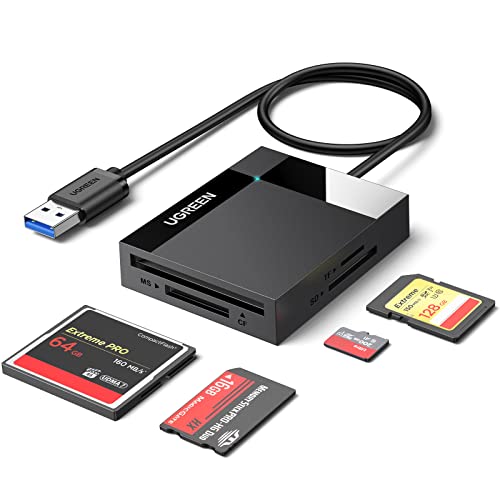
- Reads SD, microSD, CF, and MS cards
- Handles four cards simultaneously
- USB 3.0 supports up to 5Gbps
Best For: Photographers managing multiple card formats
Cross-Device Connector
4-in-1 USB-C and USB Card Reader

- Includes CF, SD, TF, and MS slots
- USB-C plug plus detachable USB adapter
- Supports major mobile and computer platforms
Best For: USB-C users who also need USB compatibility
Travel-Friendly Classic
SmartQ C368 USB 3.0 Card Reader

- Supports SD, microSD, MS, and CF cards
- USB 3.0 transfer speeds up to 5Gbps
- Plug-and-play with a blue status LED
Best For: USB-A users needing broad card-format support
Compact Dual-Slot Pick
UGREEN USB-C and USB-A Card Reader

- Supports SD and microSD cards simultaneously
- Includes USB-C and USB-A interfaces
- USB 3.0 reaches up to 5Gbps
Best For: Portable SD and microSD transfers across modern and older devices
Travel-Ready Versatility
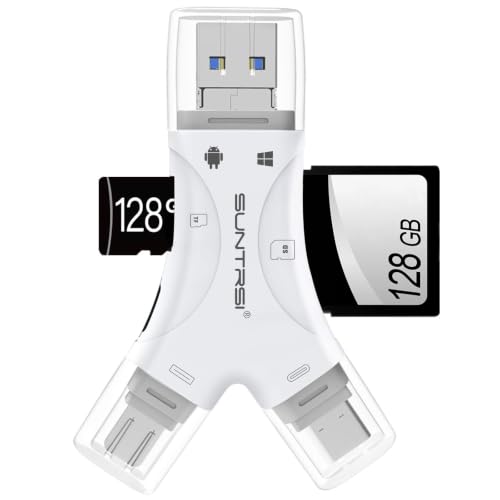
- SD and microSD slots with up to 1TB support
- Works across iOS, Android, Mac, and computers
- Pass-through charging and keychain design
Best For: Travelers transferring files across multiple device types
Compact USB-C Convenience
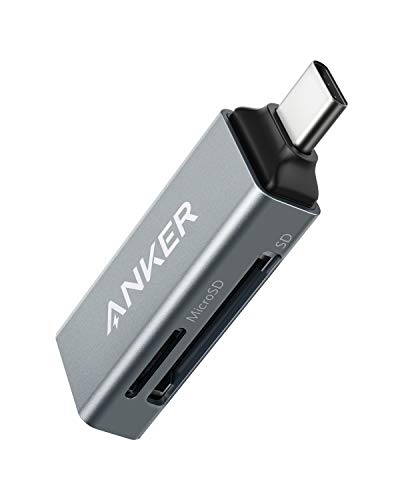
- Dedicated SD and microSD slots
- Supports common SD, microSD, and UHS-I formats
- Compact USB-C design with 18-month warranty
Best For: USB-C phones, laptops, and everyday card transfers
Multi-Format Workhorse

- Reads SD, microSD, Memory Stick, and CompactFlash
- Includes USB-C and USB 3.0 connections
- Reads four cards simultaneously with up to 160MB/s UHS-I claim
Best For: Photographers managing multiple memory card formats
Best Dual-Header Pick
Acer USB-C Dual-Slot Card Reader

- 5Gbps USB 3.0 transfers
- USB-C and USB-A connectors
- Simultaneous SD and microSD access
Best For: Photographers and mobile users with USB-C or USB-A devices
Best Multi-Format Pick

- Seven card-reader slots
- Reads up to five cards simultaneously
- USB-C and USB-A connectivity
Best For: Users handling specialty and standard memory card formats
Best Simple USB 3.0 Pick

- 5Gbps USB 3.0 transfers
- SD and microSD slots
- Two-year warranty and support
Best For: Everyday SD and microSD file transfers
Four-Card Workhorse – UGREEN 4-Slot USB 3.0 Card Reader
If you regularly work with several formats, this UGREEN model is one of the more versatile memory card readers in the roundup. It accepts SD, microSD, CompactFlash, and Memory Stick cards, while USB 3.0 supports transfer speeds up to 5Gbps.
Best For: Photographers and other users who need to read or write multiple card formats at once.
Pros:
- Supports SD, microSD, CF, and MS card formats.
- Can read and write four different cards simultaneously.
- Works with Windows, macOS, Linux, and ChromeOS without extra drivers.
- Compact body and 1.7-foot cable suit mobile work setups.
Cons:
- Uses a USB connection rather than a built-in USB-C plug.
- Its broad format support may be unnecessary for users who only use SD or microSD cards.
With four slots, 2TB card support, and USB 3.0 performance, this is a practical choice for managing several card types without repeated swapping.
Cross-Device Connector – 4-in-1 USB-C and USB Card Reader
This 4-in-1 option is designed for users moving photos, videos, and files among newer USB-C devices and older USB computers. It includes CF, SD, TF, and MS slots, plus a detachable USB-C-to-USB adapter for broader compatibility.
Best For: People transferring files between USB-C phones, tablets, MacBooks, and USB-equipped computers.
Pros:
- Combines CF, SD, microSD/TF, and MS card slots.
- Works with USB-C devices and includes a USB adapter.
- Supports Android, iOS, Windows, and macOS devices listed in the notes.
- Plug-and-play design requires no additional driver or network connection.
Cons:
- Its listed data rate is 480Mbps, below the 5Gbps USB 3.0 models here.
- Does not support Wi-Fi SD cards.
The dual-connector design makes this a flexible memory card reader for mixed-device households, though users prioritizing maximum transfer speed may prefer a USB 3.0 alternative.
Travel-Friendly Classic – SmartQ C368 USB 3.0 Card Reader
The SmartQ C368 is a straightforward four-slot memory card reader for users who want broad format support and simple plug-and-play operation. It handles SD, microSD, MS, and CF cards and uses USB 3.0 for transfers up to 5Gbps.
Best For: Travelers and desktop users who need an uncomplicated USB-A reader for common and legacy card formats.
Pros:
- Four-in-one design supports SD, microSD, MS, and CF cards.
- Compatible with Windows, macOS, and Linux without a driver.
- Blue LED indicates when the reader is powered.
- Includes a cable organizer and user manual.
Cons:
- Uses USB Type-A rather than USB-C.
- The supplied notes do not indicate simultaneous operation of all four slots.
This reader keeps things simple while covering a useful range of card types. It is a sensible pick when your computer has USB-A ports and you value a visible status indicator.
Compact Dual-Slot Pick – UGREEN USB-C and USB-A Card Reader
This slim UGREEN reader focuses on the card formats most commonly used in cameras, action cameras, and other portable devices. Its two slots accept SD and microSD cards, and its dual USB-C and USB-A interfaces connect to newer and older equipment.
Best For: Photographers, creators, and mobile users who mainly work with SD or microSD cards across USB-C and USB-A devices.
Pros:
- USB 3.0 supports transfer speeds up to 5Gbps.
- USB-C and USB-A interfaces are built into one compact reader.
- Can read SD and microSD cards simultaneously.
- Plug-and-play compatibility covers Windows, macOS, Android, ChromeOS, and Linux.
Cons:
- Does not support CF or Memory Stick cards.
- Only two card slots are included.
For everyday SD and microSD workflows, this is a particularly portable memory card reader with useful connector flexibility. Its format coverage is narrower than four-slot models, but its compact design is easier to carry.
Travel-Ready Versatility – 4-in-1 SD Card Reader
This versatile memory card reader is designed for moving files among iPhone, iPad, Android devices, computers, and cameras. It combines SD and microSD slots with USB, USB-C, and micro-USB connectivity, plus a charging port for compatible iOS devices.
Best For: Travelers and mobile users who need broad device compatibility, portable file management, and pass-through charging for an iPhone or iPad.
Pros:
- Supports SD and microSD cards with a stated maximum capacity of 1TB.
- Offers USB, USB-C, micro-USB, and iOS-device connectivity.
- Charging port allows compatible iPhones and iPads to charge while transferring data.
- Compact keychain-style design is convenient for travel and outdoor use.
Cons:
- Its listed data transfer rate is 25MB/s, slower than some USB 3.0 readers.
- Does not include an SD or microSD card.
- iOS compatibility requires iOS 8.0 or later, while Android use requires OTG support.
Choose this reader when portability and flexible device connections matter most. Its charging feature is particularly useful for mobile file transfers, while the modest transfer rate makes it better suited to everyday photos and documents than speed-focused workflows.
Compact USB-C Convenience – Anker Dual-Slot Card Reader
The Anker PowerExpand is a compact memory card reader for USB-C phones, laptops, and other compatible devices. Its dual slots let you access a standard SD card and a microSD card without swapping adapters.
Best For: USB-C users who want a small, straightforward reader for SD and microSD cards on compatible smartphones and computers.
Pros:
- Provides separate SD and microSD slots for convenient card access.
- Supports a broad range of SD, microSD, MMC, and UHS-I card formats.
- USB-C connection works with compatible devices such as MacBook models and smartphones.
- Compact design and included 18-month warranty add everyday convenience.
Cons:
- Uses USB-C only, so it is not suitable for devices without a compatible USB-C port.
- A device case may need to be removed for proper connection.
- Its two slots are intended for standard and microSD cards, rather than four card types.
This is a good fit for a streamlined USB-C setup. It keeps the design small while covering the most common SD formats, although users with older USB-A devices or professional CF and Memory Stick cards will need another option.
Multi-Format Workhorse – BENFEI 4-in-1 Card Reader
The BENFEI 4-in-1 memory card reader is built for users who work with several card formats. It supports SD, microSD, Memory Stick, and CompactFlash cards, while its integrated USB-C and USB 3.0 connectors provide compatibility with newer and older computers and selected mobile devices.
Best For: Photographers and media users who need one reader for SD, microSD, Memory Stick, and CompactFlash cards.
Pros:
- Supports four card categories: SD, microSD, Memory Stick, and CompactFlash.
- USB-C and USB 3.0 connectors support newer USB-C systems and standard USB ports.
- Can read four cards simultaneously.
- Advertises UHS-I transfer speeds up to 160MB/s, depending on the card and port.
Cons:
- Does not support standard Memory Stick, Memory Stick Micro (M2), or CF Type I cards.
- Actual transfer performance depends on the memory card and USB connection.
- Some older operating systems may not support the exFAT format used by SDXC cards.
This reader offers the broadest format coverage of the three options and is the strongest choice for mixed media collections. Its simultaneous-reading capability is useful for organized workflows, but check card-format and operating-system compatibility before buying.
Best Dual-Header Pick – Acer USB-C Dual-Slot Card Reader
This Acer memory card reader is a practical choice for users who switch between USB-C and USB-A devices. Its SD and microSD slots support 5Gbps transfers, and both cards can be read or written simultaneously for faster file management.
Best For: Photographers, editors, and travelers using laptops, tablets, phones, or cameras with USB-C or USB-A ports.
Pros:
- USB-C and USB-A connectors provide broad device compatibility.
- Supports simultaneous reading and writing from SD and microSD cards.
- Compact aluminum design includes protective port covers and an attached cord.
- Plug-and-play setup works with Windows, macOS, Android, Chrome OS, and Linux.
Cons:
- Does not directly connect to cameras; it reads data from the cards.
- Thick device cases may prevent full connector insertion.
- Does not support CF Express, XQD, MS, Memory Stick, or Lightning devices.
Choose this reader if you want a portable, dual-interface option for common SD and microSD cards. Its simultaneous-card capability is especially useful for organized file transfers, though users with specialty card formats will need a different reader.
Best Multi-Format Pick – Rocketek 7-in-1 Card Reader
The Rocketek 7-in-1 memory card reader is designed for users who handle more than standard SD and microSD formats. With slots for CF, SD, microSD, XD, and MS cards plus USB-C and USB-A connectivity, it offers broad coverage in one adapter.
Best For: Photographers and professionals managing CF, XD, Memory Stick, SD, and microSD cards across multiple computers and mobile devices.
Pros:
- Supports a wide range of CF, SD, microSD, XD, and MS card formats.
- Can read and write up to five cards simultaneously.
- USB-C and USB-A connectors work with many laptops, tablets, and phones.
- Provides 5Gbps USB 3.0 transfer speeds and 12-month warranty service.
Cons:
- Its larger selection of slots may be unnecessary for users with only SD cards.
- Listed compatibility and transfer performance depend on the connected device and card.
This is the most versatile option of the three for mixed media libraries. It makes sense when your workflow includes legacy or specialty formats, while a simpler two-slot reader may be more convenient for basic SD and microSD transfers.
Best Simple USB 3.0 Pick – Wansurs Dual-Slot Card Reader
The Wansurs memory card reader keeps things straightforward with dedicated SD and microSD slots and a USB 3.0 plug. It offers up to 5Gbps transfer speeds, plug-and-play operation, and a compact body for routine photo and video transfers.
Best For: Computer users, photographers, and families who need an affordable reader for SD and microSD cards.
Pros:
- USB 3.0 supports transfers up to 5Gbps.
- Compatible with SD, SDHC, microSD, microSDHC, microSDXC, and related formats.
- Compact, lightweight design is easy to carry.
- Includes a two-year warranty and 24/7 customer support.
Cons:
- SD and microSD cards cannot be used simultaneously.
- Uses a USB connection rather than offering a USB-C connector.
- Supports fewer card types than a multi-format reader.
This Wansurs model is a sensible fit for everyday SD and microSD transfers when you do not need simultaneous access or specialty-card support. Its simple design and longer stated warranty make it a practical basic memory card reader.
How We Picked These Memory Card Readers
We focused on practical compatibility, connection options, transfer performance, and ease of use. The selection includes USB-A and USB-C models, compact single- or dual-slot readers, and multi-format adapters supporting combinations of SD, microSD, CompactFlash, Memory Stick, and other card types.
We also considered features that matter in real workflows, including simultaneous card access, plug-and-play operation, portability, broad operating-system support, and compatibility with modern phones and tablets. Because advertised speeds can depend on the card, host device, files, and connection standard, use rated speeds as a comparison point rather than a guarantee.
Quick Comparison
- Best for broad format support: Choose a four-in-one or seven-in-one reader if you regularly use SD, microSD, CF, MS, or XD cards.
- Best for USB-C devices: Compact USB-C readers are convenient for newer laptops, iPads, Android devices, and compatible iPhones.
- Best for older computers: A USB-A reader or a model with a USB-A-to-USB-C adapter offers more connection flexibility.
- Best for frequent transfers: Look for USB 3.0 or faster support and a sturdy cable or connector designed for repeated use.
- Best for multiple cards: Multi-slot readers can simplify camera workflows, though simultaneous read/write behavior varies by model.
Key Buying Factors for Memory Card Readers
Card-Format Compatibility
Check every card you plan to use before buying. SD and microSD support is common, but CompactFlash, Memory Stick, XD, MMC, and other formats require dedicated slots. A reader cannot access a format it does not physically support.
Port and Device Compatibility
USB-C is standard on many current laptops, tablets, phones, and computers, while USB-A remains common on older systems. If you use several devices, select a reader with both connector options or include a reliable adapter. For iPhone and iPad use, confirm that the device supports external storage accessories and that the reader’s connector matches your model.
Speed and Workflow
USB 3.0, often marketed at up to 5Gbps, is generally preferable for large photo libraries and video files. Actual transfer speed is limited by the slowest component, including the memory card and host port. For occasional file access, a slower compact reader may be sufficient.
Build and Portability
Small readers are easy to carry, but exposed connectors and permanently attached cables may be more vulnerable in a camera bag. For desk use, a hub-style reader with separate slots can be easier to handle. Consider slot covers, cable length, heat management, and overall construction.
Who Should Buy Which Memory Card Readers?
Photographers and videographers should prioritize fast USB 3.0 performance, full-size SD support, and CompactFlash compatibility when needed. Phone and tablet users should choose a USB-C model with a compact design and direct support for their device. Travelers may prefer a small dual-slot reader, while multi-camera households and editors can benefit from four-in-one or seven-in-one designs.
Before ordering, verify your card formats, device connector, operating-system support, and whether you need simultaneous card access. Those checks will usually matter more than small differences in advertised speed.