
Portable document scanners make it easy to digitize receipts, contracts, IDs, and multi-page paperwork without taking up desk space. They are ideal for hybrid workers, frequent travelers, small offices, and anyone who wants a faster filing workflow.
In this roundup, we focus on compact models that balance scan quality, speed, portability, and setup simplicity so you can choose the right scanner for your day-to-day needs.
Best 10 Portable Document Scanners Picks for 2026
Ultra-Light Mobile Pick
Epson WorkForce ES-50 Compact Scanner

- USB-powered and travel-friendly
- Scans a page in as fast as 5.5 seconds
- Supports OCR, searchable PDFs, and editable files
Best For: Travel-friendly single-page scanning with minimal setup
Best Budget USB Pick
HPPS100 Portable Sheetfed Scanner

- Extremely lightweight and USB-powered
- 15 ppm simplex scanning for small batches
- Works with documents, photos, receipts, and cards
Best For: Portable everyday scanning for home, office, and travel
Fast Duplex Choice
Brother DS-740D Compact Mobile Scanner

- Duplex scans both sides in one pass
- Up to 16 ppm with color at the same speed
- Fits easily in a bag and runs on micro USB
Best For: Fast two-sided scanning on the go
Book and Flatbed Alternative
CZUR Shine Ultra Smart Portable Scanner

- About 1 second per page scanning speed
- Works as a document scanner and document camera
- Patented flattening technology for thinner books
Best For: Fast capture of flat papers and thin books
Ultra-Compact Everyday Pick
Brother DS-640 Compact Mobile Document Scanner

- Up to 16 ppm for color and black-and-white scans
- Under 1 foot long and about 1.5 lb
- USB-powered for scanning without an outlet
Best For: Travelers, students, and mobile workers
Easy-Setup Duplex Choice
Canon imageFORMULA R10 Portable Document Scanner
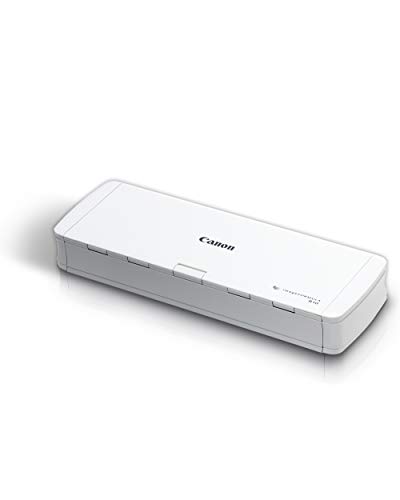
- Duplex scanning with a 20-sheet automatic feeder
- Built-in software requires no installation
- Handles receipts, cards, reports, and legal documents
Best For: Users who want a compact duplex scanner with minimal setup
Ultra-Portable USB Scanner

- USB 3.0 powered for cable-based use
- Scans up to 15 ppm
- Compact 390 g build for travel
Best For: Travel and everyday single-sheet scanning
Fastest Tiny Scanner
Epson DS-70 Portable Document Scanner

- Very compact single-sheet mobile scanner
- Scans a page in as fast as 5.5 seconds
- Includes OCR and document management software
Best For: Ultra-portable single-page scanning
Hands-Free Mobile Scanner
Plustek S410 Plus Portable Scanner

- Bus-powered USB design
- Button-free automatic scanning
- OCR exports to searchable PDF, Excel, and Word
Best For: Windows scanning with automated file handling
Ultra-Light Mobile Pick – Epson WorkForce ES-50 Compact Scanner
If you want one of the most portable document scanners for quick, single-page jobs, the Epson WorkForce ES-50 is built for travel-friendly use. It runs over USB, scans a page in as fast as 5.5 seconds, and handles documents up to 8.5 x 72 inches, plus receipts and ID cards.
Best For: Mobile users who need a lightweight USB-powered scanner for fast everyday document capture.
Pros:
- Very compact and lightweight for on-the-go scanning
- USB-powered, so no batteries or external power supply are needed
- Fast single-page scanning and automatic feeding mode for multi-page files
- Includes OCR and ScanSmart software for searchable PDFs and editable files
Cons:
- Single-sheet-fed design is not suited to high-volume batch scanning
- Requires a connected computer to operate
- Best for flat paper handling rather than mixed media workflows
Overall, the ES-50 is a simple, efficient choice when portability matters more than big-batch capacity. It keeps setup minimal while still offering useful software and broad file compatibility.
Best Budget USB Pick – HPPS100 Portable Sheetfed Scanner
The HPPS100 is a practical choice among portable document scanners if you want a small, easy-to-carry model for home, office, or travel. It powers through USB, scans single-sided pages at up to 15 ppm, and works with both PC and Mac using HP WorkScan software.
Best For: Users who want a lightweight, affordable-feeling portable scanner for mixed document and photo tasks.
Pros:
- Very lightweight and compact for bag or briefcase carry
- USB 2.0 powered with included cable for simple setup
- 15 ppm simplex scanning for small- to medium-batch jobs
- Supports documents, photos, receipts, business cards, and more
Cons:
- Single-sided scanning only
- Resolution is listed at 300 dpi in the detailed specs
- Best suited to modest scan volumes rather than heavy workloads
For portable scanning with broad everyday usefulness, the HPPS100 emphasizes convenience and versatility over advanced throughput. It is a solid fit when you need quick scans without carrying bulky equipment.
Fast Duplex Choice – Brother DS-740D Compact Mobile Scanner
The Brother DS-740D stands out in portable document scanners if you need duplex scanning without giving up mobility. It scans single- and double-sided pages in one pass at up to 16 ppm, runs from an included micro USB 3.0 cable, and fits easily into a bag or purse.
Best For: People who want fast two-sided scanning in a compact USB-powered mobile scanner.
Pros:
- Duplex scanning in a single pass saves time
- Up to 16 ppm with color scanning at the same speed as black and white
- Ultra-compact body with desk-saving design
- Compatible with Windows, Mac, and Linux, plus OCR and cloud destinations
Cons:
- Designed around small, mobile workflows rather than large sheet capacity
- Needs a connected computer for operation
- Best when your priority is speed and space savings, not standalone use
This is a strong pick if you regularly scan both sides of documents and want a device that stays out of the way when not in use. It balances speed, portability, and software flexibility well.
Book and Flatbed Alternative – CZUR Shine Ultra Smart Portable Scanner
The CZUR Shine Ultra is a different kind of option in portable document scanners, combining a USB document camera with fast scanning for flat papers and thin books. It uses a 13MP CMOS camera, can scan about one page per second, and includes patented page-flattening technology for curved book pages.
Best For: Users who need a portable scanner for books, flat documents, and camera-style capture workflows.
Pros:
- About 1 second per page for very fast capture
- Works as both a document scanner and a document camera
- Patented flattening technology helps with thinner book pages
- Supports OCR in 180+ languages and includes auto-cropping and paging tools
Cons:
- Best suited to flat papers and thinner books, not thicker books
- Not compatible with Android or iOS
- Requires a setup with adjustable height rather than a pocket-size form factor
If your scanning needs go beyond standard sheet-fed pages, the Shine Ultra offers more flexibility than a typical mobile scanner. It is especially appealing for users who want fast capture and book-friendly features in one device.
Ultra-Compact Everyday Pick – Brother DS-640 Compact Mobile Document Scanner
The Brother DS-640 is a portable document scanner built for people who need quick, lightweight scanning without adding bulk to a bag or desk. It scans color and black-and-white pages at up to 16 ppm, runs over micro USB 3.0, and works with Windows, Mac, and Linux through Brother’s iPrint&Scan software.
Best For: Travelers, students, and mobile workers who want a tiny USB-powered scanner for receipts, cards, and everyday documents.
Pros:
- Very compact at under 1 foot long and about 1.5 lb.
- Up to 16 ppm scan speed for both color and black-and-white pages.
- USB-powered, so you can scan without needing a wall outlet.
- Includes image cleanup tools like background removal and text enhancement.
Cons:
- Single-sheet capacity means no automatic multi-page feeder.
- Best suited to PC/laptop use since it relies on a connected device.
- May feel basic if you need a higher-capacity office workflow.
If size and portability matter most, the DS-640 is a practical choice among portable document scanners. It focuses on speed, flexibility, and easy carry-anywhere convenience rather than advanced batch handling.
Easy-Setup Duplex Choice – Canon imageFORMULA R10 Portable Document Scanner
The Canon imageFORMULA R10 is a portable document scanner aimed at simple, no-fuss digitizing at home, in classrooms, or on the move. It scans both sides at once, includes a 20-sheet automatic feeder, and comes with built-in software that requires no installation.
Best For: Users who want a compact duplex scanner with an automatic feeder and minimal setup.
Pros:
- Duplex scanning captures both sides at the same time.
- 20-sheet automatic feeder supports multi-page jobs.
- Built-in software is ready to use and updates automatically.
- Handles receipts, business cards, plastic or embossed cards, and legal documents.
Cons:
- Not intended for scanning photographs on photo paper.
- Daily volume is listed at 500 scans, so it is not built for heavy-duty workloads.
- Compatible with Windows and Mac, but not broader platform support like some rivals.
For buyers who want a straightforward portable document scanner with duplex capability and a feeder, the R10 keeps things simple. It stands out most for easy setup and flexible document handling rather than extreme portability.
Wireless On-the-Go Pick – Epson WorkForce ES-60W Wireless Compact Mobile Document Scanner
The Epson WorkForce ES-60W is a wireless portable document scanner designed for fast scanning away from the desk. It scans a page in as fast as 4 seconds, can connect to a PC, Mac, iOS, or Android device, and automatically switches between USB and battery-powered wireless use.
Best For: Mobile users who want wireless scanning to phones, tablets, and computers with very fast single-page capture.
Pros:
- Scans a single page in as fast as 4 seconds.
- Wireless support works with PC, Mac, iOS, and Android devices.
- Automatically switches between USB and battery-powered wireless modes.
- Includes OCR and cloud-scanning software for searchable PDFs and file storage.
Cons:
- Single-sheet-fed design is not ideal for large batch jobs.
- Requires wireless or connected-device workflows rather than standalone use.
- Best suited to documents, receipts, and ID cards rather than photo scanning.
Among portable document scanners, the ES-60W is a strong fit if wireless convenience matters as much as speed. It is especially useful for people who need quick, flexible scanning across multiple device types.
Ultra-Portable USB Scanner – Brother DS-640 Mobile Scanner
If you want a truly compact option in portable document scanners, the Brother DS-640 keeps the focus on speed, simplicity, and easy carry-anywhere use. It scans A4 documents, receipts, and ID cards, and it powers directly from a USB 3.0 port, which makes it a practical pick for desks, travel bags, or shared workspaces.
Best For: Travelers, students, and office users who need a lightweight USB-powered scanner for everyday documents and IDs.
Pros:
- Scans up to 15 pages per minute for quick capture.
- USB 3.0 power means no separate adapter is needed.
- Very compact and lightweight at 390 g for easy portability.
- Compatible with both Windows and macOS.
Cons:
- Not Wi-Fi capable.
- Single-sheet capacity means manual feeding is required.
- Best suited to smaller scanning jobs rather than high-volume stacks.
The DS-640 is a straightforward mobile scanner that balances speed and portability well. If you mainly need a reliable way to scan one document at a time without adding bulk, it fits that role cleanly.
Fastest Tiny Scanner – Epson DS-70 Portable Document Scanner
The Epson DS-70 is one of the most compact portable document scanners here, making it a strong fit when space and weight matter more than a large feed tray. It scans documents up to 8.5″ x 72″, handles business cards, ID cards, and receipts, and includes OCR and document management software for creating searchable, editable files.
Best For: Users who need a very small mobile scanner with fast single-page scans and software for searchable PDFs.
Pros:
- Smallest and lightest mobile single-sheet scanner in the lineup.
- Very fast single-page scans, as quick as 5.5 seconds.
- Supports long documents up to 8.5″ x 72″.
- Includes OCR and document management software.
Cons:
- Single-sheet design requires one page at a time.
- Windows 7 is listed as the minimum system requirement.
- USB connection only, with no wireless option noted.
If your priority is a scanner that disappears into a bag but still produces useful digital files, the DS-70 is easy to recommend. It is built for quick mobile capture rather than heavy office throughput.
Hands-Free Mobile Scanner – Plustek S410 Plus Portable Scanner
The Plustek S410 Plus is aimed at buyers who want portable document scanners with a more automated workflow. It is bus-powered over USB, scans letter, legal, business cards, plastic ID cards, invoices, and receipts, and uses button-free scanning that automatically processes images and saves them to the chosen folder.
Best For: Windows users who want a compact, automated scanner with OCR and flexible save destinations.
Pros:
- Bus-powered via USB, so no batteries or external power source are needed.
- Button-free scanning automates capture and file saving.
- Handles a wide range of media, including cards, invoices, and receipts.
- Built-in OCR supports searchable PDF, Excel, and Word output.
Cons:
- Listed minimum system requirement is Windows 7.
- Single-sheet capacity means each item is fed individually.
- Not designed for high-volume batch scanning.
For a compact scanner that emphasizes automation over manual control, the S410 Plus is a smart fit. Its OCR and flexible save options make it especially useful for organizing documents right after scanning.
How We Picked the Best Portable Document Scanners
We prioritized models that are truly easy to carry, quick to set up, and practical for real-world document capture. Strong picks needed a good mix of compact size, dependable paper handling, and scan quality suitable for invoices, forms, and everyday office files. We also considered whether the scanner is USB-powered or wireless, since that affects where and how easily you can use it.
Quick Comparison
Most Portable Document Scanners fall into a few clear categories: ultra-light single-sheet scanners for occasional use, duplex models for faster two-sided capture, wireless options for more flexible workflows, and specialty scanners for books or mixed media. If you need the fastest routine filing, duplex is a major advantage. If you value simplicity and minimal cables, USB-powered models are usually the easiest to carry and use.
Key Buying Factors for Portable Document Scanners
Duplex Vs. Single-Sided Scanning
Duplex scanning saves time on double-sided pages and is worth prioritizing if you handle contracts, reports, or multi-page paperwork. Single-sided scanners can still be a smart choice for receipts, IDs, and light-duty scanning, especially if portability matters more than raw speed.
Power and Connectivity
USB-powered scanners are convenient for travel and desk-free use because they draw power directly from a laptop. Wireless models can reduce cable clutter and may be better for shared spaces, while models with Wi-Fi or app support can simplify scanning to cloud services or mobile devices.
Paper Handling and Size Limits
Check the supported page size, feeder design, and recommended daily workload. If you scan mixed document sizes, be sure the scanner can handle standard letter and A4 pages reliably. For thicker items, books, or fragile originals, make sure the scanner type is suitable before buying.
Software and File Management
Good scanning hardware is only part of the experience. Look for OCR support, searchable PDF output, and easy one-touch workflows if you want less manual cleanup. Compatibility with your operating system matters too, especially for Windows or Mac users with older business workflows.
Who Should Buy Which Portable Document Scanners?
If you want the lightest option for occasional travel use, choose a compact single-sheet model. If you scan stacks of paperwork regularly, a duplex scanner is the most efficient choice. If you work in shared environments or prefer fewer cords, wireless Portable Document Scanners can be worth the upgrade. For books, magazines, or mixed media, consider a model designed for more specialized capture rather than a standard sheet-fed unit.
In short, the best choice depends on how often you scan, what you scan most often, and whether speed, portability, or flexibility matters most in your workflow.