
Small venues need stage monitors that deliver clear vocals and instruments without overwhelming the room. The right compact monitor can improve performance confidence while keeping setup manageable.
We compared active and passive models across size, power, connectivity, portability, and feedback control to help you find the best fit for rehearsals, churches, bars, and intimate live shows.
Best 10 Stage Monitors for Small Rooms Picks for 2026
Best Compact Mixer Monitor
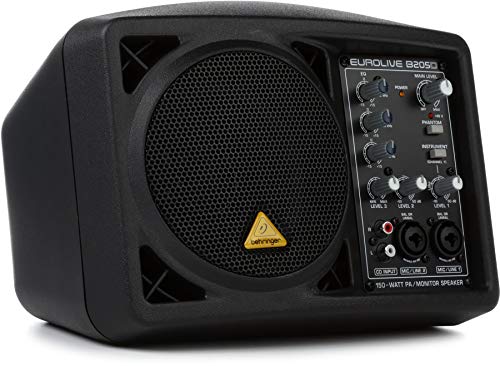
- 150-watt active monitor with a 5.25-inch driver
- Built-in mixer, EQ, mic preamps, and phantom power
- Lightweight design for tight spaces and portable setups
Best For: Vocal, keyboard, home studio, and presentation monitoring
Best High-Output Passive Wedge
Yamaha BR12M 12-inch Floor Monitor

- 12-inch woofer with a 1-inch compression driver
- 300-watt program and 600-watt peak handling
- Pole socket, handles, protection, and durable cabinet features
Best For: Small-venue bands and passive stage-monitoring systems
Best Personal PA Monitor
Mackie SRM150 Compact Active PA

- 150-watt Class-D power with a 5.25-inch driver
- XLR mic and line inputs for simple setups
- Lightweight format with limiter protection
Best For: Solo performers, speech, classrooms, and close-range monitoring
Best Powered 10-Inch Wedge

- 300-watt powered 10-inch two-way monitor
- XLR input/output plus auxiliary and MP3 inputs
- Onboard three-band EQ and durable wedge construction
Best For: Small venues, churches, rehearsals, and powered stage wedges
Compact Powered Control

- 250W powered 12-inch monitor
- Adjustable feedback filter and limiter
- XLR, 1/4-inch, RCA, and Speakon connectivity
Best For: Small-room performers needing built-in feedback control
High-Output Coaxial Monitor
Samson RSXM10A Active Stage Monitor

- 800W active monitor output
- 10-inch woofer with 1-inch tweeter
- FOH/Monitor selector and XLR link output
Best For: DJs and performers wanting high output in a compact cabinet
Tour-Ready Passive Monitor
Sound Town METIS-10M 10-inch Monitor

- 150W RMS and 300W peak at 8 ohms
- 10-inch woofer with compression tweeter
- Parallel 1/4-inch jacks and durable cabinet
Best For: Existing amplified systems needing a rugged passive floor monitor
Compact All-in-One Pick

- 150-watt active 6.5-inch monitor
- Four-channel mixer with three-band EQ
- Built-in MP3 player with USB playback
Best For: Small-room vocals, keyboards, rehearsals, and presentations
Ultra-Compact Personal Monitor

- 25-watt monitor with a 3-inch ceramic driver
- 150 Hz–17 kHz frequency response
- Stand/wall-mount hardware included
Best For: Personal monitoring and discreet small-space installations
High-Output Floor Monitor

- 300-watt two-way active monitor
- 12-inch woofer and 1-inch compression driver
- Feedback filter, limiter, and three-band EQ
Best For: Live performances needing powerful floor-monitor output
Best Compact Mixer Monitor – Behringer Eurolive B205D
For musicians searching for stage monitors for small rooms, the Behringer Eurolive B205D is a compact active option with a built-in mixer. Its 150-watt output, full-range 5.25-inch driver, and lightweight 7.05-pound design suit close-range vocal, keyboard, and recording-monitoring duties.
Best For: Vocalists, keyboard players, home recording setups, and small presentations that need onboard mixing.
Pros:
- Built-in three-channel mixer with three-band EQ.
- Two microphone preamps include phantom power for condenser microphones.
- Dedicated instrument-ready input does not require a DI box.
- Compact, lightweight enclosure is easy to place in tight rooms.
Cons:
- The 5.25-inch driver is better suited to close-range monitoring than bass-heavy playback.
- Its 150-watt output is intended for small-scale use rather than large stages.
The B205D is especially practical when space and setup simplicity matter more than high-volume coverage. Its integrated inputs and controls can reduce the need for extra equipment in a small room.
Best High-Output Passive Wedge – Yamaha BR12M 12-inch Floor Monitor
The Yamaha BR12M is a traditional floor monitor for small rooms that need more low-frequency presence and output than compact personal speakers provide. Its 12-inch woofer, 1-inch compression driver, and 300-watt program handling make it a strong fit for live sound and stage monitoring when paired with an amplifier or mixer.
Best For: Bands, vocalists, churches, and small-venue sound systems needing a full-size passive wedge.
Pros:
- 12-inch woofer delivers tighter, punchier lows than smaller monitor designs.
- 90-by-40-degree horn and titanium compression driver support clear high frequencies.
- 300-watt program and 600-watt peak power handling provide useful headroom.
- Built-in pole socket, handles, corner protectors, and protection circuitry add flexibility.
Cons:
- It requires a separate amplifier or powered mixer.
- At 15.6 kg, it is considerably heavier than compact powered monitors.
- The larger cabinet may be more than necessary for very close-range personal monitoring.
The BR12M makes sense when a small room still benefits from a conventional 12-inch wedge. Plan for appropriate amplification and adequate floor space when building the monitoring system.
Best Personal PA Monitor – Mackie SRM150 Compact Active PA
The Mackie SRM150 is a compact powered choice for stage monitors for small rooms, especially where one microphone and music source need to be heard clearly at close range. Its 150-watt Class-D amplifier, 5.25-inch full-range driver, and one-hand-carry design work well for classrooms, meetings, busking, and small performances.
Best For: Solo performers, presenters, classrooms, meetings, and compact vocal-monitoring setups.
Pros:
- Compact 7.6-pound enclosure is easy to carry and position.
- 150-watt Class-D amplification provides practical small-room output.
- XLR microphone input and line input support common vocal and playback sources.
- Built-in limiter helps protect the driver at high volume.
Cons:
- The 5.25-inch driver and 100 Hz lower response are not designed for bass-heavy music.
- It is intended for one mic plus music rather than full-band PA use.
- Bluetooth details in the supplied specifications should be verified before relying on wireless playback.
The SRM150 is a sensible personal monitor when portability and straightforward setup are priorities. For fuller music or multiple performers, a larger monitor or subwoofer-based system would be more appropriate.
Best Powered 10-Inch Wedge – Sound Town METIS-10MPW
The Sound Town METIS-10MPW is a powered 10-inch wedge for stage monitors for small rooms, bars, churches, rehearsals, and other live-sound applications. Its integrated 300-watt amplifier, titanium compression driver, and onboard three-band EQ provide more scale than compact personal monitors while keeping setup relatively simple.
Best For: Small live venues, church stages, rehearsals, and performers who want a powered wedge with flexible inputs.
Pros:
- 10-inch woofer and 1-inch titanium compression driver cover vocals and instruments with more body.
- Integrated 300-watt amplifier eliminates the need for a separate power amp.
- XLR output supports daisy chaining additional speakers.
- Three-band EQ enables quick adjustments for different rooms and stage positions.
Cons:
- The carpet-covered cabinet is heavier and less compact than personal PA monitors.
- It is not waterproof or water resistant.
- Its low-profile wedge form is primarily intended for floor placement rather than tabletop use.
The METIS-10MPW offers a useful middle ground between a small personal monitor and a larger passive wedge. Choose it when you need powered convenience, stronger low-end capability, and connection options for a modest live setup.
Compact Powered Control – Behringer EUROLIVE F1220D
For stage monitors for small rooms, the Behringer EUROLIVE F1220D offers a compact powered setup with a 12-inch woofer, 250 watts of output, and built-in tools for managing live sound. Its tabletop monitor design and wired XLR, 1/4-inch, RCA, and Speakon connectivity suit rehearsals, small performances, and multi-purpose audio setups.
Best For: Small-room performers who want an all-in-one powered monitor with feedback control.
Pros:
- Integrated adjustable feedback filter and limiter
- 12-inch woofer with wide frequency bandwidth and dynamic range
- Class-D amplification helps keep the enclosure relatively light at 23.6 pounds
- Multiple wired input and connection options
Cons:
- 250-watt output is lower than the other powered option in this roundup
- Not waterproof or water resistant
- Its 12-inch design may take more floor or tabletop space than a smaller monitor
The F1220D is a practical choice when feedback management and connection flexibility matter more than maximum output. It is especially useful for compact indoor setups that need a powered monitor without a separate amplifier.
High-Output Coaxial Monitor – Samson RSXM10A Active Stage Monitor
The Samson RSXM10A is a strong option for stage monitors for small rooms when you want substantial output from a compact active cabinet. It combines an 800-watt Class-D amplifier, a 10-inch low-frequency driver, a 1-inch tweeter, and a coaxial design for stage monitoring, DJ booths, and live performances.
Best For: Small venues, DJs, and performers who prioritize high powered output and a compact active monitor.
Pros:
- 800 watts of output power
- 10-inch woofer and 1-inch tweeter in a coaxial cabinet
- XLR-1/4-inch combo input and XLR link output
- FOH/Monitor selector and 1 3/8-inch pole-mount receptacle
Cons:
- At 30 pounds, it is heavier than the Behringer option
- Provides fewer listed connection types than the Behringer monitor
- Not waterproof or water resistant
With its high rated output and coaxial construction, the RSXM10A gives small-room systems plenty of headroom. The FOH/Monitor selector also adds useful flexibility when configuring it for different sound-system roles.
Tour-Ready Passive Monitor – Sound Town METIS-10M 10-inch Monitor
For stage monitors for small rooms built around an existing amplifier, the Sound Town METIS-10M provides a passive 10-inch floor-monitor format with 150 watts RMS and 300 watts peak power handling at 8 ohms. Its compression driver, parallel 1/4-inch jacks, and rugged carpeted cabinet make it suitable for live music, bars, churches, and portable setups.
Best For: Small-room sound systems that already have an amplifier and need a durable passive floor monitor.
Pros:
- 150W RMS and 300W peak power handling at 8 ohms
- 10-inch woofer paired with a 1-inch compression tweeter
- Parallel 1/4-inch jacks support easy daisy chaining
- Metal grille, reinforced corners, carpet finish, and side handle support portability
Cons:
- Passive design requires a separate amplifier
- Its listed connectivity is centered on 1/4-inch jacks rather than powered inputs
- Not waterproof or water resistant
The METIS-10M makes the most sense when your small-room rig already includes amplification. It offers straightforward floor-monitor operation, useful daisy-chaining, and a durable enclosure without adding an active amplifier to each speaker.
Compact All-in-One Pick – Behringer EUROLIVE B207MP3
Behringer EUROLIVE B207MP3 Active 150 Watt 6.5" PA/Monitor Speaker System with MP3 Player
Check Price On AmazonFor stage monitors for small rooms, the Behringer EUROLIVE B207MP3 combines a compact 6.5-inch speaker with a 150-watt active design and four-channel mixer. Its MP3 player, USB input, and lightweight cabinet make it practical for rehearsals, intimate gigs, home studios, and presentations.
Best For: Vocal and keyboard monitoring, small performances, meetings, and home recording setups.
Pros:
- Compact 6.5-inch active monitor with 150 watts of output.
- Four-channel mixer with three-band EQ supports flexible basic setups.
- Built-in MP3 player can play files from a USB stick.
- Lightweight design and XLR and 1/4-inch TRS connectivity suit portable use.
Cons:
- The 6.5-inch driver is less suited to applications needing substantial low-end output.
- It requires corded power.
- It is not waterproof.
The B207MP3 is a versatile choice when space and portability matter more than large-room volume. Its integrated mixer and media playback features reduce the amount of extra equipment needed.
Ultra-Compact Personal Monitor – Galaxy Audio NSPA Nano Spot
The Galaxy Audio NSPA Nano Spot is designed for listeners who need a very small monitor in a confined space. With a 3-inch ceramic driver, 25 watts of power, and included stand and wall-mount hardware, it fits well among stage monitors for small rooms, restaurants, and compact presentation areas.
Best For: Personal monitoring, restaurant installations, and wall- or stand-mounted setups where minimal size is important.
Pros:
- Very compact 3-inch monitor with a 16-ounce listed weight.
- Includes a stand/wall-mount kit, power supply, rubber feet, and quick-start guide.
- Provides 25 watts of output and a 150 Hz–17 kHz frequency response.
- Offers bass boost and 24VDC phantom power support.
Cons:
- The 3-inch driver and 25-watt output are aimed at personal monitoring rather than high-volume coverage.
- Its listed frequency response starts at 150 Hz, limiting deep bass.
- It is not waterproof.
The NSPA Nano Spot makes sense when a discreet, mountable monitor is more valuable than broad bandwidth or substantial output. Its included mounting accessories simplify installation in tight spaces.
High-Output Floor Monitor – Behringer EUROLIVE F1320D
For small rooms that still need strong stage volume, the Behringer EUROLIVE F1320D provides a 300-watt, two-way monitor with a 12-inch woofer and 1-inch compression driver. Its feedback filter, limiter, and integrated sound processor add useful control for live and playback applications.
Best For: Live performers and playback setups that need a powerful floor-standing monitor with feedback control.
Pros:
- 300-watt active two-way design delivers substantially more output than compact personal monitors.
- 12-inch woofer and 1-inch compression driver provide a larger two-way configuration.
- Adjustable feedback filter and integrated limiter support system control and protection.
- Built-in three-band EQ adds basic tonal adjustment.
Cons:
- At 33.1 pounds and approximately 19.5 inches in each listed dimension, it takes up considerable space in a small room.
- Its floor-standing format is less convenient for highly portable setups.
- It is not water resistant.
The F1320D is best when output and stage presence take priority over a compact footprint. For genuinely tight spaces, its larger cabinet should be measured carefully before purchase.
How We Picked the Best Stage Monitors for Small Rooms
We focused on the features that matter most when floor space, volume, and setup time are limited. The lineup includes compact personal monitors, active speakers with built-in amplification, and passive cabinets for users who already own a suitable mixer or power amplifier.
Our comparison considers driver size, stated power, monitor form factor, input flexibility, portability, feedback-management features, and likely use cases. Because manufacturer power ratings are not always measured the same way, they should be treated as a general reference rather than a direct volume comparison.
Quick Comparison
| Best For | What to Prioritize | Recommended Type |
|---|---|---|
| Solo performers and presenters | Small footprint, simple controls | Compact active monitor |
| Small bands | Clear vocal range and headroom | Active 10- or 12-inch monitor |
| Permanent installations | Consistent coverage and durability | Powered or passive wedge |
| Existing PA systems | Amplifier compatibility | Passive monitor |
| Very tight spaces | Low stage clutter and focused sound | Personal monitor |
Key Buying Factors for Stage Monitors for Small Rooms
Size and Coverage
A 5- to 6.5-inch monitor is easier to place near a vocalist, keyboard, or lectern, but it generally offers less low-end authority. Ten- and 12-inch wedges provide fuller coverage for bands, though they take up more floor space and can produce excessive bass in reflective rooms.
Active Versus Passive Design
Active monitors include their own amplifier, making them convenient for compact rigs and quick setup. Passive models can be a good value when you already have compatible amplification, but you must match impedance, power handling, cables, and mixer outputs correctly.
Feedback Control and Placement
Feedback-resistant circuitry is useful, but placement remains critical. Aim the monitor toward the performer’s ears, keep microphones behind the speaker’s main output axis, and avoid pointing the microphone directly at the woofer or tweeter. Start at a moderate level and raise only the frequencies needed for clarity.
Inputs, Outputs, and Portability
Check whether the monitor accepts microphone- and line-level signals, whether it offers a link output, and whether its controls suit your setup. Built-in media playback can help for rehearsal or background music, while a lighter cabinet is valuable for frequent transport.
Who Should Buy Which Stage Monitors for Small Rooms?
Choose a compact active model for solo performers, speakers, small worship teams, and anyone who values quick setup. A 10-inch powered wedge is a balanced choice for small bands that need stronger vocal projection without moving to a large PA cabinet. Consider a 12-inch monitor when fuller low frequencies and greater headroom matter more than minimal footprint.
Buy a passive model if your system already includes an appropriate amplifier and you want to expand with matching wedges. For extremely limited stages, a personal monitor can provide focused near-field sound with less spill. Whichever model you choose, prioritize intelligibility over maximum volume: in small rooms, careful placement and restrained EQ often improve the mix more than extra wattage.