
The right stage monitor helps performers hear vocals, instruments, and timing cues clearly without overpowering the rest of the mix. This roundup covers practical options for rehearsals, small venues, worship spaces, DJs, and full live setups.
Our selection includes powered and passive floor wedges, compact PA monitors, nearfield-style studio speakers, and a wireless in-ear monitoring system. Use the buying guide below to narrow the list by power, coverage, portability, and performance needs.
Best 10 Stage Monitors for Music Picks for 2026
Powerhouse Pick

- 300-watt powered two-way monitor
- 12-inch woofer with 1-inch compression driver
- Feedback filter and integrated protection processing
Best For: Live monitoring and playback setups needing powered output
Best Pair Value
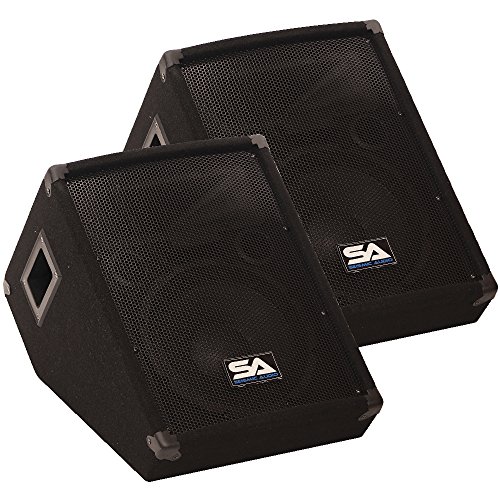
- Two 10-inch wedge monitors included
- 150 watts RMS per speaker
- Titanium compression horn driver
Best For: Bands and venues needing matched passive monitors
Best Connected Option

- 350-watt powered 10-inch speaker
- Bluetooth streaming and True Wireless Stereo
- Two-channel mixer with mic, line, and Bluetooth inputs
Best For: Mobile performers and events needing flexible connectivity
Classic Passive Choice
Yamaha BR12M 12-inch Floor Monitor

- 12-inch woofer with 1-inch compression driver
- 300-watt program and 600-watt peak handling
- 97 dB sensitivity with built-in pole socket
Best For: PA systems using separate amplification
Compact Powered Pick

- 350W bi-amplified 8-inch powered speaker
- Built-in mixer with Bluetooth and TWS
- Portable wedge design with pole socket
Best For: Small gigs, rehearsals, DJs, and home studios
Traditional Wedge Option

- 10-inch two-way floor monitor
- Titanium compression horn
- 150W RMS, 300W peak handling
Best For: Wired stage setups using an external amplifier
Compact Studio Pair

- Pair of compact 3.5-inch studio monitors
- Balanced TRS input and 24-bit USB DAC
- Bluetooth 5.3, RCA, AUX, and headphone output
Best For: Desktop music production and compact indoor monitoring
High-Power Wedge
Rockville RSM15P 15-Inch Passive Monitor

- 1400-watt peak passive speaker
- Wide 70-by-50-degree coverage
- Rugged wedge cabinet with pro connectors
Best For: High-output live music and DJ monitoring
Wireless Freedom
JOYO JW-07 Wireless In-Ear Monitor System

- Under-5ms low-latency monitoring
- 40-to-60-foot open-space range
- Over 8 hours of battery life
Best For: Individual practice and live-performance monitoring
Compact All-in-One
Behringer B105D 50-Watt PA Monitor

- Built-in 50-watt Class-D amplifier
- Bluetooth and USB MP3 playback
- Lightweight 8.2-pound enclosure
Best For: Small performances, rehearsals, and home studios
Powerhouse Pick – Behringer EUROLIVE F1320D
If you need stage monitors for music that can deliver substantial output without a heavyweight cabinet, the Behringer EUROLIVE F1320D is a practical powered option. Its 300-watt Class-D amplifier, 12-inch woofer, and built-in feedback filter make it well suited to live monitoring and playback applications.
Best For: Performers and small live setups needing a powered 12-inch monitor with feedback control.
Pros:
- 300-watt, two-way active monitor system
- 12-inch woofer and 1-inch compression driver provide broad-range sound
- Adjustable feedback filter, limiter, and integrated sound processor
- Class-D amplification keeps the system relatively lightweight for its output
Cons:
- At 33.1 pounds, it is not an ultra-light monitor
- Wired operation requires a corded power source
- It is not water resistant
The F1320D stands out when built-in processing and feedback management matter as much as raw volume. It is a versatile choice for live and playback duties, though its corded, floor-standing design is best suited to controlled setups.
Best Pair Value – Seismic Audio SA-10MT
Seismic Audio - SA-10MT - Pair of 10" Floor / Stage Monitors Wedge Style with Titanium Horn
Check Price On AmazonFor buyers outfitting more than one performer position, the Seismic Audio SA-10MT provides two wedge-style stage monitors for music in a single set. Each monitor uses a 10-inch speaker, a titanium compression horn, and a 150-watt RMS rating for live performances and stage monitoring.
Best For: Bands, venues, and event setups that need a matched pair of passive floor monitors.
Pros:
- Includes two 10-inch wedge monitors
- 150 watts RMS and 300 watts peak per stated model specification
- 40-ounce woofer magnet with a 2-inch voice coil
- Titanium compression horn driver and auxiliary/XLR connectivity
Cons:
- Passive design requires an external amplifier
- The pair weighs 44 pounds
- Not water resistant
The SA-10MT is a straightforward choice when quantity and traditional wedge monitoring are priorities. Its passive configuration can work well with an existing amplifier and mixer, but it is less convenient than a powered monitor for portable, all-in-one setups.
Best Connected Option – ALTO TX410 Powered PA Speaker
The ALTO TX410 adds modern connectivity to the stage monitors for music category, combining a 10-inch powered speaker with Bluetooth streaming and a two-channel mixer. Its 350-watt bi-amplified design supports floor-monitor use while also accommodating microphones, line-level sources, and linked speakers.
Best For: Mobile performers, DJs, presenters, and small venues that value Bluetooth and flexible input options.
Pros:
- 350 watts of Class-D bi-amplified power
- 10-inch LF driver with 1-inch titanium diaphragm HF compression driver
- Built-in two-channel mixer with microphone, line, and Bluetooth inputs
- Supports Bluetooth True Wireless Stereo and speaker linking
Cons:
- Only one speaker is included
- Bluetooth operation depends on compatible devices and setup conditions
- Not water resistant
The TX410 is a flexible choice for users who want one speaker to handle monitoring, playback, and presentation duties. Its mixer and wireless features make setup convenient, while the wedge-monitor position keeps it useful onstage.
Classic Passive Choice – Yamaha BR12M 12-inch Floor Monitor
The Yamaha BR12M is a traditional passive floor monitor designed for stage monitoring, sound reinforcement, and public address use. Its 12-inch woofer, 1-inch compression driver, 97 dB sensitivity, and 300-watt program handling make it a solid fit for systems built around a separate amplifier and mixer.
Best For: Installed or portable PA systems seeking a high-sensitivity 12-inch passive monitor with stand-mount flexibility.
Pros:
- 12-inch high-power woofer and 1-inch compression driver
- 300-watt program and 600-watt peak power handling
- 97 dB sensitivity for efficient output
- Built-in pole socket, handles, corner protectors, and protection circuitry
Cons:
- Requires an external amplifier
- No wireless communication technology
- Only one monitor is included
The BR12M favors dependable, conventional PA integration over wireless convenience. It is a sensible option for buyers who already have amplification and want a robust 12-inch wedge with practical handling features.
Compact Powered Pick – Alto TX408
For musicians seeking stage monitors for music, the Alto TX408 offers a compact powered setup with 350W of bi-amplified output, an 8-inch woofer, and broad 90° x 60° dispersion. Its built-in mixer and Bluetooth support make it practical for small gigs, rehearsals, DJs, and home studios.
Best For: Small live performances, stage monitoring, DJs, home studios, and presentations.
Pros:
- 350W Class-D amplification with an 8-inch LF driver and titanium HF compression driver.
- Built-in two-channel mixer supports microphone, line-level, and Bluetooth inputs.
- Bluetooth streaming includes True Wireless Stereo support for compatible setups.
- Metal grille, ergonomic handles, and a 36mm pole socket improve portability and setup flexibility.
Cons:
- It is not waterproof or water resistant.
- Operation requires corded power.
- The compact 8-inch design is better suited to intimate venues than large stages.
The TX408 is a versatile choice when you want a portable powered wedge that can also handle background music and simple two-source setups. Its integrated controls reduce the need for extra equipment, while the compact enclosure keeps transport manageable.
Traditional Wedge Option – Seismic Audio SA-10MT
Seismic Audio - SA-10MTSingle - 10" Floor / Stage Monitor Wedge Style with Titanium Horn
Check Price On AmazonThe Seismic Audio SA-10MTSingle is a straightforward floor wedge for musicians comparing stage monitors for music. Its 10-inch two-way speaker, titanium horn, and wired connections provide a stage-ready format for performers who prefer a conventional passive monitor design.
Best For: Floor-mounted stage monitoring where a wired 10-inch wedge is preferred.
Pros:
- 10-inch two-way speaker provides a larger driver format than compact 8-inch monitors.
- Titanium compression horn and 4-inch by 10-inch horn support high-frequency projection.
- Rated at 150W RMS and 300W peak.
- Floor-wedge enclosure is designed for stage-ready placement.
Cons:
- This is a speaker-only monitor and does not include a built-in amplifier.
- It lacks wireless connectivity and relies on wired inputs.
- At 22 pounds, it is less portable than smaller powered alternatives.
The SA-10MT makes sense for a conventional sound system already equipped with amplification. Choose it when you value a larger wedge format and simple wired operation, but account for the additional amplifier or powered mixer required.
Compact Studio Pair – Ortizan C7 Studio Monitors
The Ortizan C7 is a paired studio-monitor system for creators who need stage monitors for music in a compact indoor workspace. With 3.5-inch carbon-fiber drivers, 0.75-inch silk-dome tweeters, a stated flat-response tuning, and balanced TRS input, it is oriented toward close-range monitoring rather than high-output live-stage use.
Best For: Compact music production spaces, desktop monitoring, content creation, and casual audio playback.
Pros:
- Sold as a pair with 3.5-inch mid-bass drivers and 0.75-inch silk-dome tweeters.
- 24-bit USB DAC is designed to reduce conversion-related signal loss.
- Balanced 6.35mm TRS input supports mixers and other professional gear.
- Offers Bluetooth 5.3, RCA, AUX, USB, and front-panel headphone connectivity.
Cons:
- The small 3.5-inch drivers are not intended for high-output stage coverage.
- The supplied details identify gaming as a specific use, so live-monitoring suitability is more limited than a PA wedge.
- It requires corded power.
The C7 is best viewed as a desktop or small-room monitoring solution rather than a conventional performer-facing stage wedge. Its broad input selection and balanced connection make it useful for compact production setups, especially where accurate nearfield listening is the priority.
High-Power Wedge – Rockville RSM15P 15-Inch Passive Monitor
For performers who need substantial volume on stage, the Rockville RSM15P is a powerful choice among stage monitors for music. Its 15-inch woofer, titanium compression driver, angled wedge cabinet, and broad horn coverage suit live bands, DJs, and PA setups, though it requires an external amplifier.
Best For: Live performers, DJs, and touring setups that need a high-output passive floor monitor.
Pros:
- 1400-watt peak rating with a 15-inch woofer and 1.75-inch titanium compression driver.
- 70-by-50-degree horn coverage helps distribute sound across the stage.
- Rugged MDF cabinet, steel grille, carpet finish, handles, and floor-wedge design.
- Dual 1/4-inch and Speakon input/output connections support pro audio systems.
Cons:
- Passive design requires a compatible amplifier.
- At 54.9 pounds, it is less convenient to carry than compact monitors.
- Not waterproof and listed without a warranty.
The RSM15P is a practical fit when output and coverage matter more than portability. Confirm amplifier compatibility and transport requirements before choosing it for smaller stages.
Wireless Freedom – JOYO JW-07 Wireless In-Ear Monitor System
The JOYO JW-07 takes a personal approach to stage monitors for music, sending monitor audio wirelessly to in-ear headphones rather than through a floor speaker. Its low-latency 2.4GHz connection, automatic pairing, and compact clip-on receiver make it useful for practice, guitar, studio work, and live performance.
Best For: Guitarists, DJs, and performers who want a compact personal monitoring system without a wedge speaker.
Pros:
- Under-5ms latency supports near-real-time monitoring.
- 48kHz/16-bit audio and frequency-hopping technology support clear, stable transmission.
- 40-to-60-foot open-space operating range.
- Built-in battery provides more than 8 hours of use, with 12 channel banks.
Cons:
- One transmitter cannot connect to multiple receivers.
- Its listed compatibility is focused on guitar rather than a broad range of source equipment.
- It is an in-ear system, so suitable earphones or in-ears are needed for monitoring.
The JW-07 is appealing when mobility and personal control are priorities. Its single-receiver limitation makes it better for individual monitoring than for a shared multi-performer setup.
Compact All-in-One – Behringer B105D 50-Watt PA Monitor
The Behringer EUROLIVE B105D is a compact powered option for stage monitors for music, vocal practice, keyboard monitoring, and small multimedia setups. It combines a 50-watt Class-D amplifier with a three-channel mixer, three-band EQ, Bluetooth streaming, and USB MP3 playback in a lightweight enclosure.
Best For: Vocalists, keyboard players, home studios, and small performances needing a simple powered monitor with media playback.
Pros:
- Built-in 50-watt amplifier avoids the need for a separate power amp.
- Three-channel mixer and three-band EQ provide basic source and tone control.
- Bluetooth streaming and USB MP3 playback add flexible playback options.
- Compact 8.2-pound design is easier to position and transport.
Cons:
- 50 watts and a 5-inch driver are better suited to smaller applications than high-volume stages.
- It is not water resistant.
- The listed frequency response begins at 80Hz, so it is not intended for deep bass reproduction.
The B105D is a convenient plug-and-play monitor for modest venues, rehearsals, and home recording. Choose a larger monitor if you need substantial stage volume or fuller low-end coverage.
How We Picked These Stage Monitors for Music
We selected these models to represent the main ways musicians monitor live sound: powered floor wedges, passive monitors that require an amplifier, compact PA speakers, nearfield-style monitors, and wireless in-ear monitoring. We considered speaker size, power configuration, portability, connectivity, feedback-management features, and suitability for different stages and rehearsal environments.
Because monitoring needs vary widely, no single model is best for every performer. A compact powered monitor may be ideal for a singer-songwriter, while a larger passive wedge or wireless IEM system may better suit a full band.
Quick Comparison
| Monitor type | Best suited to | Main advantage | Potential limitation |
|---|---|---|---|
| Powered floor wedge | Live bands and vocalists | Built-in amplification and simple setup | Requires AC power at the monitor |
| Passive floor monitor | Installed or expandable PA systems | Flexible amplifier matching | Needs a compatible external amp |
| Compact PA monitor | Small venues and rehearsal spaces | Lower size and weight | Less low-end projection |
| Studio-style monitor | Practice, playback, and small setups | Convenient nearfield listening | Not designed for every live-stage role |
| Wireless IEM | Performers needing personal mixes | Clear monitoring without floor wedges | Requires wireless coordination and earbuds |
Key Buying Factors for Stage Monitors for Music
Powered or Passive Design
Powered monitors include their own amplifier, making them easier to deploy and match with a mixer. Passive wedges can be lighter or easier to integrate into an existing PA, but you must verify amplifier power, impedance, and speaker connectors before buying.
Speaker Size and Output
Eight- and 10-inch monitors are often easier to carry and can work well for vocals, keyboards, and modest stages. Twelve- and 15-inch models generally provide more low-frequency presence and headroom, which can help with bass-heavy music or louder bands. Check the published output specifications, but treat maximum ratings as peaks rather than continuous operating levels.
Feedback Control and Placement
Feedback depends on microphone type, room acoustics, gain structure, and monitor angle—not just speaker power. Features such as feedback filters can help, but careful placement remains essential. Point the monitor toward the performer’s ears while keeping it away from the microphone’s most sensitive pickup area.
Connections and Portability
Confirm whether the monitor accepts the mixer outputs you use, such as XLR, TRS, or RCA. Also consider weight, handles, pole mounts, cable requirements, and whether the enclosure can be transported safely. Wireless systems add another layer: check operating range, battery life, latency, and local frequency regulations.
Who Should Buy Which Stage Monitors for Music?
- For simple live setups: Choose a powered wedge with built-in amplification and straightforward inputs.
- For vocalists and acoustic performers: A compact powered 8- or 10-inch monitor can provide useful vocal clarity without excessive bulk.
- For louder bands: Consider a larger 12- or 15-inch monitor with sufficient headroom and dependable low-frequency response.
- For an existing PA system: A passive wedge may be the most practical choice if your amplifier is correctly matched.
- For practice or desktop listening: Studio-style monitors can be convenient, but confirm that their connectivity and output suit your room.
- For performers who want a clean stage: A wireless in-ear system can reduce wedge clutter and provide more personal monitoring control.