
Reliable power is easy to overlook until a voltage spike, overloaded circuit, or loose connection interrupts a performance. The best stage power conditioners for live sound help organize equipment power while adding practical protection and monitoring for touring rigs, racks, and mobile setups.
This roundup compares 10 options across compact, rackmount, sequenced, and high-capacity designs. Use the buying guide below to match outlet count, current handling, protection features, and portability to your system.
Best 10 Stage Power Conditioners for Live Sound Picks for 2026
Rack-Ready Noise Control

- Nine outlets with noise filtering
- Surge protection and LED illumination
- 15A capacity with one USB port
Best For: Live sound rigs needing multiple protected outlets
Extreme-Voltage Protection
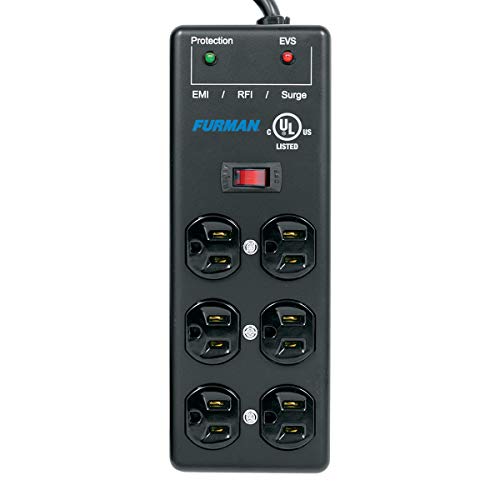
- Six protected outlets
- EVS over/under-voltage shutdown
- 15-foot cord and steel housing
Best For: Compact stage rigs needing voltage protection
High Outlet Capacity

- Eleven available outlets
- Noise filtering and surge protection
- Stainless-steel construction
Best For: Larger live sound systems needing many connections
Digital Rack Power Sequencing

- Ten outlets with two always-on front outlets
- LCD voltage readout and USB port
- 1U rack-mount design with surge protection
Best For: Rack setups needing monitoring and flexible outlet access
Compact Surge Defense

- Compact 10-amp chassis
- Linear AC filtering
- Automatic voltage shutdown
Best For: Small DJ, recording, and pro audio setups
Stage Control Center

- 10 protected outlets
- Three surge-protected zones
- LED voltmeter and pullout light
Best For: Larger live sound racks needing monitoring
Rackmount Filtering

- PG-90 filtering technology
- Nine total AC outlets
- Front USB access
Best For: Rack-mounted audio systems needing filtering
Best for Sequenced Rack Control
20A Rack Mount Power Conditioner

- Eight independently controlled sequenced outlets
- Real-time LCD voltage display
- Bypass mode and external remote switch
Best For: Rack-based audio systems needing organized power sequencing
Best Portable Pick

- Six filtered, surge-protected outlets
- Portable design with a 9-foot cable
- Stainless-steel enclosure and two-year warranty
Best For: Compact indoor professional-audio rigs
Best High-Capacity Controller

- Ten sockets with sequential and independent control
- LCD voltage and eight-channel LED indicators
- Front USB and Type-C charging ports
Best For: Larger 100–125V rack systems needing extensive control
Rack-Ready Noise Control – Radial Power-2
For stage power conditioners for live sound, the Radial Power-2 offers a practical combination of nine outlets, noise filtering, surge protection, and LED illumination. Its 15A capacity and stainless-steel enclosure make it a solid fit for organizing pro-audio equipment in a rack or setup.
Best For: Live sound rigs needing multiple protected outlets and noise filtering.
Pros:
- Nine outlets provide room for several connected devices.
- Noise filtering and surge protection help support cleaner, safer power.
- Includes LED illumination, one USB port, and a 2-year warranty.
Cons:
- Its 12.4-pound weight is relatively substantial for a power conditioner.
- Designed for 120V Type B North American power.
The Power-2 is a feature-rich choice when outlet count and rack power organization matter more than minimizing weight.
Extreme-Voltage Protection – Furman SS-6B-PRO
The Furman SS-6B-PRO is a straightforward option among stage power conditioners for live sound, combining six protected outlets with EMI/RFI filtration and Extreme Voltage Shutdown. Its steel housing and 15-foot cord suit stage, studio, and AV setups where reach and ruggedness are important.
Best For: Performers and technicians who want EVS protection in a compact power block.
Pros:
- EVS cuts power during dangerous over- or under-voltage conditions and restores it when stable.
- EMI/RFI filtration and surge suppression help protect connected gear.
- Heavy-duty steel construction, illuminated switch, and 15-foot cord support practical stage use.
Cons:
- Six outlets offer less capacity than larger rack-style conditioners.
- It does not provide a rack-mount form factor in the supplied specifications.
This is a focused protection solution for smaller rigs that prioritize voltage shutdown and a long cable over a high outlet count.
High Outlet Capacity – Radial Power-1
The Radial Power-1 is built for setups that need plenty of connections, with 11 outlets plus noise filtering and surge protection. For stage power conditioners for live sound, its stainless-steel construction and rack-oriented dimensions make it useful for organized pro-audio power distribution.
Best For: Larger live sound systems requiring a high outlet count.
Pros:
- Eleven outlets accommodate numerous devices from one power unit.
- Noise filtering and surge protection are included.
- Stainless-steel construction supports a durable enclosure.
Cons:
- The supplied notes do not specify voltage, amperage, USB ports, or warranty details.
- Its listed 23 x 10.25 x 4-inch dimensions may require careful rack or case planning.
The Power-1 stands out primarily for outlet capacity, making it a sensible choice when expanding a connected live sound system.
Digital Rack Power Sequencing – Pyle PCO875
The Pyle PCO875 adds sequencing and monitoring features to the category of stage power conditioners for live sound. It provides eight rear outlets, two always-on front outlets, a USB port, and a digital LCD voltage readout in a compact 1U rack-mount housing.
Best For: Rack-based home theater, studio, and stage setups needing outlet flexibility and basic power monitoring.
Pros:
- Ten outlets include eight rear connections and two always-on front outlets.
- Digital LCD display provides a voltage readout.
- 1U rack-mount design includes USB charging and surge, spike, and overload protection.
Cons:
- Its stated 13A and 2000W ratings are lower than a 15A conditioner.
- The supplied notes do not specify detailed noise-filtering performance.
- One-button operation may offer less control than more complex sequencing systems.
The PCO875 is appealing when convenient rack mounting, front access, USB charging, and a visible voltage display are priorities.
Compact Surge Defense – Furman AC-215A
Furman AC-215A Compact Power Conditioner with Auto-Resetting Voltage Protection - Black
Check Price On AmazonFor stage power conditioners for live sound setups where space is limited, the Furman AC-215A offers compact protection in a durable chassis. It combines surge and spike protection with linear AC filtering, while its automatic voltage-protection circuitry can shut down connected equipment when it detects unsafe irregularities.
Best For: Compact DJ rigs, home recording setups, projectors, and smaller pro audio systems needing 10-amp protection.
Pros:
- Compact design suitable for remote or space-constrained installations
- LiFT filtering is designed to provide cleaner AC power
- Auto-resetting EVS circuitry responds to dangerous voltage irregularities
- Supports up to 1,200 watts at 10 amps
Cons:
- Provides fewer outlets than larger rack-style conditioners
- Its 10-amp rating may not suit higher-demand stage systems
- No certification is listed in the supplied specifications
The AC-215A is a practical choice when portability and protective features matter more than extensive outlet capacity. Its compact form makes it especially useful for smaller live sound and recording environments.
Stage Control Center – Soundavo PMX-3300
The Soundavo PMX-3300 is a practical option among stage power conditioners for live sound when you need multiple protected connections and at-a-glance voltage monitoring. Its 10 outlets are arranged across three surge-protected zones, with a front pullout light for checking rack equipment in darker spaces.
Best For: Live sound racks and audio systems that need 15-amp capacity, multiple outlets, zone-based protection, and visible voltage monitoring.
Pros:
- Offers 10 protected outlets across three surge-protected zones
- 15-amp rating accommodates higher-demand equipment than compact 10-amp units
- LED voltmeter display makes power levels easy to monitor
- Pullout light improves visibility in dark rack areas
Cons:
- Its 19-inch-long, 7.5-inch-wide enclosure requires substantial space
- Only a one-year warranty is listed
- The supplied notes do not specify detailed filtering performance
Choose the PMX-3300 when outlet count, monitoring, and rack usability are priorities. Its 15-amp capacity and three-zone layout make it well suited to organized audio-system power management.
Rackmount Filtering – Black Lion Audio PG-X
The Black Lion Audio PG-X is a straightforward rackmount choice for stage power conditioners for live sound systems. It provides eight rear-panel outlets plus a front outlet, along with PG-90 filtering technology and a front USB port for convenient rack-based power access.
Best For: Rack-mounted audio systems that need dedicated filtering, multiple AC outlets, and front-panel access.
Pros:
- Rackmount form factor integrates neatly into equipment racks
- PG-90 filtering technology is paired with Panasonic and Wima capacitors
- Provides eight rear outlets and one front outlet
- Includes a front-panel USB port
Cons:
- The supplied notes do not list a voltage or amperage rating
- It weighs 7.7 pounds, making it less convenient for lightweight portable rigs
- No pullout light or voltage display is listed
The PG-X suits users who want a conventional rackmount conditioner focused on filtering and accessible outlet placement. Confirm its electrical capacity against your system requirements before using it in a demanding live setup.
Best for Sequenced Rack Control – 20A Rack Mount Power Conditioner
For stage power conditioners for live sound setups that need organized startup and shutdown, this 20A rack-mount unit combines sequenced outlets, surge protection, and live voltage monitoring. It provides eight rear sequenced outlets, two always-on front outlets, and a rated maximum output of 2000W.
Best For: Rack-based audio systems requiring independent outlet control, sequencing, and voltage visibility.
Pros:
- Eight rear outlets have independent switches and front-panel indicators.
- Large LCD displays voltage in real time.
- Includes bypass mode, an external dry-contact remote switch, and 110–230V compatibility.
- Metal rack-mount enclosure with UL, FCC, and RoHS specifications and a two-year manufacturer warranty.
Cons:
- Its 2000W maximum output may be limiting for larger systems.
- The rack-mount form factor is less convenient for portable, minimal setups.
Choose this model when outlet-by-outlet sequencing and remote-control flexibility matter more than maximum capacity. The LCD and dedicated indicators also make it practical for monitoring a complex rack during setup and operation.
Best Portable Pick – Black Lion Audio PG-P
For compact stage power conditioners for live sound applications, the Black Lion Audio PG-P is a straightforward portable option with six outlets, audio filtration, surge protection, and a 9-foot power cable. Its compact design suits indoor professional-audio setups where easy placement is important.
Best For: Portable audio rigs and smaller setups that need filtered, surge-protected power without rack installation.
Pros:
- Six outlets support multiple professional audio devices.
- Built-in audio filtration is designed for audio equipment.
- Long 9-foot power cable improves placement flexibility.
- Portable stainless-steel enclosure and a two-year warranty.
Cons:
- It has fewer outlets than the rack-mount options in this roundup.
- It does not provide outlet sequencing, independent channel switches, or voltage display.
- Its listed 120V specification is less versatile than models offering broader voltage compatibility.
The PG-P is best viewed as a simple, portable power and filtration solution rather than a full rack power-management controller. It is a sensible fit for musicians and engineers who value portability and a long cable over advanced sequencing features.
Best High-Capacity Controller – 3300W Rack Power Sequencer
For demanding stage power conditioners for live sound systems, this rack-mount controller offers 10 sockets, sequential startup, independent channel switching, and USB and Type-C charging. It is rated for up to 3000W total output, with a stated maximum output of 10A per channel.
Best For: Larger rack systems that need high stated capacity, channel-by-channel control, and front-panel status monitoring.
Pros:
- Eight rear sockets and two front normally-open sockets accommodate multiple devices.
- Sequential one-key startup and independent channel switches simplify system management.
- LCD voltage monitoring and eight-channel LED indicators show operating status.
- Front USB and Type-C ports add charging convenience.
Cons:
- The listed AC range is limited to 100–125V.
- It is a relatively heavy 1U rack unit at 8.63 pounds.
- The supplied notes state a 3300W product description but specify a maximum total output of 3000W, so buyers should verify the applicable rating.
This model stands out when a live or studio rack needs many outlets, visible channel status, and a higher stated total output than the other listed options. Confirm the relevant power rating and venue voltage before integrating it into a larger system.
How We Picked the Best Stage Power Conditioners for Live Sound
We focused on features that matter during rehearsals, shows, installations, and transport: available outlets, rated amperage and wattage, surge protection, voltage monitoring, sequencing controls, rack compatibility, and ease of use. We also considered whether each unit suits a compact pedalboard or small rack, a full live-sound system, or a larger installation with multiple power zones.
Product specifications and intended use were weighed more heavily than cosmetic features. A power conditioner cannot correct every venue wiring problem or replace a properly rated distribution system, so the guide emphasizes matching capacity to the connected equipment and following the manufacturer’s safety instructions.
Quick Comparison
- Best for standard rack systems: Choose a rackmount model with clear voltage monitoring, front-panel access, and enough rear outlets for your signal chain.
- Best for compact rigs: A smaller conditioner is easier to transport and can protect essential gear without consuming valuable rack space.
- Best for controlled startup: Sequencers stagger power to connected equipment, helping reduce inrush current and simplifying shutdown procedures.
- Best for demanding systems: Look for a 15A or 20A-rated design only when the venue circuit, plug type, and connected equipment support that load.
- Best for flexible placement: Portable units work well for mobile performers, front-of-house stations, and setups that change from venue to venue.
Key Buying Factors for Stage Power Conditioners for Live Sound
Current Capacity and Outlet Layout
Check the total current draw of amplifiers, mixers, wireless systems, processors, lighting accessories, and other connected devices. Leave operating headroom instead of running continuously at the maximum rating. Count both the number and spacing of outlets, especially if you use bulky adapters or wall-wart power supplies.
Protection and Monitoring
Surge suppression, over-voltage protection, and voltage displays can provide useful safeguards and quick visual checks. Some models include automatic reset or emergency shutdown features. Treat these functions as one layer of protection; they do not make unsafe venue power safe or eliminate the need for proper grounding.
Sequencing and Control
Power sequencing is useful when multiple devices should turn on or off in a controlled order. Compare the number of zones, delay behavior, independent controls, and whether sequencing applies to every outlet or only selected banks.
Rack Fit, Noise, and Portability
Confirm rack height, depth, connector placement, and access to switches or pullout lights. For portable rigs, consider weight, chassis durability, cord length, and whether the controls can be protected during transport. A conditioner should be convenient enough that you will actually use it at every show.
Who Should Buy Which Stage Power Conditioners for Live Sound?
Touring musicians and mobile DJs should prioritize compact dimensions, sturdy construction, visible voltage information, and straightforward outlet access. Small bands and rehearsal spaces will usually benefit from a dependable rackmount conditioner with enough outlets for the mixer, processors, wireless gear, and accessories. Installers and venues may prefer multiple zones, sequencing, higher capacity, and clear front-panel monitoring for repeatable system startup. Engineers with larger racks should calculate the full load carefully and verify the venue circuit before choosing a higher-amperage model.
Before buying, total your equipment’s current draw, identify the required plug and outlet types, measure available rack space, and decide whether sequencing is genuinely useful. The right unit is not simply the one with the most outlets; it is the one that provides suitable capacity and protection without exceeding the limitations of the venue’s electrical system.