
Unstable venue power can threaten audio gear, interrupt a performance, and make troubleshooting harder. The best stage power conditioners with voltage displays provide useful voltage monitoring while organizing power distribution in a rack-friendly format.
Our roundup compares 10 options across voltage regulation, outlet capacity, sequencing controls, metering, and practical stage features, so you can match protection and control to your rig.
Best 10 Stage Power Conditioners with Voltage Displays Picks for 2026
Accessible Rack Protection

- LED voltmeter and pullout light
- 10 protected outlets in 3 zones
- 15A rating with 6,500A surge protection
Best For: Stage and studio rigs needing simple monitoring and organized protection
Regulated Professional Power
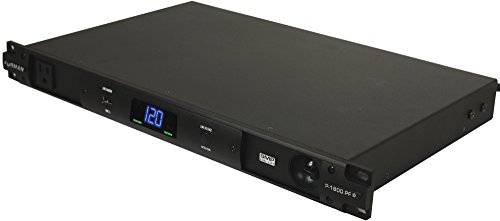
- Regulates 97–137V input to 120V output
- Digital voltage and current metering
- Nine outlets with isolated banks and USB
Best For: Professional rigs needing active voltage regulation
High-Power Sequenced Control

- LCD voltage display and channel indicators
- Independent switches with sequential startup
- USB, Type-C, and 3,000W total output
Best For: Audio racks needing sequenced power and channel control
Dual-Meter Rack Monitoring

- Digital voltage and current meters
- SMP surge suppression and EVS shutdown
- LiFT linear noise filtration with 13 outlets
Best For: Audio racks prioritizing dual metering and noise control
Flexible 20A Sequencing
MICNAUX Rack-Mount Power Conditioner

- 20A, 2000W rack-mounted power distribution
- LCD voltage display with 110–230V compatibility
- Eight sequenced outlets plus bypass and remote switch
Best For: Larger audio rigs needing high-current control and monitoring
Classic Rack Protection
Furman PL-PLUS DMC Power Conditioner

- Voltmeter and ammeter for rack power monitoring
- SMP surge and spike protection
- Isolated outlet banks and retractable LED rack lights
Best For: Professional racks emphasizing protection and monitoring
Stage-Ready Sequencing
Sound Town STPS-1028 Conditioner

- Eight sequenced and two always-on outlets
- Front LCD voltage/data display in a 1U design
- Spike protection, EMI/RFI filtering, and USB charging
Best For: Stage and studio racks needing practical sequencing
Stage-Safe Sequencer
10-Outlet Rackmount Conditioner

- Sequential startup helps reduce power surges
- Real-time digital voltage readout
- 10 outlets with 2,000W/13A capacity
Best For: Rack-based stage, studio, and home-theater systems
Precision Rack Control

- Precise real-time voltage display
- Eight switched and two always-on outlets
- One-second delayed sequencing in a 1U chassis
Best For: Compact stage, studio, KTV, and classroom racks
Independent Outlet Control

- Eight independently switched sequenced outlets
- Large LCD real-time voltage display
- 20A rating with two always-on outlets
Best For: Larger audio racks needing granular power control
Accessible Rack Protection – Soundavo PMX-3300
For stage power conditioners with voltage displays, the Soundavo PMX-3300 offers a practical combination of monitoring, surge protection, and rack-friendly power distribution. Its front LED voltmeter helps you keep an eye on power levels, while the pullout light is useful when working in darker equipment spaces.
Best For: Small to mid-size stage or studio rigs needing straightforward voltage monitoring and protected outlets.
Pros:
- LED voltage display provides at-a-glance power monitoring.
- Ten protected outlets and three surge-protected zones support multiple devices.
- Includes a pullout light for convenient rack access.
- 15A rating and 6,500A surge protection rating are clearly specified.
Cons:
- Provides voltage display but not the real-time current metering listed on some competing models.
- The supplied notes do not specify voltage regulation for correcting sags or brownouts.
The PMX-3300 is a sensible choice when outlet protection and simple voltage visibility matter more than advanced regulation. Its ten outlets, zone layout, and pullout light make it convenient for organized stage setups.
Regulated Professional Power – Furman P-1800 AR
Among stage power conditioners with voltage displays, the Furman P-1800 AR stands out because it actively regulates incoming voltage rather than only displaying it. It accepts a 97–137V input range and maintains a 120V output within plus or minus 5V, while its front meters show voltage and current draw.
Best For: Professional audio systems and touring racks exposed to voltage fluctuations, sags, or brownouts.
Pros:
- True RMS regulation stabilizes output at approximately 120V.
- Digital voltmeter and ammeter show incoming voltage and current draw in real time.
- Includes surge suppression, linear noise filtering, and extreme-voltage shutdown.
- Nine outlets include isolated banks, a front convenience outlet, and a USB charger.
Cons:
- At 19.2 pounds, it is relatively heavy for a rack power unit.
- Its advanced features may be more than needed for basic, stable-power setups.
The P-1800 AR is the strongest fit here when voltage correction is a priority. Its regulation range, dual metering, and protective circuitry provide a more comprehensive power-management solution than a display-only conditioner.
High-Power Sequenced Control – ST-368 Rack Conditioner
For stage power conditioners with voltage displays, the ST-368 combines real-time LCD monitoring with sequenced power control and charging ports. Its 1U rack design provides eight rear sockets, two front normally open sockets, independent channel switches, and a stated maximum total output of 3,000W.
Best For: Audio racks that need channel-by-channel control, staged startup, and convenient front-panel charging.
Pros:
- LCD display monitors voltage fluctuations in real time.
- Eight-channel LED indicators show switch status at a glance.
- Independent switches and one-key sequential opening simplify equipment management.
- Front USB and Type-C ports add charging convenience.
Cons:
- The supplied notes specify voltage monitoring but do not provide a detailed voltage-regulation range.
- Universal socket compatibility and channel specifications may require confirmation for a particular setup.
The ST-368 is geared toward users who want hands-on control over multiple audio devices. Its display, independent switching, and sequenced operation make it especially useful for organized rack systems, although buyers should verify socket and regional compatibility.
Dual-Meter Rack Monitoring – Furman Elite-15 DM i
The Furman Elite-15 DM i is a straightforward option for stage power conditioners with voltage displays when you also want to track current draw. Its digital voltmeter and ammeter provide line-voltage and system-current information, while Furman’s listed protection and filtering features support a cleaner, safer rack setup.
Best For: Audio racks where dual digital metering, noise filtering, and compact power distribution are key priorities.
Pros:
- Digital voltmeter and ammeter monitor voltage and system current draw.
- Non-sacrificial SMP surge suppression helps protect connected equipment.
- LiFT linear noise filtration is designed for a low noise floor.
- EVS extreme-voltage shutdown adds another layer of protection.
Cons:
- The supplied notes do not specify an active voltage-regulation range.
- Detailed outlet layout and convenience features are not provided in the supplied information.
The Elite-15 DM i is a focused choice for users who value dual metering and Furman’s protection technologies. It is best suited to monitoring and conditioning duties where active voltage correction is not the primary requirement.
Flexible 20A Sequencing – MICNAUX Rack-Mount Power Conditioner
For stage power conditioners with voltage displays, the MICNAUX combines real-time voltage monitoring with 20A capacity, sequenced power control, and rack-mounted convenience. Its 10 outlets and universal 110–230V compatibility make it a flexible choice for larger audio setups.
Best For: Stage, studio, and installed audio rigs that need high-current distribution, outlet sequencing, and remote-control flexibility.
Pros:
- Eight rear sequenced outlets have individual switches and front-panel indicators.
- Large LCD provides real-time voltage monitoring.
- Includes two always-on front outlets, bypass mode, and an external dry-contact switch.
- 20A, 2000W capacity with 110–230V compatibility.
Cons:
- Its 20A specification may be more capacity than smaller systems require.
- The rack-mount design may be less convenient for portable, non-rack setups.
Choose this model when detailed outlet control and higher power capacity matter as much as surge protection. The bypass and remote-switch features add useful flexibility for maintenance and custom installations.
Classic Rack Protection – Furman PL-PLUS DMC Power Conditioner
The Furman PL-PLUS DMC is a practical option for stage power conditioners with voltage displays, adding voltmeter/ammeter monitoring to a rack unit focused on surge protection and cleaner equipment power. Its isolated outlet banks are designed to help reduce interference between connected components.
Best For: Professional racks and live audio systems that prioritize Furman surge protection, power monitoring, and built-in rack lighting.
Pros:
- SMP technology provides surge and spike protection.
- Voltmeter and ammeter provide useful power information.
- Isolated outlet banks help minimize interference and noise contamination.
- Retractable LED rack lights include on/off and dimmer control.
Cons:
- Its 15A rating is lower than the 20A capacity of some rack conditioners.
- The supplied notes do not specify the number of outlets or outlet sequencing.
This is a strong fit for established professional racks where protection, monitoring, and low-light visibility are priorities. Consider another model if you specifically need documented sequenced outlets or a larger outlet count.
Stage-Ready Sequencing – Sound Town STPS-1028 Conditioner
The Sound Town STPS-1028 is built for buyers comparing stage power conditioners with voltage displays and wanting straightforward rack control. It combines a front LCD readout with eight sequenced outlets, two always-on outlets, surge protection, and EMI/RFI filtering in a 1U chassis.
Best For: Stage, studio, and home-theater racks needing outlet sequencing, real-time data, and convenient always-on power.
Pros:
- Eight sequenced outlets help protect speakers and other equipment.
- Each sequenced outlet has an individual switch and indicator.
- Two always-on outlets and a USB charging port add convenience.
- Front LCD provides real-time data, while spike protection and EMI/RFI filtering address power issues.
Cons:
- It offers up to 15A, which may not suit systems requiring 20A capacity.
- The supplied notes do not identify the exact LCD measurements or voltage range.
With its balanced outlet layout and 1U rack format, the STPS-1028 is a versatile choice for typical live and studio systems. It is especially appealing when sequenced power, a voltage display, and USB charging are useful in the same rack unit.
Stage-Safe Sequencer – 10-Outlet Rackmount Conditioner
For stage power conditioners with voltage displays, this SIKUING rackmount unit combines sequential startup with real-time voltage monitoring. Its 10 outlets, surge and overvoltage protection, EMI/RFI filtering, and 2,000W capacity make it a practical fit for organized audio, video, or home-theater power distribution.
Best For: Stage rigs, studios, and rack-based audio systems needing sequencing, voltage visibility, and multiple outlets.
Pros:
- Sequentially powers equipment on or off to help reduce startup surge.
- Digital voltmeter shows input voltage in real time.
- Offers 10 outlets, USB connectivity, and up to 2,000W/13A capacity.
- Rackmount design supports a tidy professional installation.
Cons:
- Its listed 110V/13A specification may not suit higher-current or different-voltage setups.
- The supplied notes list a 360-day warranty, which is shorter than some alternatives.
This is a well-rounded choice when sequential control and a visible voltage readout matter as much as basic surge protection. Confirm your rig’s voltage and current requirements before installation.
Precision Rack Control – Depusheng D228 Sequencer
The Depusheng D228 is a practical option among stage power conditioners with voltage displays, pairing a precise real-time voltage readout with delayed power sequencing. Its 1U rack format and split outlet layout help keep stage, studio, classroom, or KTV equipment organized.
Best For: Rack installations that need eight switched outlets, two always-on outlets, and orderly one-second power delays.
Pros:
- Displays current voltage in real time for quick monitoring.
- Eight rear switched outlets and two front un-switched outlets provide flexible connections.
- One-second intervals between channel groups help reduce switching impact on equipment.
- 1U rackmount housing saves space in a professional setup.
Cons:
- The product is rated at 10A, so it may be less suitable for demanding high-current systems.
- The supplied notes do not specify a warranty or detailed filtering features.
Choose the D228 if outlet organization and controlled sequencing are priorities. Its 10A rating makes checking the combined load of your connected equipment especially important.
Independent Outlet Control – 20A Voltage-Display Sequencer
This MIZISNR model stands out among stage power conditioners with voltage displays for its 20A rating, eight independently switched sequenced outlets, and large LCD monitoring screen. It also adds two always-on front outlets and an external dry-contact switch for more flexible control of a rack or music studio system.
Best For: Larger audio racks needing independent outlet switching, remote control options, and real-time voltage monitoring.
Pros:
- 20A design and 2,000W maximum output support substantial equipment loads.
- Eight rear outlets have individual switches and front-panel indicators.
- Two front always-on outlets provide convenient constant power.
- Large LCD displays voltage, while the external dry-contact switch supports remote adjustment.
Cons:
- The listed output voltage is 110V, so international users should verify compatibility despite the stated 110–230V design.
- Independent controls and external-switch capability may be more functionality than a simple rack needs.
This is the most control-oriented option of the three, especially for users who want individual outlet management rather than a single shared switch. Verify local voltage, plug, and installation requirements before use.
How We Picked the Best Stage Power Conditioners with Voltage Displays
We focused on products that combine rack-mounted power distribution with visible voltage monitoring, then compared the features most relevant to musicians, DJs, production crews, studios, and installed systems. Our evaluation considered outlet count, current capacity, sequencing controls, surge protection, meter type, voltage regulation, connectivity, and the clarity of manufacturer specifications.
Because these units serve different jobs, we did not treat a basic power sequencer and an advanced voltage regulator as interchangeable. A unit with a digital meter may be ideal for monitoring, while a regulated model is better suited to locations with consistently problematic input power.
Quick Comparison
| What to Compare | Best For | Why It Matters |
|---|---|---|
| Voltage display | Any live or rack system | Lets you monitor incoming or operating voltage at a glance. |
| Voltage regulation | Unstable electrical environments | Helps maintain a more consistent output voltage within the unit’s rated range. |
| Sequenced outlets | Complex audio racks | Reduces startup and shutdown surges by powering connected equipment in stages. |
| Current capacity | High-draw rigs | Determines how much connected equipment the conditioner can safely support. |
| Metering | Detailed system monitoring | Voltage and current readings provide more information than a simple status light. |
Key Buying Factors for Stage Power Conditioners with Voltage Displays
Voltage Monitoring Versus Regulation
A voltmeter shows what is happening; it does not necessarily correct an unsafe or inconsistent supply. If your venues have frequent brownouts or voltage swings, prioritize a model with specified regulation performance. For otherwise stable power, a clearly visible voltage display and surge protection may be sufficient.
Amperage, Outlets, and Load Planning
Check the unit’s amperage rating before connecting amplifiers, powered speakers, lighting, or other high-draw equipment. Count both the total outlets and how they are controlled. Independent switches can be useful for isolated zones, while a sequencer is convenient when several devices should start in a defined order.
Rack Fit and Everyday Operation
Confirm rack height, rear-panel clearance, plug placement, and whether the front panel remains visible once installed. Pullout lights, USB charging, Type-C ports, and digital voltage/current meters can improve workflow, but they should not replace checking core electrical specifications.
Protection and Documentation
Look for clearly stated surge protection, overload behavior, reset or breaker access, and warranty coverage. Avoid exceeding the rated load, daisy-chaining power strips, or assuming that a display alone guarantees equipment protection.
Who Should Buy Which Stage Power Conditioners with Voltage Displays?
Choose a regulated Furman model if voltage stability is your primary concern. Pick a conditioner with voltage and current meters when you want more detailed information about rack behavior. A sequencer with multiple zones or independent controls suits larger audio systems that need orderly startup and shutdown. For simpler stage, studio, or home-theater racks, a 10-outlet conditioner with a clear voltage display can provide practical monitoring and distribution without unnecessary complexity. High-draw setups should favor a properly rated 20-amp option only when the venue circuit, plugs, wiring, and connected equipment are all compatible.