
The best trackballs for gaming can reduce desk clutter, support more relaxed hand positioning, and deliver precise pointer control without requiring a large mousepad. The right choice depends on how you aim, your hand size, connection preferences, and whether comfort or competitive speed matters most.
We selected 10 options spanning thumb-operated and finger-operated layouts, wired and wireless connections, programmable controls, large trackballs, and ergonomic designs. Use the guide below to narrow the list to the model that fits your games and daily workflow.
Best 10 Trackballs for Gaming Picks for 2026
Best Compact Comfort Pick

- Thumb control saves desk space
- Bluetooth and Logi Bolt connectivity
- 18-month battery life
Best For: Compact setups and everyday ergonomic use
Best Large-Ball Wired Pick
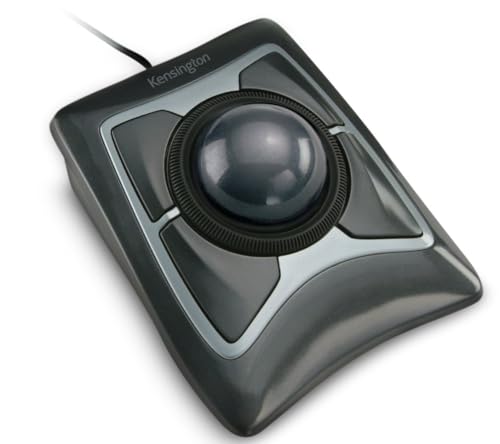
- Large 55mm optical-tracking ball
- Scroll ring for fast page navigation
- Ambidextrous design with detachable wrist rest
Best For: Comfortable wired desktop control
Best Gaming Feature Set

- 12,000 DPI sensor with 1,000Hz reporting
- Ten programmable buttons and tilt wheel
- Bluetooth, 2.4GHz, and wired connectivity
Best For: Right-handed gaming and control-heavy setups
Best Rechargeable Ergonomic Pick

- 20-degree tilt with speed and precision switching
- Six customizable buttons
- USB-C charging with up to 120-day battery life
Best For: Ergonomic work and casual gaming
Best Wired Ergonomic Pick

- 34mm thumb-operated ball with ergonomic right-handed shape
- Five DPI levels from 100 to 1200
- Stable USB connection with RGB lighting
Best For: Right-handed casual gamers and office users
Best Wireless Versatility

- Bluetooth, 2.4GHz wireless, and wired USB-C modes
- Large 55mm ball with dual-sensor tracking
- Rechargeable battery rated for up to four months
Best For: Flexible gaming and productivity setups
Best for Large Hands

- Large-hand ergonomic housing with reduced wrist pressure
- 44mm finger-operated ball works on varied surfaces
- Five DPI levels for office and design precision
Best For: Large-handed users focused on productivity, not gaming
Best Wireless Pick
TECKNET Ergonomic Wireless Trackball

- Bluetooth, 2.4GHz, and three-device switching
- Five DPI settings up to 1200
- Rechargeable battery with quiet clicks
Best For: Right-handed users wanting a flexible wireless trackball for work and casual gaming
Best Wired Control

- Large 52mm finger-operated ball
- Eight buttons with horizontal scrolling
- Wired connection and three DPI levels
Best For: Users wanting a large, stable wired trackball with extensive controls
Best Premium Features
ELECOM HUGE Plus Wireless Trackball
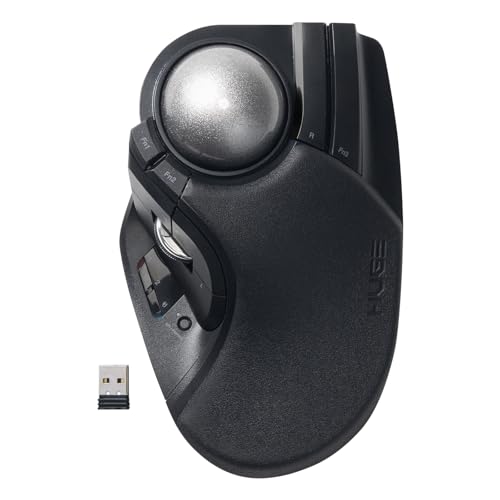
- Tri-mode Bluetooth, wireless, and USB-C connectivity
- Ten programmable buttons
- Up to five months of battery life
Best For: Power users seeking extensive controls and flexible multi-device connectivity
Best Compact Comfort Pick – Logitech ERGO M575S
For shoppers comparing trackballs for gaming and everyday computing, the Logitech ERGO M575S emphasizes relaxed thumb control and minimal desk movement. Its wireless design, quiet clicks, and 2,000 DPI sensitivity make it a practical choice for compact setups, though its feature set is more productivity-focused than gaming-specific.
Best For: Small desks, general use, and right-handed users who prioritize ergonomic comfort.
Pros:
- Thumb-controlled tracking works without moving the mouse across the desk.
- Bluetooth and Logi Bolt wireless connectivity provide flexible setup options.
- Up to 18 months of battery life from one included AA battery.
- Three customizable buttons and adjustable cursor speed support personalized shortcuts.
Cons:
- Right-handed design limits flexibility for left-handed users.
- Its 2,000 DPI maximum sensitivity is modest compared with gaming-oriented trackballs.
The ERGO M575S is a comfortable, space-saving option for users who want trackball control without a cable. It is best suited to everyday work and casual gaming rather than competitive play requiring extensive buttons or very high sensitivity.
Best Large-Ball Wired Pick – Kensington Expert Trackball
Kensington Expert Trackball Mouse (K64325), Black Silver, 5"W x 5-3/4"D x 2-1/2"H
Check Price On AmazonThe Kensington Expert Trackball is a wired option for shoppers considering trackballs for gaming, browsing, and precise desktop control. Its large 55mm ball, optical tracking, scroll ring, and ambidextrous shape favor steady cursor movement and comfortable long sessions over wireless portability.
Best For: Users who want a large, ambidextrous wired trackball with a wrist rest.
Pros:
- Large 55mm ball is designed for precise cursor control.
- Patented scroll ring makes moving through long pages convenient.
- Detachable wrist rest adds support during extended use.
- Four-button customization and speed controls are available through KensingtonKonnect on supported systems.
Cons:
- Wired USB-A connectivity offers less flexibility than wireless models.
- Customization is limited on ChromeOS, and Windows ARM computers are not supported by KensingtonKonnect.
- The larger desktop footprint may not suit small workspaces.
With its substantial ball and wrist support, the Expert Trackball is a dependable choice for controlled cursor work. It can serve casual gaming needs, but its wired connection and office-oriented design may be less appealing to gamers seeking portability or extensive gaming controls.
Best Gaming Feature Set – ELECOM IST PRO Trackball
The ELECOM IST PRO stands out among trackballs for gaming with a 12,000 DPI PixArt sensor, 1,000Hz report rate, ten programmable buttons, and a tilt wheel. It also offers Bluetooth 5.3, 2.4GHz wireless, and USB-C wired connectivity, making it the most configurable model in this roundup.
Best For: Right-handed gamers and power users who want high sensitivity, many controls, and multiple connection modes.
Pros:
- 12,000 DPI sensor and 1,000Hz report rate target responsive, precise tracking.
- Ten programmable buttons and a tilt wheel provide extensive control options.
- Bluetooth, 2.4GHz wireless, and wired USB-C connectivity support varied setups.
- Swappable steel or ruby bearings let users adjust the ball feel.
Cons:
- Right-handed design is not suited to left-handed users.
- Its 156g weight and larger dimensions may feel less portable.
- Two AA batteries are required, despite the up-to-18-month battery rating.
The IST PRO is the strongest fit here for gaming-oriented customization and responsiveness. Its programmable controls and high-report-rate sensor give it a broader gaming case than the other models, while multi-device pairing also makes it useful beyond gaming.
Best Rechargeable Ergonomic Pick – Logitech MX Ergo S
The Logitech MX Ergo S combines thumb-controlled trackball navigation with a 20-degree tilt, quiet clicks, and speed or precision switching. For shoppers evaluating trackballs for gaming, it offers useful control and a comfortable shape, but its 2,048 DPI sensitivity and productivity-focused button layout are better suited to casual gaming and daily work.
Best For: Medium- to large-handed users who want rechargeable ergonomic control for work and casual gaming.
Pros:
- 20-degree tilt and contoured grip are designed to support a more comfortable forearm posture.
- A button toggles between speed and high-precision tracking.
- Six customizable buttons and Easy-Switch support productivity-focused control.
- A one-minute USB-C charge provides up to 24 hours of use, while a full charge can last up to 120 days.
Cons:
- Right-handed shape is intended for medium- to large-sized hands.
- USB-C charging cable is not included.
- Its 2,048 DPI maximum sensitivity is lower than the ELECOM IST PRO’s gaming specification.
The MX Ergo S is a polished ergonomic trackball for users who value rechargeable convenience and posture-friendly design. It works for casual gaming, but players seeking very high sensitivity or a large number of programmable controls may prefer a more gaming-focused model.
Best Wired Ergonomic Pick – RGB Thumb-Control Trackball
For shoppers comparing trackballs for gaming and everyday desktop use, this wired PORLEI model offers responsive thumb control, five DPI settings, and a compact footprint. Its 34mm ball and USB connection make it a practical choice for tight workspaces, though its 1200 DPI ceiling is better suited to casual gaming and general computing than high-speed competitive play.
Best For: Right-handed users who want an ergonomic wired trackball with RGB lighting and adjustable cursor speed.
Pros:
- Ergonomic thumb-operated design can reduce hand and wrist movement.
- Five selectable DPI levels from 100 to 1200 support precise or faster tracking.
- USB-A wired connectivity requires no drivers and provides a stable connection.
- Works on desks and other surfaces, including a sofa, bed, or carpet.
Cons:
- Limited to right-handed use.
- Buttons are non-programmable, and Back/Forward buttons do not work with macOS.
- The 1200 DPI maximum may feel restrictive for fast-paced gaming.
This is a sensible space-saving option for casual gaming, office work, and browsing when comfort and a reliable wired connection matter more than advanced gaming controls.
Best Wireless Versatility – Kensington SlimBlade Pro
The Kensington SlimBlade Pro stands out among trackballs for gaming when flexible connectivity and broad control options are priorities. It supports Bluetooth, 2.4GHz wireless, and wired USB-C operation, while its large 55mm ball and dual sensors are designed for accurate cursor control with minimal wrist movement.
Best For: Users who want a low-profile, ambidextrous trackball that can switch between wireless and wired setups.
Pros:
- Offers Bluetooth, 2.4GHz wireless, and wired connection modes.
- Large 55mm ball and dual sensors support precise tracking and scrolling.
- Rechargeable battery is rated for up to four months per charge.
- KensingtonKonnect software enables customization across eight sets of programmable buttons.
Cons:
- Windows ARM-based computers are not currently supported by the software.
- Its low-profile, finger-operated design may require an adjustment period.
- The supplied specifications list four physical buttons, while customization depends on KensingtonKonnect software.
With its large ball, ambidextrous shape, and three connection options, the SlimBlade Pro is the most adaptable pick here for mixed gaming, work, and multi-device setups.
Best for Large Hands – 44mm Index-Finger Trackball
This PORLEI model is shaped for larger hands and uses a 44mm index-finger-operated ball to minimize arm movement. Although it appears in searches for trackballs for gaming, the supplied guidance specifically says it is not recommended for gaming because of its tracking profile and response characteristics; it is better viewed as an ergonomic productivity option.
Best For: Right-handed users with large hands who need a comfortable wired trackball for office work, design, and browsing.
Pros:
- Hand-conforming design is intended to reduce muscle strain and wrist pressure.
- Large 44mm ball supports finger-controlled cursor movement on nearly any surface.
- Five DPI levels allow adjustment for precise cursor placement.
- USB-A wired setup requires no drivers and works with Windows and macOS.
Cons:
- The manufacturer notes that it is not recommended for gaming.
- Right-handed design does not suit left-handed users.
- Forward/Back buttons are not supported on Mac systems.
Choose this model for comfort and workspace flexibility rather than gaming performance. Its large housing and finger control make it a better fit for extended productivity tasks than fast-action play.
Best Wireless Pick – TECKNET Ergonomic Wireless Trackball
If you want trackballs for gaming that also suit everyday computer use, the TECKNET Wireless Trackball Mouse offers flexible connectivity and adjustable cursor sensitivity. Its thumb-operated design is useful when desk space is limited, while the 16° angle is intended to promote a more natural forearm position.
Best For: Right-handed users with medium to large hands who want a rechargeable, multi-device trackball for general computing and lighter gaming use.
Pros:
- Connects to up to three devices through Bluetooth and 2.4GHz wireless.
- Five DPI settings range from 100 to 1200 for adjustable cursor control.
- Rechargeable 500mAh battery and quiet operation are convenient for extended use.
- 34-foot wireless range supports flexible desk setups.
Cons:
- Designed for right-handed use only.
- The larger shape may take one to two weeks to become familiar with.
- Its 1200 DPI maximum may feel limited for users seeking very high sensitivity.
The TECKNET is a practical choice when comfort, wireless flexibility, and low-maintenance charging matter more than specialized gaming features. Its adjustable DPI and precise thumb control make it a versatile option for compact workspaces and casual gaming.
Best Wired Control – ELECOM HUGE 52mm Trackball
Among trackballs for gaming, the wired ELECOM HUGE stands out for its oversized 52mm finger-operated ball and extensive physical controls. The wired connection avoids battery management, while selectable DPI settings and a palm rest support controlled, comfortable navigation.
Best For: Right-handed users who prefer a stable wired connection, a large finger-operated ball, and numerous controls for navigation or productivity-focused gaming setups.
Pros:
- Large 52mm trackball provides broad finger-controlled movement.
- Eight physical buttons include tilt-wheel horizontal scrolling.
- Switchable 500, 1000, and 1500 DPI settings offer speed flexibility.
- Removable ball and large ruby bearings simplify maintenance.
Cons:
- Wired operation limits placement flexibility.
- The 7.2-inch body is substantially larger than a conventional mouse.
- Right-handed design is not suitable for left-handed users.
The HUGE is a strong fit if you value a substantial trackball, dependable wired performance, and plenty of configurable inputs. Its large footprint and fixed cable make it less portable, but those tradeoffs may be worthwhile for a dedicated desk setup.
Best Premium Features – ELECOM HUGE Plus Wireless Trackball
For shoppers comparing trackballs for gaming and productivity, the ELECOM HUGE Plus combines a large 52mm ball with wireless, Bluetooth, and wired USB-C operation. It adds 10 programmable buttons, silent clicks, and a rechargeable battery, making it suited to users who want extensive customization without giving up connection flexibility.
Best For: Right-handed users who want a feature-rich, multi-device trackball with programmable controls and long battery life.
Pros:
- Tri-mode connectivity supports Bluetooth, 2.4GHz wireless, and wired USB-C use.
- Ten programmable buttons provide extensive shortcut customization.
- Rechargeable battery is rated for up to five months per charge.
- Large 52mm ball, silent clicks, and swappable bearings emphasize comfort and maintenance flexibility.
Cons:
- At 291g, it is relatively heavy for a mouse.
- Its large 7.2-inch body may not suit small desks or hands.
- Right-handed design limits suitability for left-handed users.
The HUGE Plus is the most versatile option in this group for users who want programmable inputs and multiple connection modes. Its size and weight favor a permanent workstation, while the long battery rating and USB-C wired use reduce charging concerns.
How We Picked the Best Trackballs for Gaming
We compared these trackballs by control layout, ball size, sensor resolution, connection options, button configuration, ergonomics, power design, and overall versatility. Because gaming needs vary, the list includes both thumb-operated models that feel familiar to mouse users and finger-operated models that can offer broader, more deliberate cursor control.
We also considered practical details such as wired reliability, Bluetooth and 2.4GHz support, rechargeable batteries, programmable buttons, compatibility, and the amount of desk space each design requires. A high DPI rating alone does not guarantee better performance, so it was weighed alongside tracking control and comfort.
Quick Comparison
| Best For | What to Look For |
|---|---|
| Everyday gaming and work | Comfortable thumb ball, reliable wireless connection, easy button access |
| Precision and creative control | Larger finger-operated ball, adjustable sensitivity, smooth tracking |
| Competitive or latency-sensitive play | Wired connection or dependable 2.4GHz wireless and consistent sensor behavior |
| Multiple devices | Bluetooth plus 2.4GHz or wired connectivity, device switching, onboard profiles |
| Large hands | Roomier shell, larger ball, and controls that do not crowd the fingers |
Key Buying Factors for Trackballs for Gaming
Control Layout and Ball Size
Thumb-operated trackballs are the easiest transition for conventional mouse users and suit general gaming, browsing, and office work. Finger-operated models place control in the index and middle fingers, which may provide finer movement for strategy games, productivity, and long sessions. Larger balls generally offer more room for controlled motion, but they also require more finger travel.
Connection and Gaming Performance
Choose wired USB when uninterrupted connectivity and predictable latency are priorities. Wireless models are more convenient, especially when they offer both Bluetooth and 2.4GHz modes. Check whether the device supports your operating system and whether its buttons or software features work fully on your platform.
Ergonomics and Adjustability
Look for a shape that supports your palm without forcing your wrist into an awkward angle. A detachable or adjustable palm rest, broad shell, and smooth ball can matter more than extra DPI. If you switch between games and productivity, programmable buttons and sensitivity controls can improve flexibility.
Desk Space, Maintenance, and Features
Trackballs need less desktop movement than standard mice, making them useful for compact setups. They still require occasional cleaning around the ball and bearings. RGB lighting is mostly cosmetic, while rechargeable batteries, device switching, and customizable controls can have a more meaningful effect on everyday use.
Who Should Buy Which Trackballs for Gaming?
Choose a compact thumb-operated model if you want the quickest learning curve and a familiar gaming shape. Pick a large finger-operated trackball if comfort, precision, or reduced thumb strain is your priority. Wired designs are best for simple plug-and-play use and latency-conscious players, while multi-connection wireless models suit users who move between a gaming PC, laptop, and tablet. Buyers with large hands should prioritize the roomier designs and larger balls rather than relying on generic ergonomic labels.