
Clear, intelligible sound matters in every worship service, whether your church runs a compact mixer or a full PA with subwoofers. The right equalizer can reduce harsh frequencies, improve vocal clarity, and help volunteers create consistent mixes.
This roundup covers graphic EQs, feedback processors, mixers, and crossover-equipped solutions suited to different church sound setups. Use the guide below to match features, connections, and control requirements to your room and team.
Best 10 Audio Equalizers for Church Sound Systems Picks for 2026
Practical 15-Band Control
EQ-215 Stereo Graphic Equalizer

- Dual 15-band stereo control
- Low-cut filter for rumble and hum
- XLR and 1/4-inch TRS connectivity
Best For: Church installations seeking simple, rack-mount EQ control
Feedback Management Specialist

- Real-time feedback detection
- Automatic mode for simpler operation
- DSP processing for clear vocals
Best For: Church PA systems needing automated anti-feedback support
Precision Church Tuning

- Independent dual 31-band channels
- 40Hz low-cut and phase inversion
- Balanced XLR and TRS I/O
Best For: Church systems requiring detailed room and PA tuning
Speaker-Band Routing

- Two-way, three-way, and four-way modes
- Separate gain controls by band
- Balanced XLR connections and phase reversal
Best For: Church PA systems with active speakers and subwoofers
Practical Rack EQ
15-Band Stereo EQ with Sub Out
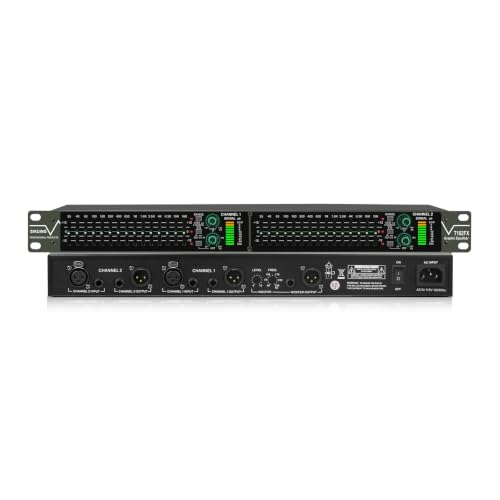
- Independent 15-band stereo control
- Adjustable low-cut filter for noise cleanup
- Dedicated 50Hz–250Hz subwoofer output
Best For: Churches wanting simple, hands-on EQ and subwoofer control
All-in-One Vocal Processor
DSP Karaoke and PA Audio Processor

- Four-level feedback suppression
- Multiple wired and wireless input options
- XLR, RCA, and subwoofer outputs
Best For: Churches combining vocal processing, playback, and PA routing
Flexible Dual-Channel EQ

- 15 adjustable bands per channel
- Balanced XLR and TRS connectivity
- Adjustable low-cut and dedicated bass output
Best For: Churches needing detailed stereo EQ and flexible rack integration
Flexible Mixing Hub
8-Channel Mixer with 7-Band EQ

- 7-band master graphic EQ
- Eight XLR and line inputs
- Bluetooth, USB, DSP, and headphone monitoring
Best For: Smaller church PA and worship setups needing integrated mixing and EQ
Precision Rack EQ

- 31-band DSP equalizer
- Spectrum display and 10 presets
- 1U rack mount with XLR I/O
Best For: Installed church systems requiring detailed, repeatable EQ tuning
DJ-Style Voice Mixer
6-Channel Mixer with 10-Band EQ

- 10-band graphic equalizer
- Microphone tone controls and effects
- Bluetooth and 5U rack-mount design
Best For: Church announcements, music playback, and event-focused mixing
Practical 15-Band Control – EQ-215 Stereo Graphic Equalizer
For audio equalizers for church sound systems, the EQ-215 offers a straightforward way to shape two stereo channels. Its 15-band layout, low-cut filter, bypass switch, and rack-mount design are useful for managing room sound and reducing unwanted low-frequency noise.
Best For: Churches and live installations needing accessible dual-channel EQ control in a 1U rack space.
Pros:
- 15 adjustable bands per channel with selectable ±6dB or ±12dB ranges.
- Low-cut switch helps attenuate wind noise, floor rumble, and electrical hum.
- Balanced XLR and unbalanced 1/4-inch TRS inputs and outputs support varied setups.
Cons:
- Offers fewer frequency bands than a 31-band equalizer.
- Analog, slider-based operation requires manual adjustment.
The EQ-215 is a practical choice when you want hands-on tone shaping without taking more than 1U of rack space. Its bypass function also makes system checking and troubleshooting more convenient.
Feedback Management Specialist – G60-DX Feedback Suppressor
Among audio equalizers for church sound systems, a feedback suppressor serves a different but complementary role by targeting microphone howling and screeching. The G60-DX uses real-time detection, automatic operation, and DSP processing to help keep vocals and presentations stable.
Best For: Churches, conference rooms, and PA systems where fast, automatic feedback control is a priority.
Pros:
- Automatically detects and removes feedback frequencies in real time.
- Smart auto mode reduces the need for manual technical adjustments.
- DSP processing is designed to reduce distortion while preserving voice clarity.
- Suitable for churches, classrooms, conferences, weddings, and stage systems.
Cons:
- It is a feedback processor rather than a conventional graphic equalizer.
- Its automatic approach may provide less hands-on tonal control.
The G60-DX is best viewed as a feedback-control component for a church audio chain, not as a replacement for a full graphic EQ. It can be especially useful when volunteer operators need assistance maintaining stable sound.
Precision Church Tuning – EQ-231 31-Band Equalizer
The EQ-231 is one of the more precise audio equalizers for church sound systems, with independent 31-band channels and 1/3-octave resolution. It is built for detailed room tuning, anti-feedback adjustments, and integration with balanced PA equipment.
Best For: Churches and permanent AV installations that need detailed stereo equalization and monitoring.
Pros:
- Dual 31-band design provides fine-grained frequency adjustment.
- Balanced XLR and TRS inputs and outputs support low-noise PA integration.
- 40Hz low-cut filters help reduce rumble, wind noise, and low-frequency mud.
- Includes phase inversion, LED level meters, and selectable mono subwoofer summing.
Cons:
- Its 2U rack size requires more installation space than a 1U unit.
- The larger number of controls may require more setup knowledge.
With its 31-band resolution and useful system-alignment features, the EQ-231 is suited to churches with dedicated sound volunteers or technicians. The meters, phase controls, and subwoofer mode add flexibility beyond basic tonal shaping.
Speaker-Band Routing – 234XL Stereo Crossover
The 234XL is not a traditional equalizer, but it can complement audio equalizers for church sound systems by dividing a signal into frequency bands before amplification. Its selectable two-way stereo, three-way stereo, and four-way mono modes provide routing flexibility for systems using separate speaker drivers or subwoofers.
Best For: Churches and PA installations using multi-amplifier speaker systems, subwoofers, or actively divided frequency bands.
Pros:
- Supports two-way stereo, three-way stereo, and four-way mono operation.
- Individual output gain controls allow adjustment for each frequency band.
- 40Hz high-pass filter and phase-reverse switches assist with system alignment.
- Balanced XLR inputs and outputs suit rack-mounted PA setups.
Cons:
- It routes frequency bands rather than providing graphic EQ sliders.
- Its benefits depend on compatible amplifiers and separately driven speakers.
The 234XL makes sense when a church sound system needs structured frequency-band routing and amplifier control. For simple full-range speaker setups, a dedicated graphic equalizer will generally be the more direct choice.
Practical Rack EQ – 15-Band Stereo EQ with Sub Out
For church sound systems that need straightforward tonal shaping and feedback control, this 1U rack-mount equalizer offers independent 15-band stereo adjustment across 25Hz–16kHz. Its low-cut filter, signal metering, and dedicated subwoofer output support practical live-sound setup and troubleshooting.
Best For: Churches needing hands-on stereo EQ control, low-frequency cleanup, and adjustable subwoofer integration.
Pros:
- Independent 15-band EQ across two channels for detailed sound shaping.
- Adjustable low-cut filter helps reduce muddy hums and low-end noise.
- Dedicated subwoofer output with adjustable 50Hz–250Hz range.
- Rugged 1U metal chassis includes rack-mount brackets.
Cons:
- Analog controls require manual adjustment rather than digital presets.
- Its 15-band layout may offer less frequency detail than higher-band equalizers.
This is a sensible choice when volunteers or audio operators want visible, physical controls and a simple rack-based signal path. XLR and TRS connectivity provides flexibility for common church audio setups.
All-in-One Vocal Processor – DSP Karaoke and PA Audio Processor
This processor suits church sound systems that combine microphones, music playback, and vocal enhancement in one unit. Its DSP engine includes four-level feedback suppression, microphone and tone adjustments, multiple digital inputs, and outputs for amplifiers, powered speakers, or mixers.
Best For: Churches that need vocal processing, anti-feedback features, and flexible playback connectivity for services or events.
Pros:
- Four-level FBX suppression is designed to help control microphone feedback.
- Offers mic, vocal, and tone parameter adjustments for more controlled speech or singing.
- Supports Bluetooth, USB, optical, coaxial, and AUX inputs.
- Provides RCA stereo, subwoofer, and four XLR outputs for varied system layouts.
Cons:
- Its karaoke-oriented feature set may be more than needed for a basic church EQ application.
- The supplied notes do not specify traditional graphic EQ band count or adjustment range.
Choose this model when your priority is broader DSP processing rather than a dedicated rack graphic equalizer. The LCD display and remote can make parameter access convenient, while the extensive I/O supports larger or mixed-source systems.
Flexible Dual-Channel EQ – 15-Band Rack Equalizer
This dual-channel graphic equalizer is a strong fit for church sound systems that need precise, independent tonal adjustment in a standard rack format. Each channel provides 15 bands with selectable gain control, while the low-cut section and dedicated bass output help address room noise and low-end balance.
Best For: Churches seeking flexible stereo EQ, balanced connectivity, and dedicated control over subwoofer frequencies.
Pros:
- Provides 15-band control per channel with up to ±12dB adjustment.
- Low-cut control allows frequency adjustment to reduce unwanted low-end noise.
- Includes XLR balanced and 1/4-inch TRS unbalanced connections.
- 1U rack design includes power, XLR, and TRS cables.
Cons:
- Manual graphic EQ operation may require operator familiarity.
- The supplied information does not identify a built-in feedback suppression system.
Compared with a simpler EQ, this model emphasizes connection flexibility and adjustable low-frequency management. Its bypass switch also makes it easier to compare processed and unprocessed sound during setup.
Flexible Mixing Hub – 8-Channel Mixer with 7-Band EQ
For church sound systems that need input flexibility as well as tonal control, this 8-channel mixer combines channel-level shaping with a 7-band graphic EQ on the master output. It offers 8 XLR and 8 line inputs, plus phantom power, Bluetooth, USB, and onboard DSP for a versatile live-sound setup.
Best For: Churches needing an all-in-one mixer for microphones, playback, live performances, and PA use.
Pros:
- Provides 7-band graphic EQ for adjusting the overall mix.
- Offers 8 XLR and 8 line inputs with per-channel gain, 3-band EQ, mute, and fader controls.
- Includes 320 DSP, dual AUX/FX controls, Bluetooth, USB, and dedicated headphone monitoring.
Cons:
- The master EQ has 7 bands, offering less frequency-specific control than a dedicated 31-band unit.
- Its 8-channel format may be limiting for larger worship productions with many simultaneous sources.
This is a practical choice when you want audio equalization for church sound systems integrated directly into the mixing console. It is especially useful for smaller to mid-sized setups that value straightforward connectivity and built-in processing.
Precision Rack EQ – 31-Band Digital Equalizer
This rack-mount digital equalizer is suited to church sound systems where detailed frequency-by-frequency adjustment matters. Its 31-band DSP EQ, spectrum display, presets, bypass switch, and balanced XLR connectivity provide a focused way to refine an existing audio chain.
Best For: Churches with a compatible rack system, mixer, or amplifier that need detailed system tuning and repeatable EQ settings.
Pros:
- Offers 31-band graphic equalization with real-time LED spectrum monitoring.
- Stores up to 10 custom presets and includes intelligent noise reduction.
- Provides a bypass switch, 1U rack-mount design, XLR balanced connections, and a dedicated adjustable subwoofer output.
Cons:
- It is an EQ processor rather than a complete mixing console, so additional equipment is required.
- The subwoofer output’s adjustable range is specified as 50Hz to 250Hz, which may not suit every system configuration.
Among these audio equalizers for church sound systems, this model offers the most precise dedicated tonal control. Its rack format and presets make it useful for installations that need consistent settings across services and events.
DJ-Style Voice Mixer – 6-Channel Mixer with 10-Band EQ
The Pyle PYD1964B.5 combines a 6-channel mixer with a 10-band graphic equalizer, microphone tone controls, and voice effects. For church sound systems that also host announcements, community events, or music playback, its slider-based layout provides hands-on control over the mix.
Best For: Churches seeking a rack-mount mixer for speech, music playback, Bluetooth sources, and event-style sound control.
Pros:
- Includes a 10-band graphic equalizer for full sound output control.
- Provides bass, mid, and high microphone adjustments plus a kill switch for two microphone inputs.
- Offers six channels, Bluetooth connectivity, XLR output, echo, delay, repeat, and digital effects.
Cons:
- Its 5U rack-mount design requires more rack space than a compact mixer or 1U EQ.
- The 6-channel configuration may not provide enough inputs for larger worship teams.
- The supplied specifications list an 80 dB noise level, which buyers may want to consider for quieter applications.
This mixer is a good fit when tactile controls and microphone-focused adjustments are more important than highly granular system tuning. It adds useful voice and playback features, though larger churches may need more channels or a separate dedicated EQ.
How We Picked These Audio Equalizers for Church Sound Systems
We focused on equipment that can address common church audio needs: speech intelligibility, vocal balance, feedback management, monitor control, and integration with mixers or PA amplifiers. The selection includes 15- and 31-band graphic equalizers, feedback suppressors, crossover processors, and mixers with built-in EQ. We also considered practical installation factors such as rack-mount form, channel layout, outputs, controls, and suitability for volunteer-operated systems.
Not every option is a standalone equalizer. Some are better viewed as supporting tools for a complete sound system, particularly when a church needs microphone mixing, DSP effects, subwoofer routing, or anti-feedback processing.
Quick Comparison
| Best For | Look For | Typical Choice |
|---|---|---|
| Basic room tuning | 15-band stereo EQ and clear visual controls | Compact dual-channel graphic equalizer |
| Precise tonal correction | 31 bands, balanced inputs and outputs | Professional rack-mount 31-band EQ |
| Feedback-prone microphones | Automatic suppression or frequency shifting | Dedicated feedback eliminator |
| PA and subwoofer systems | Crossover controls and XLR connectivity | 2/3-way stereo or 4-way mono crossover |
| Small volunteer-led setups | Built-in EQ, mixing, and simple controls | Audio mixer with graphic EQ |
Key Buying Factors for Audio Equalizers for Church Sound Systems
Band Count and Control Precision
A 15-band EQ is often sufficient for broad room correction and straightforward vocal shaping. A 31-band model provides finer control, which can help in difficult rooms, but it also makes incorrect adjustments easier. Choose the level your operators can use confidently.
Inputs, Outputs, and Signal Flow
Check whether the unit uses XLR, 1/4-inch, or both, and confirm that its input and output configuration matches your mixer, amplifiers, powered speakers, and monitors. For systems with separate subwoofers, a crossover or subwoofer output can simplify routing. Balanced connections are preferable for longer cable runs because they help resist noise.
Feedback and Speech Clarity
Equalization can reduce feedback risk, but it cannot replace correct microphone placement, speaker positioning, and gain structure. A dedicated feedback suppressor may be useful for wireless microphones, stage monitors, or rooms where acoustic changes are limited. For sermons and announcements, prioritize controlled low frequencies and a clear midrange rather than excessive brightness.
Installation and Ease of Use
Rack-mount hardware suits permanent sound booths, while a mixer with integrated EQ may be better for portable or small systems. Look for readable sliders, reliable bypass controls, clear meters, and settings that volunteers can understand quickly.
Who Should Buy Which Audio Equalizers for Church Sound Systems?
Choose a 15-band stereo equalizer if your church needs affordable, visible control for a basic stereo PA. Choose a 31-band model when you have an experienced operator and need detailed tuning across the room or monitors. Select a feedback processor when howling microphones are the main issue. A crossover is the better fit for systems that divide signals between full-range speakers, mains, and subwoofers. If you are building a compact setup from scratch, a mixer with built-in graphic EQ may offer the best combination of routing, level control, and simplicity.