
External recorders can give a DSLR better monitoring, longer recording options, improved codecs, and cleaner production audio than the camera body alone. The right choice depends on your camera outputs, workflow, resolution, and portability needs.
We selected 10 options spanning HDMI monitor-recorders, capture devices, SDI-compatible monitors, and dedicated DSLR audio recorders so you can match your setup to the way you shoot.
Best 10 Camera External Recorders for Dslr Cameras Picks for 2026
Best All-Around Monitor-Recorder
Atomos Ninja 5.2-inch 4K Recorder

- Records 4Kp60 in ProRes, DNxHD, and H.265
- Includes a 240GB SSD
- Adds monitoring and wireless sharing tools
Best For: Creators needing a versatile HDMI monitor-recorder bundle
Best for Pro Audio
TASCAM FR-AV2 32-Bit Float Field Recorder

- Captures audio in 32-bit float
- Provides dual XLR/TRS inputs
- Generates and syncs timecode internally
Best For: Videographers prioritizing reliable external audio
Best for RAW Workflows
Atomos Ninja RAW Monitor-Recorder

- Records ProRes and ProRes RAW
- Features a 1500-nit HDR touchscreen
- Adds camera control and professional scopes
Best For: Filmmakers needing RAW capture and advanced monitoring
Best Standalone 4K Capture
ClonerAlliance UHD Pro Recorder

- Records 4K video without a PC
- Supports H.264 and H.265
- Passes through 4K at 60fps
Best For: Users wanting straightforward standalone HDMI capture
Best Budget Touchscreen Recorder
FEELWORLD CUT6S 6-inch Monitor

- 1080p30 USB recording in MP4
- 6-inch 1080p touchscreen
- 3G-SDI and HDMI monitoring options
Best For: Budget-conscious DSLR video setups needing monitoring and basic recording
Best 4K HDMI Recorder
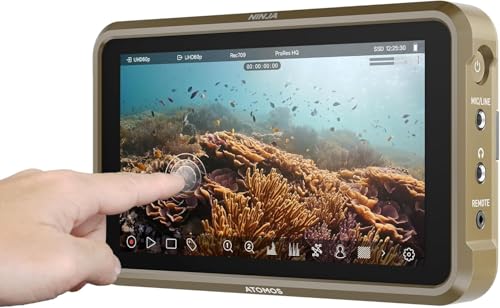
- 4Kp60 ProRes, DNxHD, and H.265 recording
- 6Kp30 ProRes RAW support
- AtomOS 11 workflow improvements
Best For: Filmmakers seeking high-quality HDMI recording from compatible cameras
Best DSLR Audio Recorder

- Six-track WAV recording
- Four individual microphone inputs
- HDMI sync and timecode support
Best For: DSLR filmmakers needing synchronized multitrack production audio
Compact Unlimited Recorder
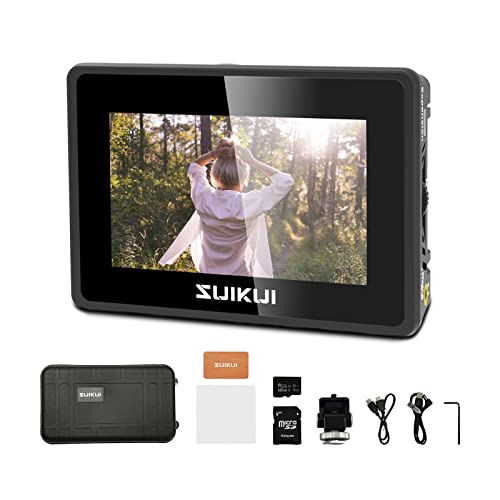
- 1080p30 H.264 recording without a stated limit
- Records to microSD or USB flash drives
- Focus and exposure monitoring tools included
Best For: Lightweight DSLR monitoring and Full HD capture
Professional RAW Workflow

- Captures up to 6K RAW
- Supports ProRes, DNx, H.265, and H.264
- 1500-nit touchscreen with Wi-Fi 6E and NDI
Best For: Advanced DSLR video and professional post-production
Touchscreen Editing Monitor

- 6-inch 1920 x 1080 touchscreen
- Records 1080p30 MP4 to FAT32 USB drives
- Includes scopes, LUT output, and focus aids
Best For: Full HD DSLR filming with detailed monitoring
Best All-Around Monitor-Recorder – Atomos Ninja 5.2-inch 4K Recorder
For creators comparing camera external recorders for DSLR cameras, the Atomos Ninja combines a 5.2-inch recording monitor with a bundled 240GB SSD. It supports HDMI cameras and records up to 4Kp60 in Apple ProRes, Avid DNxHD, or H.265, while compatible cameras can output up to 6Kp30 in ProRes RAW.
Best For: DSLR, mirrorless, and cinema-camera users who want an on-camera monitor and multiple recording formats.
Pros:
- Records up to 4Kp60 in several professional codecs.
- Includes a 240GB SSD and power accessories.
- AtomOS 11 adds a modern interface and improved responsiveness.
- Supports useful scheduling and wireless sharing tools.
Cons:
- Its HDMI compatibility depends on the camera’s output capabilities.
- The included storage is limited to 240GB.
This is a versatile choice when you want recording, monitoring, and a starter storage bundle in one portable unit.
Best for Pro Audio – TASCAM FR-AV2 32-Bit Float Field Recorder
Although it is an audio-focused option among camera external recorders for DSLR cameras, the TASCAM FR-AV2 can simplify video production with dual XLR/TRS inputs, 32-bit float recording, and built-in timecode generation. Its compact design suits videographers who need dependable audio capture alongside their camera.
Best For: Videographers who need dual professional audio inputs and synchronized timecode.
Pros:
- 32-bit float recording helps provide no-clip capture.
- Includes two XLR/TRS combo inputs and a 3.5mm input.
- Built-in timecode generation reduces the need for a separate timecode device.
- Supports recording at 48kHz, 96kHz, and 192kHz.
Cons:
- It records audio rather than camera video.
- Wireless monitoring requires the optional AK-BT2 adapter.
- Requires three AA batteries.
The FR-AV2 is a practical companion recorder when clean, flexible audio and timecode are more important than capturing the camera’s video signal.
Best for RAW Workflows – Atomos Ninja RAW Monitor-Recorder
For demanding camera external recorders for DSLR cameras, the Atomos Ninja RAW pairs a bright 1500-nit HDR touchscreen with ProRes and ProRes RAW recording. It also offers camera control, professional monitoring tools, and storage through CFexpress Type B media or external USB-C drives.
Best For: HDMI or mirrorless-camera users building a professional RAW recording and monitoring workflow.
Pros:
- Records ProRes RAW, ProRes RAW HQ, ProRes LT, and ProRes formats.
- 1500-nit HDR display improves on-camera monitoring.
- Provides camera controls for start/stop, ISO, shutter, aperture, and white balance.
- Includes waveform, focus peaking, false color, and Onion Skin tools.
Cons:
- CFexpress media, external storage, and network adapters are not included.
- Its advanced features may exceed the needs of basic recording setups.
- The display is 1080p despite supporting advanced recording formats.
This is the stronger fit for filmmakers who need RAW capture, detailed exposure tools, and direct camera control in a rugged mobile monitor-recorder.
Best Standalone 4K Capture – ClonerAlliance UHD Pro Recorder
The ClonerAlliance UHD Pro is a standalone option for shoppers seeking camera external recorders for DSLR cameras without requiring a computer. It records HDMI video to USB storage or a TF card, supports H.264 and H.265, and passes through 4K at 60fps to a display.
Best For: Users who want simple standalone HDMI recording, pause/resume control, and 4K passthrough.
Pros:
- Records up to 4K at 24fps, with support up to 30fps.
- Supports both H.264 and H.265 codecs.
- Works without a PC and offers pause/resume recording.
- Supports 4K 60fps HDMI passthrough and multiple storage formats.
Cons:
- Recording is limited to up to 30fps rather than 4K60.
- It does not support HDCP-protected sources.
- Included editing and conversion software is for Windows only.
Choose the UHD Pro when ease of use and standalone operation matter more than RAW recording or the advanced monitoring features found on dedicated cinema recorders.
Best Budget Touchscreen Recorder – FEELWORLD CUT6S 6-inch Monitor
The FEELWORLD CUT6S is a practical option for shoppers comparing camera external recorders for DSLR cameras. It combines a 6-inch 1080p touchscreen monitor with USB recording, 3G-SDI connectivity, and HDMI loop-out features for on-camera monitoring and basic field capture.
Best For: DSLR and video users who want an integrated monitor-recorder with exposure tools, LUT support, and multi-person monitoring.
Pros:
- Records compatible video up to 1080p30 to a FAT32 USB flash drive in MP4 format.
- 6-inch 1920×1080 touchscreen provides a clear monitoring image.
- Includes waveform, RGB parade, vectorscope, histograms, and focus/exposure tools.
- Supports 3G-SDI input/output, HDMI input, and HDMI loop-out with LUT support.
Cons:
- Recording is limited to compatible signals up to 1080p30.
- NP-F battery is not included in this package.
- USB recording requires a FAT32-formatted flash drive.
The CUT6S is a versatile choice when monitoring and straightforward USB recording matter more than higher-resolution onboard capture. Confirm your camera’s output and plan for a separate NP-F battery before shooting.
Best 4K HDMI Recorder – Atomos Ninja 5.2-inch Monitor
The Atomos Ninja is a compact choice among camera external recorders for DSLR cameras with HDMI output. Its 5.2-inch monitor records up to 4Kp60 in Apple ProRes, Avid DNxHD, and H.265, while ProRes RAW support extends recording to compatible 6Kp30 workflows.
Best For: DSLR and mirrorless filmmakers who need high-quality external HDMI recording and a compact on-camera monitor.
Pros:
- Records up to 4Kp60 in Apple ProRes, Avid DNxHD, and H.265.
- Supports Apple ProRes RAW recording up to 6Kp30 with compatible cameras.
- AtomOS 11 improves memory management and responsiveness.
- Includes wireless screen sharing and RecordAssist and PlayBackAssist tools.
Cons:
- Its recording capabilities depend on a compatible HDMI-output camera.
- The native display resolution is 1920×1080 despite support for higher-resolution recording.
- It is an external monitor-recorder rather than a simple standalone recorder.
The Ninja is the stronger fit for creators prioritizing 4K recording formats and advanced workflow features. Check camera compatibility, output resolution, and the intended recording codec before buying.
Best DSLR Audio Recorder – Tascam DR-701D 6-Track
The Tascam DR-701D takes a different approach to camera external recorders for DSLR cameras by focusing on multitrack production audio. It connects with a DSLR through HDMI, supports camera-triggered recording and video-clock synchronization, and records four microphone inputs plus a stereo mix for up to six tracks.
Best For: Filmmakers, documentarians, and production crews needing synchronized, multi-microphone audio alongside DSLR video.
Pros:
- Records four microphone inputs individually and mixes them to a stereo track for six-track recording.
- HDMI input and output can allow the DSLR to start recording both devices.
- Video clock helps reduce drift between sound and picture.
- Includes a timecode generator with SMPTE jam-sync capability.
Cons:
- It records WAV audio rather than serving as a video recorder.
- Requires four AA batteries and has a listed average battery life of 3.75 hours.
- At 2 pounds, it is heavier than many compact audio recorders.
The DR-701D is a specialized companion for DSLR video rather than an all-in-one video monitor. Choose it when clean, synchronized multitrack sound is more important than external video capture.
Compact Unlimited Recorder – RH35 HDMI Camera Monitor
The RH35 is a compact option for shoppers comparing camera external recorders for DSLR cameras. It records 1080p video at 30fps in H.264 without a stated recording limit, while its 3.5-inch monitor adds practical exposure and focus tools.
Best For: DSLR users who want a lightweight HDMI recorder with basic monitoring tools and flexible USB or microSD storage.
Pros:
- Records 1080p30 H.264 video without a stated time limit.
- Supports recording to a microSD card or USB flash drive.
- Includes peaking, zebra, waveform, false color, and other focus/exposure aids.
- Lightweight 3.5-inch design with a 600-nit display.
Cons:
- The display resolution is limited to 800 x 480.
- Recording is limited to 1080p30 rather than higher frame rates.
- Its single HDMI port may offer less connectivity flexibility than larger models.
Choose the RH35 when portability and straightforward Full HD recording matter more than a large, high-resolution touchscreen or advanced codec options.
Professional RAW Workflow – Atomos Ninja TX GO Recorder
Atomos Ninja TX GO 5-inch Camera Monitor-Recorder, HDMI CFexpress Wi-Fi HDR Touchscreen ProRes RAW
Check Price On AmazonThe Atomos Ninja TX GO is a high-end choice among camera external recorders for DSLR cameras, pairing a bright 5-inch touchscreen with professional recording formats. It can capture up to 6K RAW and supports CFexpress Type B or USB-C storage, depending on the camera and compatible drive.
Best For: Advanced creators who need RAW-capable recording, professional codecs, HDR monitoring, and wireless production features.
Pros:
- Captures up to 6K RAW to CFexpress Type B or compatible USB-C storage.
- Supports ProRes, ProRes RAW, Avid DNx, H.265, and H.264.
- Bright 1500-nit 5-inch touchscreen with camera control and touch-to-focus functions.
- Includes HDMI input/output, Wi-Fi 6E, NDI support, and direct cloud-service upload options.
Cons:
- Compatible storage and some networking or calibration accessories are sold separately.
- Its professional feature set may be more than needed for basic DSLR recording.
- Power requires USB-C, an NP-F battery, or an AC adapter.
The Ninja TX GO stands out for demanding productions that benefit from broad codec support and RAW capture, though its storage and accessory requirements should be included in the budget.
Touchscreen Editing Monitor – FEELWORLD CUT6 Recorder
The FEELWORLD CUT6 combines a 6-inch Full HD touchscreen with HDMI recording for shoppers considering camera external recorders for DSLR cameras. It records compatible 1080p30 footage to a FAT32 USB flash drive and adds LUT output plus a broad set of monitoring scopes.
Best For: DSLR filmmakers and livestreamers who want a larger touchscreen, LUT-assisted workflows, and detailed focus and exposure monitoring.
Pros:
- Records up to 1080p30 in MP4 through its USB 2.0 recording function.
- Provides a sharp 6-inch 1920 x 1080 touchscreen.
- Offers waveform, vectorscope, RGB parade, histograms, audio meter, and focus peaking.
- Supports 4K60 HDMI input and up to 1080p60 HDMI output with LUT functionality.
Cons:
- USB recording requires a FAT32 USB flash drive.
- Internal recording is limited to 1080p30.
- At 1.23 pounds, it is less lightweight than the compact RH35.
The CUT6 is a practical middle ground: its display and monitoring tools are more substantial than a basic recorder, while its recording format remains focused on Full HD MP4 capture.
How We Picked the Best Camera External Recorders for Dslr Cameras
We focused on compatibility, recording quality, monitoring features, storage, portability, and workflow value. The selection includes HDMI and SDI options, monitor-recorders that support formats such as ProRes or ProRes RAW, capture devices for computer-based production, and dedicated audio recorders with DSLR-friendly inputs.
Because DSLR setups vary widely, we also considered practical details such as screen size, touch controls, frame-rate limits, timecode support, camera control, battery requirements, and whether a product is designed for field recording or stationary capture.
Quick Comparison
| Type | Best For | What to Check |
|---|---|---|
| HDMI monitor-recorder | On-camera monitoring and high-quality video capture | HDMI format, codec, media, battery life |
| RAW monitor-recorder | Advanced grading and cinema-style workflows | Camera compatibility and supported RAW standards |
| HDMI capture DVR | Streaming, archiving, and computer capture | Input resolution, frame rate, encoding, connectivity |
| SDI/HDMI field monitor | Large-screen framing and exposure checks | Signal type, brightness, recording format |
| Portable audio recorder | Multi-microphone DSLR production sound | Input count, preamps, timecode, mounting |
Key Buying Factors for Camera External Recorders for Dslr Cameras
Connection and Camera Compatibility
Confirm whether your DSLR outputs clean HDMI, micro HDMI, or another signal. Check the camera’s maximum resolution and frame rate, and verify that the recorder accepts that exact format. SDI models generally require an adapter or a camera with an SDI output.
Recording Format and Storage
ProRes and similar intraframe codecs are easier to edit but use more storage than compressed H.264 or H.265. RAW recording offers greater post-production flexibility but requires compatible cameras, faster media, and a more demanding editing workflow. Check whether the recorder includes storage or requires an SSD, SD card, or CFexpress card.
Monitoring, Power, and Build
A brighter, larger display helps outdoors, while touch controls and exposure tools can speed up setup. Consider mounting weight, battery availability, cable strain, and continuous-runtime needs before choosing a compact or full-size monitor.
Audio and Synchronization
If sound is a priority, a dedicated recorder may provide better preamps, more inputs, timecode, and safer recording than a video monitor-recorder. Look for XLR or TRS inputs, phantom power where needed, and a synchronization method suited to your editing software.
Who Should Buy Which Camera External Recorders for Dslr Cameras?
- Choose a compact HDMI monitor-recorder for handheld DSLR shooting, interviews, travel, and filmmakers who want better monitoring plus an edit-friendly recording format.
- Choose a RAW-capable recorder if your camera supports the required RAW output and you regularly color-grade footage for commercial or cinematic work.
- Choose an HDMI capture DVR for streaming, presentations, simple archiving, or recording into a computer-based setup.
- Choose a larger field monitor if framing and exposure are more important than the smallest possible rig, especially for tripod or studio use.
- Choose a dedicated audio recorder when you use multiple microphones, need reliable production sound, or want timecode and isolated tracks.
Before buying, compare your DSLR’s output specifications with the recorder’s supported inputs and formats. That compatibility check is the best way to avoid an expensive monitor that cannot record the signal your camera produces.