
The right external recorder can turn a capable camera into a more efficient studio production system, adding higher-quality codecs, monitoring tools, live output, or dependable media workflows.
Our 2026 roundup covers monitor-recorders, dedicated studio decks, capture hardware, camcorders with recording built in, and a filmmaker-focused audio recorder. Use the guide below to match features, connections, and workflow demands to your setup.
Best 10 Camera External Recorders for Studio Filming Picks for 2026
Best RAW Monitor-Recorder

- ProRes and ProRes RAW recording
- 1500-nit HDR touchscreen
- Camera controls and pro monitoring tools
Best For: RAW-capable studio recording and monitoring
Best All-in-One Camcorder
Canon XA70 Professional Camcorder
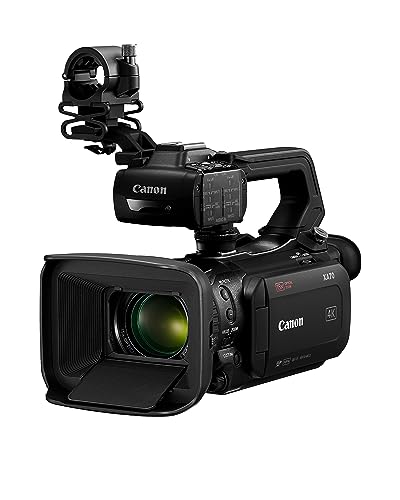
- 4K UHD with a 1-inch sensor
- 15x optical zoom and stabilization
- Dual XLR inputs and dual SD slots
Best For: Integrated studio video and audio production
Best Connected Recorder

- 12G-SDI and HDMI 2.0 I/O
- Wi-Fi 6 and camera-to-cloud tools
- Records ProRes, DNx, H.265/H.264, and RAW
Best For: Connected studio and broadcast workflows
Best Long-Zoom Camcorder

- 4K UHD video recording
- 20x optical zoom
- UVC livestreaming and Hybrid AF
Best For: Simple studio shooting and livestreaming with long reach
Studio Deck Pick
Blackmagic HyperDeck Studio HD Mini

- HDMI and 3G-SDI video connectivity
- Records digital video to SD cards
- Includes a 2-year warranty
Best For: Studio setups needing flexible camera and audio connections
All-in-One Camera Pick
Canon XA60 4K Camcorder Bundle

- UHD 4K30 recording with dual SD slots
- 20x optical zoom with 5-axis stabilization
- USB-C UVC streaming and dual XLR inputs
Best For: Integrated studio, field, and livestream production
Computer Capture Pick
Blackmagic UltraStudio Mini Recorder 12G

- 12G-SDI and HDMI inputs
- Captures up to UHD 4K60
- Thunderbolt 4 output for studio computers
Best For: Computer-based recording, streaming, and production workflows
Best Pro Monitor-Recorder
Atomos Ninja TX GO 5-inch Bundle
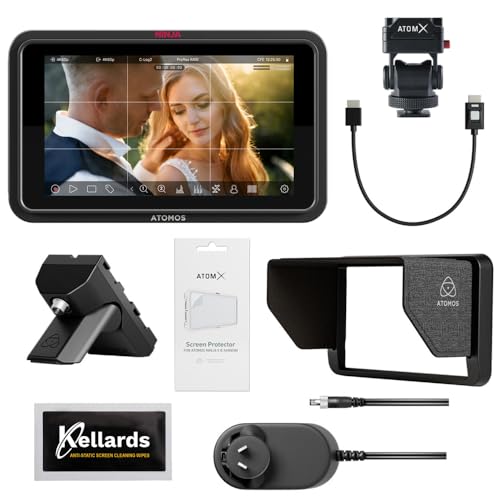
- 1500-nit touchscreen for bright monitoring
- Records ProRes RAW and up to 6K RAW
- HDMI, Wi-Fi 6E, NDI, and USB-C support
Best For: Studio crews wanting monitoring and external video recording in one unit
Best Audio Recorder

- 32-bit float recording for clip-free audio
- Large stereo mics and dedicated gain knobs
- Up to four-track, 192kHz WAV recording
Best For: Filmmakers adding dedicated portable audio to a studio camera setup
Best Standalone TX GO
Atomos Ninja TX GO Monitor-Recorder

- 1500-nit 5-inch HDR touchscreen
- Up to 6K RAW and multiple recording codecs
- HDMI 2.0, Wi-Fi 6E, and NDI support
Best For: Studio shooters building a flexible standalone monitor-recorder rig
Best RAW Monitor-Recorder – Atomos Ninja RAW
For filmmakers building a studio setup around HDMI or mirrorless cameras, the Atomos Ninja RAW adds a bright monitoring screen and direct recording to CFexpress Type B media or external USB-C storage. It supports ProRes and ProRes RAW formats, while camera controls and professional monitoring tools help streamline production.
Best For: Studio filmmakers who want RAW-capable external recording, on-camera control, and detailed monitoring.
Pros:
- Records ProRes and ProRes RAW, including ProRes RAW HQ and ProRes LT.
- 1500-nit 5-inch HDR touchscreen with waveform, focus peaking, and EL Zone false color.
- Supports camera control for start/stop, ISO, shutter, aperture, and white balance.
- Can run from NP-F batteries, USB-C power banks, or a DC adapter.
Cons:
- CFexpress Type B media and some external storage or network accessories are sold separately.
- Its advanced RAW features may be more than needed for simpler recording workflows.
The Ninja RAW is a strong choice when image control and post-production flexibility matter. Its bright display, recording options, and rugged design make it well suited to demanding studio and production environments.
Best All-in-One Camcorder – Canon XA70 Professional Camcorder
The Canon XA70 is a complete video camera rather than a standalone recorder, making it a practical option for studio filming when you need a lens, internal recording, connectivity, and professional audio in one body. Its 1-inch sensor, 4K recording, 15x optical zoom, and USB streaming support cover a broad range of production needs.
Best For: Studio teams seeking an integrated 4K camcorder with optical zoom, XLR audio, and live-streaming support.
Pros:
- Captures 4K UHD video using a 1-inch CMOS sensor and DIGIC DV6 processor.
- 15x optical zoom and optical image stabilization support flexible, steady shooting.
- Two XLR terminals and 4-channel linear PCM provide professional audio options.
- Dual SD card slots support relay and simultaneous recording.
Cons:
- It is a full camcorder, so it may be less suitable for users specifically seeking a compact external recorder.
- Its listed mini-HDMI output and USB-C streaming do not indicate RAW recording.
Choose the XA70 when convenience and versatility are more important than a modular recorder-only setup. The built-in zoom lens, audio connections, stabilization, and dual-card recording make it a capable studio workhorse.
Best Connected Recorder – Atomos Ninja TX
For connected studio workflows, the Atomos Ninja TX combines a 5.2-inch monitor with HDMI 2.0 and 12G-SDI input/output, CFexpress Type B recording, Wi-Fi 6, and camera-to-cloud features. It records several professional codecs and can handle up to 4K60 I/O, with ProRes RAW recording listed up to 8K30.
Best For: Studios needing external recording with SDI/HDMI connectivity, wireless uploading, and camera-to-cloud workflows.
Pros:
- Provides locking 12G-SDI and HDMI 2.0 input/output.
- Records Apple ProRes, Avid DNx, H.265/H.264, and ProRes RAW.
- Includes Wi-Fi 6, timecode sync, and uploading features for connected production.
- 1500-nit touchscreen and CFexpress Type B recording support studio operation.
Cons:
- The feature-rich workflow may be unnecessary for basic HDMI recording.
- Its 0.67 kg weight and L-Series battery design may require additional rig planning.
The Ninja TX stands out for productions that need more than simple capture. Its combination of SDI, HDMI, codec flexibility, wireless connectivity, and camera-to-cloud tools makes it especially useful in modern studio pipelines.
Best Long-Zoom Camcorder – Canon VIXIA HF G70
The Canon VIXIA HF G70 is a straightforward 4K camcorder for studio filming, with internal SD recording, HDMI connectivity, USB live streaming, and a 20x optical zoom. Its Hybrid AF, image stabilization, and compact design make it useful when a self-contained camera is more practical than a separate external recorder.
Best For: Studio presenters, events, and livestreams that benefit from long optical reach and simple operation.
Pros:
- Records 4K UHD video with a DIGIC DV6 image processor.
- 20x optical zoom provides substantial framing flexibility.
- Hybrid image stabilization and face-detection autofocus support steady, responsive footage.
- Offers UVC livestreaming to a PC or Mac and dual SD card slots.
Cons:
- Its 1/2.3-inch sensor is smaller than the XA70’s 1-inch sensor.
- The supplied notes specify MP4 and other standard video formats rather than RAW recording.
- The product is a camcorder with internal recording, not a dedicated external monitor-recorder.
The HF G70 is a practical pick for creators who prioritize reach, stabilization, and easy streaming. It is less suited to RAW-focused workflows, but its 20x zoom and UVC support make it convenient for many studio and live-video applications.
Studio Deck Pick – Blackmagic HyperDeck Studio HD Mini
The Blackmagic Design HyperDeck Studio HD Mini is a dedicated option for camera external recorders for studio filming. Its HDMI, SDI, USB, RCA, and SD-card support gives studio setups several ways to connect cameras, audio, and recording media.
Best For: Studio filmmakers who want a purpose-built recorder with SDI and HDMI connectivity.
Pros:
- Supports HDMI, 3G-SDI, RCA audio, USB, and SD-card recording.
- Compatible with cameras including the Canon EOS R5, Sony A7S III, and Nikon Z6 II.
- Includes a 2-year warranty and a durable studio-recorder design.
Cons:
- Software update support is unspecified in the supplied details.
- Its 953 g weight may be less convenient for highly portable setups.
Choose this model when connection flexibility and dedicated studio recording matter more than a compact, lightweight field rig.
All-in-One Camera Pick – Canon XA60 4K Camcorder Bundle
The Canon XA60 is a complete 4K camcorder bundle rather than a standalone recorder, but its HDMI output and dual-SD recording make it relevant when comparing camera external recorders for studio filming. It combines UHD 4K30 capture, professional audio inputs, and direct USB-C UVC livestreaming.
Best For: Studio and livestream creators who need a camcorder with built-in recording, long zoom reach, and professional audio inputs.
Pros:
- Records UHD 4K30 video in XF-AVC or MP4 formats.
- 20x optical zoom and 5-axis optical stabilization support steady, flexible shooting.
- Dual SD slots allow relay recording or simultaneous backup recording.
- Dual XLR inputs, phantom power, and 4-channel LPCM recording support professional audio.
Cons:
- It is a 4.9-pound camcorder bundle, not a compact standalone external recorder.
- The supplied details do not specify a dedicated external recording input.
This is a strong choice if you want one integrated camera system for recording, streaming, zoomed shots, and XLR audio instead of adding a separate recorder.
Computer Capture Pick – Blackmagic UltraStudio Mini Recorder 12G
The Blackmagic UltraStudio Mini Recorder 12G is designed for computer-based capture and fits workflows using camera external recorders for studio filming. It accepts 12G-SDI and HDMI sources, then sends video to a computer through Thunderbolt 4 for use with common production and streaming software.
Best For: Studio operators capturing camera feeds into a computer for recording, switching, streaming, or post-production.
Pros:
- Provides both 12G-SDI and HDMI inputs.
- Supports common codecs up to UHD 4K60.
- Works with DaVinci Resolve, Wirecast, vMix, OBS, and other popular software.
- Supports 10-bit 4:2:2 YUV and 4:4:4 RGB workflows.
Cons:
- Requires a computer connection through Thunderbolt 4 for output.
- The supplied details do not list standalone media recording.
Pick this compact recorder when your studio workflow is computer-centered and you need high-quality HDMI or SDI capture rather than an independent SD-card deck.
Best Pro Monitor-Recorder – Atomos Ninja TX GO 5-inch Bundle
For studio filming, the Atomos Ninja TX GO combines a bright 5-inch monitor with an external recorder. Its 1500-nit touchscreen, camera-control tools, and support for ProRes RAW and other codecs make it a versatile choice when you want monitoring and recording in one unit.
Best For: Studio crews that need a bright camera monitor, professional recording codecs, and flexible media or network options.
Pros:
- 1500-nit touchscreen provides a bright monitoring surface.
- Records ProRes, ProRes RAW, Avid DNx, H.265, and H.264.
- Captures up to 6K RAW to CFexpress Type B or compatible USB-C storage.
- Includes HDMI, Wi-Fi 6E, NDI support, and direct ATOMOSphere uploads.
Cons:
- CFexpress media, compatible drives, and some accessories are sold separately.
- Power options require USB-C, an NP-F battery, or an AC adapter.
The Ninja TX GO is a strong all-in-one option for studio setups that value high-visibility monitoring and post-production flexibility. The included accessory kit adds practical screen-cleaning supplies, while the recorder still requires separate storage and power accessories for a complete rig.
Best Audio Recorder – Zoom H5 Studio Handy Recorder
The Zoom H5 Studio is an audio-focused companion for camera external recorders for studio filming. Its large stereo microphones, 32-bit float recording, dedicated gain controls, and multi-track capabilities help capture production sound separately from the camera feed.
Best For: Filmmakers who need portable, clip-resistant audio recording alongside a camera-based studio setup.
Pros:
- 32-bit float recording helps preserve takes across changing sound levels.
- Large 19.4mm X/Y microphones provide detailed stereo capture.
- Records up to four tracks simultaneously at up to 192kHz in WAV format.
- Dedicated gain knobs provide quick, hands-on level adjustment.
Cons:
- This is an audio recorder rather than a video monitor-recorder.
- Portable operation requires four AA batteries.
Choose the H5 Studio when sound quality is the priority and you want a separate audio path for filming. Its built-in microphones and 32-bit float workflow suit changing environments, while the XLR/TRS inputs and USB audio-interface capability support more involved studio recording.
Best Standalone TX GO – Atomos Ninja TX GO Monitor-Recorder
Atomos Ninja TX GO 5-inch Camera Monitor-Recorder, HDMI CFexpress Wi-Fi HDR Touchscreen ProRes RAW
Check Price On AmazonThe standalone Atomos Ninja TX GO is a compact option for camera external recorders for studio filming, pairing a 1500-nit 5-inch touchscreen with HDMI recording and monitoring. It supports ProRes RAW and several editing-friendly formats, with USB-C and CFexpress Type B storage options.
Best For: Studio shooters who want a feature-rich Atomos monitor-recorder without the additional accessory bundle.
Pros:
- Bright 1500-nit touchscreen supports detailed on-camera monitoring.
- Records ProRes, ProRes RAW, Avid DNx, H.265, and H.264.
- Supports up to 6K RAW recording to CFexpress Type B or USB-C storage.
- Offers HDMI 2.0 input and output, Wi-Fi 6E, NDI, and multiple power choices.
Cons:
- Storage media and optional network or calibration accessories are sold separately.
- The listed total USB-port specification may be limiting for some accessory-heavy rigs.
This Ninja TX GO is well suited to production teams building their own rig around a compact HDR monitor-recorder. Its broad codec support and NLE compatibility help streamline post-production, while the HDMI and wireless features add flexibility for studio workflows.
How We Picked the Best Camera External Recorders for Studio Filming
We evaluated these 10 products by looking at the complete studio workflow rather than recording resolution alone. Key considerations included supported input and output formats, codec options, monitoring, camera control, media compatibility, connectivity, live-streaming potential, audio handling, portability, and the amount of production equipment required around each recorder.
The selection includes HDMI monitor-recorders for mirrorless and cinema cameras, dedicated studio recorders, computer capture hardware, professional camcorders with integrated recording, and a portable audio recorder. That mix matters because “external recorder” can mean different things depending on whether you need better files, a reliable switching or playback deck, a camera-to-computer feed, or cleaner production audio.
Quick Comparison
- For mirrorless and cinema cameras: Atomos Ninja models add on-camera monitoring and external recording, with differences in size, connectivity, storage, and workflow features.
- For all-in-one studio shooting: Canon XA70, XA60, and VIXIA HF G70 provide integrated lenses, stabilization, zoom, and recording without a separate camera body and recorder combination.
- For fixed studio racks: Blackmagic Design HyperDeck Studio HD Mini is suited to deck-style recording and playback workflows.
- For computer capture: Blackmagic Design UltraStudio Mini Recorder 12G is designed to move compatible camera signals into a computer-based production setup.
- For production sound: Zoom H5 Studio handles separate audio recording when camera inputs, microphones, or backup tracks need more flexibility.
Key Buying Factors for Camera External Recorders for Studio Filming
Signal and Connection Compatibility
Confirm whether your camera uses HDMI or SDI, and check the exact signal format it outputs. Also verify full-size versus micro or mini connectors, supported frame rates, and whether the recorder can accept the camera’s color and resolution settings.
Codec, Storage, and Recording Media
External recording may provide a more editable codec or higher-quality file than the camera’s internal media. Check ProRes or ProRes RAW support where relevant, then budget for compatible SSDs, CFexpress cards, SD cards, or other media. Sustained write speed and media capacity are especially important for long studio sessions.
Monitoring and Control
A bright display, waveform and exposure tools, focus assistance, HDR support, and camera control can be more valuable than a higher headline resolution. If the recorder will stay on a rig, consider screen size, mounting, power, and cable strain.
Live Production and Computer Workflows
For streaming or software-based production, look for dependable USB, Thunderbolt, SDI, or HDMI connectivity and confirm operating-system and software requirements. A recorder that saves files is not automatically a capture interface, so distinguish recording, monitoring, and computer input before buying.
Audio and Reliability
Check embedded audio support, microphone inputs, headphone monitoring, timecode options, and whether you need a separate audio recorder. For studio use, mains power, backup recording, heat management, and long-session stability can outweigh compact size.
Who Should Buy Which Camera External Recorders for Studio Filming?
Choose an Atomos Ninja if you use a compatible mirrorless or cinema camera and want a combination of large-screen monitoring, external codecs, and a more capable recording workflow. Compare the specific TX and RAW versions carefully because their connectivity and feature sets differ.
Choose a Canon XA-series camcorder if you want a ready-to-shoot studio camera with an integrated zoom lens, stabilization, and straightforward operation. The VIXIA HF G70 is another sensible fit for creators who prioritize a compact all-in-one 4K camcorder.
Choose a HyperDeck for a deck-like studio recorder, playback station, or rack-oriented workflow. Choose an UltraStudio instead when the primary destination is a computer. Finally, add the Zoom H5 Studio when separate, flexible, or backup audio is a central part of the production.