
The best camera gimbals make handheld footage smoother, more controlled, and easier to capture. This roundup compares 10 stabilizers across mirrorless cameras, DSLRs, smartphones, and compact action cameras.
From lightweight travel models to higher-payload rigs with tracking and fill lights, these picks cover beginner-friendly controls, professional movement, and practical creator features.
Best 10 Camera Gimbals Picks for 2026
Best for Pro Mirrorless Rigs

- 3 kg payload for larger mirrorless setups
- Native vertical shooting with quick switching
- Teflon-coated axes for precise balancing
Best For: Mirrorless videographers needing capacity and balancing flexibility
Best Versatile Lightweight Kit

- Supports cameras, phones, and action cameras
- Built-in AI face and object tracking
- Includes fill light, rod, tripod, and case
Best For: Multi-device and solo creators
Best Fast-Setup Camera Gimbal

- Automatic axis locks speed up setup
- Supports cameras and phones up to 2 kg
- Includes intelligent tracking and briefcase handle
Best For: Solo creators shooting fast-moving scenes
Best Phone-Only Gimbal

- Lightweight 300 g foldable design
- Built-in tripod and ActiveTrack 7.0
- Up to 10 hours of operating time
Best For: iPhone and Android creators filming solo
Smart Tracking Pick

- Built-in AI subject tracking
- 2.5 kg payload and 1.3-inch touchscreen
- Fast vertical-shooting setup
Best For: Creators wanting integrated tracking and flexible camera control
Travel-Friendly Pick
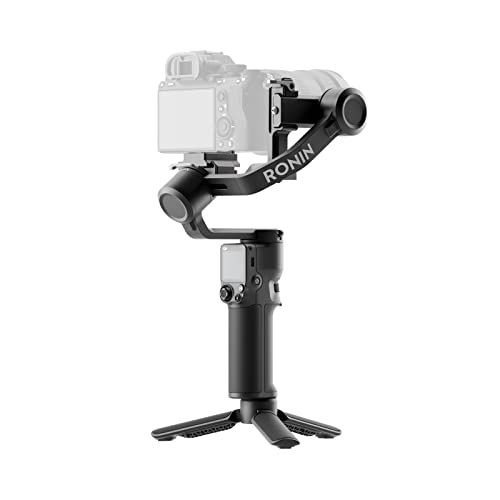
- Lightweight 795 g construction
- Supports up to 2 kg
- Native vertical shooting and Bluetooth control
Best For: Travel shooters seeking a compact, easy-to-carry gimbal
High-Payload Pick

- Supports up to 3 kg
- Up to 16 hours of battery life
- Native vertical shooting
Best For: Heavier camera setups and long shooting sessions
Best All-in-One Pick
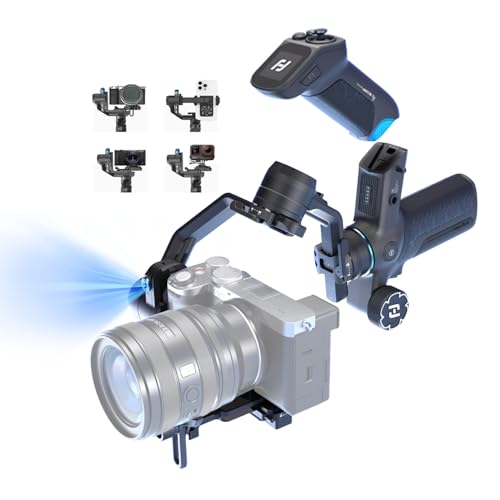
- 4.4-pound payload for cameras, action cams, and phones
- Built-in AI tracking with a stated 59-foot range
- Detachable OLED-screen handle and quick-release system
Best For: Creators who switch between cameras, action cameras, and smartphones
Best for Heavy Camera Rigs
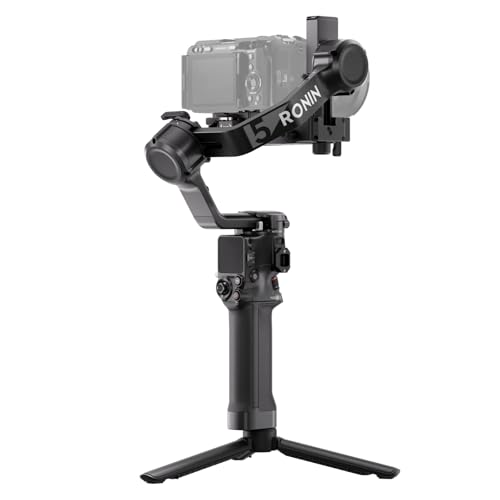
- 6.6-pound tested payload for professional camera setups
- Fine-tuning knobs enable precise axis balancing
- Automated axis locks and up to 14 hours of standby
Best For: Filmmakers using heavier mirrorless or professional camera configurations
Best for Long-Running Vlogs

- 17-hour runtime for extended shooting sessions
- Built-in AI tracker and adjustable RGB/CCT fill light
- Supports cameras, phones, compact cameras, and action cams
Best For: Travel vloggers and social creators shooting throughout the day
Best for Pro Mirrorless Rigs – DJI RS 4
The DJI RS 4 is a capable choice for demanding camera gimbals setups, pairing a 3 kg payload with expanded balancing space for mainstream mirrorless camera and lens combinations. Its quick vertical-shooting design and adjustable control modes also suit creators who move between conventional video and social-first content.
Best For: Mirrorless-camera videographers who need higher payload capacity, precise balancing, and flexible vertical shooting.
Pros:
- Supports up to 3 kg and offers an extended tilt axis for more balancing room.
- Switches efficiently to native vertical shooting without additional accessories.
- Teflon-coated axis arms help reduce friction during balancing.
- Includes PF, PTF, FPV, and configurable 3D Roll 360 shooting options.
Cons:
- At 1.55 kg, it is heavier than compact camera gimbals.
- It is not water resistant.
- The BG70 extended battery grip is sold separately.
Choose the RS 4 if your camera setup needs more capacity and adjustment range than a lightweight stabilizer can provide. Its included grip, tripod, quick-release plate, and control cable make it a practical foundation for solo production.
Best Versatile Lightweight Kit – FeiyuTech SCORP Mini 2
The FeiyuTech SCORP Mini 2 Kit is one of the more adaptable camera gimbals options in this roundup, supporting mirrorless cameras, smartphones, action cameras, and video cameras. Its built-in AI tracker, fill light, extension rod, and carrying case make it especially useful for mobile and solo creators.
Best For: Creators who use multiple device types and want built-in tracking in a relatively lightweight kit.
Pros:
- Supports devices weighing up to 1.2 kg across four device categories.
- Built-in AI tracking can follow faces or objects without connecting to the app.
- Includes a 1.3-inch touchscreen and five-way joystick for easier operation.
- Comes with a fill light, extension rod, tripod, adapters, and carrying case.
Cons:
- Its 1.2 kg payload is lower than the DJI RS 4’s capacity.
- At 852 g, it is heavier than a phone-only gimbal.
- The supplied notes do not specify a battery runtime.
The SCORP Mini 2 stands out when flexibility matters more than maximum camera payload. It is a convenient all-in-one option for switching between phones, action cameras, and smaller interchangeable-lens setups.
Best Fast-Setup Camera Gimbal – DJI RS 4 Mini Combo
The DJI RS 4 Mini Combo is designed for quick-moving shoots where setup speed and subject tracking matter. Automatic axis locks, rapid vertical switching, and the included Intelligent Tracking Module make these camera gimbals a strong fit for solo videographers using mirrorless cameras, vlog cameras, or phones.
Best For: Solo creators who prioritize fast setup, responsive movement, and intelligent subject framing.
Pros:
- Automatic axis locks help make the gimbal ready in about one second.
- Supports up to 2 kg and works with cameras and smartphones.
- Switches from horizontal to vertical shooting in about 10 seconds.
- Includes the Intelligent Tracking Module and Briefcase Handle.
Cons:
- The 2 kg payload is lower than the full-size DJI RS 4.
- It is not water resistant.
- The 1.03 kg body is less lightweight than a phone-only stabilizer.
For creators who frequently change locations or shooting angles, the RS 4 Mini Combo offers a useful balance of portability and control. Its included tracking module adds hands-free framing without requiring a separate purchase.
Best Phone-Only Gimbal – DJI Osmo Mobile 7
The DJI Osmo Mobile 7 is a compact phone-focused option for shoppers comparing camera gimbals for iPhone and Android content. Its three-axis stabilization, built-in tripod, ActiveTrack 7.0, and 300 g weight make it easy to carry for travel, social video, livestreaming, and everyday filming.
Best For: Smartphone creators who want portable stabilization, hands-free tracking, and simple solo filming tools.
Pros:
- Three-axis stabilization helps smooth handheld phone footage.
- Built-in foldable tripod simplifies solo shooting and storage.
- ActiveTrack 7.0 supports subject tracking in varied scenarios.
- Offers up to 10 hours of operation and can charge a phone through USB-C.
Cons:
- It is designed for phones rather than dedicated cameras.
- The maximum supported weight is 300 g.
- The additional OM 7 Series Tracking Kit is sold separately.
The Osmo Mobile 7 is the straightforward pick for phone-first creators who value low weight and quick setup. Its integrated tripod and tracking features reduce the extra gear needed for solo videos and livestreams.
Smart Tracking Pick – FeiyuTech SCORP 2
For creators comparing camera gimbals, the FeiyuTech SCORP 2 stands out for its integrated AI tracking sensor and broad DSLR and mirrorless compatibility. Its 2.5 kg payload, touchscreen controls, and quick vertical-shooting setup make it a versatile option for dynamic photo and video work.
Best For: Creators who want built-in subject tracking and flexible control options.
Pros:
- Integrated AI tracking works through gesture controls without an added accessory.
- Supports up to 2.5 kg and includes a 1.3-inch touchscreen.
- Quick-release system supports vertical shooting without extra accessories.
- Offers both Bluetooth and cable-based camera control.
Cons:
- At 1,070 g, it is heavier than the DJI RS 3 Mini.
- It is not water resistant.
- Camera compatibility and control features may vary by setup.
The SCORP 2 is a feature-rich choice among camera gimbals, particularly for users who value tracking and built-in controls. Its higher payload and included accessories add flexibility, while its weight may matter for extended handheld shooting.
Travel-Friendly Pick – DJI RS 3 Mini
The DJI RS 3 Mini is a compact option for shoppers comparing camera gimbals for travel and extended handheld use. Weighing 795 g and supporting up to 2 kg, it balances portability with compatibility for many camera-and-lens combinations.
Best For: Travelers and creators who prioritize a lightweight gimbal with native vertical shooting.
Pros:
- Lightweight 795 g design is easier to carry and hold for longer shoots.
- Supports payloads up to 2 kg with high-torque motors.
- Native vertical shooting is built into the quick-release setup.
- Bluetooth shutter control supports photo capture and video recording.
Cons:
- Its 2 kg payload is lower than the ZHIYUN Weebill 3E and FeiyuTech SCORP 2.
- DJI Ronin app activation and full functionality require downloading the app from DJI’s website rather than Google Play.
- It is not water resistant.
With its low weight, touchscreen interface, and 3rd-generation RS stabilization algorithm, the RS 3 Mini is a practical travel-oriented pick. Check your camera and lens combination against the 2 kg payload before buying.
High-Payload Pick – ZHIYUN CINEPEER Weebill 3E
The ZHIYUN CINEPEER Weebill 3E is a strong contender among camera gimbals for larger DSLR and mirrorless setups. It supports up to 3 kg, offers native vertical shooting, and provides up to 16 hours of battery life for demanding shooting days.
Best For: Shooters using heavier camera-and-lens combinations or needing long battery life.
Pros:
- 3 kg tested payload accommodates a wide range of camera and lens combinations.
- Up to 16 hours of battery life supports all-day shooting.
- Native vertical shooting requires no additional accessory or component removal.
- Bluetooth shutter control can start and stop recording or trigger photos.
Cons:
- The included control cable is for Panasonic cameras; other brands require an additional cable.
- The sling grip and wrist rest for Sling Mode 2.5 are sold separately.
- At about 990 g, it is heavier than the DJI RS 3 Mini.
The Weebill 3E is compelling when payload capacity and endurance matter more than minimal weight. Before purchasing, verify camera compatibility and plan for any required control cable or optional sling accessories.
Best All-in-One Pick – Feiyu SCORP Mini 3 Pro
The Feiyu SCORP Mini 3 Pro is a versatile choice for camera gimbals shoppers who want one stabilizer for mirrorless cameras, action cameras, and smartphones. Its 4.4-pound payload, built-in AI tracking, detachable handle, and quick-release system suit creators who frequently change setups.
Best For: Multi-device creators, vloggers, and filmmakers who want high payload capacity plus integrated tracking.
Pros:
- Supports up to 4.4 pounds, including compatible mirrorless camera setups.
- AI tracking offers a stated 59-foot range and 0.003-second response time.
- Detachable handle includes a 1.3-inch OLED screen for direct setting adjustments.
- Includes quick-release components, a cooling smartphone clamp, tripod, and camera accessories.
Cons:
- The extensive compatibility and accessory list may require checking your exact camera and lens combination.
- Its maximum payload is lower than the DJI RS 5’s stated 6.6-pound tested payload.
Choose this model when flexibility matters more than carrying the heaviest professional rig. The combination of camera, action-camera, and smartphone support makes it particularly practical for creators who switch formats often.
Best for Heavy Camera Rigs – DJI RS 5
The DJI RS 5 is a strong option among camera gimbals for users working with heavier professional camera setups. It combines a stated 6.6-pound tested payload with fine-tuning knobs, automated axis locks, intelligent tracking support, and a 1.8-inch touchscreen.
Best For: Professional camera users who prioritize payload capacity, fast setup, and precise balancing.
Pros:
- Handles a stated tested payload of up to 6.6 pounds.
- Fine-tuning knobs and Teflon interlayers support precise balancing.
- Second-generation automated axis locks can lock for storage and unlock for shooting.
- Offers up to 14 hours of standby time and reaches a full charge in about one hour.
Cons:
- At 1.62 kg, it is heavier than the Hohem iSteady MT3.
- It is not water resistant.
- The DJI Ronin app is not available through Google Play and must be downloaded from DJI’s official website.
The RS 5 is best suited to planned shoots where a heavier camera package benefits from precise balancing and robust controls. Its automated locks and quick-open tripod also make transitions between storage and shooting more efficient.
Best for Long-Running Vlogs – Hohem iSteady MT3
The Hohem iSteady MT3 is a lightweight choice among camera gimbals, supporting mirrorless cameras, compact cameras, smartphones, and action cameras. Its built-in AI tracker, adjustable RGB/CCT fill light, OLED display, and 17-hour runtime make it well suited to mobile content creation.
Best For: Travel vloggers, livestreamers, and social creators who need long battery life and broad device compatibility.
Pros:
- Supports four device categories with a payload of up to 3.08 pounds.
- Built-in AI tracking works without app or Bluetooth restrictions.
- Adjustable CCT/RGB fill light helps illuminate footage in darker settings.
- Provides up to 17 hours of runtime and supports horizontal-to-vertical switching.
Cons:
- Its 3.08-pound payload is lower than the Feiyu SCORP Mini 3 Pro and DJI RS 5.
- Full charging takes about three hours.
- Exact camera compatibility should be confirmed using the supplied compatibility sheet.
For creators who value portability and endurance, the MT3 offers a practical balance of stabilization, tracking, lighting, and control. It is especially compelling for day-long mobile shoots where frequent recharging would be inconvenient.
How We Picked the Best Camera Gimbals
We selected these Camera Gimbals based on stabilization design, payload capacity, camera and phone compatibility, portability, controls, battery practicality, and useful creator features. The list includes full-size models for interchangeable-lens cameras, compact gimbals for travel, and smartphone-focused options for quick social content.
We also considered whether each model fits a specific type of buyer. A powerful gimbal is not automatically the best choice if it adds unnecessary weight, while an ultralight model may struggle with a large lens or camera body.
Quick Comparison
| Best For | Recommended Type | What to Look For |
|---|---|---|
| Professional mirrorless or DSLR work | DJI RS 4, DJI RS 5, or Feiyu SCORP 2 | Higher payload, strong motors, and advanced balancing |
| Travel and lightweight kits | DJI RS 4 Mini, DJI RS 3 Mini, or SCORP Mini models | Low weight, compact storage, and quick setup |
| Smartphone video | DJI Osmo Mobile 7 | Phone compatibility, tracking, and simple controls |
| Mixed camera setups | hohem iSteady MT3 or Feiyu SCORP Mini 3 Pro | Flexible mounting and broad device support |
Key Buying Factors for Camera Gimbals
Payload and Balance
Check the gimbal’s maximum payload against your complete setup, including the camera, lens, battery, memory card, and accessories. Staying comfortably below the limit generally gives motors more room to respond smoothly. Balance the camera carefully before shooting; even a strong gimbal can perform poorly when the rig is off-center.
Size and Handling
Full-size stabilizers provide more power and often better control, but they can become tiring during long shoots. Mini gimbals are easier to carry and suit smaller mirrorless bodies. Smartphone models are the simplest option for casual video, travel, and short-form content.
Tracking and Creator Features
AI tracking, built-in fill lights, OLED displays, and wireless camera controls can simplify solo filming. These features are helpful for presenters and moving subjects, but they should not outweigh core stabilization and compatibility.
Compatibility and Battery Life
Confirm support for your exact camera, lens, phone, and connection method. Some functions depend on a compatible cable or app. Also consider charging time, runtime, and whether the battery is removable or built in.
Who Should Buy Which Camera Gimbals?
Choose a high-capacity model such as the DJI RS 4, DJI RS 5, or Feiyu SCORP 2 for heavier mirrorless and DSLR setups, demanding movement, or frequent professional use. The DJI RS 4 Mini and DJI RS 3 Mini are better suited to creators who want dependable stabilization without carrying a large rig.
For compact travel kits, the Feiyu SCORP Mini 2, SCORP Mini 3 Pro, ZHIYUN CINEPEER Weebill 3E, and hohem iSteady MT3 offer a balance of portability and versatility. Smartphone users should choose the DJI Osmo Mobile 7 for the simplest phone-first experience. Before buying, prioritize the weight of your actual setup, then compare controls, tracking features, and portability.