
Heavy camera bodies and long lenses demand more than a basic walking-stick monopod. The right support can reduce arm fatigue, improve framing, and add stability without the bulk of a full tripod.
These 10 camera monopods cover lightweight travel setups, video-focused kits, and heavier DSLR or mirrorless combinations. Use the buying guide below to match each design to your gear and shooting style.
Best 10 Camera Monopods for Heavy Cameras Picks for 2026
Best Lightweight Pick

- 0.59-pound aluminum design
- Supports up to 5 pounds
- Folds to 16.75 inches
Best For: Travel and outdoor photographers using lighter DSLR or mirrorless setups
Best Video Kit
Avella CD324 Carbon Fiber Monopod

- 13.2-pound maximum load
- Fluid head with pan bar
- Collapsible three-foot support base
Best For: Video creators using heavier cameras and requiring controlled movement
Best Travel Value

- 11.02-pound maximum load
- Weighs about 0.83 pounds
- Folds to approximately 16.9 inches
Best For: Travel, hiking, and mobile DSLR or mirrorless photography
Best Studio Stability
IFOOTAGE A400 Round Base Monopod

- Supports up to 22 pounds
- 79.4-inch maximum height
- Space-saving 15.75-inch round base
Best For: Studio setups using heavy cameras, lights, or other supported equipment
Lightweight Heavy-Load Pick
Manbily C-555L Carbon Fiber Monopod
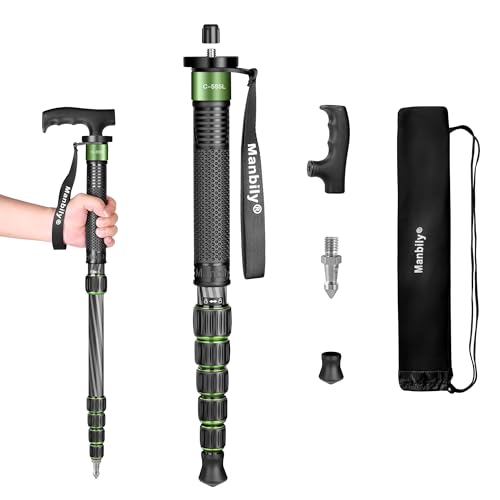
- 15.4-pound stated load capacity
- 0.93-pound carbon-fiber construction
- Folds to 15.7 inches; reaches 61 inches
Best For: Travel, sports, and wildlife photography
Versatile Video Support Pick
IFOOTAGE Cobra 3 A180T Monopod
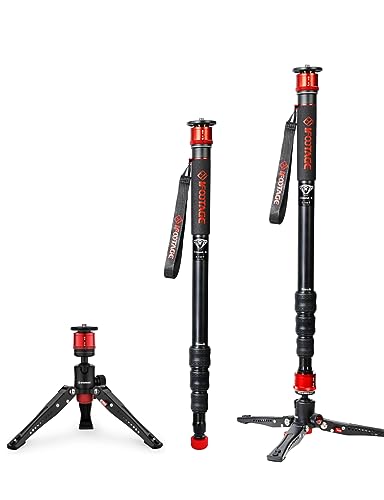
- 17.6-pound stated payload
- 71.7-inch maximum height
- Detachable mini tripod base
Best For: Tall, modular support for video cameras and heavier setups
Budget Lightweight Pick
Amazon Basics 67-Inch Camera Monopod
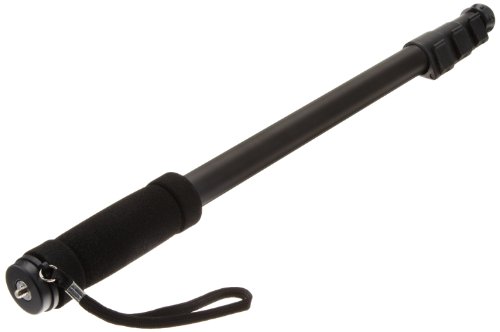
- 6.6-pound stated capacity
- 12.8-ounce aluminum construction
- 67-inch height with rubber foot and spikes
Best For: Lightweight cameras, scopes, and budget-conscious users
Best Heavy-Duty Versatility
Koolehaoda 71.6" 3-Way Monopod

- 22-pound maximum load
- 3-way pan-tilt head
- Detachable tripod base
Best For: Sports, wedding, travel, and video shooting
Best Studio Footprint
IFOOTAGE A300 Round Base Monopod

- 22-pound payload
- 11.8-inch weighted round base
- 24- to 60-inch height range
Best For: Compact studios, livestreaming, and interviews
Best Simple Pick
Manbily A-222 Extendable Monopod

- 15.5-pound maximum load
- 67-inch height with five sections
- Lightweight 0.67-kilogram build
Best For: Travel photographers and moderate-weight camera setups
Best Lightweight Pick – Altura Photo 62-Inch Monopod
For photographers seeking camera monopods for heavy cameras without adding much weight to a kit, the Altura Photo 62-Inch Monopod offers a compact aluminum design with a stated 5-pound capacity. It folds to 16.75 inches and includes a carry pouch for travel.
Best For: Travel photographers and outdoor users with DSLR or mirrorless cameras weighing up to 5 pounds.
Pros:
- Weighs just 0.59 pounds and folds to 16.75 inches.
- Supports cameras, video cameras, ball heads, or scopes up to 5 pounds.
- Includes a foam grip, wrist strap, rubber foot, and retractable leg spike.
Cons:
- The 5-pound capacity is lower than the other heavy-duty options here.
- It does not include a fluid head.
The Altura is a practical choice when portability matters more than maximum load capacity. Its lightweight construction and terrain-friendly foot make it useful for everyday shooting, hiking, and travel.
Best Video Kit – Avella CD324 Carbon Fiber Monopod
Avella CD324 Carbon Fiber Video Monopod Kit | Fluid Head, Removable Feet, 71 Inch, Max Load 13.2 LB,
Check Price On AmazonAmong camera monopods for heavy cameras, the Avella CD324 stands out as a complete video-oriented kit. Its carbon fiber monopod supports up to 13.2 pounds and pairs a fluid head with a removable pan bar for controlled movement.
Best For: Videographers who need smooth panning, broad tilt adjustment, and a higher load rating in a travel-ready monopod.
Pros:
- Supports up to 13.2 pounds and extends from 27.55 to 71.25 inches.
- Includes a fluid head and removable pan bar for video movement.
- Collapsible three-foot base allows 15-degree inclination and 360-degree rotation.
- Comes with quick-release plates, tools, and a carrying bag.
Cons:
- Its 27.55-inch folded length is less compact than shorter travel monopods.
- The monopod should remain hand-held for safety, according to the supplied specifications.
The CD324 is the most feature-rich option in this group for video work. Carbon fiber construction keeps it relatively portable, while the fluid head and support base add control for heavier camera setups.
Best Travel Value – ULANZI TB12 61-Inch Monopod
The ULANZI TB12 is a compact aluminum option for shoppers comparing camera monopods for heavy cameras with a travel-friendly design. It extends to 61 inches, weighs about 0.83 pounds, and lists an 11.02-pound capacity.
Best For: Mobile photographers, hikers, and hobbyists carrying DSLR or mirrorless cameras on the go.
Pros:
- Supports up to 11.02 pounds while weighing approximately 0.83 pounds.
- Folds to about 16.9 inches and fits in a 20-inch carry-on.
- Offers five height settings from 16.9 to 61 inches.
- Can also function as a selfie stick or walking and trekking pole.
Cons:
- It has no stated water resistance.
- The five-section design prioritizes portability over a larger, more substantial support system.
For photographers who want a strong stated capacity without carrying a bulky stand, the TB12 is a versatile pick. Its compact folded size and multiple operating modes suit travel and outdoor shooting.
Best Studio Stability – IFOOTAGE A400 Round Base Monopod
For studio users seeking camera monopods for heavy cameras, the IFOOTAGE A400 uses a broad round base instead of conventional tripod legs. It reaches 79.4 inches, supports up to 22 pounds, and is designed to reduce floor-space and tripping concerns in crowded shooting areas.
Best For: Studio photographers and videographers working with heavy cameras, lights, fluid heads, microphones, or projectors.
Pros:
- Supports payloads up to 22 pounds.
- Round 15.75-inch base is designed for tip resistance and space-efficient placement.
- Adjusts from 30.3 to 79.4 inches with quick-twist locks.
- Includes 1/4-inch, 3/8-inch, and light-adapter compatibility.
Cons:
- Weighs approximately 5.4 kilograms, making it far less portable than travel monopods.
- The large base is intended for floors and studio spaces rather than hiking.
- It is not water resistant.
The A400 is the strongest load-rated option here and is built around studio stability rather than lightweight mobility. Its flat round base is especially useful where bulky tripod legs would obstruct a workspace.
Lightweight Heavy-Load Pick – Manbily C-555L Carbon Fiber Monopod
For photographers looking for camera monopods for heavy cameras without adding much travel weight, the Manbily C-555L combines an 8-layer carbon-fiber build with a stated 15.4-pound load capacity. It folds to 15.7 inches, weighs 0.93 pounds, and reaches 61 inches.
Best For: Travel, sports, and wildlife photographers who need high capacity in a compact monopod.
Pros:
- Supports up to 15.4 pounds while weighing just 0.93 pounds.
- Eight-layer carbon fiber and a 28 mm leg provide a strong, lightweight platform.
- Quarter-turn locks, reversible 1/4-inch and 3/8-inch screw, and convertible rubber or metal feet add versatility.
- Includes a walking-stick handle, wrist strap, Allen key, and carry case.
Cons:
- Its six-section design may require more adjustments than a simpler monopod.
- At 61 inches, it offers less maximum height than the IFOOTAGE option in this roundup.
The C-555L is a strong fit when portability matters as much as load capacity. Its carbon-fiber construction and compact folded size make it especially appealing for outdoor shooting, while the walking-stick conversion adds practical trail utility.
Versatile Video Support Pick – IFOOTAGE Cobra 3 A180T Monopod
The IFOOTAGE Cobra 3 A180T is a practical choice among camera monopods for heavy cameras when you want extra height and a higher stated payload. Its aluminum body reaches 71.7 inches, supports up to 17.6 pounds, and includes a detachable mini tripod base.
Best For: Video shooters who want a tall monopod with a removable stabilizing base and quick-release operation.
Pros:
- 17.6-pound payload is the highest stated capacity among these three models.
- Reaches 71.7 inches for elevated shooting positions.
- Detachable mini tripod creates a versatile 3-in-1 support setup.
- Quick-disconnect locking mechanism and 1/4-inch and 3/8-inch mounting compatibility simplify setup.
Cons:
- At 2.76 pounds, it is substantially heavier than the Manbily and Amazon Basics models.
- Its 27.2-inch folded length is less compact for travel.
- The aluminum construction is not described as water resistant.
The Cobra 3 A180T prioritizes payload, height, and modular video functionality over minimum carry weight. It is a sensible choice for larger camera or camcorder setups when the detachable base and fast deployment are useful.
Budget Lightweight Pick – Amazon Basics 67-Inch Camera Monopod
The Amazon Basics WT1003 offers a straightforward, lightweight option for camera monopods for heavy cameras when the equipment stays within its 6.6-pound capacity. It extends to 67 inches, weighs less than a pound, and includes a rubber foot, retractable spikes, wrist strap, and carrying bag.
Best For: Budget-conscious photographers using lighter cameras, scopes, or video equipment.
Pros:
- Lightweight aluminum design weighs about 12.8 ounces.
- Four sections extend to 67 inches for flexible shooting height.
- Rubber foot and retractable spikes help accommodate different surfaces.
- Includes a cushion grip, adjustable wrist strap, and carrying bag.
Cons:
- Its 6.6-pound capacity is considerably lower than the Manbily and IFOOTAGE models.
- The 21.4-inch collapsed length is longer than the Manbily’s folded size.
- It uses a 1/4-inch universal thread rather than the reversible 1/4-inch and 3/8-inch mounting system found on the other two models.
This monopod is best viewed as an affordable, uncomplicated support for lighter equipment rather than a high-capacity solution. Its low weight and included carrying accessories make it convenient for casual photography and scopes.
Best Heavy-Duty Versatility – Koolehaoda 71.6" 3-Way Monopod
For photographers comparing camera monopods for heavy cameras, the Koolehaoda stands out with a 22-pound load rating, tall 71.6-inch maximum height, and a detachable tripod base. Its 3-way pan-tilt head is especially useful when controlled movement matters as much as support.
Best For: Sports, wedding, travel, and video shooters who need high capacity plus flexible positioning.
Pros:
- Supports up to 22 pounds and extends to 71.6 inches.
- 3-way head offers 360° horizontal rotation and -70° to +90° vertical tilt.
- Detachable adjustable tripod base can also function as a compact desktop mini tripod.
- Includes rubber foot caps, a metal spike, carrying bag, and dual 1/4-inch and 3/8-inch mounting screws.
Cons:
- At 3.52 pounds, it is heavier than simpler travel monopods.
- The 22.3-inch folded length may take more room in a compact bag.
With its combination of capacity, height, and pan-tilt control, this is the most feature-rich option here. It is a strong fit for heavier DSLR, camcorder, or video-rig setups where a basic support stick is not enough.
Best Studio Footprint – IFOOTAGE A300 Round Base Monopod
The IFOOTAGE A300 is a practical choice among camera monopods for heavy cameras when floor space is limited. Its weighted 11.8-inch round base supports up to 22 pounds while occupying less space than traditional tripod legs.
Best For: Small studios, home offices, livestreaming, interviews, and desk-level product shooting.
Pros:
- 22-pound payload suits DSLR cameras, lights, monitors, and heavy microphones.
- Weighted, non-slip round base is designed to resist tipping.
- Height adjusts from 24 to 60 inches for seated or standing setups.
- Supports 1/4-inch and 3/8-inch mounting options and includes a light adapter.
Cons:
- The fixed round base is less suitable for uneven outdoor terrain than a legged monopod.
- Its 60-inch maximum height is lower than the Koolehaoda and Manbily options.
This model prioritizes compact, stable placement rather than traditional handheld mobility. Choose it when a heavy camera or accessory needs a small studio footprint and quick setup.
Best Simple Pick – Manbily A-222 Extendable Monopod
The Manbily A-222 is a compact travel option for camera monopods for heavy cameras, offering a 15.5-pound load rating in a lightweight 0.67-kilogram design. Its five-section build reaches 67 inches and packs down to 21 inches.
Best For: Travel photographers and videographers using moderately heavy DSLR or mirrorless setups.
Pros:
- Lightweight 0.67-kilogram construction with a compact 21-inch folded size.
- 1/4-turn locks adjust the height from 21 to 67 inches.
- Includes a removable tripod base, wrist strap, metal spike, and rubber foot.
- Anodized aluminum surfaces are designed to resist abrasion.
Cons:
- Its 15.5-pound capacity is lower than the 22-pound-rated alternatives.
- The base is intended to improve stability, not to serve as a standalone tripod.
- The product has no ball head, so head movement depends on the mounted equipment.
The A-222 makes a sensible compromise between portability and support. It is better suited to mobile users with moderate payloads than to large, fully built video rigs or situations requiring a dedicated fluid head.
How We Picked These Camera Monopods for Heavy Cameras
We focused on practical support features rather than height alone. The comparison considers stated load capacity, construction material, folded size, maximum working height, locking design, foot configuration, included heads, and portability. Models with rubber feet or detachable bases can provide useful stability on firm ground, while round-base designs are better suited to controlled video work than fast-moving outdoor photography.
Because camera-and-lens combinations vary considerably, treat manufacturer capacity ratings as a starting point. A large telephoto lens, fluid head, monitor, or cage can shift the balance and increase the support needed at the mounting point.
Quick Comparison
| Feature | What to look for | Best suited to |
|---|---|---|
| Aluminum construction | Lower cost and good durability, usually with more weight | Beginners, studio work, and demanding general use |
| Carbon fiber construction | Lower carrying weight and better vibration damping | Travel, wildlife, events, and long handheld sessions |
| Rubber foot or removable feet | More grip and better placement on hard surfaces | Photography and changing outdoor locations |
| Round base | Freer panning and improved upright support | Video, interviews, and static camera positions |
| Pan-tilt head | Controlled movement and easier video framing | Videographers using long or heavy setups |
Key Buying Factors for Camera Monopods for Heavy Cameras
Load Capacity and Balance
Choose a monopod rated comfortably above the combined weight of your camera, lens, battery grip, and accessories. A higher rating also leaves room for safer handling and less flex. Check whether the rating applies to the monopod alone or includes the supplied head.
Material and Locking Sections
Carbon fiber is appealing when every ounce matters, but aluminum can offer excellent value and impact resistance. Compare the number of sections and lock style: fewer sections generally set up faster, while more sections can produce a shorter folded length. Twist locks are compact; lever locks are often quicker to inspect and operate.
Feet, Bases, and Movement
A simple rubber foot is portable and works well when you are actively repositioning. Removable tripod-style feet add stability but may not replace a true tripod for unattended support. Round bases are useful for controlled panning and upright positioning, especially on level indoor floors.
Height, Head, and Mounting Hardware
At maximum extension, the monopod should place the viewfinder or monitor at a comfortable height without forcing you to lean. A basic tilt head may be enough for stills, while video users should consider pan-tilt control, platform size, and compatibility with their plate system.
Who Should Buy Which Camera Monopods for Heavy Cameras?
Choose a carbon-fiber model if you travel frequently, hike with telephoto equipment, or expect long periods of carrying support between shots. An aluminum model is usually the better value for studio sessions, events, and buyers who prioritize durability over minimum weight.
Photographers who need quick repositioning should favor a conventional monopod with a grippy foot. Video shooters working from a fixed location should consider a round-base design or a model with a pan-tilt head. If your camera setup is especially heavy, prioritize the highest credible capacity, rigid locks, a broad mounting platform, and a stable foot system over the smallest folded size.
Finally, remember that a monopod is a balance aid, not a hands-free substitute for a tripod. Keep one hand on the camera when the support is not designed to stand independently, and verify that the head, plate, and base are all tightened before shooting.