
Low-angle photography demands more than a tall support: you need smooth positioning, dependable footing, and enough flexibility to frame subjects close to the ground. The right monopod can provide that support without the bulk of a full tripod.
We compared 10 camera monopods for low-angle shots across height, materials, head design, stability features, portability, and value. Use the guide below to narrow the list by camera setup and shooting style.
Best 10 Camera Monopods for Low Angle Shots Picks for 2026
Best Budget Pick
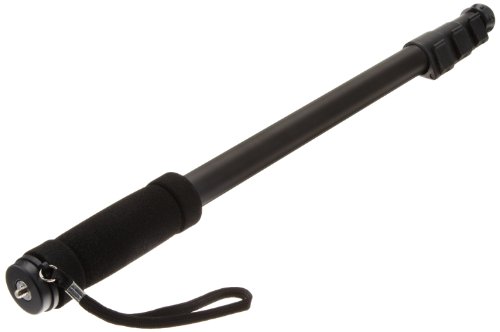
- Lightweight aluminum design under 1 pound
- Rubber foot and retractable spikes
- 67-inch reach with carrying bag
Best For: Affordable, portable camera support for everyday shooting
Best for Low-Angle Video

- 3-way pan-tilt head with broad tilt range
- Detachable stabilizing tripod base
- 22-pound capacity and 71.6-inch height
Best For: Creators needing controlled video movement and versatile support
Best Lightweight Travel Pick

- Weighs approximately 0.83 pounds
- Folds to a compact 16.9 inches
- 11.02-pound capacity with five height settings
Best For: Travelers and hikers who prioritize minimal carry weight
Best Premium Stability
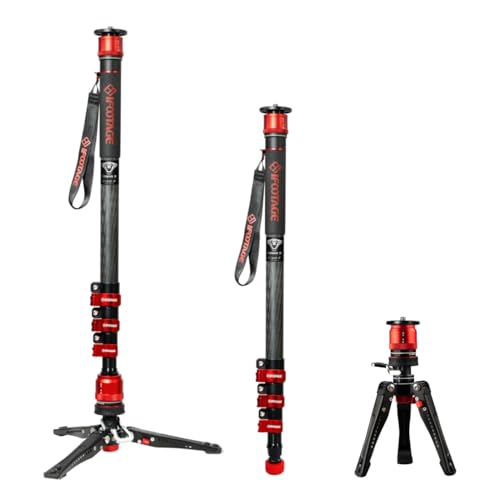
- Pedal locking system for quick adjustments
- Stable lengthened feet with 360-degree swivel
- Carbon fiber build with 17.6-pound capacity
Best For: Fast-paced shooters needing stable, quick-change support
Best Fluid-Head Pick

- Horizontal or vertical positioning for low-angle work
- Fluid head with 360° pan and controlled tilt
- 26.8–74.8-inch range; supports 13.2 pounds
Best For: Videographers needing smooth movement and a detachable tripod base
Best Lightweight Option

- Weighs 0.59 pounds and folds to 16.75 inches
- Rubber foot with retractable leg spike
- Supports up to 5 pounds with universal mounting
Best For: Travelers and hikers carrying lightweight camera gear
Best Multi-Position System
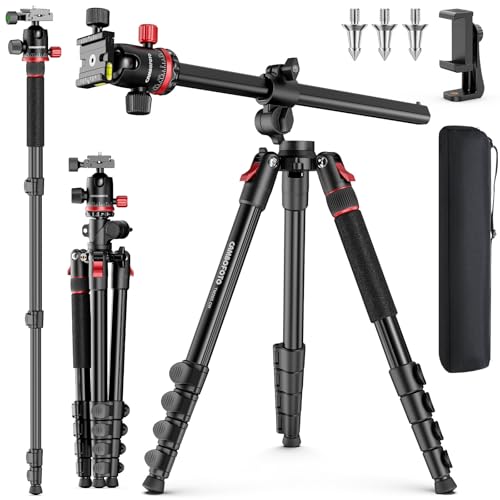
- Reversible column for ultra-low-angle macro shots
- Converts to a 53-inch monopod
- 33-pound capacity with ball head and spikes
Best For: Macro and overhead shooters wanting tripod and monopod flexibility
Best Portable Pick

- Lightweight 401g aluminum construction
- 67.5–155cm height range with flip locks
- Rubber and spike feet for varied surfaces
Best For: Traveling creators and flexible low-angle setups
Best Premium Support
SmallRig Carbon Fiber Ball Head Monopod

- One-touch height adjustment
- 166.5cm reach with carbon fiber leg
- Ball head and bubble level included
Best For: Outdoor shooting with fast adjustments and heavier support needs
Best Adjustable Base

- 21–67-inch range with five sections
- Detachable three-foot base with 20° tilt
- Rubber and metal spike feet included
Best For: Travel shooters wanting added base stability and positioning control
Best Budget Pick – Amazon Basics 67-Inch Monopod
If you want straightforward camera monopods for low angle shots without adding much weight to your kit, this Amazon Basics model is a practical option. Its four-section aluminum design adjusts from 21.5 to 67 inches, while the rubber foot and retractable spikes help it stay planted on different surfaces.
Best For: Budget-conscious photographers and travelers using cameras, video cameras, or scopes up to 6.6 pounds.
Pros:
- Lightweight aluminum construction weighs less than 1 pound.
- Rubber foot and retractable spikes provide adaptable footing.
- Includes a carrying bag, cushion grip, and adjustable wrist strap.
- Four-section design offers flexible height adjustment.
Cons:
- 6.6-pound capacity is lower than the other options here.
- It does not include a detachable tripod base for hands-free support.
This is a simple, portable choice for casual shooting and low-angle positioning. It favors low weight and affordability over advanced panning features or high-load support.
Best for Low-Angle Video – Koolehaoda 71.6-Inch Monopod
The Koolehaoda is one of the more feature-rich camera monopods for low angle shots, combining a 3-way pan-tilt head with a detachable tripod base. Its broad tilt range, adjustable feet, and 22-pound capacity make it suited to controlled video and creative framing.
Best For: Content creators, sports photographers, wedding shooters, and vloggers who need adjustable tilt and extra base stability.
Pros:
- 3-way head supports 360-degree horizontal rotation and -70 to +90 degrees of vertical tilt.
- Detachable tripod base can also function as a compact desktop mini tripod.
- Supports up to 22 pounds and reaches 71.6 inches.
- Includes a quick-release plate, carry bag, metal spike, and rubber foot caps.
Cons:
- At about 3.5 pounds, it is heavier than the simpler travel models.
- Its 22.8-inch folded length may take more room in a compact bag.
Choose this model when positioning control matters more than minimum carry weight. The pan-tilt head and detachable base give it greater versatility for low-angle video, uneven surfaces, and tabletop work.
Best Lightweight Travel Pick – ULANZI TB12 61-Inch Monopod
For travelers looking for camera monopods for low angle shots, the ULANZI TB12 emphasizes compact packing and low carry weight. It folds to 16.9 inches, weighs about 0.83 pounds, and offers five height settings from 16.9 to 61 inches.
Best For: Hiking, wildlife, and travel photographers carrying compact cameras, mirrorless models, or DSLRs up to 11.02 pounds.
Pros:
- Very light at approximately 0.83 pounds.
- Compact 16.9-inch folded size fits easily into travel luggage.
- Supports up to 11.02 pounds despite its portable design.
- Can also be used as a selfie stick, walking stick, hiking stick, or trekking pole.
Cons:
- Its 61-inch maximum height is shorter than the tallest models here.
- The supplied notes do not indicate a detachable tripod base or dedicated pan-tilt head.
This is a strong fit for photographers who prioritize portability and quick height changes. Its shorter reach and simpler support setup are reasonable trade-offs for a monopod that is easy to carry outdoors.
Best Premium Stability – IFOOTAGE Cobra 3 C180F-P
The IFOOTAGE Cobra 3 is designed for demanding camera monopods for low angle shots, with a pedal locking system, lengthened feet, and a carbon-fiber build. Its base swivels 360 degrees, and the low-profile base can serve as a tabletop mini tripod for more flexible positioning.
Best For: Sports, wedding, wildlife, and video shooters who need fast setup, smooth movement, and support for heavier equipment.
Pros:
- Foot pedal locks and unlocks the monopod without bending over.
- Lengthened feet provide a base diameter of about 13.4 inches for added stability.
- Supports up to 17.6 pounds and adjusts from 5.9 to 71 inches.
- Convertible 1/4-inch and 3/8-inch mounting screws suit cameras, gimbals, lights, and more.
Cons:
- At about 2.8 pounds, it is heavier than the lightweight travel alternatives.
- Its 27-inch folded length is less compact for small bags.
This model is the most specialized choice in the group for fast-paced shooting and stable low-angle work. The pedal lock, quick-release system, and multifunctional base add convenience when changing positions or equipment frequently.
Best Fluid-Head Pick – NEEWER TP78 Monopod with Feet
For camera monopods for low angle shots, the NEEWER TP78 stands out with a flexible shooting position, detachable feet, and a fluid head that supports controlled camera movement. Its horizontal orientation and adjustable height make it useful when you need to work close to the ground or reframe quickly.
Best For: Videographers and content creators who want a fluid-head monopod that can also function as a small desktop tripod.
Pros:
- Positions horizontally or vertically between 90° and includes a feet support for uneven ground.
- Fluid head offers 360° panning and -70°/+90° tilting with damping control.
- Adjusts from 26.8 to 74.8 inches and supports up to 13.2 pounds.
- Includes a Manfrotto-compatible quick-release plate and side 1/4-inch accessory thread.
Cons:
- At 3.8 pounds, it is heavier than a basic travel monopod.
- The larger fluid-head design may be more equipment than casual photographers need.
The TP78 is a versatile choice when low-angle positioning, smooth video movement, and strong load capacity matter more than minimizing weight. Its removable base adds useful flexibility for travel and desktop setups.
Best Lightweight Option – Altura Photo 62-Inch Monopod
The Altura Photo 62-Inch Monopod is a straightforward option for camera monopods for low angle shots when portability is the priority. It collapses to 16.75 inches, weighs only 0.59 pounds, and uses a universal mount for DSLR, mirrorless, video camera, or scope setups.
Best For: Hikers, travelers, and casual photographers who want a compact support pole for lightweight camera equipment.
Pros:
- Collapses to 16.75 inches and weighs just 0.59 pounds for easy carrying.
- Built-in non-skid rubber foot includes a retractable leg spike for varied terrain.
- Universal 1/4-inch thread includes a 3/8-inch screw adapter.
- Soft foam grip and safety wrist strap improve handling during use.
Cons:
- Its 5-pound weight limit is lower than the other options in this roundup.
- It does not include a fluid head or a dedicated low-angle positioning mechanism.
This monopod favors simplicity and low carry weight over advanced positioning controls. It is a practical pick for supported handheld shooting, but photographers seeking precise horizontal or ultra-low-angle framing may prefer a more specialized design.
Best Multi-Position System – CAMBOFOTO TM265 Tripod
The CAMBOFOTO TM265 is a tripod-first support system with strong credentials for camera monopods for low angle shots. Its reversible center column can be positioned horizontally or inverted for ultra-low-angle macro work, while the detachable leg converts the setup into a 53-inch monopod.
Best For: Macro photographers and creators who want one support system for low-angle, overhead, tripod, and monopod shooting.
Pros:
- Reversible center column supports horizontal, overhead, and ultra-low-angle positioning.
- Detachable leg converts into a 53-inch monopod.
- Supports up to 33 pounds and includes a counterweight hook for stability.
- Includes a ball head, phone holder, carry bag, and three steel ground spikes.
Cons:
- It is a larger tripod system rather than a dedicated monopod.
- The 53-inch converted monopod is shorter than the full 68-inch tripod height.
The TM265 offers the broadest range of shooting configurations here, especially for macro and overhead work. Choose it if versatility and high load capacity matter more than having the smallest, simplest monopod.
Best Portable Pick – NEEWER TP41
For camera monopods for low angle shots, the NEEWER TP41 offers a compact aluminum build, quick flip-lock height adjustments, and interchangeable feet. It extends from 67.5cm to 155cm, while folding to 44cm and weighing about 401g.
Best For: Travelers and creators who need a lightweight monopod for indoor floors, rocks, grass, sand, or dirt.
Pros:
- Lightweight 401g design folds to 17.3 inches for transport.
- Supports cameras and equipment up to 17.6lb/8kg.
- Interchangeable rubber and steel spike feet suit varied surfaces.
- Dual 1/4-inch and 3/8-inch adapter supports cameras, gimbals, rigs, and compatible accessories.
Cons:
- It has no stated water-resistance rating.
- The included support is a monopod design rather than a dedicated tripod system.
The TP41 is a practical choice when portability matters most. Its low minimum height, flexible foot options, and broad mounting compatibility make it well suited to mobile low-angle shooting.
Best Premium Support – SmallRig Carbon Fiber Ball Head Monopod
The SmallRig carbon fiber monopod is a strong option for camera monopods for low angle shots when one-handed adjustment and higher load capacity matter. Its four-section leg reaches 166.5cm, folds to 68cm, and includes a ball head with a bubble level.
Best For: Outdoor photographers and videographers who want carbon fiber construction, rapid height adjustment, and accessory expansion.
Pros:
- One-touch adjustment locks the monopod at any position.
- Carbon fiber leg supports up to 15kg, while the head supports up to 5kg/11lb.
- Built-in bubble level helps with precise leveling.
- 1/4-inch locating hole and dual-thread spigot expand mounting options.
Cons:
- At 1.73kg, it is substantially heavier than the NEEWER TP41.
- Its 68cm folded length is less compact for small bags.
- The ball head is limited to a 5kg maximum load.
This SmallRig model prioritizes control and support over minimum carry weight. The one-touch lock and ball head make it especially useful when shooting positions change quickly.
Best Adjustable Base – Manbily A-222
For camera monopods for low angle shots that need extra positioning flexibility, the Manbily A-222 combines five-section adjustment with a detachable three-foot base. It adjusts from 21 to 67 inches and uses a 20-degree base tilt with 360-degree rotation.
Best For: DSLR and video users who want a travel monopod with a removable stability base and interchangeable feet.
Pros:
- Five sections and 1/4-turn locks provide quick height changes.
- Supports up to 15.5lb/7kg.
- Detachable, foldable three-foot base improves positioning flexibility.
- Rubber and metal spike feet accommodate paved surfaces and soft ground.
Cons:
- The base is intended to increase stability and is not recommended for use as a tripod.
- There is no ball head included.
- The manufacturer recommends avoiding the smallest-diameter tube section for better stability.
The A-222 is a versatile travel option for users who want more than a conventional monopod can provide. Its adjustable base helps with framing, but the system still requires hand control and the wrist strap during use.
How We Picked the Best Camera Monopods for Low Angle Shots
We focused on features that matter when a monopod is used near the ground: adjustable height, stable feet or a removable tripod base, smooth head movement, load capacity, and ease of transport. We also considered whether each model suits a lightweight mirrorless camera, a heavier DSLR, or a longer lens.
Aluminum models generally offer strong value and durability, while carbon fiber can reduce carrying weight and absorb some vibration. A monopod with a pan-tilt or fluid head may be more useful for video and moving subjects; a ball head is often faster for still-photo composition.
Quick Comparison
- Best for budget buyers: Amazon Basics and Altura Photo provide straightforward support at an accessible price.
- Best for fluid movement: Koolehaoda and NEEWER models with pan-tilt or fluid heads suit video and action work.
- Best for portability: ULANZI, NEEWER TP41, and compact carbon-fiber designs are easier to pack.
- Best for premium lightweight support: IFOOTAGE Cobra 3 and SmallRig carbon-fiber models prioritize reduced weight and refined construction.
- Best for versatility: CAMBOFOTO and Manbily models add detachable feet or tripod-style bases for more positioning options.
Key Buying Factors for Camera Monopods for Low-Angle Shots
Minimum Height and Leg Configuration
Check the collapsed and minimum working heights, not just the maximum extension. A model that can open low or use detachable feet is easier to position for ground-level perspectives. Four-section designs pack compactly, while fewer sections may deploy faster.
Base Stability and Foot Design
Rubber feet help on smooth indoor surfaces, while removable tripod bases provide better balance when you need the camera to stand independently. These bases still should not be treated as a full tripod for long unattended exposures or uneven terrain.
Head Movement and Camera Compatibility
Confirm the head type, mounting screw, locking controls, and stated load capacity. Pan-tilt and fluid heads are useful for controlled video moves; ball heads make quick still-photo adjustments. Leave safety margin above your camera-and-lens weight.
Materials, Weight, and Locks
Carbon fiber is appealing for travel and long handheld sessions, but aluminum often costs less and can withstand frequent use. Look for secure twist or flip locks, comfortable grips, and a included carry bag if the monopod will be transported often.
Who Should Buy Which Camera Monopods for Low Angle Shots?
Travel photographers should prioritize a compact aluminum or carbon-fiber model with a reliable locking system. Sports and wildlife shooters may prefer greater height, a strong load rating, and a smooth pan-tilt head. Videographers should look for fluid movement and a stable removable base. Budget-conscious beginners can choose a basic monopod with a rubber foot and add accessories later. For low-angle landscapes, product photography, or creative ground-level compositions, select a model with a low usable height and flexible head positioning rather than choosing solely by maximum height.