
The best cassette recorders for musicians make it easy to capture rehearsals, songwriting ideas, lessons, and lo-fi demos without relying on a phone or computer. The right model can also help you digitize older tapes, monitor recordings with headphones, or record from an external audio source.
This roundup compares 10 portable cassette players and recorders, focusing on recording flexibility, power options, connectivity, portability, and useful extras such as built-in microphones, speakers, radio tuners, SD cards, and USB conversion.
Best 10 Cassette Recorders for Musicians Picks for 2026
Best Portable Digital Converter
K7 Cassette Player and MP3 Recorder

- Converts tapes to MP3 on an included 16GB SD card
- Built-in microphone and speaker for quick recordings
- Rechargeable, lightweight design with earphones included
Best For: Portable tape conversion and basic musical idea capture
Best for Transcription Control
Panasonic RR830 Analog Cassette Recorder

- Variable speed and pitch controls for detailed playback
- Remote review and foot-pedal support
- Built-in microphone with 3.5mm audio interface
Best For: Controlled playback, review, and transcription workflows
Best All-Around Conversion Option
SEMIER Cassette Recorder and MP3 Converter

- Converts tapes to MP3 by SD card or USB with Audacity
- Records to cassette, computer, or SD card via microphone
- Includes LCD, 16GB SD card, speaker, and dual power options
Best For: Flexible analog recording and digital conversion
Best for One-Touch Recording
JENSEN MCR-100 Cassette Recorder

- One-touch cassette recording with automatic level control
- Built-in condenser microphone and auxiliary input
- Headphone and external microphone connections
Best For: Simple rehearsals, notes, and analog source recording
Simple Analog Recording
PROSCAN Cassette Player & Recorder

- One-touch recording with automatic level control
- Built-in and external microphone options
- AUX input, headphone jack, and carry handle
Best For: Straightforward voice notes and basic cassette recording
Portable Radio Recorder
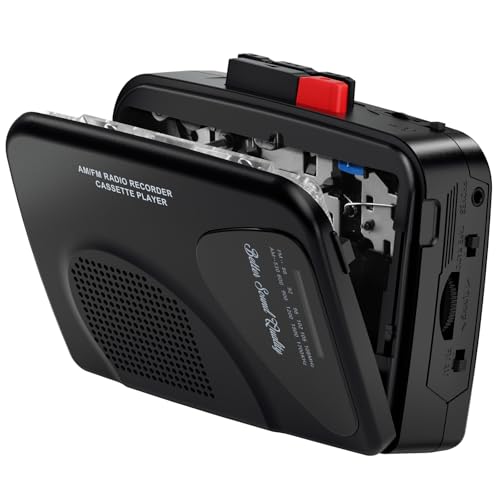
- Records external sounds or AM/FM broadcasts
- Voice activation supports convenient recording
- Runs on two AA batteries or 5V DC
Best For: Mobile idea capture, lessons, and radio recording
Connected Cassette Workstation
QFX RETRO-39BT Cassette Recorder

- Records USB audio directly onto cassette
- Transfers cassette, Bluetooth, FM, mic, or line-in to USB
- Adds MP3, Bluetooth, and AC/battery operation
Best For: Musicians needing flexible cassette-to-digital workflows
Simple Voice Capture
Coby Cassette Player and Recorder

- Plays tapes and records audio
- Built-in microphone for quick capture
- Battery or AC powered
Best For: Straightforward voice notes, practice ideas, and portable cassette playback
Portable Idea Recorder
Reshow Cassette Player and Recorder

- Records ideas with a built-in mic
- Speaker and headphone listening
- AA battery or USB-C power
Best For: Mobile musical sketches, voice memos, and casual cassette listening
Flexible Cassette Inputs
Deluxe Products Portable Tape Recorder

- Built-in and external microphone recording
- Aux-in recording from compatible devices
- Includes mic, cable, and AC adapter
Best For: Basic demos, microphone capture, and transferring audio to cassette
Best Portable Digital Converter – K7 Cassette Player and MP3 Recorder
For musicians seeking cassette recorders for musicians with modern file storage, the K7 combines cassette playback, MP3 conversion, and basic voice or idea capture. Its included 16GB SD card and rechargeable battery make it a convenient portable option, though it cannot record onto cassette tapes.
Best For: Musicians who want to digitize tapes and record quick ideas directly to an SD card.
Pros:
- Converts cassette audio to MP3 files stored on the included 16GB SD card.
- Built-in microphone and speaker support quick recordings and playback.
- Rechargeable 1000mAh battery, USB-C charging, earphones, and 3.5mm output support portability.
Cons:
- Does not record audio onto cassette tapes.
- Built-in microphone recording is more suited to basic sessions than elaborate studio work.
The K7 is a practical choice when digital conversion and lightweight portability matter more than cassette-based recording. It is especially useful for preserving tape material or capturing musical sketches for later editing.
Best for Transcription Control – Panasonic RR830 Analog Cassette Recorder
The Panasonic RR830 is a larger analog cassette recorder designed around playback and transcription control. Among cassette recorders for musicians, its variable speech control, pitch and speed adjustment, remote review, and optional foot-pedal operation make it better suited to controlled listening and review than spontaneous portable recording.
Best For: Musicians and audio users who need adjustable playback speed and hands-free review.
Pros:
- Variable Speech Control provides pitch and speed adjustments.
- Remote review and foot-pedal support can streamline transcription-style workflows.
- Built-in microphone and 3.5mm audio interface provide basic recording and connection options.
Cons:
- At 4.3 pounds, it is considerably less portable than compact cassette players.
- The supplied details do not specify cassette-to-MP3 conversion features.
The RR830 stands out for playback management rather than modern digital production. Choose it when speed control and review functions are more valuable than a lightweight, musician-focused field recorder.
Best All-Around Conversion Option – SEMIER Cassette Recorder and MP3 Converter
The SEMIER combines cassette playback and recording with two cassette-to-MP3 workflows, making it a flexible pick for musicians comparing cassette recorders for musicians. It can save converted audio to the included SD card or connect by USB for conversion through Audacity, while its microphone supports new recordings.
Best For: Musicians who want cassette recording, digital conversion, and multiple power options in one compact unit.
Pros:
- Supports cassette-to-MP3 conversion to an SD card or through USB with Audacity.
- Can record through its built-in microphone, to SD card, computer, or cassette.
- Includes a 16GB SD card, USB reader, LCD, 2W speaker, and headphone jack.
- Runs from USB-C power or four AA batteries.
Cons:
- Does not support Type IV or metal tapes.
- USB conversion requires using Audacity software.
With both cassette recording and digital export, the SEMIER offers the broadest feature set here for musicians working between analog and computer-based workflows. Its Type I tape limitation is the main compatibility point to check before buying.
Best for One-Touch Recording – JENSEN MCR-100 Cassette Recorder
The JENSEN MCR-100 is a straightforward shoebox-style cassette player and recorder with one-touch recording. For musicians looking at cassette recorders for musicians, its built-in condenser microphone, automatic level control, auxiliary input, and external microphone jack make it useful for simple rehearsals, notes, and source recording.
Best For: Musicians who want easy cassette recording from a built-in microphone or connected audio source.
Pros:
- One-touch recording simplifies capturing music, lectures, and personal notes.
- Automatic level control helps maintain consistent recording volume.
- Auxiliary input supports smartphones, tablets, and other audio sources.
- Includes headphone and external microphone connections.
Cons:
- Its mono microphone operation is geared toward basic recordings rather than stereo production.
- The 90-day limited warranty is relatively short.
- The supplied details do not identify cassette-to-digital conversion.
The MCR-100 favors simplicity and familiar cassette operation over advanced digital features. It is a sensible fit for quick analog demos and source capture when one-touch controls and flexible inputs are priorities.
Simple Analog Recording – PROSCAN Cassette Player & Recorder
PROSCAN Cassette Player & Recorder with Microphone, Headphone Jack, Aux in, Black
Check Price On AmazonIf you want straightforward cassette recorders for musicians, the PROSCAN combines cassette playback and recording with a built-in microphone, external microphone input, and AUX input. Its one-touch recording and automatic level control make it practical for capturing basic ideas, interviews, or rehearsal notes.
Best For: Musicians who want a lightweight, easy-to-operate cassette recorder for voice notes and simple analog recordings.
Pros:
- One-touch recording with automatic level control
- Includes a freestanding microphone and external microphone jack
- AUX input, headphone jack, and fast-forward/rewind controls
- Portable 1.74-pound design with carry handle
Cons:
- Plastic construction may feel less rugged than professional equipment
- Power options are limited to AC/DC operation rather than battery details
- No stated Bluetooth, USB recording, or radio functionality
The PROSCAN is a sensible choice when ease of use matters more than advanced connectivity. It supports basic cassette recording workflows without adding unnecessary controls or features.
Portable Radio Recorder – Mersoco AM/FM Cassette Player
This compact option stands out among cassette recorders for musicians who need portability and multiple recording sources. It can record external sounds or AM/FM broadcasts to cassette, includes voice activation, and runs on either two AA batteries or a 5V DC supply.
Best For: Musicians who want an affordable portable recorder for capturing ideas, lessons, broadcasts, or spontaneous sounds away from an outlet.
Pros:
- Records external audio and AM/FM broadcasts to cassette
- Voice activation system supports hands-free recording starts
- Supports two AA batteries or 5V DC power
- Includes 3.5mm headphones, USB-to-DC cable, and built-in AM/FM radio
Cons:
- USB connection is described for power rather than digital audio recording
- Two AA batteries are not included
- Compact plastic construction and stated 125–6.3 kHz frequency response may limit high-frequency detail
The Mersoco favors convenience and flexible power over studio-oriented features. Its radio and voice-activated recording functions make it useful for mobile idea capture, while the included headphones help with private monitoring.
Connected Cassette Workstation – QFX RETRO-39BT Cassette Recorder
For musicians seeking more ways to move audio between formats, the QFX RETRO-39BT offers cassette recording from a USB drive plus recording from cassette, Bluetooth, FM radio, microphone, or line-in to USB. It also includes MP3 playback, line-in/out connections, and a built-in speaker.
Best For: Musicians who want a versatile cassette recorder with USB conversion features, Bluetooth playback, and multiple input options.
Pros:
- Records digital audio from USB directly onto cassette
- Can record cassette, Bluetooth, FM radio, microphone, or line-in to USB
- Includes Bluetooth playback, MP3 support, USB, and line-in/out connections
- Works from AC power or four C batteries
Cons:
- Four C batteries are required but not included
- Its broad feature set may be more than needed for simple voice recording
- Built-in 3.5-inch speaker and mono microphone operation are suited to convenience rather than detailed monitoring
The QFX is the most flexible choice in this group for musicians working across cassette and digital sources. Choose it when USB recording, Bluetooth playback, and multiple transfer paths are more important than a minimalist interface.
Simple Voice Capture – Coby Cassette Player and Recorder
The Coby CVR-22 is a straightforward option for shoppers comparing cassette recorders for musicians who want basic tape playback and voice recording in one compact unit. Its built-in microphone, simple controls, headphone jack, and battery-or-AC operation make it practical for quick musical ideas, notes, or casual listening.
Best For: Musicians and users who want an easy-to-operate cassette recorder for voice notes, basic practice ideas, and portable tape playback.
Pros:
- Plays cassettes and records audio in one device.
- Built-in microphone supports self-contained voice recording.
- Runs on four C batteries or AC power.
- Includes headphone and auxiliary connectivity options.
Cons:
- Uses larger C batteries, which may add bulk to portable use.
- The built-in microphone is designed for general voice capture rather than specialized music recording.
The CVR-22 emphasizes accessibility and convenience over advanced recording controls. It is a sensible pick for simple analog capture and playback, especially when clear buttons and flexible power matter more than studio-oriented features.
Portable Idea Recorder – Reshow Cassette Player and Recorder
The Reshow portable cassette player and recorder is aimed at musicians and listeners seeking cassette recorders for musicians with a compact, retro design. It records through a built-in microphone, plays tapes through its speaker or headphones, and supports either two AA batteries or USB-C power for flexible use.
Best For: Musicians who want a lightweight way to capture musical ideas, voice memos, or practice material directly to cassette while traveling or working at home.
Pros:
- Built-in microphone records ideas and voice memos directly to tape.
- Built-in speaker allows convenient listening without extra equipment.
- Offers private listening through a 3.5mm headphone jack.
- Supports two AA batteries or USB-C power.
Cons:
- AA batteries are not included.
- Its recording feature is microphone-based, so the notes do not specify dedicated instrument inputs.
The Reshow combines classic cassette operation with USB-C convenience and a built-in speaker. It fits musicians who value spontaneous, tactile recording and portability rather than extensive input or mixing options.
Flexible Cassette Inputs – Deluxe Products Portable Tape Recorder
The Deluxe Products DP-CASR-101 is a practical choice among cassette recorders for musicians because it can record through its built-in or included external microphone and accept audio through an auxiliary cable. That lets users capture voices, musical performances, or compatible audio from a smartphone, laptop, or tablet onto cassette.
Best For: Musicians who want both microphone recording and a simple aux-in method for transferring compatible audio sources to cassette.
Pros:
- Records via built-in microphone or included external microphone.
- Aux-in cable enables recording from compatible smartphones, laptops, and tablets.
- Includes a built-in speaker for cassette playback.
- Includes an AC adapter and carrying handle for flexible use.
Cons:
- Battery operation requires four batteries, which are not included.
- Auxiliary recording requires a source device with a headphone output.
- The supplied notes do not indicate advanced musician-focused recording controls.
With microphone options, aux recording, and included accessories, this Deluxe Products model is the most flexible of the three for getting audio onto cassette. It remains a simple portable recorder, but its input choices make it useful for basic demos and analog transfers.
How We Picked These Cassette Recorders for Musicians
We focused on practical features that matter during songwriting, rehearsal, teaching, travel, and basic home recording. The selection includes traditional cassette recorders, compact shoebox-style units, and newer models that convert tapes to MP3 or record to SD cards. We also considered microphone placement, one-touch recording, playback controls, speaker usability, headphone support, auxiliary inputs, power flexibility, and ease of carrying.
Because these are generally affordable portable recorders rather than multitrack studio machines, expectations matter. They are best suited to quick demos, voice memos, field ideas, cassette-based sampling, and casual playback—not pristine digital production.
Quick Comparison
- Best for tape-to-digital conversion: Choose a model with USB or SD recording and verify whether the required card or cable is included.
- Best for quick songwriting notes: Look for a built-in microphone, simple controls, and one-touch recording.
- Best for rehearsals: Prioritize a clear built-in speaker, a headphone jack, reliable battery operation, and a sturdy handle.
- Best for connecting instruments or another player: Select a recorder with an auxiliary input or microphone input that matches your source.
- Best for flexible listening: Consider models offering radio, headphones, external power, or both batteries and AC/USB power.
Key Buying Factors for Cassette Recorders for Musicians
Recording Inputs and Controls
A built-in microphone is useful for spoken ideas and room recordings, while an auxiliary input can capture audio from a mixer, keyboard, phone, or other playback device. Simple controls are valuable when recording in the middle of a rehearsal.
Tape and Digital Compatibility
Traditional cassette recording is ideal for an intentionally lo-fi workflow. If you want to archive tapes or edit recordings on a computer, choose a unit with USB or SD-card conversion. Check the advertised format, storage limit, and whether software or a memory card is required.
Monitoring and Sound
Built-in speakers are convenient for quick playback, but headphones provide better detail and privacy. If you plan to review rehearsals, pay attention to headphone output, speaker size, volume control, and any included tone or radio features.
Power and Portability
Battery operation is helpful for practice rooms, lessons, and travel. AC or USB power is more convenient for extended sessions at home. A retractable handle, compact body, and protected controls can make a difference when carrying the recorder between locations.
Who Should Buy Which Cassette Recorders for Musicians?
Songwriters and students should favor a compact recorder with a built-in microphone and straightforward controls. Musicians digitizing old tapes should choose a USB- or SD-enabled converter and confirm computer compatibility before buying. Performers and rehearsal groups will benefit from a louder speaker, headphone monitoring, and dependable battery or AC operation. Lo-fi recording enthusiasts should prioritize reliable cassette recording, auxiliary input, and a sound character they enjoy over digital extras.