Finding the best cassette recorders for field recording means balancing portability, recording quality, power options, and ease of use. This roundup includes classic tape-based devices alongside modern handheld digital recorders that suit interviews, music, filmmaking, and travel.
Some picks prioritize authentic cassette recording and playback, while others offer cleaner digital audio, expanded storage, and more reliable field performance. Use the guide below to narrow the list based on your recording style and budget.
Best 10 Cassette Recorders for Field Recording Picks for 2026
Professional Pick

- 32-bit float recording helps prevent clipped takes.
- Dual locking XLR/TRS inputs suit complex rigs.
- Low-noise preamps support clean location audio.
Best For: Professional field recording with external microphones
Digital Cassette Companion

- Converts tapes to MP3 on the included 16GB SD card.
- Built-in microphone and speaker enable quick recordings.
- Rechargeable and supplied with earphones and accessories.
Best For: Tape conversion and casual portable voice recording
Versatile Digital Pick

- 32-bit float recording helps reduce distorted takes.
- Stereo mics and two XLR/TRS inputs handle varied sources.
- USB-C and SD recording support flexible workflows.
Best For: Music, interviews, video, and live field recording
Classic Tape Choice

- One-touch cassette recording is simple to operate.
- Automatic level control helps keep volume consistent.
- Built-in and external microphone options add flexibility.
Best For: Simple mono cassette recording and playback
Best Digital Field Recorder

- Three microphones with nine recording patterns
- 32-bit float/96kHz clip-resistant recording
- USB microphone and SD backup functionality
Best For: Field recordists needing flexible digital capture
Best Cassette Voice Recorder
Reshow Portable Cassette Player
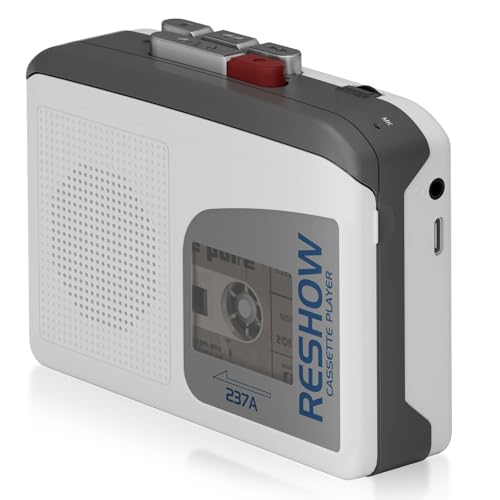
- Built-in microphone records directly to cassette
- Built-in speaker and headphone output
- Two AA or USB-C power options
Best For: Portable analog voice memos and interviews
Best Cassette Recorder With External Mic
PROSCAN PRC124AMZ Cassette Recorder

- One-touch cassette recording
- Built-in and external microphone options
- Automatic level control and carry handle
Best For: Voice-focused interviews, classes, and conferences
Digital Detail Pick

- 16GB storage and up to 20 hours of recording
- Stereo WAV/MP3 recording with voice activation
- Lightweight design with USB file transfer
Best For: Digital interviews, lectures, and portable field notes
Versatile Tape Hub
QFX RETRO-39BT Shoebox Recorder

- Records between USB and cassette
- Supports Bluetooth, FM, MIC, and line-in sources
- AC or four C-battery operation with carrying handle
Best For: Portable cassette recording with multiple audio sources
Pocket Cassette Companion
TOMASHI Portable Cassette Recorder

- Compact 180-gram cassette player and recorder
- Built-in microphone, speaker, and headphone jack
- Automatic stop and simple tape controls
Best For: Casual cassette recording and portable personal listening
Professional Pick – Zoom F3 Field Recorder
Although it is not a cassette recorder, the Zoom F3 is a stronger modern option for field recording when clean, clip-resistant digital audio matters more than tape compatibility. Its 32-bit float recording, dual locking inputs, and low-noise preamps suit demanding location work.
Best For: Filmmakers, musicians, and recordists who need dependable digital audio in unpredictable field conditions.
Pros:
- 32-bit float recording helps capture quiet sounds and sudden peaks without stopping to adjust levels.
- Dual locking XLR/TRS inputs help keep microphone connections secure.
- Low-noise preamps and flexible battery or USB power support location recording.
Cons:
- It records WAV files rather than cassette tape or MP3.
- It requires external microphones for many recording setups.
The F3 is the most specialized choice here for professional field recording. Choose it when reliable, high-quality digital capture is more important than the tactile cassette experience.
Digital Cassette Companion – KLIM K7 Cassette Recorder
The KLIM K7 is a practical choice for shoppers seeking cassette recorders for field recording with convenient digital storage. It plays tapes, converts them to MP3 on the included 16GB SD card, and records voice directly to the card through its built-in microphone.
Best For: Portable voice notes, tape digitization, and casual outdoor recording without a separate computer or app.
Pros:
- Converts cassette tapes to MP3 files stored on an SD card.
- Built-in microphone, speaker, and 3.5mm headphone jack support flexible use.
- Rechargeable battery, included earphones, SD card, and card reader add convenience.
Cons:
- It does not record audio onto cassette tapes.
- The built-in microphone is better suited to casual recording than advanced multitrack work.
The K7 bridges cassette playback and simple digital recording effectively. It is a good fit for portability and archiving, but users wanting true tape-based recording should consider a traditional cassette recorder instead.
Versatile Digital Pick – Zoom H4 Essential Recorder
The Zoom H4 Essential is a versatile alternative to cassette recorders for field recording, combining built-in stereo microphones with two XLR/TRS inputs. Its 32-bit float capture, four-track capability, and USB-C connectivity make it useful for music, interviews, video, and live sound.
Best For: Creators who want one portable recorder for built-in microphone work, external mics, instruments, and USB audio.
Pros:
- 32-bit float recording helps protect against distorted takes.
- Built-in stereo microphones and two XLR/TRS inputs support varied setups.
- Can record or stream over USB-C while also saving to an SD card.
- Spoken menu guidance can make navigation easier and more accessible.
Cons:
- It is a digital WAV recorder, not a cassette player or cassette recorder.
- Two AA batteries are required for battery-powered operation.
The H4 Essential is the most flexible all-purpose digital option in this group. It suits field recordists who need more input options than a basic cassette device while retaining a handheld format.
Classic Tape Choice – JENSEN MCR-100 Recorder
The JENSEN MCR-100 is the most traditional choice for shoppers comparing cassette recorders for field recording. Its one-touch recording, built-in condenser microphone, automatic level control, and retractable handle make it straightforward for notes, lectures, and casual outdoor use.
Best For: Users who specifically want cassette recording with simple controls and portable shoebox-style handling.
Pros:
- One-touch recording simplifies capturing lectures, music, and personal notes.
- Automatic level control helps maintain consistent recording volume.
- Built-in microphone, headphone jack, auxiliary input, and external microphone jack offer useful flexibility.
Cons:
- Mono recording is less suitable for stereo music or detailed environmental sound.
- Its 90-day limited warranty is shorter than some competing options.
- It uses cassette recording rather than modern digital file storage.
The MCR-100 is the clearest match for a classic cassette workflow. Choose it for simple analog recording and playback, especially when physical tapes matter more than digital editing or advanced inputs.
Best Digital Field Recorder – Zoom H2 Essential
For shoppers comparing cassette recorders for field recording, the Zoom H2 Essential is a modern digital alternative built for flexible, clip-resistant capture. Its three microphones, nine recording patterns, and 32-bit float/96kHz support suit interviews, music, and wide stereo soundscapes.
Best For: Field recordists, journalists, podcasters, musicians, and filmmakers who want versatile digital recording.
Pros:
- Three built-in microphones offer nine selectable recording patterns.
- 32-bit float recording helps capture audio without manual gain adjustments.
- Works as a USB microphone while recording a backup to an SD card.
- Offers audible menu navigation in seven languages.
Cons:
- Uses two AA batteries rather than an internal rechargeable battery.
- Its digital workflow may not suit shoppers specifically seeking tape-based recording.
The H2 Essential is the strongest choice here for flexible, reliable field audio, particularly when clip-free recording and multiple pickup patterns matter more than cassette authenticity.
Best Cassette Voice Recorder – Reshow Portable Cassette Player
If you specifically want cassette recorders for field recording, the Reshow combines tape-based voice capture with portable playback. Its built-in microphone records directly to cassette, while battery or USB-C power supports use at home, while traveling, or away from an outlet.
Best For: Students, journalists, travelers, and analog enthusiasts recording memos, interviews, lectures, or musical ideas.
Pros:
- Records voice directly to cassette through the built-in microphone.
- Built-in speaker and 3.5mm headphone jack support flexible listening.
- Runs on two AA batteries or USB-C power.
- Simple controls and a portable design are accessible for different users.
Cons:
- Two AA batteries are not included.
- Analog cassette recording is less convenient for quick digital file transfer.
- The supplied notes do not specify a dedicated external microphone input.
The Reshow is the closest match for authentic cassette field notes in this roundup, offering straightforward tape recording with practical portable-power options.
Best Cassette Recorder With External Mic – PROSCAN PRC124AMZ Cassette Recorder
PROSCAN Cassette Player & Recorder with Microphone, Headphone Jack, Aux in, Black
Check Price On AmazonFor buyers seeking cassette recorders for field recording with simple controls, the PROSCAN PRC124AMZ offers one-touch recording and automatic level control. It includes a built-in free-standing microphone, an external microphone jack, and a carry handle for easier transport.
Best For: Recording interviews, classes, conferences, and other voice-focused sessions with a cassette-based system.
Pros:
- One-touch recording simplifies starting a session.
- Includes both a free-standing microphone and an external microphone jack.
- Automatic level control is designed for crisp, clear recordings.
- Has a carry handle, headphone jack, AUX input, and fast-forward/rewind controls.
Cons:
- At 1.74 pounds, it is less lightweight than smaller portable cassette players.
- Operates from AC/DC power rather than the battery option described for the Reshow.
- Its recording format is analog cassette.
The PROSCAN stands out when an external microphone connection and uncomplicated one-touch operation are more important than minimizing size or weight.
Digital Detail Pick – HoTiyan 16GB Voice Recorder
For cassette recorders for field recording shoppers who value compact digital storage, this HoTiyan recorder offers a practical alternative to tape. Its stereo microphone, noise-reduction function, WAV/MP3 support, and rechargeable battery suit lectures, interviews, and other portable recording tasks.
Best For: Digital field notes, interviews, lectures, and users who need long recording capacity in a lightweight device.
Pros:
- 16GB storage with up to 20 hours of continuous recording.
- Stereo recording with WAV and MP3 support.
- Voice activation, A-B repeat, variable playback speed, and password protection.
- Compact 1.6-ounce design with USB file transfer.
Cons:
- It is a digital recorder rather than a cassette-based field recorder.
- The built-in microphone may be less flexible than a recorder with dedicated external microphone inputs.
This is the most convenient choice here for extended digital recording and quick file transfer. Choose it when storage, battery life, and playback tools matter more than recording to physical cassette tape.
Versatile Tape Hub – QFX RETRO-39BT Shoebox Recorder
The QFX RETRO-39BT is the closest match for shoppers specifically seeking cassette recorders for field recording. It combines cassette recording with USB, Bluetooth, FM radio, line-in, and microphone support, while AC or battery power makes it easier to use away from a desk.
Best For: Users who want cassette recording plus USB playback and multiple recording sources in a portable shoebox-style unit.
Pros:
- Records from USB to cassette and from cassette, Bluetooth, FM, MIC, or line-in to USB.
- Built-in microphone, line-in/out connections, and Bluetooth playback.
- Portable swivel handle and AC or four C-battery power options.
- Built-in 3.5-inch speaker and MP3 playback from USB.
Cons:
- At 1.7 pounds, it is less pocketable than a personal cassette recorder.
- The built-in microphone operates in mono.
- Four C batteries are required but not included.
With genuine cassette recording and unusually broad connectivity, this is the most flexible option in the group. Its larger shoebox format is a trade-off for easier controls, speaker playback, and source flexibility.
Pocket Cassette Companion – TOMASHI Portable Cassette Recorder
For a simple, lightweight approach to cassette recorders for field recording, the TOMASHI portable recorder provides tape playback and recording in a compact body. Its built-in microphone, speaker, headphone jack, and straightforward transport controls make it suited to basic personal recording and listening.
Best For: Casual cassette recording, language practice, personal listening, and users who prioritize small size and simple controls.
Pros:
- Compact 4.57-by-3.54-by-1.38-inch design weighing 180 grams.
- Built-in microphone for recording and built-in speaker for playback.
- Headphone listening and familiar rewind, fast-forward, stop, play, and record controls.
- Automatic stop helps limit unnecessary cassette mechanism wear.
Cons:
- Mono speaker output is less suitable for spacious field-monitoring needs.
- Two AA batteries and USB power supply are not included.
- Its feature set is more basic than the QFX unit’s connectivity options.
This TOMASHI is a sensible pick when portability and uncomplicated cassette operation come first. It is better suited to personal notes and casual use than to elaborate field-recording setups requiring numerous inputs or advanced digital storage.
How We Picked the Best Cassette Recorders for Field Recording
We evaluated these products for the practical demands of recording away from a desk: portability, microphone availability, recording workflow, playback options, storage, power flexibility, and ease of operation. Because “cassette recorder” can describe both traditional tape machines and compact modern field recorders, the roundup includes both categories. Digital models generally provide higher-quality capture and simpler file management, while cassette devices offer familiar physical controls and an analog workflow.
We also considered the intended user. A filmmaker or musician may need dependable stereo recording and manual control, while a student or casual user may value one-touch operation, a built-in speaker, and a low-cost design.
Quick Comparison
| Best for | Look for | Typical advantage |
|---|---|---|
| Interviews and lectures | Built-in microphone, voice activation, headphone monitoring | Simple spoken-word capture |
| Music and filmmaking | Quality microphones, stereo recording, input control | More detailed, flexible audio |
| Authentic cassette use | Tape recording, built-in speaker, compact controls | Analog playback and recording |
| Digitizing tapes | USB or MP3 conversion, included storage | Easier computer and phone transfers |
Key Buying Factors for Cassette Recorders for Field Recording
Recording Format and Sound Quality
Choose tape if the physical medium and vintage workflow matter most. For cleaner recordings, easier editing, and repeatable results, a digital handheld recorder is usually the better choice. Check whether the device records mono or stereo and whether it supports external microphones or line-level sources.
Microphone and Monitoring Options
A built-in microphone is convenient for notes and interviews, but microphone placement strongly affects results. Headphone output is valuable for checking unwanted noise, distortion, and handling sounds while recording. If you record music or film audio, prioritize models with better microphone control and input flexibility.
Portability, Power, and Storage
Compact dimensions and a secure handle help when recording outdoors or moving between locations. Confirm the battery type, expected runtime, and whether the recorder can operate from USB power. Digital models should provide enough internal or removable storage; cassette models require blank tapes and may be more vulnerable to mechanical wear.
Controls and File Transfer
One-touch recording is useful for spontaneous interviews, while level controls and format settings benefit more advanced users. If you need to edit or share recordings, verify how files transfer to a computer and whether the device creates commonly supported formats such as WAV or MP3.
Who Should Buy Which Cassette Recorders for Field Recording?
Choose a traditional cassette recorder if you want physical tape playback, simple analog recording, or a retro device for home, travel, and casual voice notes. These models are approachable but are not usually the best choice for critical music or film production.
Choose a compact digital recorder if audio quality, storage, editing, and reliable field workflow matter most. Handheld digital models are the strongest fit for musicians, podcasters, filmmakers, interviewers, and serious location recording.
Choose a conversion-focused player if your main goal is transferring existing tapes to digital files. Check the included card, connection method, supported formats, and software requirements before buying. For any option, consider carrying headphones, spare batteries or a power bank, and a protective case for outdoor sessions.