
The right channel strip can make voiceover recording cleaner, more consistent, and easier to mix. Combining preamp gain with tools such as compression, de-essing, EQ, and gating, it can simplify your signal chain before audio reaches your interface or recorder.
These 10 picks cover budget-friendly podcast setups, flexible project studios, and premium broadcast or commercial voiceover rigs. The best choice depends on your microphone, room noise, desired tone, and workflow.
Best 10 Channel Strip for Voiceover Picks for 2026
Versatile Voiceover Control

- Compression, de-essing, enhancement, and gate
- XLR mic and 1/4-inch line inputs
- Rackmount design with loop-out
Best For: Home studios and voiceover setups needing several analog processors
Tube Warmth and Digital Flexibility

- Tube preamp for warmth and definition
- Compressor, expander, de-esser, and gate
- USB and multiple digital outputs
Best For: Voiceover studios requiring flexible digital connectivity
Class A Detail and Musical Control
Rupert Neve Newton Channel Strip

- Class A mic/line preamp
- Custom transformer outputs with Silk enhancement
- Eight-segment metering and compressor
Best For: Engineers prioritizing premium analog front-end tone
Tube-Based Voice Shaping
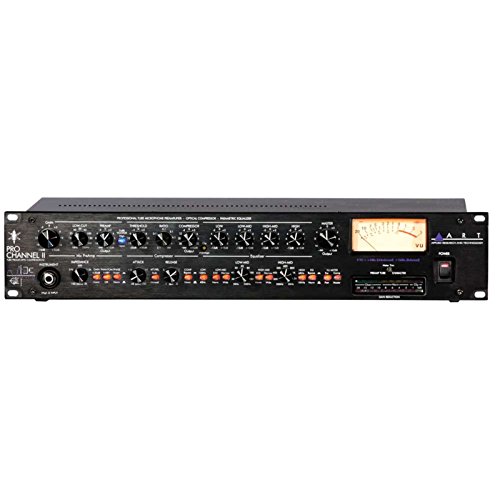
- Tube preamp, compressor, and EQ
- Selectable optical or tube compression
- Switchable VU monitoring points
Best For: Voiceover setups seeking hands-on tube tone shaping
Digital Neve Classic

- Class A preamp and EQ design
- USB, ADAT, and 24-bit/192kHz conversion
- Insert loop and headphone amp included
Best For: Voiceover rigs needing integrated recording and expansion
Tube Tone Workhorse
StudioChannel Tube Channel Strip

- Class A 12AX7 tube preamp
- VCA compressor with flexible controls
- Three-band EQ and 1U rack format
Best For: Voiceover studios wanting tube coloration and hardware processing
Compact SSL Control
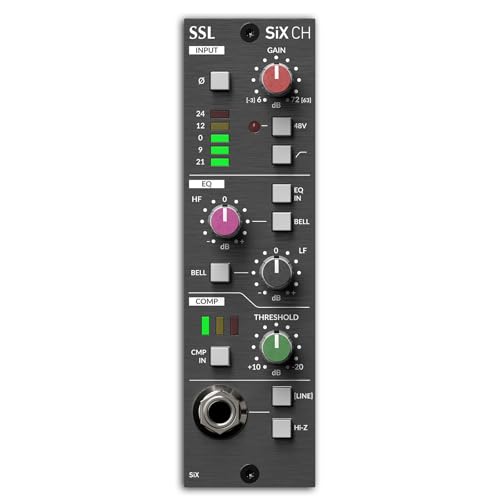
- Mic pre, EQ, and single-knob compressor
- 75 Hz high-pass filter and +48V phantom power
- Requires a compatible 500 Series chassis
Best For: 500 Series studios needing a compact voice channel
Premium Tube Control

- Vacuum-tube mic, instrument, and line preamp
- Optical compressor and EQ included
- Single-channel design with two-year warranty
Best For: Voiceover setups needing tube coloration and onboard dynamics control
Analog Noise Reduction

- Reduces ambient and preamp-floor noise
- Fully analog, near-zero-latency design
- Must be placed after a mic preamp
Best For: Home voiceover and podcast chains needing compact line-level noise control
Flexible Tube Processing

- Mono tube channel strip
- Selectable opto or FET compression
- Four-band semi-parametric EQ
Best For: Voiceover users wanting broad compression and EQ-shaping options
Versatile Voiceover Control – dbx 286s Channel Strip
If you need a practical channel strip for voiceover, the dbx 286s combines a microphone preamp with compression, de-essing, enhancement, and expander/gate controls. Its straightforward processing and status LEDs make it suitable for shaping spoken-word signals before they reach your recording system.
Best For: Voiceover artists and home-studio users who want several essential processors in a single rackmount unit.
Pros:
- Includes compression, de-esser, enhancer, and expander/gate sections.
- Balanced XLR microphone input plus 1/4-inch line connectivity.
- Loop-out capability allows additional external processing.
- Front-panel LEDs provide at-a-glance level and processor-status monitoring.
Cons:
- It is a single-channel, wired rackmount processor.
- It operates from AC power rather than USB bus power.
The dbx 286s is a strong all-in-one choice when clear, controlled voiceover processing matters more than onboard digital connectivity.
Tube Warmth and Digital Flexibility – ART VoiceChannel Tube Strip
The ART VoiceChannel is a channel strip for voiceover that pairs a tube preamp with compressor, expander, de-esser, and gate functions. Its broad digital-output selection, including USB and ADAT, makes it a flexible option for recording systems that need both analog tone and digital routing.
Best For: Voiceover and recording users who want tube-style preamp character alongside multiple digital connection options.
Pros:
- ART tube preamp design is intended to provide warmth and definition.
- Includes compressor, expander, de-esser, and gate controls.
- Supports USB, ADAT, AES/EBU, S/PDIF, and TOSLink digital connectivity.
- Specified maximum sample rate reaches 192 kHz.
Cons:
- The supplied information identifies one channel, so it is not a stereo strip.
- Its 5.5 kg weight may be less convenient for portable setups.
Choose the VoiceChannel when digital integration is a priority and you want tube-based preamp character with dedicated dynamics and noise-control sections.
Class A Detail and Musical Control – Rupert Neve Newton Channel Strip
The Rupert Neve Designs Newton is a focused channel strip for voiceover built around a Class A mic/line preamp, custom transformer outputs, Silk harmonic enhancement, metering, and compression. It suits users looking for a streamlined signal path with tone-shaping features rather than a long list of separate processors.
Best For: Recording engineers and voice talent seeking Class A preamp performance with transformer output character and compression.
Pros:
- Class A microphone and line preamp supports both source types.
- Custom transformer outputs and Silk provide harmonic-enhancement options.
- Eight-segment LED meters support signal monitoring.
- Dedicated compressor is included in the mono channel strip.
Cons:
- The supplied notes do not specify a de-esser, EQ, gate, or digital outputs.
- It is a mono channel strip.
The Newton is best considered a premium, focused front end for voiceover chains where preamp character, transformer output, and compression are the central requirements.
Tube-Based Voice Shaping – ART Pro Channel II
ART Pro Channel II Microphone Preamp/Compressor/EQ Professional Tube Based Selectable VU Metering
Check Price On AmazonThe ART Pro Channel II is a channel strip for voiceover built from three independent tube-based sections: a microphone preamp, selectable optical or tube compressor, and tube EQ. Selectable VU metering helps you monitor different points in the signal path while recording speech or other sources.
Best For: Voiceover and recording users who want tube coloration with dedicated preamp, compressor, and EQ stages.
Pros:
- Combines tube mic preamp, compressor, and EQ in one channel.
- Compressor can be switched between optical and tube operation.
- Selectable VU metering monitors preamp, compressor, or main output.
- Provides XLR and 1/4-inch TRS/TS connectivity.
Cons:
- The supplied notes do not list a dedicated de-esser or gate.
- It is a single-channel, corded-electric unit.
- Its 13.4-pound weight may be less suitable for mobile use.
The Pro Channel II is a good fit when tonal shaping through tube circuitry and hands-on metering is more important than digital I/O or specialized sibilance control.
Digital Neve Classic – 1073SPX-D Channel Strip
The Neve 1073SPX-D combines a Class A preamp and EQ channel strip with USB and ADAT connectivity, making it a flexible channel strip for voiceover setups that also need computer recording and expansion options. It supports 24-bit/192kHz conversion, insert send/return, and a headphone amp.
Best For: Voiceover users who want a premium-style preamp/EQ alongside USB recording and ADAT expansion.
Pros:
- Class A preamp and EQ channel-strip design
- USB connectivity with support for Windows and macOS
- 24-bit/192kHz AD/DA conversion and ADAT I/O
- Includes insert send/return and headphone amplification
Cons:
- Two-channel unit may be more than needed for a simple single-mic setup
- At 16.3 pounds, it is relatively heavy for a desktop-oriented rig
Choose this model if you want voiceover processing and an integrated computer interface in one unit. Its connectivity is especially useful when your setup may grow beyond a basic microphone-and-interface chain.
Tube Tone Workhorse – StudioChannel Tube Channel Strip
The PreSonus StudioChannel is a hardware channel strip for voiceover that pairs a high-voltage Class A 12AX7 tube preamp with a VCA compressor and three-band EQ. Its gain, tube-drive, filtering, dynamics, and equalization controls support hands-on shaping before the signal reaches your recorder or interface.
Best For: Project and professional studios seeking tube character, compression, and EQ in a rack-mount format.
Pros:
- High-voltage Class A 12AX7 tube preamplifier
- VCA compressor includes auto attack/release and soft/hard knee options
- Three-band EQ with variable-Q mid band and shelving/peak options
- Offers mic, line, and instrument inputs in a rugged 1U chassis
Cons:
- Does not include the USB or ADAT connectivity listed for the Neve unit
- One-year warranty is relatively limited
- Its extensive controls may be more than a minimalist voiceover chain requires
The StudioChannel is a strong fit when you want to shape vocal tone and dynamics in hardware. Its tube stage and flexible compressor/EQ section make it particularly suitable for users who prefer making processing decisions before recording.
Compact SSL Control – SiX 500 Series Channel Strip
The Solid State Logic SiX Channel Strip brings a mic preamp, EQ, and single-knob compressor to the 500 Series format. For a channel strip for voiceover, it offers +48V phantom power, a 75 Hz high-pass filter, a switchable shelf-or-bell EQ curve, and a front-panel line input with a 1MΩ Hi-Z switch.
Best For: 500 Series owners who want a compact SSL processing channel for voice and other sources.
Pros:
- Combines mic preamp, EQ, and single-knob compressor
- Includes +48V phantom power for compatible condenser microphones
- 75 Hz, 12 dB/octave high-pass filter helps manage low-frequency buildup
- Front-panel TRS input and 1MΩ Hi-Z switch add source flexibility
Cons:
- Requires a compatible 500 Series power chassis
- Single-channel design limits simultaneous processing capacity
- Compressor control is simpler than the multi-parameter designs in some channel strips
This is a sensible choice for a modular studio that already uses 500 Series hardware. Its focused control set keeps the voice path compact, while the HPF, EQ, and compressor cover essential spoken-word shaping tasks.
Premium Tube Control – LA-610 Mk II
The Universal Audio LA-610 Mk II is a premium channel strip for voiceover that combines a vacuum-tube microphone preamp with an optical compressor and EQ. Its single-channel design is suited to recording setups where detailed input shaping and controlled dynamics are priorities.
Best For: Voiceover users seeking tube preamp character, onboard EQ, and optical compression in one unit.
Pros:
- Combines microphone, instrument, and line preamp functions.
- Includes both EQ and optical compression.
- Uses a vacuum-tube signal path.
- Backed by a stated two-year warranty.
Cons:
- Provides one channel only.
- At 15.7 pounds, it is relatively heavy for a compact recording setup.
The LA-610 Mk II is a feature-rich choice when you want preamp, EQ, and compression available before the signal reaches your recording system. Its weight and single-channel format are worth considering when planning your studio rack or workstation.
Analog Noise Reduction – RO05 Noise Gate
The Rodweil RO05 is a compact channel strip processor for voiceover focused on reducing ambient background and preamp noise. Its fully analog noise-gate design is intended for line-level use after a microphone preamp, making connection order especially important.
Best For: Home studios and podcasting setups that need analog noise reduction after the mic preamp.
Pros:
- Designed to reduce ambient background and preamp-floor noise.
- Uses a fully analog circuit with no signal conversion.
- Compact 3.35-by-2.95-by-1.97-inch form factor.
- Includes an XLR-to-TRS cable.
Cons:
- It is not a microphone preamp and should not receive a microphone directly.
- The notes indicate higher power consumption and a possible circuit echo when powering off.
- Its processing is focused on noise gating rather than EQ or compression.
The RO05 can be a practical add-on for cleaning up a voiceover chain, particularly in a home studio. Place it after the mic preamp or elsewhere in the line-level path, and expect a focused noise-control tool rather than a complete preamp-and-EQ channel strip.
Flexible Tube Processing – ART Pro Channel III
The ART Pro Channel III is a mono tube channel strip for voiceover with several ways to shape a recorded signal. It combines switchable microphone impedance, selectable opto or FET compression voicings, and a four-band semi-parametric EQ.
Best For: Voiceover recording setups that need flexible compression choices and detailed four-band EQ control.
Pros:
- Uses a tube-based mono channel-strip design.
- Offers switchable microphone impedance.
- Provides selectable opto and FET compression voicings.
- Includes a four-band semi-parametric EQ.
Cons:
- It is a mono unit, so it does not provide multiple channels.
- Its listed dimensions and 10.61-pound weight may require dedicated space.
The Pro Channel III is a strong fit when tonal flexibility matters more than a minimal signal path. Its combination of tube processing, two compression voicings, and semi-parametric EQ gives voiceover users multiple options for shaping a mono source.
How We Picked the Best Channel Strip for Voiceover
We evaluated each channel strip for the features that matter most to spoken-word recording: preamp quality, useful compression, effective de-essing, noise control, EQ flexibility, metering, connectivity, and ease of setup. We also considered whether a unit is better suited to a clean, transparent voiceover sound or a deliberately colored tube or transformer tone.
Because voiceover chains vary widely, the selection includes single-channel processors, 500 Series hardware, tube designs, digital-output models, and products aimed at podcasting or home studios. A good channel strip should improve control without adding distracting noise, harshness, or unnecessary complexity.
Quick Comparison
| Best For | What to Prioritize | Useful Features |
|---|---|---|
| Clean narration | Low-noise preamp and precise control | Expander, compressor, de-esser |
| Warm, characterful vocals | Tube or transformer coloration | Drive control, analog metering |
| Podcasting and home studios | Simple operation and noise reduction | Gate, enhancer, easy routing |
| Professional studio integration | Connectivity and recallable workflow | Digital outputs, ADAT, USB, 500 Series format |
Key Buying Factors for a Channel Strip for Voiceover
Preamp Gain and Noise Performance
Make sure the preamp provides enough clean gain for your microphone, especially if you use a low-output dynamic or ribbon microphone. A quiet input stage is essential when recording intimate narration with significant gain.
Compression and De-Essing
Compression helps maintain a stable speaking level, while a de-esser can reduce excessive “s” and “sh” sounds. Look for controls that are easy to adjust by ear rather than relying on complicated routing.
EQ, Gate, and Expander Controls
A high-pass filter or flexible EQ can remove rumble and shape proximity effect. An expander is often preferable to an aggressive gate because it lowers room noise between phrases without abruptly cutting word endings.
Tube Color Versus Transparency
Tube channel strips can add warmth and harmonic character, but they may be less neutral than solid-state designs. Choose a cleaner processor when you want the microphone and voice to remain as natural as possible; choose tube coloration when a richer, more produced tone is desirable.
Connections and Studio Compatibility
Check whether the unit uses XLR, line-level outputs, USB, ADAT, or 500 Series power and chassis requirements. Digital outputs can simplify integration with compatible interfaces, while an analog-only unit may be ideal for a straightforward recording chain.
Who Should Buy Which Channel Strip for Voiceover?
Home voiceover artists and podcasters should prioritize simple controls, dependable gating, and low noise. A versatile channel strip with compression, de-essing, and enhancement can reduce the need for multiple plug-ins.
Voice actors seeking a polished, dimensional sound may prefer a tube or transformer-based model with adjustable coloration. Project studios should focus on flexible EQ, metering, and connectivity so the processor can serve narration, vocals, and other sources.
For a permanent professional setup, choose the channel strip that best matches your microphone and interface rather than simply selecting the most expensive model. Record clean test phrases at realistic levels, listen for sibilance and room noise, and confirm that the controls remain easy to use during a session.