
The best compact audio mixers give you practical control over multiple microphones, instruments, and playback sources without taking over your desk. The right model can simplify recording, streaming, rehearsals, or small live performances.
This roundup compares 10 compact audio mixers across channel count, connectivity, preamp quality, effects, phantom power, portability, and overall value, so you can choose a mixer that fits your setup and budget.
Best 10 Compact Audio Mixers Picks for 2026
Versatile Compact Choice

- Six channels with two mic preamps
- Four stereo line channels plus EQ
- Built-in digital effects
Best For: Small recording, rehearsal, and performance setups
Simple Line Submixer
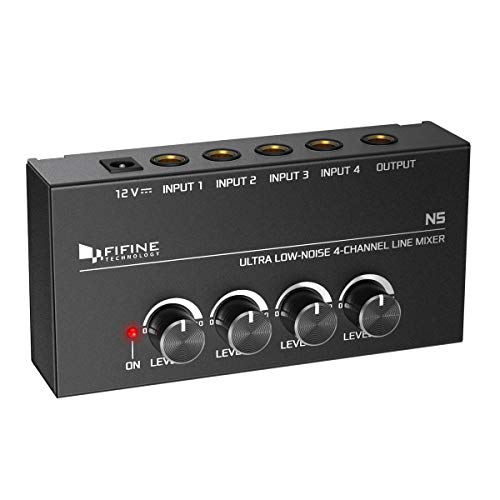
- Four independent line-level channels
- Stereo or mono operating modes
- Metal enclosure with low-noise operation
Best For: Keyboard rigs and basic source submixing
Streaming-Ready Mixer

- Eight-input analog mixing
- Stereo USB interface
- Mixes PC or gaming audio into streams
Best For: Streaming, podcasting, and computer-based recording
Broadcast-Focused Mini Mixer

- Two Onyx mic preamps with phantom power
- Four line inputs in a desktop format
- Low-noise design with RF rejection
Best For: Podcasts, broadcasts, and small studios
Balanced Control

- Six-channel analog mixer with D-PRE preamps
- EQ, high-pass filters, and one-knob compressors
- Rugged metal chassis; no USB connectivity
Best For: Small recording, lecture, and performance setups
Simple Signal Hub

- Five-channel compact mixer with low-noise performance
- RCA inputs and outputs for playback or recording
- Phantom power and two-band EQ
Best For: Basic desktop, playback, and presentation setups
Instrument-Ready Mixing

- Six inputs with GS-Pre microphone preamps
- Two HiZ inputs for direct guitar and bass connection
- Three-band EQ, high-pass filtering, and Neutrik XLRs
Best For: Small musician, recording, and performance rigs
Feature-Rich Pick

- Four channels with 3-band EQ
- 99 DSP effects plus 48V phantom power
- USB, OTG, and Bluetooth connectivity
Best For: Podcasting, streaming, and home recording
Minimalist Line-Level Pick

- Four mono/stereo line-level channels
- Independent level controls and routing switches
- USB-C powered, low-noise design
Best For: Combining line-level sources in compact setups
Versatile Live-Sound Pick
Pyle 6-Channel Bluetooth Mixer
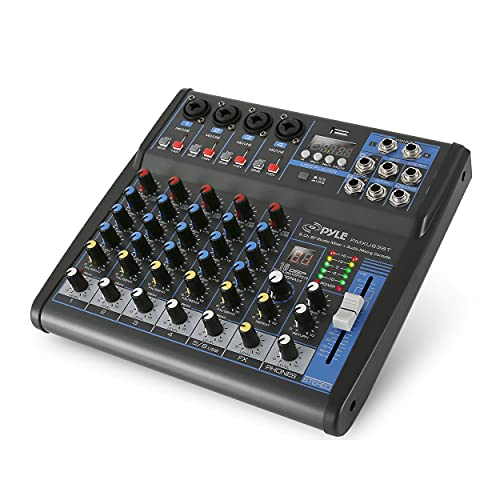
- Six channels with mic and stereo line inputs
- Bluetooth, USB, flash reader, and MP3 playback
- 48V phantom power and 3-band EQ
Best For: Small live gigs, DJ setups, and karaoke
Versatile Compact Choice – Yamaha MG06X
The Yamaha MG06X is a practical choice among compact audio mixers when you need microphone inputs, stereo line connectivity, built-in effects, and a familiar analog layout. Its six-channel design fits small recording, rehearsal, and performance setups.
Best For: Small setups needing two microphone preamps, stereo line inputs, and onboard effects.
Pros:
- Six-channel layout with two microphone preamps and four dedicated stereo line channels
- Built-in digital effects and EQ provide useful sound-shaping options
- Compact 5.9-by-7.9-by-2.4-inch form factor
- XLR output and 48V specification support flexible mixer connections
Cons:
- It is an analog mixer rather than a dedicated multitrack USB recording interface
- Its six-channel capacity may be limiting for larger productions
Choose the MG06X if you want a compact audio mixer with more input flexibility than a basic line mixer and the convenience of integrated effects.
Simple Line Submixer – FIFINE N5
The FIFINE N5 is one of the most compact audio mixers for combining up to four line-level sources with straightforward independent volume controls. Its metal enclosure and low-profile design suit keyboard rigs, desktop systems, and simple submixing tasks.
Best For: Mixing keyboards, guitars, basses, or other line-level sources into a single stereo or mono output.
Pros:
- Four independent channels with separate volume controls
- Heavy-duty metal enclosure in a very small format
- Designed for low-noise mixing of line-level signals
- Supports stereo or mono operation depending on cable configuration
Cons:
- TRS/TS cables are not included
- It does not provide microphone preamps or onboard EQ and effects
- Correct stereo or mono cable selection is required for the intended operation
The N5 is best viewed as a focused line mixer: compact, easy to adjust, and well suited to combining several sources before sending them to another mixer or amplifier.
Streaming-Ready Mixer – Behringer XENYX 802S
Behringer XENYX 802S Premium Analog 8-Input Mixer with USB Streaming Interface
Check Price On AmazonThe Behringer XENYX 802S adds USB connectivity to a compact analog mixer, making it a useful option for streaming, podcasting, and computer-based recording. It can also mix PC or gaming audio directly into the streaming output.
Best For: Streamers, podcasters, and creators who need analog mixing with a stereo USB audio interface.
Pros:
- Eight-input analog mixer provides more routing capacity than basic four-channel models
- Stereo USB audio interface connects to a computer or mobile device
- Supports direct mixing of PC or gaming sounds into the streaming output
- Includes XLR, TRS, and RCA output connectivity
Cons:
- The supplied notes do not specify physical dimensions suited to a particularly small desktop footprint
- USB audio is described as stereo rather than multitrack
- Its broader connectivity may be more than needed for a simple line-mixing setup
The XENYX 802S stands out when a compact audio mixer also needs to serve as a computer-connected streaming hub, especially for setups combining microphones, instruments, and playback audio.
Broadcast-Focused Mini Mixer – Mackie 402VLZ4
The Mackie 402VLZ4 is a compact audio mixer built around two Onyx microphone preamps and four line inputs. Its high-headroom, low-noise design makes it a strong fit for podcasts, small studios, broadcast work, and other desktop setups.
Best For: Podcasts, broadcast applications, and small desktop systems needing quality mic preamps.
Pros:
- Two Onyx mic preamps with phantom power
- Four line inputs complement the two microphone inputs
- High headroom, low noise, and improved RF rejection for broadcast use
- Main outputs include both 1/4-inch and RCA connections
Cons:
- It requires the included external power adapter
- Four total channels may not suit larger multi-source setups
- The supplied notes do not list a USB interface
The 402VLZ4 is a sensible pick when clean microphone preamps and broadcast-oriented performance matter more than USB connectivity or a large channel count.
Balanced Control – Yamaha MG06
The Yamaha MG06 is a practical choice among compact audio mixers when you want six inputs, quality microphone preamps, and straightforward analog control. Its three-band EQ, high-pass filters, and one-knob compressors make it useful for shaping vocals and instruments without a complicated setup.
Best For: Small recording setups, lectures, and live performances that need six-channel analog mixing.
Pros:
- Six-channel layout with studio-grade D-PRE microphone preamps.
- Three-band EQ and high-pass filters help refine the mix and reduce unwanted noise.
- One-knob compressors provide simple control for vocals, guitars, bass, and snare.
- Rugged, impact-resistant powder-coated metal chassis.
Cons:
- No USB connectivity for direct computer recording.
- Analog operation may require additional equipment for computer-based workflows.
The MG06 is a strong fit if durable construction and hands-on sound shaping matter more than onboard USB features. Its compact format and flexible tone controls keep it useful for both basic production and small event systems.
Simple Signal Hub – Mackie Mix5
The Mackie Mix5 is one of the most straightforward compact audio mixers for basic playback, recording, and small sound systems. It combines a mic/line input, stereo line inputs, RCA connectivity, phantom power, and a compact 1.4-pound design.
Best For: Simple desktop mixing, playback, small presentations, and setups using condenser microphones.
Pros:
- Five-channel design with a mic/line input and two stereo 1/4-inch line inputs.
- Dedicated stereo RCA inputs and outputs support playback or recording.
- Phantom power supports studio condenser microphones.
- Compact, lightweight housing with high-headroom, low-noise performance.
Cons:
- Two-band EQ offers less tone-shaping control than mixers with three-band EQ.
- No USB connectivity is listed for direct computer integration.
- Limited to one mic/line input.
The Mix5 makes sense when you need a small, uncomplicated mixer with useful RCA connections and basic tone control. It is less suited to larger multi-microphone arrangements, but its simple layout keeps everyday routing manageable.
Instrument-Ready Mixing – Allen & Heath ZED-6
The Allen & Heath ZED-6 stands out among compact audio mixers for its combination of high-quality preamps, HiZ instrument inputs, and hands-on tone shaping. Its six-input layout includes microphone, line/instrument, and stereo sources, making it especially adaptable for small music setups.
Best For: Musicians and compact recording or performance rigs connecting microphones, guitars, basses, and stereo sources.
Pros:
- GS-Pre microphone preamps provide low noise, high headroom, and clean gain.
- Two HiZ connections allow direct connection of electric, acoustic, or bass guitars.
- High-pass filtering and three-band MusiQ EQ are available on mono inputs.
- Neutrik XLR connectors and a 60mm main level fader support hands-on control.
Cons:
- No USB connectivity is listed for direct computer recording.
- At 2.8 pounds, it is heavier than some smaller compact mixers.
- The six-input format may be limiting for larger ensembles.
The ZED-6 is a compelling option when direct instrument connection and musical EQ control are priorities. Its sturdy construction and quality connectors also make it a practical choice for portable music rigs.
Feature-Rich Pick – Compact Podcast Mixer
This four-channel console is one of the more versatile compact audio mixers for podcasting, recording, and streaming. It combines microphone support, hands-on EQ, built-in effects, USB connectivity, and Bluetooth in a small corded-electric design.
Best For: Podcasters, streamers, and home-studio users who need microphone inputs, phantom power, and onboard effects.
Pros:
- 48V phantom power supports condenser microphones.
- PAD and an 80Hz high-pass filter help manage loud sources and low-frequency rumble.
- 99 DSP effects provide selectable reverb, delay, and other sound treatments.
- USB recording, OTG support, and Bluetooth 5.0 add flexible playback and streaming options.
Cons:
- Its four-channel layout offers less expansion than larger mixers.
- Bluetooth streaming is specified for distances within 15 feet.
Choose this model when built-in processing and direct computer or mobile connectivity matter more than having a larger channel count. The 3-band EQ on each channel also gives you useful hands-on control for voice and other sources.
Minimalist Line-Level Pick – Jyker 4-Channel Line Mixer
The Jyker JMAMP6 is a particularly small option among compact audio mixers, built for combining line-level sources rather than connecting microphones directly. Independent level controls, mono/stereo switching, and USB-C power make it suited to straightforward routing in a studio, rehearsal, or multimedia setup.
Best For: Users mixing stereo or mono line-level devices, instruments, media players, or audio interfaces.
Pros:
- Four channels accept 1/4-inch TS mono or TRS stereo sources.
- Each channel has its own level control for balancing sources.
- Mono/stereo switches support flexible signal routing.
- USB-C 5V power and a ground screw help simplify setup and reduce hum.
Cons:
- It is designed for line-level sources and does not list microphone inputs or phantom power.
- There are no onboard EQ controls or effects listed in the supplied specifications.
This is a focused choice for combining existing line outputs without adding a larger console. Its low-noise design, separate left/right mix buses, and compact dimensions make it practical where space and simple routing are priorities.
Versatile Live-Sound Pick – Pyle 6-Channel Bluetooth Mixer
The Pyle PMXU63BT offers six channels and a broad set of connectivity options for live sound, DJ use, recording, and karaoke. As compact audio mixers go, it adds useful playback features—including Bluetooth, USB, a flash reader, and a built-in MP3 player—alongside microphone and stereo line inputs.
Best For: Small live performances, DJs, karaoke setups, and users who want wired and wireless playback in one mixer.
Pros:
- Six channels provide more input capacity than the four-channel options here.
- Mic and stereo line inputs include 48V phantom power and 3-band EQ.
- Bluetooth, USB, flash-reader, and MP3 playback support flexible source options.
- Steel chassis and sealed rotary controls are designed for regular stage use.
Cons:
- At 9.7 by 9.3 by 2.6 inches and 3.8 pounds, it is less portable than smaller mixers.
- The supplied details specify 16-bit DSP effects rather than the larger effects library offered by some compact models.
The PMXU63BT is a strong fit when you need extra channels and built-in media playback without moving to a much larger board. Its multi-voltage power supply also supports use with compatible power arrangements from 100V to 240V.
How We Picked the Best Compact Audio Mixers
We evaluated these Compact Audio Mixers for the features that matter most in real-world setups: usable input count, microphone and line-level connectivity, preamp performance, phantom power, USB or computer integration, onboard effects, portability, and control layout. We also considered whether each mixer is better suited to recording, podcasting, streaming, rehearsals, DJ use, or basic live sound.
Because “compact” can describe everything from a simple line mixer to a small console with microphone preamps, this list includes several distinct categories. Always confirm the exact input type and output connections before buying.
Quick Comparison
| Best For | What to Prioritize | Recommended Type |
|---|---|---|
| Home recording | Clean preamps, phantom power, direct monitoring | Compact analog mixer with USB or reliable main outputs |
| Podcasting and streaming | Multiple mic inputs, USB connectivity, monitoring controls | USB mixer or podcast-focused console |
| Live rehearsals | Simple routing, durable construction, enough inputs | Four- to eight-input analog mixer |
| DJ or playback mixing | Stereo line inputs, independent level controls, Bluetooth or USB playback | Compact line mixer or multimedia mixer |
| Small performances | Phantom power, effects, flexible outputs | Mixer with microphone preamps and onboard DSP |
Key Buying Factors for Compact Audio Mixers
Inputs and Channel Layout
Count the sources you need today, then leave room for one or two additions. XLR inputs are important for microphones, while 1/4-inch line inputs handle instruments, keyboards, interfaces, and playback devices. Check whether stereo channels share controls or use separate mono inputs.
Phantom Power and Preamps
Condenser microphones require 48V phantom power, but not every compact mixer provides it, and some apply it globally rather than per channel. Look for quiet preamps and sufficient gain if you plan to use dynamic microphones or record vocals and speech.
USB, Outputs, and Monitoring
A USB connection can make computer recording and streaming much easier, but verify whether it supports playback, recording, or both. Dedicated headphone monitoring, main outputs, control-room outputs, and monitor mixes are valuable when you need to hear a blend different from the audience or recording feed.
Effects, Size, and Build
Built-in reverb and other DSP effects can be useful for live vocals and quick streams, while a simpler mixer may be preferable for transparent recording. Compare the physical footprint, knob spacing, power requirements, and chassis construction with your available workspace and travel needs.
Who Should Buy Which Compact Audio Mixers?
Choose a Yamaha MG06X or a similar small analog mixer if you want straightforward operation with compact dimensions and useful vocal effects. A basic Yamaha MG06, Mackie Mix5, or Allen & Heath ZED-6 is a strong fit for buyers who value uncomplicated analog control and dependable channel management.
The Behringer XENYX 802S is worth considering when USB streaming and a larger channel count are priorities. The Mackie 402VLZ4 suits users who want a particularly compact mixer with quality-focused preamps. For simple stereo line-level sources, the FIFINE or Jyker models may be more appropriate than a full microphone console.
Podcast creators and home-studio beginners should focus on models with XLR inputs, phantom power, USB connectivity, and easy headphone monitoring. Buyers seeking maximum built-in features on a budget may prefer a podcast-oriented or Pyle multimedia mixer, but should carefully verify recording behavior, noise performance, and control flexibility before purchase.