
Choosing the right DI box can make a live keyboard rig cleaner, quieter, and easier for a sound engineer to manage. Stereo outputs, ground loops, connection length, and available headroom all matter when keyboards share a busy stage.
We’ve gathered 10 options ranging from compact single-channel passive boxes to dual-channel stereo models, then outlined the features that matter most for dependable live use.
Best 10 Di Boxes for Live Keyboards Picks for 2026
Best Stereo Keyboard Pick
Mackie MDB-2P Passive Stereo DI Box

- Dual 1/4-inch inputs for stereo keyboards
- Ground lift and 15 dB pads
- Passive, no-power steel construction
Best For: Stereo keyboards, DJ rigs, and backing-track setups
Best Premium Two-Channel Option
Radial ProD2 Passive 2 Channel Direct Box

- Two-channel passive stereo design
- Isolation transformer and lift switch
- 15 dB pad for stronger signals
Best For: Stereo keyboard rigs needing transformer isolation
Best Active and Rechargeable Choice
Dual-Input Active Stereo DI Box

- Stereo or mixed-mono input operation
- Thru and stereo XLR outputs
- USB-C or 9V battery power
Best For: Flexible live sound and recording setups
Best Simple Mono Pick
Radial Pro DI Passive Direct Box

- Passive mono operation
- Custom transformer and rugged I-beam build
- Works with keyboards and professional consoles
Best For: Mono keyboard feeds in live or studio systems
Best Stereo Value
Bolanle DB2 Passive 2-Channel DI Box

- Dual channels for stereo keyboard signals
- Ground lift helps reduce hum
- Three selectable attenuation settings
Best For: Stereo live keyboard and synthesizer rigs
Best Feature Set
ART DualZDirect Passive Direct Box

- Two-channel passive transformer design
- No battery required
- Includes attenuation, filter, phase, and ground lift controls
Best For: Flexible stereo keyboard and live audio setups
Best Compact Simplicity
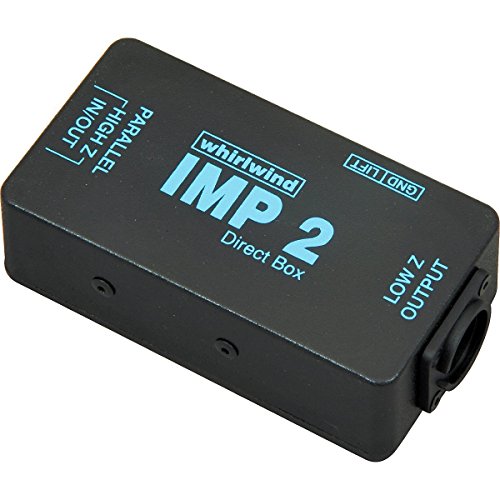
- Single-channel format for simple setups
- Converts unbalanced signals to balanced mic level
- Compact, durable, and passive
Best For: Mono keyboard outputs and economical live rigs
Flexible Signal Control
Livewire SPDI Passive Direct Box

- High-impedance 1/4-inch input and throughput
- Balanced floating XLR output
- Variable attenuation and ground lift
Best For: Live keyboard rigs needing level and grounding control
Two-Input Routing

- Passive unbalanced-to-balanced conversion
- Attenuation and ground-lift switches
- Rugged housing for live use
Best For: PA, club, monitor, and DJ systems
Keyboard-Ready Basics

- 1/4-inch input and through jacks
- Balanced XLR output
- Pad and ground-lift switches
Best For: Simple passive keyboard and guitar setups
Best Stereo Keyboard Pick – Mackie MDB-2P Passive Stereo DI Box
For players comparing DI boxes for live keyboards, the Mackie MDB-2P is a practical stereo solution with dual 1/4-inch inputs. Its passive design needs no power, while ground lift and 15 dB pads help address hum and hot keyboard signals before they reach the mixer.
Best For: Stereo keyboards, DJ rigs, and backing-track setups that need a passive, road-ready DI.
Pros:
- Dual high-impedance 1/4-inch inputs support stereo sources.
- Ground lift helps reduce ground-loop buzz and noise.
- 15 dB pads accommodate hot signals without distortion.
- Passive operation requires no power.
Cons:
- Passive design may be less suitable when an active DI is specifically required.
- It is intended for two-channel stereo use rather than a compact mono-only setup.
The MDB-2P stands out when a keyboard rig needs two channels, straightforward hum control, and minimal setup. Its steel case and no-power design also suit regular live use.
Best Premium Two-Channel Option – Radial ProD2 Passive 2 Channel Direct Box
The Radial ProD2 is a two-channel passive choice for musicians seeking dependable DI boxes for live keyboards. It combines stereo operation with an isolation transformer, lift switch, and 15 dB pad for flexible signal handling.
Best For: Keyboard players and other stereo sources that need passive two-channel direct injection with transformer isolation.
Pros:
- Two-channel passive design supports stereo keyboard signals.
- Isolation transformer helps separate connected audio paths.
- Lift switch provides useful grounding flexibility.
- 15 dB pad helps manage stronger input levels.
Cons:
- It weighs 1.2 pounds, making it less lightweight than some compact options.
- Passive operation does not provide active DI features or onboard power.
With its dedicated stereo layout and transformer-based isolation, the ProD2 is a focused option for live keyboard systems where channel separation and grounding flexibility matter.
Best Active and Rechargeable Choice – Dual-Input Active Stereo DI Box
This active unit gives live keyboard players more connection and power flexibility than a basic passive box. Its dual high-impedance inputs can run in stereo or combine a mono source, with 1/4-inch thru outputs, stereo XLR outputs, ground lift, and hum cancellation.
Best For: Live sound and recording setups needing active stereo routing, thru outputs, and flexible power options.
Pros:
- Supports stereo input or mixed mono operation.
- Provides dual 1/4-inch thru outputs and stereo XLR outputs.
- Can use 5V USB-C power or a 9V GF22 battery.
- Ground lift and hum-cancellation features support cleaner connections.
Cons:
- The 9V battery is not included.
- Its 2.01-pound weight is relatively substantial for a DI box.
- Active operation requires attention to charging or battery power.
For keyboardists who need routing flexibility beyond a standard passive box, this model offers useful thru connections and two power methods. It is especially adaptable for live sound and recording applications.
Best Simple Mono Pick – Radial Pro DI Passive Direct Box
The Radial Pro DI is a straightforward mono option for live keyboards and other instruments. Its passive design uses a custom transformer and rugged I-beam construction, making it a focused choice when one keyboard output needs to feed a professional console or snake system.
Best For: Mono keyboard, drum-machine, bass, or acoustic-guitar connections in live or studio setups.
Pros:
- Passive mono design keeps operation simple.
- Custom transformer supports direct connection to professional audio systems.
- Rugged I-beam construction is suited to live and studio use.
- Compatible with keyboards, bass, acoustic guitars, and drum machines.
Cons:
- Mono operation does not accommodate a stereo keyboard signal by itself.
- Passive design offers fewer active features than a powered DI.
- The supplied specifications identify XLR connectivity but provide limited connector detail.
The Pro DI makes the most sense for a single-channel keyboard feed where durability and simple transformer-based connection are priorities. Stereo players will need two units or a dedicated two-channel model.
Best Stereo Value – Bolanle DB2 Passive 2-Channel DI Box
For musicians comparing DI boxes for live keyboards, the Bolanle DB2 is a practical stereo option. Its two passive channels accept high-impedance instrument signals and provide balanced XLR outputs, while selectable attenuation helps accommodate different output levels.
Best For: Keyboardists and other performers who need a dual-channel DI for stereo live setups, studio mixing, or reamping.
Pros:
- Two channels suit stereo keyboards and synthesizers.
- Ground-lift switch helps reduce ground-loop hum.
- Selectable 0, -20, and -40 dB attenuation helps prevent overload.
- Road-ready, scratch-resistant construction.
Cons:
- Passive design may require more careful level matching with some sources.
- It is larger and heavier than a basic single-channel DI.
The DB2 stands out when stereo connectivity and flexible signal control matter more than having the smallest possible box. Its balanced outputs and ground-lift function are useful additions for live keyboard rigs.
Best Feature Set – ART DualZDirect Passive Direct Box
The ART DualZDirect is a strong choice among DI boxes for live keyboards when you want two channels and extra signal-shaping controls. Its fully passive transformer design converts high-impedance inputs to balanced outputs without batteries, making it well suited to straightforward live setups.
Best For: Keyboard players and audio setups needing dual-channel passive conversion with attenuation, filtering, phase, and ground-lift controls.
Pros:
- Two channels support stereo keyboard connections.
- Fully passive operation requires no battery.
- Includes 0, -20, and -40 dB input attenuation.
- Offers low-pass filter, phase invert, and ground-lift switches.
Cons:
- The additional switches may be unnecessary for simple keyboard rigs.
- Its tabletop format is less compact than a single-channel DI.
With its broad set of controls, the DualZDirect gives live engineers more ways to manage keyboard levels and signal issues. It is especially appealing when a stereo passive DI must handle varied sources and venue conditions.
Best Compact Simplicity – Whirlwind IMP 2 Passive DI
The Whirlwind IMP 2 keeps the DI task simple with a single passive channel. For live keyboard users who need to convert an unbalanced line- or instrument-level signal to a low-impedance balanced mic-level feed, it offers a compact and economical approach.
Best For: Single-channel keyboard connections, compact live rigs, and users prioritizing straightforward operation and durability.
Pros:
- Converts unbalanced line or instrument signals to balanced mic-level output.
- Single-channel design has a small, practical footprint.
- Passive operation keeps the setup simple.
- Riveted TRHL transformer supports a durable construction.
Cons:
- Only one channel is available, so stereo keyboards need two units.
- The supplied notes do not list attenuation, ground lift, or other switching controls.
The IMP 2 is a sensible pick when reliability and economy matter more than stereo operation or advanced controls. Its single-channel format works well for a mono keyboard output or other individual source.
Flexible Signal Control – Livewire SPDI Passive Direct Box
For musicians comparing DI boxes for live keyboards, the Livewire SPDI offers practical signal control in a passive design. It accepts a high-impedance 1/4-inch input, provides a 1/4-inch throughput, and sends a balanced, floating low-impedance XLR output to a mixer or PA.
Best For: Keyboard players and live rigs that need attenuation and ground-lift options.
Pros:
- High-impedance 1/4-inch input and through output support instrument-level connections.
- Balanced, floating XLR output ignores +48V phantom power.
- Variable attenuation accommodates a range of input levels.
- Lift mode disconnects the input-to-XLR ground connection to help address ground-related noise.
Cons:
- As a passive DI, it does not provide powered signal boosting.
- Its feature set is focused on basic routing, attenuation, and grounding rather than additional outputs.
The SPDI is a straightforward choice when your keyboard setup needs dependable balanced output with adjustable attenuation and flexible grounding control.
Two-Input Routing – Passive DI Box/Merge Function
This passive DI box is worth considering for live keyboards and other setups that need signal conversion with a merge-style two-input function. It converts high-impedance unbalanced signals to low-impedance balanced XLR output and includes controls aimed at level matching and hum reduction.
Best For: Live sound, PA, monitor, club, and DJ systems needing passive conversion and flexible routing.
Pros:
- Converts unbalanced high-impedance signals to balanced XLR output to help reduce noise and signal loss.
- Ground-lift switch can disconnect the input and output ground connection to reduce hum from connected equipment.
- Attenuation switch supports level matching with connected gear.
- High-strength housing is designed for steady use in live environments.
Cons:
- The supplied notes do not specify the exact number or type of input connectors for the merge function.
- It is passive, so it does not offer active gain or powered signal enhancement.
Choose this model if your keyboard rig benefits from passive balanced conversion, an attenuation switch, and a ground lift in a rugged enclosure.
Keyboard-Ready Basics – Yovus DB-1 Passive DI Box
The Yovus DB-1 is a compact option for shoppers looking at DI boxes for live keyboards. Its 1/4-inch input and through jacks accommodate a keyboard signal, while the balanced XLR output connects to compatible live-sound equipment without requiring a power source.
Best For: Keyboard and guitar players who need simple passive routing with pad and ground-lift controls.
Pros:
- Designed for 1/4-inch instrument input and through connections.
- Balanced XLR output supports connection to live audio equipment.
- Pad switch helps soften hot sources.
- Ground lift helps address buzz associated with electrical grounding issues.
Cons:
- It has one output channel, limiting routing flexibility.
- No power is required, but the passive design does not provide active gain.
With its straightforward connections, metal enclosure, pad, and ground lift, the DB-1 is a practical basic DI for keyboard rigs that do not need extra routing features.
How We Picked the Best Di Boxes for Live Keyboards
We focused on practical stage requirements rather than specifications alone. The selection includes passive and dual-channel designs, with attention to stereo compatibility, input and output layout, ground-lift controls, attenuation options, transformer isolation, construction, and ease of integration with mixers or stage boxes.
For keyboard players, a useful DI should convert the instrument’s unbalanced output to a balanced signal that can travel through long XLR runs with less susceptibility to noise. Dual-channel units are especially valuable when the keyboard’s left and right outputs need to remain stereo.
Quick Comparison
| Type | Best Use | What to Prioritize |
|---|---|---|
| Dual-channel passive | Stereo keyboards and electronic instruments | Two matched channels, ground lift, strong headroom |
| Single-channel passive | Mono keyboards, backup rigs, and simple setups | Transformer isolation, rugged enclosure, clear output |
| Active DI | Low-output or battery-powered sources | Power requirements, gain handling, and noise performance |
| DI with attenuation | Hot keyboard or line-level signals | Pad options and adequate input headroom |
Key Buying Factors for Di Boxes for Live Keyboards
Stereo or Mono Operation
Many keyboards provide separate left and right outputs for stereo effects and wider patches. A two-channel DI box preserves that image while using only one compact stage device. A single-channel model can work for mono operation, but using two matching units may be necessary for a stereo rig.
Passive Versus Active Circuitry
Passive DI boxes are typically simple, durable, and do not require batteries or phantom power. They are often a strong choice for keyboards with healthy output levels. Active models can offer useful flexibility with lower-output sources, but confirm how they are powered and whether the design accommodates the keyboard’s signal level.
Ground Lift and Isolation
Ground loops can create hum when keyboards, amplifiers, mixers, and other powered equipment share different electrical paths. Transformer isolation and a ground-lift switch can help resolve this common live-sound problem without unsafe wiring changes.
Headroom and Attenuation
Some keyboards produce a comparatively strong line-level signal. Look for generous headroom or a pad if the console input clips even with its gain control turned down. An attenuation switch is also useful when one DI must accommodate several instruments.
Build and Connections
Prioritize sturdy metal housings, secure jacks, clearly labeled controls, and balanced XLR outputs. Check the input format before buying: some units accept one 1/4-inch input per channel, while others add merge, reamp, or unbalanced-through options.
Who Should Buy Which Di Boxes for Live Keyboards?
Choose a dual-channel passive model if you regularly perform with stereo keyboard patches and want a straightforward, low-maintenance setup. A compact single-channel DI suits mono rigs, spare equipment, or players who send only one keyboard output to front of house. Choose a model with attenuation for hot outputs or varied instruments, and consider active circuitry when you need additional flexibility for lower-level sources.
Before ordering, confirm the number of channels, required cables, phantom-power expectations, and available space on your pedalboard or stage tray. The best Di Boxes for Live Keyboards are the ones that match your signal path and remain predictable under real performance conditions.