
A dependable DI box can make the difference between a clean, consistent stage signal and a troublesome mix filled with hum, noise, or weak levels. The right model matches your instrument, outputs, channel count, and live setup.
We’ve selected 10 DI boxes for live performance across passive, active, stereo, and multi-channel designs, helping musicians, bands, and sound engineers find a practical fit for their rigs.
Best 10 Di Boxes for Live Performance Picks for 2026
Reliable Passive Pick

- Passive mono design with custom transformer
- Rugged stainless-steel I-beam construction
- Works with guitars, bass, keyboards, and drum machines
Best For: Durable mono live or studio setups
Flexible Stage Signal Control

- Passive 1/4-inch to balanced XLR conversion
- Ground lift and two-stage signal pads
- Thru output supports pedals or amplifiers
Best For: Guitar, bass, and keyboard stage rigs
Budget Roadworthy Essential
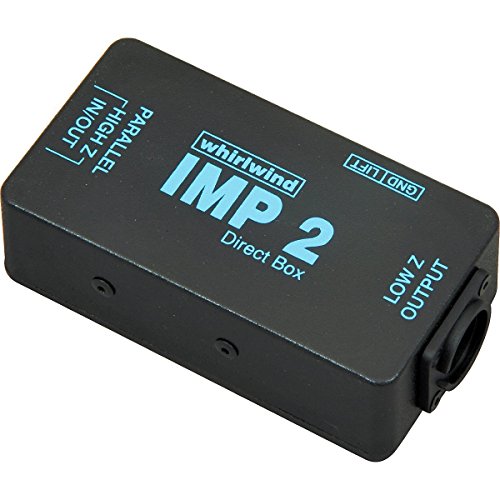
- Compact single-channel passive DI
- Converts unbalanced signals to balanced mic level
- Riveted TRHL transformer and economical design
Best For: Affordable portable single-instrument rigs
Stereo Keyboard and DJ Specialist

- Dual 1/4-inch inputs for stereo sources
- Ground lift and 15 dB pads
- Passive, power-free design in a roadworthy steel case
Best For: Stereo keyboards, DJ rigs, and backing tracks
Flexible Two-Channel DI

- Two-channel balanced XLR conversion
- Mono, stereo, and Link modes
- Attenuation and ground lift
Best For: Flexible two-channel live rigs
Simple Passive Routing

- High-impedance 1/4-inch input and throughput
- Balanced floating XLR output
- Variable attenuation and Lift/GND modes
Best For: Straightforward passive instrument routing
Isolated Stereo DI

- Passive two-channel stereo design
- Isolation transformer for signal separation
- Ground Lift switch and 15 dB pad
Best For: Stereo live sources needing passive isolation
Flexible Dual-Channel Control

- Two passive DI channels
- No battery required
- Attenuation, filter, phase, and ground-lift controls
Best For: Two-channel live rigs needing flexible signal management
Simple Hum-Free Connections
Pyle Premium Direct Injection Box

- Passive impedance transformer
- Supports 1/4-inch and XLR connections
- Designed for buzz and hum cancellation
Best For: Basic instrument and line-source connections to PA systems
Rugged Stage Isolation

- Passive transformer isolation
- Thru output for amp routing
- Ground Lift for reducing ground-loop noise
Best For: Instrument players routing a signal to both amp and PA
Reliable Passive Pick – Radial Pro DI
The Radial Pro DI is a rugged passive option for live performance setups involving acoustic guitars, bass, keyboards, drum machines, and professional mixing systems. Its transformer-based design converts instrument signals for XLR-connected sound systems without wireless operation.
Best For: Musicians and venues needing a durable mono DI box for live or studio use.
Pros:
- Passive mono design with a custom transformer
- Rugged stainless-steel I-beam construction
- Suitable for guitars, bass, keyboards, and drum machines
- Includes a listed two-year warranty
Cons:
- Mono operation does not suit stereo sources
- No wireless functionality
- Listed as not waterproof
The Radial Pro DI emphasizes straightforward, durable signal conversion. It is a strong fit when reliability and broad instrument compatibility matter more than stereo operation or extra features.
Flexible Stage Signal Control – Samson MD1 Pro
The Samson MD1 Pro is a practical choice for live performance DI boxes when you need to connect a 1/4-inch instrument or line source to a balanced XLR input. Its passive signal path, ground lift, pads, and Thru output support flexible stage and studio routing.
Best For: Guitar, bass, and keyboard players who need ground-noise control and an amplifier or pedal Thru connection.
Pros:
- Converts unbalanced 1/4-inch signals to balanced mic-level XLR
- Requires no phantom power or batteries
- Ground lift and -15dB/-30dB pads help manage hum and hot signals
- Thru output sends a dry signal to pedals or an amplifier
Cons:
- Listed as a tabletop-mounted unit rather than a rack device
- Warranty information may require contacting the seller or manufacturer
- Its 1.3-pound steel chassis is heavier than some compact options
With more routing and signal-control features than a basic passive DI, the MD1 Pro is well suited to performers who need to feed both a mixer and stage amplifier while keeping the setup simple.
Budget Roadworthy Essential – Whirlwind IMP 2
The Whirlwind IMP 2 is a compact passive DI box for live performance setups that need dependable conversion from an unbalanced line or instrument signal to a low-impedance balanced mic signal. It focuses on essential functionality, durability, and an economical footprint.
Best For: Performers and small production setups seeking an affordable single-channel DI box.
Pros:
- Passive transformer-based signal conversion
- Compact footprint for portable rigs
- Uses a TRHL transformer riveted to the chassis
- Designed for professional quality at an economical price
Cons:
- Only one channel
- Supplied notes do not list ground lift, pads, or a Thru output
- Fewer connection details are provided than for some competing models
The IMP 2 is a focused, no-frills solution. It makes the most sense when you want a small, durable passive DI for one instrument or line-level source without paying for additional controls.
Stereo Keyboard and DJ Specialist – Mackie MDB-2P
The Mackie MDB-2P is a stereo passive DI box designed for live performance sources such as stereo keyboards, DJ controllers, and backing-track rigs. Its dual 1/4-inch inputs, ground lift, and 15 dB pads help integrate high-impedance sources with a mixer while addressing hum and hot signals.
Best For: Stereo keyboards, DJ rigs, and backing-track systems that need two-channel passive conversion.
Pros:
- Two 1/4-inch high-impedance inputs for stereo sources
- Ground lift helps address ground-loop buzz
- 15 dB pads accommodate hot signals
- Passive design requires no power
Cons:
- Focused on stereo sources rather than a single-channel minimalist setup
- Supplied notes do not specify a dedicated Thru output
- Warranty is listed as one year and nontransferable
The MDB-2P is the strongest match here for performers who regularly run stereo material. Its dual-channel layout and signal-management controls make it more suitable for keyboards, DJ controllers, and backing tracks than a basic mono DI.
Flexible Two-Channel DI – Ultra-DI DI20
For live performance setups that need flexible routing, the Behringer Ultra-DI DI20 converts two unbalanced 1/4-inch TRS line inputs to balanced XLR outputs. Its mono, two-channel, stereo, and Link modes make it a versatile choice among DI boxes for live performance.
Best For: Performers and small live rigs needing two-channel operation, attenuation, and ground-loop control.
Pros:
- Handles two separate inputs and balanced XLR outputs.
- Supports mono, two-channel, stereo, and switchable Link modes.
- Switchable attenuation supports outputs rated up to 3,000 watts.
- Ground lift helps address typical ground-loop problems; power comes from phantom power or a 9V battery.
Cons:
- Its many operating modes may be more than a simple single-channel setup requires.
- Battery operation requires a 9V battery when phantom power is unavailable.
The DI20 is a strong fit when flexibility is more important than simplicity. Two channels, Link operation, attenuation, and dual powering options give it broad utility onstage.
Simple Passive Routing – Livewire SPDI
The Livewire SPDI is a passive direct box designed for straightforward instrument and line routing. With a high-impedance 1/4-inch input and throughput plus a balanced, floating XLR output, it is a practical option among DI boxes for live performance.
Best For: Musicians who need passive signal conversion with adjustable attenuation and selectable ground handling.
Pros:
- Provides a 1/4-inch high-impedance instrument input and output.
- Balanced, floating XLR output ignores +48V phantom power.
- Variable attenuation offers flexible input handling.
- Lift mode separates the input and XLR output ground connection, while GND mode maintains it.
Cons:
- Passive design may be less suitable when active DI features or battery operation are desired.
- Offers one primary input/output path rather than two-channel operation.
The SPDI focuses on essential passive DI duties without adding unnecessary complexity. Its attenuation and Lift/GND options are useful for adapting the box to different stage connections.
Isolated Stereo DI – Radial ProD2
The Radial ProD2 is a passive two-channel direct box built around transformer isolation. For performers comparing DI boxes for live performance, its stereo configuration, isolation transformer, Lift switch, and 15 dB pad target clean, practical stage integration.
Best For: Stereo instruments and live systems that benefit from passive transformer isolation.
Pros:
- Provides passive stereo, two-channel DI operation.
- Uses an isolation transformer for signal separation.
- Includes a ground Lift switch and 15 dB pad.
- Offers 1/4-inch and XLR connector compatibility.
Cons:
- Passive operation may not suit setups specifically requiring active DI power.
- The supplied notes do not list battery or phantom-power operation.
The ProD2 is well matched to stereo stage sources where transformer isolation and simple control are priorities. Its dual-channel design keeps a stereo signal path organized in a compact enclosure.
Flexible Dual-Channel Control – ART DualZDirect
For live performance setups that need two channels in one unit, the ART DualZDirect is a practical choice among DI boxes for live performance. Its passive transformer design requires no battery while offering attenuation, filtering, phase, and ground-isolation controls.
Best For: Performers and small production setups needing two passive DI channels with detailed signal-management options.
Pros:
- Two channels in a single tabletop unit
- No battery required due to the passive design
- Switchable 0, -20, and -40 dB input attenuation
- Low-pass filter, phase invert, and ground-lift controls
Cons:
- Passive operation may not suit setups requiring active DI gain
- Its additional controls may be more than needed for simple rigs
The DualZDirect stands out when you want flexible routing and signal control without adding a power requirement. Its two-channel format can also help keep a live rig compact.
Simple Hum-Free Connections – Pyle Premium Direct Injection Box
The Pyle Premium Direct Injection Audio Box is a compact passive option for DI boxes for live performance, especially when connecting guitars, basses, keyboards, or other unbalanced sources to a PA or mixer. Its impedance transformer and hum-cancellation design target cleaner signal connections.
Best For: Budget-conscious live performers connecting instruments, submixers, effects processors, or consumer audio sources to balanced or unbalanced equipment.
Pros:
- Supports 1/4-inch device connections
- Provides balanced and unbalanced XLR connectivity
- Designed to reduce buzz and hum
- Compact 1.8 x 3.3 x 5-inch enclosure
Cons:
- Single-channel design offers less routing flexibility
- Its feature set is more basic than a multi-control DI
Choose this Pyle model when straightforward instrument-to-PA connectivity is the priority. It covers common live-source connections in a small enclosure and adds ground-lift-based hum reduction.
Rugged Stage Isolation – Donner Special-I DI Box
The Donner Special-I is a straightforward passive choice among DI boxes for live performance, with transformer isolation for impedance and signal matching. It can send a thru signal to an amplifier while routing a balanced output to the PA, making it useful for stage setups.
Best For: Guitar, bass, and keyboard players who need a compact stage DI with thru routing and ground-loop protection.
Pros:
- Supports instrument and line-level unbalanced signals
- Converts them to low-impedance balanced microphone-level output
- Transformer isolation helps reduce hum and buzz
- Ground Lift and thru output support common stage routing
Cons:
- Single-channel design is not intended for multi-source setups
- Plastic construction may be less reassuring than a metal enclosure
The Special-I is a useful fit for performers who want simple amp-and-PA routing from one passive box. Its transformer and ground-lift features address common live-stage noise concerns without requiring active power.
How We Picked the Best Di Boxes for Live Performance
We focused on the features that matter most in real stage environments: balanced XLR output, reliable signal conversion, sturdy construction, grounding options, attenuation controls, and compatibility with instruments such as guitars, basses, keyboards, and playback devices. The selection includes simple one-channel boxes for individual performers as well as stereo and dual-channel models for keyboards, mixers, and more complex rigs.
Because passive and active DI boxes serve different purposes, this roundup includes both. Passive units are generally simple, durable, and well suited to high-output sources, while active designs can offer stronger impedance matching and better results with passive pickups or lower-output instruments.
Quick Comparison
- Best for general-purpose use: A rugged passive single-channel DI with ground lift and attenuation is a practical choice for most small and medium-sized stages.
- Best for keyboards and stereo sources: Choose a dual-channel or stereo DI to preserve left/right signals without using two separate boxes.
- Best for passive pickups: An active DI may provide better impedance matching and help retain clarity and dynamics.
- Best for demanding stage setups: Look for durable metal construction, clearly labeled controls, and dependable grounding options.
- Best for budget rigs: A basic passive DI can solve hum and connection problems without adding unnecessary complexity.
Key Buying Factors for Di Boxes for Live Performance
Passive or Active Design
Passive DI boxes typically require no battery or phantom power and are valued for simplicity and durability. Active models need a power source but can be a better match for low-output instruments, passive basses, acoustic-electric guitars, and sources requiring higher input impedance.
Channel Count and Connectivity
A single-channel box is usually enough for one guitar, bass, or mono source. Stereo keyboards, drum machines, mixers, and playback devices benefit from dual-channel designs. Check the available 1/4-inch inputs, XLR outputs, link or thru connections, and whether the layout suits your cable routing.
Ground Lift and Attenuation
Ground lift can help reduce hum caused by ground loops, while an attenuation pad prevents loud sources from overloading the DI input. These controls are especially useful when connecting active electronics, keyboards, amplifiers, or other high-output equipment.
Build Quality and Stage Practicality
Prioritize a strong enclosure, secure jacks, easy-to-read labeling, and controls that are unlikely to be changed accidentally. A compact footprint is useful, but durability and stable cable connections matter more for frequent gigging.
Who Should Buy Which Di Boxes for Live Performance?
Solo guitarists and bassists should start with a durable passive model if their instrument has a strong output and they want a straightforward connection to the mixing console. Players using passive pickups or acoustic-electric instruments may prefer an active DI for improved impedance matching and signal detail.
Keyboardists and electronic musicians should consider stereo or dual-channel options, especially when their instrument produces separate left and right outputs. Sound engineers and bands may benefit from buying several rugged single-channel units or a flexible multi-channel splitter for larger setups. For occasional home, rehearsal, or small-venue use, a budget passive DI with ground lift and attenuation can provide the essential benefits at a lower cost.