
Choosing among large format 3D printers means balancing build volume, print speed, chamber control, and automation. The right machine should match your parts, materials, and production needs.
This roundup focuses on models that stand out for generous build space, modern features, and practical owner value in 2026.
Best 10 Large Format 3d Printers Picks for 2026
Large-Format Speed Pick

- 400×400×400 mm build volume
- Up to 700 mm/s CoreXY printing
- WLAN multi-printer control
Best For: Print farms and large-part production
Industrial Chamber Choice
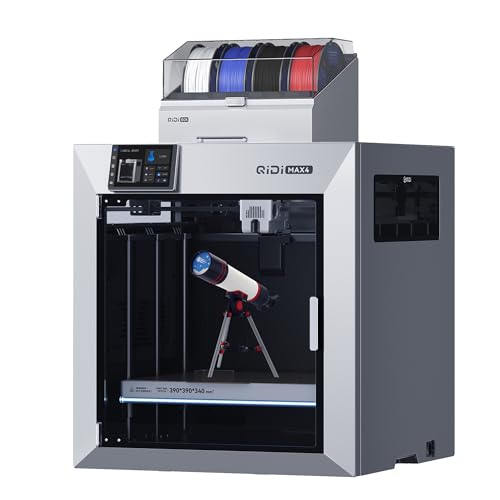
- 390×390×340 mm build volume
- 65°C active heated chamber
- AI camera with print monitoring
Best For: Engineering parts and controlled high-temp printing
Oversized Build Leader
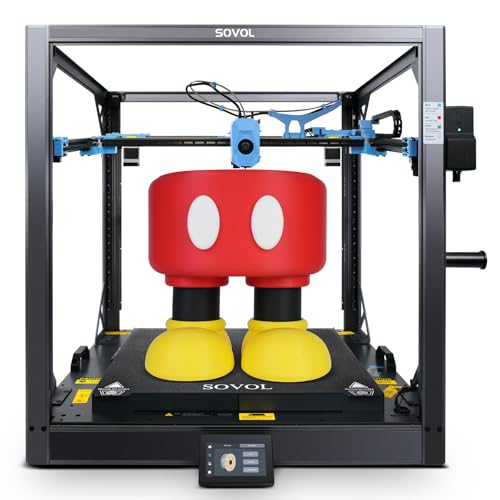
- Massive 500×500×500 mm build volume
- 700 mm/s speed with CoreXY motion
- HD camera with remote monitoring
Best For: Oversized prototypes and industrial-scale parts
Multi-Color Toolchanger Pick

- 4-toolhead 5-second tool changes
- Up to 5X less waste on color swaps
- 500 mm/s CoreXY printing
Best For: Multi-color and multi-material printing with less waste
Multicolor Large-Format Speed Pick

- 260 × 260 × 260 mm build volume
- Up to 16 colors with CFS expansion
- 600 mm/s speed with auto leveling
Best For: Makers wanting fast multicolor printing with easy setup
Industrial Multi-Material Large-Format Choice

- 4 toolheads with near-zero waste swapping
- 65°C heated chamber for advanced filaments
- CoreXY design rated up to 600 mm/s
Best For: Industrial users needing stable multi-material printing
Easy Multi-Color Large-Format Starter
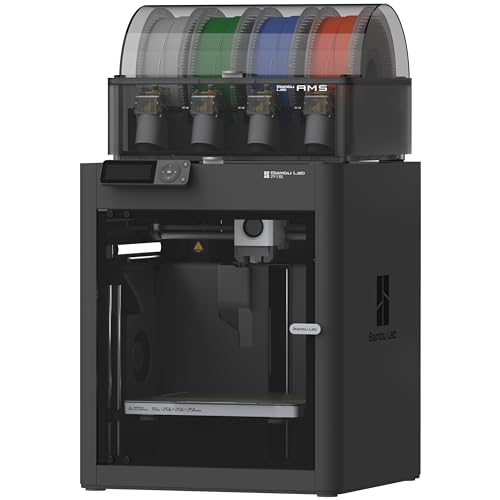
- Up to 16 colors with AMS support
- 500 mm/s speed with automatic leveling
- Fully enclosed and quick to set up
Best For: Users wanting fast, simple multicolor printing
Fast Color Precision
FLASHFORGE AD5X 4-Color CoreXY Printer

- Up to 4-color printing for vivid results
- CoreXY speed up to 600mm/s
- 1-click auto leveling and 300b0C extruder
Best For: Fast multi-color printing with easy setup
Large Build Flagship
Creality K2 Plus Combo 16-Color Printer

- 350x350x350mm build volume for large jobs
- Up to 16-color printing with linked CFS units
- 600mm/s speed plus dual AI cameras
Best For: Big builds with advanced multi-color automation
Large-Format Speed Pick – Creality Ender 5 Max
If you want a large format 3D printer that prioritizes speed and throughput, the Creality Ender 5 Max is built for exactly that kind of workflow. Its 400×400×400 mm build volume gives you room for oversized prototypes or batch parts, while the CoreXY motion system is rated up to 700 mm/s for fast production.
Best For: Print farms, businesses, and makers who need a big build area with fast output and grouped control.
Pros:
- Extra-large 400×400×400 mm build volume for big models or multiple parts at once
- CoreXY system with up to 700 mm/s printing speed
- WLAN multi-printer control and grouped management for print-farm use
- 64-point auto leveling with automatic Z-offset for easier first layers
Cons:
- Large, heavy machine at 68.9 pounds
- Best suited to users who can take advantage of its scale and speed
The Ender 5 Max stands out when you need volume, automation, and fast turnaround in one machine. Its rigid frame, dual-gear extruder, and 1000W rapid-heating bed support reliable long-job printing across a wide range of materials.
Industrial Chamber Choice – QIDI Max4 Combo
The QIDI Max4 Combo is a serious large format 3D printer for users who need both space and controlled printing conditions. Its 390×390×340 mm build area is large enough for industrial parts and custom prototypes, and the 65°C heated chamber helps support demanding materials with better stability.
Best For: Advanced users and professionals printing large parts, engineering materials, or multi-color projects.
Pros:
- 390×390×340 mm build volume for large industrial parts and molds
- 65°C active heated chamber for high-temperature materials
- Built-in AI camera for abnormal print detection and pause
- Expandable to 16-color and multi-material printing with QIDI BOX
Cons:
- Polar Cooler is not included and must be purchased separately
- Large 120-pound machine may be less convenient to move
For buyers focused on material range and print control, the Max4 Combo offers more than just volume. Closed-loop motors, a high-flow hotend, and a heated bed make it a practical option for demanding large-format workflows.
Oversized Build Leader – Sovol SV08 Max
If your priority is maximum size in a large format 3D printer, the Sovol SV08 Max pushes far into oversized territory with up to 500×500×500 mm of build space. It also pairs that volume with 700 mm/s speed and CoreXY motion, making it aimed at users who want big prints without a huge slowdown.
Best For: Makers and professionals printing full-scale prototypes, industrial parts, or oversized props.
Pros:
- Huge 500×500×500 mm print volume for very large projects
- Up to 700 mm/s printing with 40,000 mm/s² acceleration
- Eddy current scanning for high-speed contactless bed leveling
- Built-in HD camera with remote monitoring and Obico support
Cons:
- Heated chamber module is only reserved for future upgrade, not included
- Large-format machine size may exceed casual desktop needs
The SV08 Max is best viewed as a productivity tool for users who need both scale and speed. Its high-flow nozzle, 300°C hotend, and broad filament compatibility add flexibility for more advanced print jobs.
Multi-Color Toolchanger Pick – Snapmaker U1
The Snapmaker U1 is a large-format 3D printer in the sense that it gives you a full 270×270×270 mm build volume plus a flexible 4-toolhead system for advanced multi-color work. Instead of purging between colors, it swaps toolheads in about 5 seconds, which helps save time and material on complex prints.
Best For: Beginners, hobbyists, and professionals who want fast multi-color or multi-material printing.
Pros:
- 4-toolhead system with 5-second automatic tool changes
- Up to 5X less waste compared with traditional filament swapping
- True multi-material support for PLA, TPU, PETG, ABS, ASA, PA, PC, and more
- 500 mm/s CoreXY printing with automatic calibration features
Cons:
- Build volume is smaller than other large-format printers in this roundup
- Best value comes from using its multi-tool capabilities regularly
The U1 is less about sheer size and more about efficient, high-quality color and material changes. If your workflow values speed, low waste, and reliable calibration, it is a smart specialized choice.
Multicolor Large-Format Speed Pick – Creality K2 Combo
If you’re comparing large format 3D printers and want a fast, versatile machine without a long setup process, the Creality K2 Combo is worth a close look. It pairs a 260 × 260 × 260 mm build volume with multicolor printing support, so it suits users who want broad everyday capability and less post-processing.
Best For: Makers who want a quick-start, high-speed printer with multicolor output and a practical build volume.
Pros:
- Supports up to 16 colors with up to four CFS units connected.
- 600 mm/s printing speed and step-servo motor system for fast, controlled printing.
- 95% pre-assembled for a more plug-and-play setup.
- Smart auto leveling and AI camera help monitor print issues in real time.
Cons:
- Build volume is solid, but not as large as some other large-format systems.
- Full 16-color printing requires additional CFS units beyond the included one.
Overall, the K2 Combo is a strong fit if you want a balanced large-format printer that combines speed, automation, and multicolor capability in one package. It focuses on convenience and broad material support rather than sheer build size.
Industrial Multi-Material Large-Format Choice – FLASHFORGE Creator 5 Pro
For buyers shopping large format 3D printers with an emphasis on industrial materials and efficient multi-color production, the FLASHFORGE Creator 5 Pro stands out. Its enclosed CoreXY design, active heated chamber, and 4-toolhead system are aimed at users who need stable, high-speed production with less waste.
Best For: Users who need a professional printer for advanced materials, low-waste color changes, and stable high-speed output.
Pros:
- 4 independent toolheads and 7-second FlashSwap changer reduce purge waste.
- Active heated chamber up to 65°C supports ABS, PC, and PA.
- CoreXY structure, linear rails, and belts are built for 600 mm/s printing.
- HEPA 13 and activated carbon filtration help keep the workspace safer.
Cons:
- Focused on industrial workflows, so it may be more printer than casual users need.
- The notes emphasize material stability and speed rather than a very large build area.
If you want a production-minded machine for advanced filaments and efficient multi-material work, the Creator 5 Pro is a compelling option. Its strengths are control, stability, and reduced waste rather than hobby-first simplicity.
Easy Multi-Color Large-Format Starter – Bambu Lab P1S Combo
Among large format 3D printers, the Bambu Lab P1S Combo is a strong choice if you want quick setup and easy multi-color printing. It offers an enclosed design, automatic bed leveling, and support for up to 16 colors with the AMS, making it attractive for users who value convenience and speed.
Best For: Users who want an enclosed, easy-to-use printer with fast output and simple multi-color capability.
Pros:
- Supports up to 16 colors when paired with the AMS.
- 500 mm/s printing speed with high acceleration for fast jobs.
- Enclosed body helps improve printing with advanced filaments.
- Auto bed leveling and 15-minute setup make it beginner-friendly.
Cons:
- Build volume is practical, but not especially large for a true large-format category.
- Carbon/glass fiber reinforced polymers are not recommended.
The P1S Combo is best viewed as a fast, user-friendly enclosed printer that handles multicolor work well. If your priority is simple operation and reliable everyday performance, it makes a lot of sense.
Fast Color Precision – FLASHFORGE AD5X 4-Color CoreXY Printer
For buyers comparing large format 3d printers, the FLASHFORGE AD5X stands out more for speed and color versatility than sheer build size. Its CoreXY motion system reaches up to 600mm/s, while the 4-color printing setup, one-click auto leveling, and 3000b0C direct-drive extruder make it a strong fit for detailed, efficient production work.
Best For: Makers who want fast, multi-color printing with simple setup and reliable everyday operation.
Pros:
- Supports up to 4 colors simultaneously for vivid multi-color prints
- CoreXY design reaches up to 600mm/s with 20,000mm/sb2 acceleration
- 1-click auto leveling helps simplify first-layer setup
- 300b0C direct-drive extruder and multiple nozzle sizes add flexibility
Cons:
- Build volume is 220x220x220mm, so it is not a true extra-large-format machine
- Color printing and accessory features may be more than needed for simple single-material jobs
The AD5X is a practical pick if your priority is fast output, color capability, and user-friendly automation. It is less about oversized prints and more about getting consistent results quickly with a compact, efficient platform.
Space-Saving Multi-Material – FLASHFORGE AD5X IFS Productivity Booster
If you are shopping large format 3d printers, this FLASHFORGE AD5X variant is better described as a high-speed multi-color productivity machine with a compact footprint. It combines 4-color printing, up to 600mm/s speed, full auto leveling, and an Intelligent Filament System that supports multiple materials for flexible everyday production.
Best For: Creators who want multi-color, multi-material printing in a space-saving setup.
Pros:
- IFS enables multi-color and multi-material printing with supported filaments like PLA, TPU, PETG, and CF blends
- Full auto leveling helps keep first-layer adhesion consistent
- Up to 600mm/s speed with 20,000mm/sb2 acceleration
- Compact modular design saves space with four side-by-side filament spools
Cons:
- Build size is not listed as a large-format volume
- Feature set is geared toward color and material handling rather than oversized parts
This model makes sense if you want the AD5X platform with added filament-system flexibility. It is a strong fit for productive, multi-material printing, but shoppers needing a genuinely large build area should look elsewhere.
Large Build Flagship – Creality K2 Plus Combo 16-Color Printer
Among large format 3d printers, the Creality K2 Plus Combo is the most clearly built for bigger jobs. Its 350x350x350mm build volume, 16-color capability with linked CFS units, and 600mm/s high-speed motion make it suited to oversized parts, batch printing, and more demanding materials.
Best For: Users who want a true large-build machine with multi-color output and advanced automation.
Pros:
- Large 350x350x350mm build volume handles bigger models and batch jobs
- Up to 16-color printing with four CFS units linked together
- 600mm/s speed and 30,000mm/sb2 acceleration for fast production
- Dual AI cameras, 18 sensors, and auto bed-tilt correction add automation
Cons:
- At 70.4 pounds, it is significantly heavier than compact printers
- Advanced features may be more machine than casual users need
The K2 Plus Combo is the strongest fit here for buyers who truly need large-format capacity. It combines size, speed, and material support in a single platform, making it a compelling choice for ambitious projects and higher-throughput printing.
How We Picked the Best Large Format 3d Printers
We prioritized build volume, real-world speed, setup convenience, temperature management, and feature sets that matter for bigger prints. For Large Format 3d Printers, consistency is just as important as raw size, so we also looked for strong leveling systems, rigid frames, and dependable extrusion.
Quick Comparison
In this group, the main differences come down to use case. Some printers are best for maximum build size and fast prototyping, while others emphasize multi-color or multi-material printing, enclosed chamber control, or easier first-time setup. If you print functional parts, chamber temperature and stability matter more; if you print display models, color handling and workflow may matter more.
Key Buying Factors for Large Format 3d Printers
Build Volume Vs. Footprint
Don’t just chase the biggest advertised volume. Make sure the printer physically fits your workspace and that you can remove finished parts without hassle.
Speed and Acceleration
High speed is useful only if the printer can maintain quality at larger dimensions. Look for proven motion systems, sturdy frames, and good calibration features.
Enclosure and Chamber Heat
For ABS, ASA, nylon, and other warp-prone materials, a heated chamber or enclosed design can improve layer adhesion and reduce failures on tall parts.
Automation and Calibration
Auto leveling, camera monitoring, and guided setup reduce downtime, especially when you are printing big jobs that take many hours.
Material and Color Workflow
Multi-color and multi-material systems are valuable, but they add complexity. Choose them if your projects justify the extra material cost and maintenance.
Who Should Buy Which Large Format 3d Printers?
If you need maximum throughput for functional parts, choose a fast, rigid large-format machine with strong calibration and enclosure support. If you want big display pieces or color-rich models, a multi-color system may be the better fit. Makers moving up from a standard-bed printer should focus on easy setup and reliable auto-leveling first, then expand into advanced features later.
In short, the best choice depends on whether you value size, speed, material versatility, or ease of use most. The strongest Large Format 3d Printers are the ones that match your workflow, not just the ones with the largest number on the spec sheet.