
The right looper can help church musicians build full, expressive arrangements without adding more players to the platform. Whether you need simple verse-and-chorus layering or hands-free control over multiple parts, the best loop station should match your worship style, team size, and technical setup.
We’ve selected 10 loop stations spanning beginner-friendly pedals, stereo and dual-track units, drum-enabled models, and performance-focused workstations. Use the guide below to compare recording capacity, control options, connectivity, and live usability before choosing.
Best 10 Loop Stations for Church Musicians Picks for 2026
Best Overall

- 32-bit processing with 13 hours of stereo recording
- 99 phrase memories plus 57 rhythms
- Compact design with MIDI, USB, and external control
Best For: Compact worship setups needing versatile looping and storage
Simple Classic
RC-20XL Looper Guitar Effects Pedal

- 16 minutes of recording time
- 11 loop-saving slots with undo
- Tempo adjustment for flexible timing
Best For: Straightforward short-loop accompaniment
Best for Complex Sets
BOSS RC-600 Floor-Based Loop Station
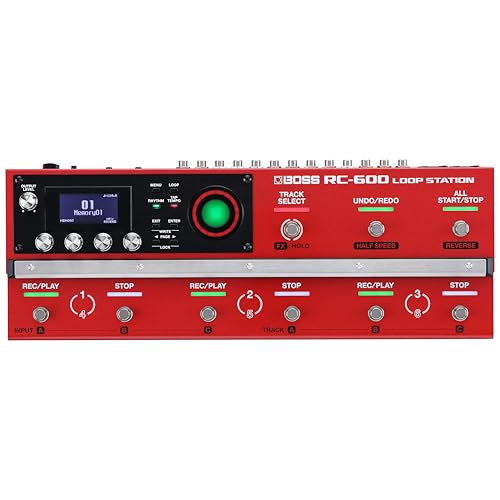
- Six simultaneous stereo phrase tracks
- 49 Input FX and 53 Track FX types
- Nine assignable footswitches with three pedal modes
Best For: Layered worship performances and advanced live control
Best Value Features

- Stereo looper and drum machine in one pedal
- 40 slots with 160 minutes total capacity
- 110 grooves plus USB transfer and tap tempo
Best For: Affordable rhythm-backed looping for rehearsal and worship
Studio Layering Powerhouse

- Five stereo phrase tracks for complex arrangements
- Professional 32-bit audio processing
- XLR mic inputs and 99 onboard memories
Best For: Detailed live worship layering and tabletop performance setups
Simple Starter Looper

- User-friendly stompbox operation
- 12 minutes of stereo recording time
- Battery included; AC adaptor optional
Best For: First-time loopers and straightforward worship accompaniment
Dual-Track Worship Workhorse

- Two tracks with 13 hours of stereo recording
- Onboard rhythms and color LCD
- XLR and 1/4-inch inputs plus USB transfer
Best For: Live worship setups needing flexible two-track looping
Full-Scale Foot Control

- Three stereo tracks with dedicated foot control
- Up to three hours of recording and 99 memories
- Expression pedal and extensive onboard effects
Best For: Solo worship musicians needing deep hands-free control
Compact Tabletop Control

- Two stereo phrase tracks with status indicators
- 64 phrase memories across eight banks
- Supports optional foot control and MIDI
Best For: Hands-on tabletop looping with flexible effects
Connected Performance Hub
- XLR mic input with phantom power
- 17 rhythms and 64 phrase memories
- USB audio/MIDI and DAW integration
Best For: Vocal and electronic performers needing connected looping
Best Overall – BOSS RC-5 Loop Station
For church musicians seeking dependable loop stations for church musicians, the BOSS RC-5 combines professional sound processing, long recording capacity, rhythm accompaniment, and flexible control in a compact pedalboard-friendly design. Its color display and extensive connectivity make it practical for worship rehearsals, live services, and layered instrumental parts.
Best For: Worship musicians who want a compact looper with long phrase storage, onboard rhythms, and MIDI/USB integration.
Pros:
- 32-bit processing and 13 hours of stereo recording time
- Stores up to 99 phrase memories
- Includes 57 rhythms, A/B variations, and seven drum kits
- Offers a multi-color LCD, USB, MIDI, and external control support
Cons:
- Optional PSA adapter is needed for extended use beyond battery operation
- Advanced MIDI and control features may be more than beginners need
The RC-5 is a strong all-around choice when sound quality, portability, and expandability matter. It offers enough capacity for recurring worship arrangements without occupying much pedalboard space.
Simple Classic – RC-20XL Looper Guitar Effects Pedal
The RC-20XL offers a straightforward option for church musicians who need essential looping without a large feature set. With 16 minutes of recording time, saved-loop slots, undo, and tempo adjustment, it can support simple repeated accompaniment during worship or rehearsal.
Best For: Musicians who want a basic looper for short layered parts and uncomplicated live use.
Pros:
- Provides 16 minutes of recording time
- Includes 11 slots for saving loops
- Undo function supports quick correction of the latest loop
- Loop tempo adjustment adds timing flexibility
Cons:
- Recording capacity is much lower than newer alternatives
- Supplied notes list a 1/4-inch audio interface but no USB or MIDI connectivity
- The feature set is relatively basic for complex arrangements
The RC-20XL is best suited to musicians who value simple operation over extensive effects, storage, or connectivity. It is a practical fit for modest looping requirements.
Best for Complex Sets – BOSS RC-600 Floor-Based Loop Station
For church musicians building full arrangements live, the BOSS RC-600 provides six simultaneous stereo tracks, extensive effects, and deep foot control. Its floor-based layout is designed for complex performances involving layered vocals, instruments, and evolving worship sections.
Best For: Experienced worship performers and multi-instrumentalists who need multiple synchronized tracks and extensive hands-free control.
Pros:
- Records and edits up to six loops in real time
- Uses 32-bit AD/DA conversion and 32-bit floating-point processing
- Includes 49 Input FX and 53 Track FX types
- Provides nine freely assignable footswitches and three pedal modes
Cons:
- Its 22.88-by-9.81-inch footprint and 8.2-pound weight require substantial floor space
- The advanced feature set may have a steep learning curve
- It requires corded power rather than battery operation
The RC-600 is the most capable option here for elaborate live looping. Its size and complexity make it better for prepared performance rigs than minimal pedalboards.
Best Value Features – Donner Circle Looper Pedal
The Donner Circle combines a stereo looper and drum machine in one pedal, making it a useful choice for church musicians who want rhythm support without adding a separate unit. Its 40 memory slots, USB transfer capability, tap tempo, and fade-out function support rehearsal and live accompaniment.
Best For: Budget-conscious musicians who want built-in drum grooves, substantial loop storage, and USB import/export.
Pros:
- Combines a 24-bit stereo looper with 110 drum grooves
- Offers 40 slots and up to 160 minutes of total loop capacity
- Screen displays loop mode, progress, and timing
- Supports USB import/export, tap tempo, fade out, and an optional external footswitch
Cons:
- Power adapter is not included
- Each memory slot stores up to four minutes of recording
- External footswitch support requires an additional footswitch
The Circle Looper delivers an unusually broad feature set for a compact pedal, especially when drum accompaniment is useful. Be sure to budget for the required 9V center-negative adapter.
Studio Layering Powerhouse – RC-505mkII
For church musicians seeking loop stations for church musicians, the BOSS RC-505mkII is a powerful tabletop choice for building full arrangements from vocals, instruments, and effects. Its five stereo phrase tracks, extensive routing, and customizable controls suit detailed live worship setups.
Best For: Worship leaders and multi-instrumentalists who need deep hands-on control for complex live layers.
Pros:
- Five simultaneous stereo phrase tracks with dedicated controls and volume faders
- 32-bit AD/DA conversion and 32-bit floating-point processing
- Two XLR microphone inputs with phantom power plus stereo line connectivity
- 99 memories for saving tracks, effects, assignments, and playback settings
Cons:
- Large tabletop footprint compared with a compact pedal
- Its extensive effects and routing may take time to learn
The RC-505mkII is best when a church musician values maximum layering flexibility and repeatable presets over pedalboard simplicity.
Simple Starter Looper – RC-1
The BOSS RC-1 is a straightforward option for church musicians comparing loop stations for church musicians. Its stompbox format supports recording, overdubbing, playback, and undo or redo without the deeper setup demands of larger loopers.
Best For: Guitar, bass, and keyboard players who want an uncomplicated way to add repeating musical phrases.
Pros:
- Simple controls and an intuitive 24-segment loop indicator
- Up to 12 minutes of stereo recording time
- Stereo inputs and outputs support a range of instruments and setups
- Includes a 9-volt battery with approximately 4.5 hours of battery life
Cons:
- Optional AC adaptor is sold separately
- Offers fewer advanced features than the RC-500 and RC-505mkII
The RC-1 is a sensible entry point for worship musicians who prioritize quick operation and compact pedalboard integration.
Dual-Track Worship Workhorse – RC-500
The BOSS RC-500 balances live control and manageable pedalboard size for church musicians evaluating loop stations for church musicians. Its two-track design, 13 hours of stereo recording, onboard rhythms, and XLR input make it suited to layered worship performances.
Best For: Worship performers who need two independent looping tracks, long recording capacity, and practical live connections.
Pros:
- Two-track looping with 13 hours of stereo record time
- Onboard rhythm tracks support fuller practice or performance arrangements
- XLR and 1/4-inch inputs accommodate varied sources
- Color LCD and USB import/export add useful workflow support
Cons:
- Less layering capacity than the five-track RC-505mkII
- Requires an AC adapter according to the supplied specifications
The RC-500 is a strong middle ground for church musicians who want more control than a basic looper without moving to a large tabletop unit.
Full-Scale Foot Control – BOSS RC-300
For church musicians seeking loop stations for church musicians, the BOSS RC-300 offers a floor-based setup built for layered live performances. Three stereo tracks, dedicated footswitches, track faders, and an expression pedal make it practical for controlling arrangements while playing.
Best For: Guitarists and solo worship musicians who want extensive hands-free control and multiple song layers.
Pros:
- Three stereo tracks with dedicated controls and footswitches.
- Up to three hours of internal recording and 99 onboard memories.
- Expression pedal supports real-time effects control.
- Includes modulation, delay, reverb, distortion, and other effects.
Cons:
- Its larger, multi-control layout may be more than a simple looping setup requires.
- Designed for plug-in power rather than battery operation.
The RC-300 is a strong choice when hands-free track management and substantial onboard storage matter more than compact size.
Compact Tabletop Control – BOSS RC-202
The BOSS RC-202 is a compact tabletop option for church musicians exploring loop stations for church musicians without committing to a large floor unit. Its two stereo phrase tracks, fingertip controls, and external-control support suit layered performances with guitar, keyboards, or other instruments.
Best For: Musicians who prefer tabletop operation and want hands-on control while performing.
Pros:
- Two simultaneous stereo phrase tracks with dedicated controls.
- Four input effects and four track effects can be used simultaneously.
- Stores 64 phrase memories across eight banks.
- Supports optional footswitches, expression pedals, and MIDI.
Cons:
- Tabletop operation may require optional external controls for fully hands-free use.
- Offers two tracks rather than the RC-300’s three-track layout.
Choose the RC-202 if you value a compact footprint and direct fingertip access to looping and effects controls.
Connected Performance Hub – BOSS RC-202 with Mic and USB
This BOSS RC-202 configuration is aimed at performers who want loop stations for church musicians with microphone support, rhythms, and computer connectivity. It combines two stereo tracks with an XLR input and phantom power, 17 rhythm patterns, USB audio/MIDI, and extensive effects.
Best For: Vocalists, beatboxers, and electronic or multi-instrument performers building layered worship arrangements.
Pros:
- XLR microphone input with phantom power plus instrument and auxiliary inputs.
- Two stereo tracks and 64 phrase memories with custom settings.
- Includes 17 onboard rhythm patterns, including odd-measure beats.
- USB supports phrase transfer and DAW integration.
Cons:
- Hands-on tabletop operation may be less convenient than a dedicated floor pedal.
- Optional footswitch or expression pedal is needed for expanded external control.
With microphone connectivity, rhythms, and USB integration, this RC-202 is especially useful for performers who need more than basic instrument looping.
How We Picked the Best Loop Stations for Church Musicians
We focused on features that matter during rehearsals, services, and live worship sets: dependable foot control, intuitive recording and overdubbing, memory capacity, audio quality, stereo operation, connectivity, and the ability to recover quickly from a mistake. We also included a range of formats, from compact single-track pedals to larger units designed for complex arrangements.
Because worship setups vary widely, no single model is ideal for every musician. A solo guitarist may prioritize simplicity and portability, while a worship leader using backing parts, vocal loops, or multiple instruments may need independent tracks, MIDI, USB, and extensive phrase storage.
Quick Comparison
- Simple single-track looping: The BOSS RC-1 is a straightforward starting point with minimal setup.
- Compact but capable: The BOSS RC-5 adds more memory, stereo operation, and expanded control in a pedal-sized format.
- Built-in rhythm support: The Donner Circle combines looping with drum grooves for solo practice and performance.
- Multi-track worship arrangements: The BOSS RC-500 and RC-600 offer more control, storage, and routing flexibility.
- Tabletop performance: The BOSS RC-202 and RC-505mkII suit musicians who prefer hands-on controls rather than footswitch-only operation.
Key Buying Factors for Loop Stations for Church Musicians
Track Layout and Looping Workflow
Decide whether you need one continuous loop or separate sections for percussion, chords, vocals, and transitions. Dual-track and multi-track designs make it easier to mute, replace, or rearrange parts without stopping the entire performance.
Foot Control and Live Reliability
Footswitch placement, dedicated stop controls, undo/redo functions, and external-switch support can make a major difference on a busy platform. Choose controls you can operate confidently while singing or playing.
Memory, Recording Time, and Audio Quality
More phrase memories and longer recording time help when you want to store complete worship arrangements or several songs. Stereo recording is useful for keyboards, stereo effects, and prerecorded tracks, while higher-resolution audio can preserve detail through repeated overdubs.
Connectivity and Integration
Check for USB audio, MIDI, external expression or footswitch inputs, and suitable input and output options. These features matter if the looper must work with a DAW, MIDI clock, drum machine, keyboard, amplifier, or church sound system.
Power, Portability, and Setup
Confirm the power requirements and allow space for cables, adapters, and any external controls. A compact pedal is easier to add to an existing board, while a larger workstation may be better for a permanent worship rig.
Who Should Buy Which Loop Stations for Church Musicians?
Beginners and occasional users should start with a simple pedal such as the RC-1. It keeps the learning curve low and covers basic chord and vocal layering.
Guitarists who want more flexibility without a large unit should consider the RC-5 or RC-20XL. These provide more room for saved phrases and creative effects than a basic looper.
Solo worship leaders and instrumentalists may benefit from the RC-500, RC-300, or RC-600, especially when separate song sections, rhythm parts, and hands-free transitions are important.
Electronic musicians, keyboardists, and vocal performers should look closely at the RC-202 and RC-505mkII. Their tabletop layouts offer immediate access to multiple tracks and performance controls.
Before buying, map out one real worship song and identify how many layers, inputs, saved phrases, and foot actions you actually need. The best loop station is the one that supports that workflow without slowing down your performance.