
The best loop stations for home studios make it easier to build arrangements, practice parts, and experiment with layered performances without a full band. The right model depends on your instrument setup, workflow, available space, and need for built-in rhythms or effects.
This roundup compares 10 options ranging from straightforward loop pedals to feature-rich desktop and floor-based systems, helping you find a looper that fits your studio and creative process.
Best 10 Loop Stations for Home Studios Picks for 2026
Professional Tabletop Power

- Five simultaneous stereo phrase tracks
- Large effects selection and customizable controls
- XLR, line, and USB connectivity
Best For: Advanced home-studio looping and layered performances
Budget-Friendly Looping Hub

- Looper and drum machine in one pedal
- 40 slots with 160 minutes of storage
- USB transfer and timing display
Best For: Rhythm-based practice and compact home setups
Versatile Dual-Track Choice

- Dual-track looping with professional processing
- Built-in rhythms, drum kits, and color LCD
- USB, MIDI, and external-control support
Best For: Songwriting and expandable pedalboard-based studios
Simple Guitar-Centered Looper

- Nine loops and 40 minutes of recording
- Unlimited overdubs with simple foot control
- Built-in tuner and USB WAV transfer
Best For: Straightforward guitar and bass practice looping
Flagship Creative Hub
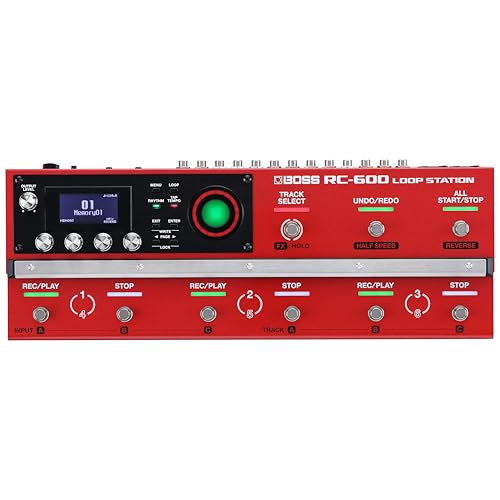
- Six simultaneous stereo phrase tracks
- 32-bit processing and extensive effects
- Nine assignable footswitches
Best For: Complex home-studio looping and live-style arrangements
Compact Budget Looper

- Three loops and 18 minutes total time
- Unlimited overdubbing with USB WAV transfer
- Compact design with tuner and sync recording
Best For: Affordable guitar and bass looping in small home studios
Pedalboard Studio Essential

- 13 hours of stereo recording and 99 memories
- 57 rhythms and seven drum kits
- MIDI, USB, and external control support
Best For: Compact, expandable looping for home studios and pedalboards
Feature-Packed Pick

- 300 minutes of stereo recording in 100 slots
- 220 built-in drum grooves across 11 styles
- USB transfer and headphone output for home use
Best For: Layered practice, songwriting, and rhythm-backed home sessions
Advanced Tabletop Pick

- Two simultaneous stereo phrase tracks
- Input and track effects for creative processing
- 64 phrase memories with MIDI and external-control support
Best For: Complex tabletop looping and effect-driven performances
Simple Pedal Pick

- Easy record, overdub, playback, undo, and redo controls
- 12 minutes of stereo recording
- Visual loop indicator and stereo connectivity
Best For: Beginners and players wanting uncomplicated phrase layering
Professional Tabletop Power – BOSS RC-505mkII
For home studios that need extensive layering and hands-on control, the BOSS RC-505mkII is one of the most capable loop stations for home studios. Its five stereo phrase tracks, deep effects, and flexible connectivity support complex arrangements and detailed live-style performance workflows.
Best For: Producers and performers who want advanced tabletop looping with multiple stereo layers, effects, and routing options.
Pros:
- Five simultaneous stereo phrase tracks with dedicated controls and volume faders
- 32-bit AD/DA conversion and 32-bit floating-point processing
- Extensive input and track effects, including Harmony and Electric FX
- Two XLR microphone inputs with phantom power plus USB connectivity
Cons:
- Its large tabletop design requires more studio space
- The extensive controls and effects may take time to learn
The RC-505mkII is a strong choice when creative flexibility matters more than simplicity. Its 99 memories and customizable controls make it particularly suitable for repeatable studio setups and elaborate performance arrangements.
Budget-Friendly Looping Hub – Donner Circle Looper
The Donner Circle Looper combines looping and rhythm practice in a compact pedal, making it a practical option for home studios building arrangements around guitar, bass, or other instruments. Its screen, onboard grooves, and USB file transfer add useful workflow features at a straightforward pedal format.
Best For: Home musicians who want an affordable stereo looper with built-in drum patterns and substantial onboard storage.
Pros:
- Combines a stereo looper with 110 drum grooves across 11 styles
- Offers 40 memory slots and 160 minutes of total recording capacity
- Screen displays loop mode, timing, and progress
- Supports USB import/export, tap tempo, fade out, and an optional external footswitch
Cons:
- Power adapter is not included
- External footswitch is sold separately
With automatic saving and USB file management, the Circle Looper is convenient for sketching and revisiting ideas. It offers more rhythm-oriented features than a basic looper while keeping the pedal footprint compact.
Versatile Dual-Track Choice – BOSS RC-500
The BOSS RC-500 is a balanced pick for home studios that want professional audio processing without moving to a large tabletop unit. As one of the more versatile loop stations for home studios, it adds dual-track looping, onboard rhythms, a color LCD, and USB WAV file management in a pedal-sized design.
Best For: Guitarists, songwriters, and producers who want dual-track control, rhythm accompaniment, and room to expand with external control.
Pros:
- Dual-track looping with 32-bit AD/DA conversion and floating-point processing
- 13 hours of stereo recording time in a single-track configuration
- Includes 16 drum kits, 57 preset rhythms, and A/B variations
- Supports USB file management, MIDI, footswitches, and expression pedals
Cons:
- MIDI uses mini TRS jacks, with the adapter cable available separately
- Its deeper control options may require more setup than a simple looper
The RC-500 sits between simple pedal looping and advanced tabletop production. Its display, phrase memories, rhythms, and external-control support make it a flexible centerpiece for songwriting and repeatable studio sessions.
Simple Guitar-Centered Looper – LEKATO Looper Pedal
The LEKATO Looper Pedal keeps the looping workflow focused on essential foot control, making it a convenient entry point for guitar and bass home setups. It combines unlimited overdubs, a built-in tuner, uncompressed audio, and USB WAV transfer in a small pedal enclosure.
Best For: Guitarists and bassists who want straightforward looping, tuning, and file transfer without a complex control layout.
Pros:
- Provides nine loops and 40 minutes of total recording time
- Supports unlimited overdubbing with dedicated foot commands for key functions
- Uses 48 kHz/24-bit uncompressed audio with analog dry-through
- Includes a built-in tuner and USB import/export for WAV files
Cons:
- Offers fewer tracks and effects than more advanced loop stations
- Single-knob operation limits hands-on mixing control
This LEKATO pedal is best suited to players who value quick operation and a small footprint. Its tuner and unlimited overdubs make it useful for practice, idea development, and basic home-studio layering.
Flagship Creative Hub – BOSS RC-600
For home studios that need extensive hands-free control, the BOSS RC-600 is a flagship option among loop stations for home studios. It combines six simultaneous stereo tracks, advanced editing, high-resolution processing, and a broad effects selection for detailed layered arrangements.
Best For: Guitarists, singer-songwriters, and multi-instrumentalists building complex studio loops and live-style performances.
Pros:
- Records and edits up to six simultaneous stereo phrase tracks.
- Uses 32-bit AD/DA conversion and 32-bit floating-point processing.
- Includes 49 Input FX and 53 Track FX types, with four usable at once in each section.
- Nine freely assignable footswitches and three pedal modes provide flexible control.
Cons:
- The large 22.88-by-9.81-inch footprint may be excessive for compact desks or pedalboards.
- At 8.2 pounds, it is less portable than compact loop pedals.
- Its extensive feature set may be more than beginners need.
The RC-600 is best suited to creators who value maximum routing, effects, and performance control over a small form factor. Its size and complexity make it a better fit for a dedicated home-studio setup than casual practice.
Compact Budget Looper – LEKATO 3-Loop Pedal
The LEKATO looper is a compact, straightforward choice for loop stations for home studios, especially when desk or pedalboard space is limited. It offers three loops, unlimited overdubbing, USB file transfer, and up to 18 minutes of total recording time.
Best For: Guitarists and bassists who want an affordable, space-saving looper for practice, songwriting, and basic studio layering.
Pros:
- Provides three loops with up to six minutes per loop and 18 minutes total recording time.
- Supports unlimited overdubbing plus Undo, Redo, Stop, and Erase foot commands.
- USB supports importing and exporting WAV loop files, with automatic saving after power-off.
- Includes synchronous recording, a tuner, and a visual loop-time indicator.
Cons:
- A 9V center-negative power supply is required but is not included.
- Its feature set and three-loop design are more limited than advanced multi-track units.
- The supplied notes specify a single-knob playback-volume control, offering less hands-on adjustment.
This LEKATO model keeps the core looping workflow simple and portable. It makes sense for home musicians who prioritize basic overdubbing and computer file transfer rather than extensive effects or complex routing.
Pedalboard Studio Essential – BOSS RC-5
The BOSS RC-5 balances a compact pedal format with substantial recording capacity, making it a practical pick among loop stations for home studios. It provides 13 hours of stereo recording, 99 phrase memories, rhythms, MIDI, USB, and a clear multicolor display.
Best For: Home-studio musicians who want professional audio quality and expandable control in a pedalboard-friendly unit.
Pros:
- Offers 13 hours of stereo recording and 99 phrase memories.
- Includes 57 rhythms with A/B variations and seven drum kits.
- Uses 32-bit AD/DA conversion and 32-bit floating-point processing.
- Supports MIDI, USB, external footswitches, and an expression pedal.
Cons:
- Its single-track design is less suited to highly complex multi-track arrangements.
- The PSA adapter is optional for extended sessions, though it can also run on a 9V battery.
- Mini TRS MIDI connections may require compatible cabling or adapters.
The RC-5 is a strong middle ground for musicians who want polished sound, long recording capacity, and rhythm accompaniment without moving to a larger floor-based system. Its compact enclosure also suits crowded pedalboards and smaller studio workspaces.
Feature-Packed Pick – FLAMMA FF20 Looper Pedal
The FLAMMA FF20 is a versatile choice for loop stations for home studios, combining stereo looping, a drum machine, and practical practice features in one pedal. Its 300 minutes of recording, 100 memory slots, USB file transfer, and headphone output make it useful for developing layered ideas at home.
Best For: Guitarists and bassists who want extensive loop storage, built-in rhythms, and silent practice capability.
Pros:
- Stores up to 300 minutes of stereo loops across 100 slots.
- Includes 220 drum grooves across 11 styles for self-contained practice and jamming.
- Offers a full-color display, time stretch, auto record, USB WAV transfer, and headphone output.
Cons:
- Requires a 9-volt, 300-milliamp power source.
- Its many functions may be more than beginners need from a basic looper.
Choose the FF20 if you want a feature-rich home-studio looper that can handle extended recordings and rhythm-backed sessions without additional gear.
Advanced Tabletop Pick – BOSS RC-202 Loop Station
The BOSS RC-202 is a tabletop option for loop stations for home studios when hands-on control and creative effects matter. It provides two simultaneous stereo phrase tracks, extensive phrase memory, and dedicated input and track effects for more elaborate loop-based arrangements.
Best For: Keyboardists, guitarists, and electronic performers who want tabletop control and advanced effects processing.
Pros:
- Provides two simultaneous stereo phrase tracks with dedicated controls.
- Includes four input effects and four track effects that can run simultaneously.
- Offers 64 phrase memories across eight banks and supports optional footswitches, expression pedals, and MIDI.
Cons:
- The tabletop design is less suited to direct stompbox-style foot operation without optional accessories.
- Its larger 13.8-by-9.25-inch footprint takes more studio space.
The RC-202 is a strong fit for creators who prefer fingertip control and want to build complex, effect-heavy performances rather than use a minimal one-track pedal.
Simple Pedal Pick – BOSS RC-1 Loop Station
The BOSS RC-1 is a straightforward option for loop stations for home studios, especially for players learning to record, overdub, and manage basic loops. Its simple stompbox layout, visual loop indicator, stereo connectivity, and 12 minutes of recording keep the workflow focused.
Best For: Guitar, bass, and keyboard players who want an uncomplicated pedal for layering phrases.
Pros:
- Supports recording, playback, overdubbing, undo, and redo in a compact pedal.
- The 24-segment loop indicator shows the current recording, overdub, or playback mode.
- Includes stereo inputs and outputs, a 9-volt battery, and memory retention when powered off.
Cons:
- Its 12 minutes of stereo recording is much less than the FF20’s capacity.
- An AC adapter is optional rather than included.
Pick the RC-1 when ease of use is more important than drum patterns, extensive memory, or onboard effects. It is a practical starting point for basic looping at home.
How We Picked the Best Loop Stations for Home Studios
We focused on the features that matter most in a home recording and practice environment: recording time, loop memory, overdub flexibility, rhythm functions, connectivity, control layout, and ease of use. The selection includes compact pedals for guitarists, desktop units suited to vocalists and electronic performers, and advanced loop stations for musicians who want more control over complete arrangements.
We also considered how well each unit can grow with your setup. Stereo operation, external footswitch support, USB connectivity, synchronization, and independent track control can make a major difference once basic looping becomes part of your regular workflow.
Quick Comparison
| Best For | Look For |
|---|---|
| Simple practice and songwriting | Fast operation, clear controls, and reliable undo/redo |
| Guitar and bass pedalboards | Compact design, stereo I/O, tuner, and footswitch control |
| Beat-based looping | Built-in drum grooves, tap tempo, and rhythm synchronization |
| Vocalists and multi-instrumentalists | Desktop controls, microphone connectivity, and multiple tracks |
| Live-style home performance | Scene memory, effects, hands-free control, and extensive routing |
Key Buying Factors for Loop Stations for Home Studios
Track Layout and Overdubbing
Basic loopers are ideal for layering a repeating phrase, while multi-track models let you separate sections or instruments. If you plan to build full songs, look for independent tracks, phrase memory, undo/redo, and flexible loop management.
Recording Time and Storage
Short loop times work well for practice, but longer recording capacity is useful for songwriting, ambient textures, and extended arrangements. Check both total recording time and the number of stored loop slots.
Rhythms, Effects, and Sync
Built-in drums can provide a useful tempo reference and make solo practice more musical. Tap tempo, rhythm-to-loop synchronization, and onboard effects are especially valuable when you want a complete sketch without additional gear.
Connections and Control
Confirm that the inputs match your instruments or microphones and that the outputs suit your interface, amplifier, or monitors. USB, MIDI, external footswitch support, and expression inputs can improve control and integration as your studio develops.
Who Should Buy Which Loop Stations for Home Studios?
Choose a compact single-pedal looper if you want quick guitar or bass practice with minimal setup. A model with built-in drums is a better fit for players who want rhythm backing while composing or rehearsing.
Desktop loop stations suit vocalists, keyboard players, beatmakers, and performers who need hands-on control over several layers. Advanced floor-based units are best for musicians building complex arrangements, using multiple effects, or preparing live-style performances at home.
For beginners, prioritize intuitive controls and dependable basic looping over a long feature list. More experienced users should focus on track independence, memory capacity, synchronization, routing, and expansion options so the looper remains useful as the rest of the studio evolves.