
The best loop stations for singer guitarists make it easier to build full-sounding performances from a guitar, voice, and a few well-timed layers. The right model can add rhythm, harmony, bass lines, and backing parts without requiring a complete pedalboard or computer setup.
This roundup covers compact beginner pedals, vocal-friendly systems, drum-equipped loopers, and advanced multi-track stations. Focus on your performance style, available space, and the controls you need most while singing and playing.
Best 10 Loop Stations for Singer Guitarists Picks for 2026
All-in-One Vocal-Guitar Hub

- Integrated vocal and acoustic-guitar processing
- Real-time harmonies and looping
- Compact design with USB, XLR, and 1/4-inch connections
Best For: Acoustic singer guitarists wanting vocal effects and harmony in one unit
Tabletop Layering Powerhouse

- Five simultaneous stereo phrase tracks
- Extensive input and track effects
- Two XLR mic inputs with phantom power
Best For: Complex tabletop live-looping arrangements
Drum-Backed Practice Pick

- 300 minutes of stereo recording in 100 slots
- 220 drum grooves across 11 styles
- Headphone output and USB-C file transfer
Best For: Solo looping, rhythm-backed practice, and stored compositions
Flagship Floor Controller
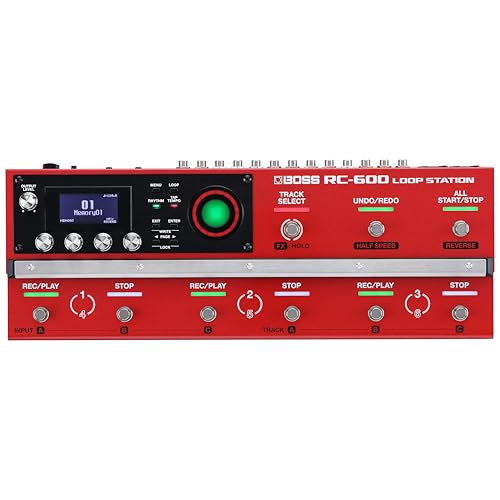
- Six simultaneous stereo phrase tracks
- Nine assignable footswitches for hands-free control
- Broad input and track effects selection
Best For: Advanced live performers building complex floor-based loops
Creative Value Pick

- 10 minutes of loop time with unlimited overdubs
- Stereo I/O and reverse or speed playback
- Metal case and true-bypass design
Best For: Budget-conscious performers wanting creative stereo looping
Advanced Live Performance Pick

- Dual-track looping with extensive control options
- Built-in rhythms, loop effects, and 99 phrase memories
- USB, MIDI, and external controller support
Best For: Experienced performers creating complex live arrangements
Simple Starter Pick

- 12 minutes of stereo recording time
- Simple record, overdub, undo, and redo controls
- Includes a 9-volt battery and clear loop indicator
Best For: Beginners wanting uncomplicated guitar and vocal looping
Dual-Track Powerhouse

- Two stereo tracks and 13 hours of recording
- XLR and 1/4-inch inputs for vocals and instruments
- Onboard rhythms, USB transfer, and color LCD
Best For: Singer guitarists building layered live performances
Three-Track Performance Hub

- Three stereo tracks with dedicated footswitches
- Per-track faders and expression pedal effects control
- Up to 99 memories and three hours of recording
Best For: Performers managing complex multi-part arrangements
Tabletop Effects Looper

- Two stereo phrase tracks with hands-on controls
- Four input and four track effects available simultaneously
- 64 phrase memories with MIDI and optional external control
Best For: Creative tabletop performers and effects-focused setups
All-in-One Vocal-Guitar Hub – BOSS VE-8 Acoustic Singer
For singer guitarists who want vocal processing, guitar effects, harmony, and looping in one compact unit, the BOSS VE-8 is a practical all-in-one option. Its physical controls, XLR and 1/4-inch connections, and included cables make it well suited to portable acoustic performances.
Best For: Acoustic singer guitarists seeking integrated vocal effects, guitar processing, real-time harmonies, and looping.
Pros:
- Combines vocal and guitar processing in a compact package
- Creates real-time harmonies from guitar input or manual key settings
- Includes ambience effects, Enhance, and chromatic pitch correction
- Offers USB, XLR, and 1/4-inch connectivity
Cons:
- Focused on acoustic singer-guitarist use rather than extensive multi-track looping
- Requires corded electric power
The VE-8 stands out among loop stations for singer guitarists who prioritize natural vocal support and simple setup over deep phrase-track expansion. It is especially appealing for solo acoustic performers who want several core tools in one enclosure.
Tabletop Layering Powerhouse – BOSS RC-505mkII Loop Station
The BOSS RC-505mkII is a tabletop choice for loop stations for singer guitarists who want extensive hands-on control over layered arrangements. Five simultaneous stereo phrase tracks, independent faders, microphone inputs, and broad effects support detailed live mixing.
Best For: Performers who build complex vocal, guitar, and backing-track arrangements from a tabletop setup.
Pros:
- Provides five simultaneous stereo phrase tracks with dedicated controls
- Includes dual effects sections with 49 Input FX and 53 Track FX types
- Offers two XLR microphone inputs with phantom power
- Stores 99 memories with phrase tracks, effects, and control assignments
Cons:
- Tabletop format is less foot-operated than a floor-based looper
- Large and relatively heavy compared with compact loop pedals
With 32-bit processing, extensive routing, and customizable controls, the RC-505mkII is built for ambitious live looping. Its tabletop workflow makes it a strong fit when visual access and manual mixing are more important than minimal stage footprint.
Drum-Backed Practice Pick – FLAMMA FF20 Looper Pedal
The FLAMMA FF20 is a practical option for loop stations for singer guitarists who want stored loops, built-in rhythms, and clear visual feedback without a large tabletop unit. Its dual footswitches, drum machine, headphone output, and USB-C file transfer support practice and solo performance.
Best For: Solo guitarists and singer guitarists who want drum-backed looping, silent practice, and substantial loop storage.
Pros:
- Stores up to 300 minutes across 100 loop slots
- Includes 220 drum grooves across 11 styles
- Color screen displays loop status, time, BPM, and drum patterns
- Supports time stretch, auto record, USB file transfer, and headphone monitoring
Cons:
- Its feature set centers on looping and drums rather than vocal effects
- Requires corded electric power
The FF20 offers a lot of practical functionality for its pedal format. Singer guitarists who value rhythmic backing, saved ideas, and headphone practice may find it more useful than a simpler looper, while dedicated vocal processing will require separate equipment.
Flagship Floor Controller – BOSS RC-600 Loop Station
The BOSS RC-600 is designed for loop stations for singer guitarists who need maximum floor-based control over layered performances. Six simultaneous stereo tracks, nine assignable footswitches, extensive effects, and multiple pedal modes support hands-free live arranging.
Best For: Advanced singer guitarists, singer-songwriters, and multi-instrumentalists performing complex hands-free loop arrangements.
Pros:
- Records and edits up to six loops in real time
- Provides six simultaneous stereo phrase tracks
- Includes 49 Input FX and 53 Track FX types, with four usable at once in each section
- Offers nine freely assignable footswitches and three pedal modes
Cons:
- Large and heavy for a floor-based pedal
- Its advanced feature set may be more than casual loopers need
- Requires a higher-current power supply than the other listed units
The RC-600 is the most performance-oriented option here for musicians who want hands-free access to a deep looping system. Its size and complexity are trade-offs, but the flexible control layout and six-track architecture suit demanding live shows.
Creative Value Pick – VSN Twin Looper
For singer guitarists seeking loop stations for singer guitarists on a budget, the VSN Twin Looper offers a practical feature set with stereo I/O, 10 minutes of loop time, and unlimited overdubs. Its reverse and speed controls also support more experimental live arrangements.
Best For: Budget-conscious performers who want stereo looping and creative playback controls.
Pros:
- Provides 10 minutes of looping with unlimited overdubs plus undo/redo.
- Offers stereo input and output with separately adjustable left and right volume.
- Includes reverse, half-speed, and combined playback options.
- Uses a sturdy metal case, heavy-duty footswitch, and true bypass.
Cons:
- Power adapter is not included.
- USB is intended for computer software use, not power input.
This is a versatile entry-level option for building vocal-and-guitar textures, though buyers should budget for a compatible 9-volt power supply.
Advanced Live Performance Pick – BOSS RC-500
The BOSS RC-500 is a strong choice for singer guitarists who need loop stations for singer guitarists with deeper live-performance control. Its dual-track design, onboard rhythms, extensive phrase memory, and external control support suit elaborate solo arrangements.
Best For: Experienced performers building layered sets with rhythms, saved phrases, and expanded control.
Pros:
- Delivers 32-bit AD/DA conversion and 32-bit floating-point processing.
- Includes 16 drum kits, 57 preset rhythms, and A/B variations.
- Stores up to 99 phrase memories and supports WAV file management over USB.
- Offers MIDI, footswitch, and expression-pedal control options.
Cons:
- Mini TRS MIDI adapter cable is available separately.
- Its broad control set may be more than beginners need.
With stereo recording capacity, a multicolor display, loop effects, and substantial connectivity, the RC-500 is designed for musicians who want a more configurable performance hub.
Simple Starter Pick – BOSS RC-1
The BOSS RC-1 keeps looping straightforward for singer guitarists comparing loop stations for singer guitarists. Its record, playback, overdub, undo, and redo functions are paired with an intuitive loop indicator and stereo connectivity.
Best For: Beginners and players who want a dependable, uncomplicated looper for guitar, bass, or keyboard.
Pros:
- Offers 12 minutes of stereo recording time.
- Supports recording, playback, overdubbing, undo, and redo.
- Uses a 24-segment indicator to show the current loop mode.
- Includes a 9-volt alkaline battery with approximately 4.5 hours of battery life.
Cons:
- Optional AC adapter is sold separately.
- It has a simpler feature set than the RC-500.
The RC-1 is a sensible starting point for learning live looping without navigating rhythms, phrase libraries, or advanced routing. Its stereo I/O and memory retention add useful flexibility.
Dual-Track Powerhouse – BOSS RC-500
For singer guitarists comparing loop stations for singer guitarists, the BOSS RC-500 is a feature-rich dual-track pedal with stereo recording, onboard rhythms, and connections for both guitar and microphone setups. Its color LCD and extended recording capacity also make it practical for structured live performances.
Best For: Singer guitarists who want dual-track control, long recording time, and microphone connectivity.
Pros:
- Two stereo tracks with 13 hours of onboard recording time.
- XLR and 1/4-inch inputs support vocal and instrument setups.
- Includes onboard rhythm tracks, USB import/export, and a color LCD.
Cons:
- Requires a 9-volt, 500-milliamp AC adapter.
- Its 950-gram build may be less convenient for highly portable setups.
The RC-500 is a strong all-around choice when you want more than basic looping without moving to a larger three-track format. Dedicated dual-track operation and vocal-friendly inputs suit layered solo performances.
Three-Track Performance Hub – BOSS RC-300
The BOSS RC-300 is a substantial option among loop stations for singer guitarists, offering three stereo tracks with dedicated footswitches, controls, and faders. It is designed for performers who want to manage multiple song parts independently while adding effects in real time.
Best For: Singer guitarists who need three independently controlled stereo tracks and hands-free live operation.
Pros:
- Three stereo tracks have dedicated footswitches, controls, and faders.
- Expression pedal control supports real-time effects operation.
- Stores up to 99 onboard memories and records up to three hours internally.
Cons:
- Its internal recording time is shorter than the RC-500’s listed capacity.
- The larger three-track feature set may be more than needed for simple loops.
Choose the RC-300 when independent verse, chorus, rhythm, or vocal layers matter more than compact simplicity. Its dedicated controls and broad effects selection make it suited to elaborate foot-controlled arrangements.
Tabletop Effects Looper – BOSS RC-202
The BOSS RC-202 takes a tabletop approach to loop stations for singer guitarists, pairing two simultaneous stereo phrase tracks with hands-on controls and extensive effects. It is especially suited to performers who prefer fingertip access while playing guitar or another instrument.
Best For: Singer guitarists wanting tabletop control, creative effects, and flexible phrase-based performance.
Pros:
- Two stereo phrase tracks provide dedicated controls and status indicators.
- Offers four input effects and four track effects simultaneously.
- Provides 64 phrase memories across eight banks with real-time saving.
Cons:
- It is a tabletop unit rather than a conventional foot-operated pedal.
- External footswitches or an expression pedal are optional for expanded control.
The RC-202 stands out for hands-on sound shaping and compact phrase management rather than traditional pedalboard operation. Its MIDI compatibility and optional external controls can add flexibility to a more developed live rig.
How We Picked the Best Loop Stations for Singer Guitarists
We focused on features that matter during real performances: straightforward overdubbing, dependable foot control, useful recording time, clear audio, and practical input and output options. Because singer guitarists often manage vocals and instruments simultaneously, we also considered how easily each looper can be operated without interrupting a performance.
The selection includes simple single-track pedals, stereo and dual-track models, vocal-oriented systems, drum-loop options, and advanced stations for musicians who build complete arrangements live. Product capabilities vary, so check the individual specifications for exact memory, effects, connectivity, and control details.
Quick Comparison
- Best for simple looping: A compact single-pedal looper is easier to learn and fits almost any pedalboard.
- Best for vocals and acoustic guitar: An all-in-one vocal-and-guitar processor can combine effects, harmony, and looping in one unit.
- Best for layered performances: Multi-track stations provide more independent control over verses, choruses, and backing parts.
- Best for rhythm-focused sets: Models with built-in drum patterns can supply a steady foundation without extra gear.
- Best for hands-on control: Floor and tabletop loopers with multiple switches or pads reduce menu diving during a show.
Key Buying Factors for Loop Stations for Singer Guitarists
Track Layout and Overdubbing
Single-track loopers are quick and intuitive, while dual-track and multi-track models let you separate song sections or instruments. If you want independent verse, chorus, and solo parts, prioritize track controls, undo and redo functions, and the ability to stop or clear layers individually.
Inputs, Outputs, and Microphone Support
Confirm that the looper accepts your microphone and guitar connections without awkward adapters. XLR microphone input, phantom power, independent level controls, stereo outputs, and balanced connections can be especially valuable for acoustic performers and small live rigs.
Timing, Storage, and Synchronization
Quantization, rhythm guides, tap-tempo controls, and automatic start or stop features can help keep layers aligned. More memory is useful for rehearsed songs and saved arrangements, while MIDI or other synchronization options matter if you plan to connect drum machines, keyboards, or external effects.
Foot Control and Reliability
Look for clear switches, responsive controls, visible status indicators, and durable construction. A looper should be easy to operate while singing, so hands-free control and optional external switches may be worth prioritizing over a smaller footprint.
Who Should Buy Which Loop Stations for Singer Guitarists?
Beginners and minimalist performers should start with a simple pedal that covers record, overdub, undo, and stop functions. Acoustic singer guitarists may benefit most from an integrated vocal-and-guitar unit with harmony and effects. Solo performers building complete arrangements should consider a multi-track model with separate section controls and generous memory. Rhythm-driven players should choose a looper with built-in drum patterns, while experienced live-looping musicians may prefer advanced routing, MIDI, and expanded foot control.
Before buying, map out your typical performance: count the instruments and microphones you use, decide whether you need saved songs, and identify how many layers must be controlled independently. That workflow will usually narrow the choices faster than comparing recording time alone.