
The right preamp can determine whether a microphone recording feels merely clear or genuinely dimensional. These 10 microphone preamps for audiophiles span vintage-inspired tone, transparent gain, channel-strip control, and practical budget options.
Use the guide below to compare circuit character, noise performance, connectivity, and workflow before choosing the model that best fits your microphones and recording priorities.
Best 10 Microphone Preamps for Audiophiles Picks for 2026
Editor's Choice

- 80dB of gain
- Class A transformer-balanced circuit
- Three-band EQ with mic, line, and DI support
Best For: Audiophiles wanting a versatile premium preamp and EQ
Budget Tube Pick
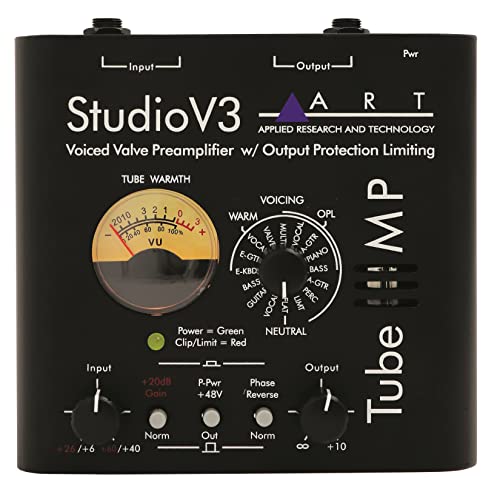
- Single-channel tube design
- Variable valve voicing
- Compact two-pound metal enclosure
Best For: Home studios and musicians recording one source at a time
Dual-Channel Choice
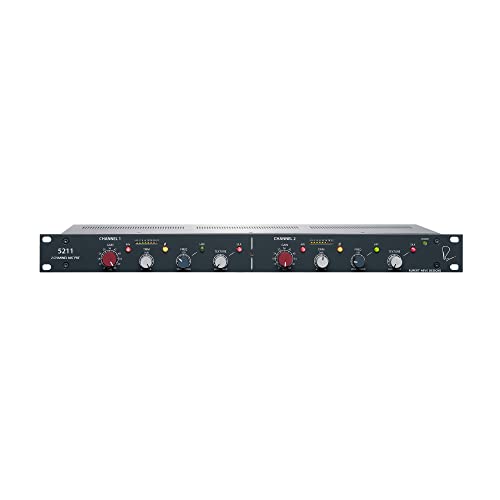
- Two microphone preamp channels
- Highpass filter included
- Silk circuit in a stainless-steel chassis
Best For: Stereo recording and two-source microphone setups
Passive Ribbon Booster
Cloudlifter CL-1 Mic Activator

- Adds up to 25dB of clean gain
- Does not pass phantom power to passive mics
- Compact one-channel XLR design
Best For: Passive ribbons and quiet microphones needing extra gain
Versatile Channel Control

- Mic preamp with four built-in processors
- XLR and 1/4-inch input options
- Rack-mountable 1U channel strip
Best For: Vocal and project-studio processing
Classic Color and Control
Rupert Neve Designs Portico 511

- 500-series mic preamp module
- Variable Silk/Texture circuit
- 66 dB gain and high headroom
Best For: 500-series recording systems
Compact Vintage-Style Flexibility

- Single-channel mic preamp and DI
- 48V phantom power and polarity reverse
- High-pass filter and Air boost
Best For: Home recording and instrument tracking
Hybrid Tube Versatility

- Two-channel tube/solid-state preamp
- Tube-drive control for adjustable saturation
- Mic and instrument inputs with phantom power
Best For: Home studios wanting flexible tube coloration
500-Series Character
Golden Age Project PRE-573 MKIII

- Single-channel 500 Series preamp
- Up to 80 dB of mic gain
- Includes impedance switching, phantom power, and DI
Best For: 500 Series rigs needing a versatile single channel
Portable Low-Noise Gain

- 19–66 dB gain with claimed -120 dBV EIN
- 1 MΩ instrument input impedance
- Type-C power and XLR/TRS/TS connectivity
Best For: Portable recording and streaming setups
Editor's Choice – Neve 1073SPX Mic Preamp & EQ
For audiophiles seeking microphone preamps with substantial gain and flexible tone shaping, the Neve 1073SPX combines a transformer-balanced Class A circuit with mic, line, and DI inputs. Its 80dB of gain and three-band EQ make it a versatile choice for detailed recording setups.
Best For: Audiophiles who want a premium, flexible preamp and EQ module for microphones, instruments, and line-level sources.
Pros:
- Provides up to 80dB of gain.
- Transformer-balanced Class A circuitry.
- Supports mic, line, and DI applications with polarity reverse.
- Includes three-band EQ.
Cons:
- At 15.8 pounds, it is relatively heavy.
- Its premium feature set may be more than a simple recording setup needs.
The 1073SPX is the most feature-rich option here for users who want gain, connectivity, and EQ in one substantial unit. Its broad input support also makes it useful beyond microphones.
Budget Tube Pick – ART Tube MP Studio V3
The ART Tube MP Studio V3 is a compact single-channel option for audiophiles exploring tube microphone preamps without a large rack unit. Its variable valve voicing supports vocals and a range of instruments, including guitars, bass, keyboards, and drums.
Best For: Home studios and musicians who need an affordable, compact tube preamp for one source at a time.
Pros:
- Uses a tube amplifier design.
- Offers variable valve voicing.
- Compact two-pound metal enclosure.
- Works with vocals and several instrument types.
Cons:
- Provides only one output channel.
- The supplied connector information lists XLR only.
With its small footprint and tube-based design, the Tube MP Studio V3 is a practical entry point for adding variable valve voicing to a recording chain. Its single-channel format is best suited to focused tracking rather than multi-source sessions.
Dual-Channel Choice – Rupert Neve Designs 5211
For audiophiles comparing microphone preamps for stereo or two-source recording, the Rupert Neve Designs 5211 provides two channels in a substantial stainless-steel chassis. Its highpass filter and Silk circuit add useful control for shaping the recording path.
Best For: Recordists who need two microphone channels with highpass filtering and Silk circuit functionality.
Pros:
- Provides two microphone preamp channels.
- Includes a highpass filter.
- Features a Silk circuit.
- Uses a stainless-steel construction.
Cons:
- Its listed weight is 10.01 pounds.
- The supplied notes do not specify additional input or output connector details.
The 5211 is a focused choice for users who value two-channel operation and onboard filtering. It is particularly appealing when a recording setup benefits from matching preamp channels rather than a single-channel design.
Passive Ribbon Booster – Cloudlifter CL-1 Mic Activator
The Cloudlifter CL-1 is a microphone activator rather than a conventional standalone preamp, making it a useful companion for microphone preamps for audiophiles who need more clean gain. It uses phantom power to provide passive microphones with up to 25dB of gain while preventing phantom power from reaching the microphone.
Best For: Passive ribbon microphones, quiet sources, podcasts, voiceovers, and recording chains with phantom-powered standard microphone inputs.
Pros:
- Adds up to 25dB of ultra-clean gain.
- Designed to protect passive ribbons from transferred phantom power.
- Supports studio recording, podcasting, streaming, radio, and live sound.
- Compact 0.32-kilogram stainless-steel enclosure.
Cons:
- Requires standard microphone phantom power.
- It is a one-channel activator, not a complete multi-channel preamp.
The CL-1 makes the most sense when an existing preamp needs additional clean signal strength for a quiet passive microphone. Its role is specialized, but the phantom-power isolation and compact design make it a practical addition to compatible recording chains.
Versatile Channel Control – dbx 286s
For shoppers comparing microphone preamps for audiophiles, the dbx 286s stands out as a complete, rack-mountable channel strip rather than a preamp alone. It combines microphone and instrument input with compression, de-essing, enhancement, and expander/gate processing, giving you practical control before the signal reaches your recording chain.
Best For: Vocal recording, spoken-word work, and home or project studios that want built-in dynamics and tone processing.
Pros:
- Combines mic preamp, compression, de-esser, enhancer, and expander/gate in one unit.
- Accepts XLR microphone input and 1/4-inch TRS line or instrument sources.
- Includes loop-out connectivity, extensive status LEDs, and a rack-mountable 1U design.
Cons:
- Its single-channel design may not suit stereo recording setups.
- The many processing sections may be more than needed for a minimalist preamp chain.
The dbx 286s is a feature-rich choice when flexibility matters more than a stripped-down signal path. Its built-in processing can help shape vocals and instruments efficiently, while the loop-out connection leaves room for additional equipment.
Classic Color and Control – Rupert Neve Designs Portico 511
Among microphone preamps for audiophiles, the Rupert Neve Designs Portico 511 is aimed at buyers who want a 500-series module with substantial gain and adjustable analog character. Its variable Silk/Texture circuit, transformer saturation, and sweepable high-pass filter provide ways to tailor the preamp beyond basic level boosting.
Best For: 500-series users seeking bold, adjustable preamp coloration for microphones and high-headroom recording.
Pros:
- Offers up to 66 dB of gain in 6 dB increments with an additional +/-6 dB trim.
- Provides variable Silk/Texture control derived from the Portico II Channel.
- Handles signals up to 22 dBu without requiring a pad and includes a sweepable high-pass filter.
Cons:
- As a 500-series module, it requires a compatible rack or chassis.
- The supplied specifications describe a module rather than a complete standalone desktop unit.
The Portico 511 makes sense when you already use, or plan to build, a 500-series system. Its combination of high headroom, substantial gain, and variable transformer-style texture gives experienced recordists useful tonal flexibility in a compact format.
Compact Vintage-Style Flexibility – Pre73 Jr MKII
The Pre73 Jr MKII is a straightforward option for shoppers evaluating microphone preamps for audiophiles who want useful recording features in a one-channel design. It provides microphone and DI functionality alongside 48V phantom power, polarity reverse, a high-pass filter, and an Air boost.
Best For: Home studios and musicians recording microphones, electric guitar, or other high-impedance instruments through a compact single-channel preamp.
Pros:
- Combines microphone preamp and DI functions in one channel.
- Includes +48V phantom power, polarity reverse, high-pass filter, and Air boost.
- Supports microphones and high-impedance instruments, with compatibility for common recording software.
Cons:
- It provides only one channel.
- The supplied notes specify XLR connectivity without detailing additional output connections.
The Pre73 Jr MKII offers a focused feature set for recording vocals and instruments without adding a separate DI box or basic utility processors. Its single-channel layout is best suited to individual-source tracking rather than larger multi-input sessions.
Hybrid Tube Versatility – PreSonus BlueTube DP v2
For audiophiles seeking microphone preamps for audiophiles with flexible tonal options, the PreSonus BlueTube DP v2 combines 12AX7 tube and solid-state gain stages across two channels. Its tube-drive control can provide anything from a cleaner signal to audible saturation.
Best For: Home studios and project setups needing two channels, instrument connectivity, and adjustable tube coloration.
Pros:
- Two-channel hybrid design with tube and solid-state paths
- Combo mic/instrument inputs with Class A XMAX preamps and 48V phantom power
- Tube-drive control, VU meter, high-pass filter, pad, and polarity reverse
- Compact 1/2U rack-mount chassis
Cons:
- Tube coloration may be unnecessary for users seeking strictly transparent gain
- Requires an external DC power supply
The BlueTube DP v2 is a practical choice when you want two channels and the ability to shape recordings with tube saturation rather than committing to one fixed sound.
500-Series Character – Golden Age Project PRE-573 MKIII
The Golden Age Project PRE-573 MKIII is a single-channel 500 Series option for buyers comparing microphone preamps for audiophiles. It offers up to 80 dB of mic gain, plus mic, line, and instrument operation in a compact modular format.
Best For: 500 Series owners who need one versatile channel for microphones, line-level sources, or direct instruments.
Pros:
- Up to 80 dB of microphone gain
- Supports microphone, line, and instrument sources
- Includes LED output-level metering and switchable impedance
- Provides phantom power and DI functionality
Cons:
- Single-channel design limits simultaneous recording capacity
- Its 500 Series format requires a compatible rack or chassis
Choose the PRE-573 MKIII if your setup already uses 500 Series modules and you value high gain, impedance options, and DI support in one channel.
Portable Low-Noise Gain – Rodyweil RO03 Mic Preamp
The Rodyweil RO03 targets budget-conscious users comparing microphone preamps for audiophiles who need portable connectivity and substantial gain. Its updated design provides a 19–66 dB gain range, a claimed -120 dBV EIN, Type-C power, and support for dynamic, condenser, ribbon, and instrument sources.
Best For: Portable vocal, instrument, and streaming setups that can connect to an audio interface’s TRS line input.
Pros:
- 19–66 dB variable gain range with claimed -120 dBV EIN
- 1 MΩ instrument input impedance for improved DI compatibility
- Type-C power input supports more portable setups
- Offers XLR, TRS, and TS connectivity with simultaneous outputs
Cons:
- The two input ports cannot operate simultaneously
- Manufacturer recommends using an interface’s TRS input for lowest noise
- Proper cables and connection choices are important for the stated noise performance
The RO03 is appealing when portability and low-cost gain matter most, but achieving its intended performance depends on following the recommended TRS line-input connection.
How We Picked the Best Microphone Preamps for Audiophiles
We focused on the factors that matter most when a preamp is expected to preserve detail and add useful character: gain range, noise performance, headroom, input and output flexibility, component design, and day-to-day usability. The selection includes single- and dual-channel units, 500 Series modules, tube designs, channel strips, and inline gain boosters.
We also considered whether each unit serves a distinct recording need. A high-end preamp should offer refinement and reliable headroom, while an affordable model should provide practical gain and a meaningful improvement over a basic interface input.
Quick Comparison
| Best For | Look For |
|---|---|
| Classic console color | Transformer-based circuitry, EQ options, and harmonic character |
| Transparent recording | Low equivalent input noise, clean gain, and generous headroom |
| Ribbon microphones | High gain, quiet operation, and suitable input impedance |
| Voice and broadcast work | Compression, de-essing, gating, and enhancement controls |
| Flexible studio expansion | Two channels or a 500 Series format |
Key Buying Factors for Microphone Preamps for Audiophiles
Gain, Noise, and Headroom
Match the preamp’s maximum clean gain to your microphones. Low-output dynamics and passive ribbons often need substantially more gain than condenser microphones. A quiet circuit is especially important when recording soft sources, and ample headroom helps prevent transient distortion on drums, vocals, and acoustic instruments.
Tonal Character
Some preamps aim for a neutral signal, while transformer, tube, or discrete designs may add saturation and harmonic density. Neither approach is universally better. Choose clean gain when you want maximum flexibility in mixing; choose coloration when the preamp’s tone is part of the sound.
Features and Connectivity
Check for phantom power, polarity reverse, a high-pass filter, input impedance controls, and instrument input if you plan to record sources directly. Channel strips add useful processing, but dedicated preamps generally keep the signal path simpler. Confirm that the output level and connector format suit your interface or console.
Format and Expansion
A one-channel desktop unit works well for a vocal or mobile rig. Two-channel models are more convenient for stereo recording, while 500 Series modules make sense if you already own a compatible rack. Inline activators are specialized tools for adding gain to passive microphones rather than complete preamp replacements.
Who Should Buy Which Microphone Preamps for Audiophiles?
Choose a Neve-inspired or other colored preamp if you want recognizable console-style depth for vocals, guitars, or drums. Pick a clean, low-noise design if accurate capture and later processing are your priorities. Tube models suit buyers who want softer transients and harmonic warmth at a modest cost.
For spoken-word recording, streaming, or project studios, a channel strip can provide compression, de-essing, and gating in one unit. Buyers working with passive ribbon or low-output dynamic microphones should prioritize high, quiet gain; an inline activator may be the simplest solution when the existing interface is otherwise satisfactory. Finally, consider a dual-channel or 500 Series option if you expect your setup to grow.