
Choosing the right NAS enclosure is about more than drive bays. For many buyers, M.2 cache support is the feature that turns a good storage box into a fast, responsive system for everyday file access, backups, and media streaming.
In this roundup, we focused on 10 options that combine practical storage expandability with smarter performance features, so you can match the right model to your home lab, creative workflow, or small team.
Best 10 Nas Enclosures with M2 Cache Picks for 2026
Performance-Ready 6-Bay Pick

- Dual M.2 NVMe cache slots
- Scales to 16 drives with expansion
- Backup and snapshot tools included
Best For: buyers who want a 6-bay NAS enclosure with cache and growth room
Fast All-Rounder

- 10GbE and 2.5GbE networking
- Supports Docker and virtual machines
- SSD support for faster performance
Best For: families, creators, and small teams wanting a fast 4-bay NAS
High-Speed External Expansion
TERRAMASTER D4 SSD NVMe Enclosure

- 40Gbps transfer support
- Four M.2 NVMe bays, up to 32TB
- Tool-free hot-swappable design
Best For: creators and power users needing fast external NVMe storage
Creator-Focused Hybrid

- Dual 10GbE for fast transfers
- Supports M.2 SSD expansion
- Built-in SD and surveillance features
Best For: creators and teams wanting a fast NAS with broad app support
Triple-Expansion 4-Bay Pick

- 3x M.2 slots for cache or storage pools
- Dual 5GbE with link aggregation support
- Intel N95, 8GB RAM, and up to 144TB
Best For: Home labs and small teams needing flexible cache expansion
Performance-First Pro Choice

- Intel Core i3-1315U with DDR5 memory
- Dual M.2 PCIe 4.0 slots for cache or pool
- 10GbE + 2.5GbE networking up to 1.25GB/s
Best For: Power users and teams needing top-tier speed
Value-Driven Hybrid NAS

- 2 HDD bays plus 2 M.2 NVMe slots
- Dual 2.5GbE and extra USB/HDMI ports
- Supports VMs, Docker, and 4K media
Best For: Compact home users wanting hybrid storage and media features
High-Speed Compact Choice
LincStation N2 6-Bay NAS Server with 10GbE

- 4 M.2 NVMe slots and 2 SATA bays
- Built-in 10GbE for faster transfers
- Includes Unraid OS Starter License
Best For: Fast, compact DIY NAS users who want hybrid storage and 10GbE
Hybrid Media Pick
ORICO MetaHome NAS with Dual 2.5GbE

- 2 HDD slots plus 2 M.2 NVMe SSD slots
- Dual 2.5GbE ports for faster LAN use
- 4K HDMI and media scraping tools
Best For: Home media setups that want hybrid storage and remote access
Creator Workflow Pick
Asustor Lockerstor 6 Gen2+ AS6706T v2
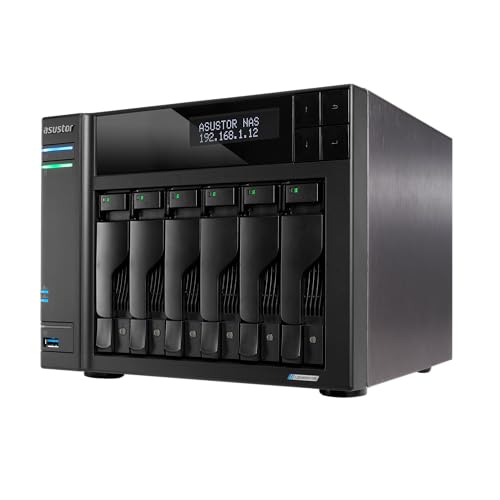
- 4 M.2 NVMe slots for caching or acceleration
- Dual 5GbE with 10GbE upgrade readiness
- 8GB DDR4 and 6-bay hybrid storage
Best For: Video creators and small teams needing cache-friendly NAS performance
Performance-Ready 6-Bay Pick – Synology DS1621+ 6-Bay NAS
If you’re comparing nas enclosures with m2 cache for a fast, scalable home or small-business setup, the Synology DS1621+ stands out for its built-in dual M.2 NVMe slots and strong upgrade path. It’s designed to speed up HDD arrays without giving up drive bays, while also leaving room to add 10GbE networking and more storage later.
Best For: Users who want a 6-bay NAS enclosure with built-in M.2 cache, easy expansion, and Synology’s backup tools.
Pros:
- Dual built-in M.2 slots can turbocharge HDD arrays without using drive bays.
- Scale up to 16 drives with two DX517 expansion units.
- Supports Active Backup, Hyper Backup, and Snapshot Replication for broad data protection.
- Ready for 10GbE with an add-in NIC for faster networking.
Cons:
- Diskless enclosure, so you still need to buy your own drives.
- 10GbE requires an additional network card.
This is a strong choice if you want a mainstream NAS platform with cache support, expansion flexibility, and a clear upgrade path. The DS1621+ is especially appealing when you need to improve HDD performance now and add networking or capacity later.
Fast All-Rounder – UGREEN DXP4800 Plus 4-Bay NAS
For shoppers looking at nas enclosures with m2 cache plus quick network connectivity, the UGREEN DXP4800 Plus is built around speed and flexible everyday use. It pairs a high-performance processor with 10GbE, 10Gbps USB ports, and SSD-based cache support to help keep backups, collaboration, and transfers moving smoothly.
Best For: Families, creators, and small teams that want a fast 4-bay NAS with SSD cache support and modern connectivity.
Pros:
- Includes Intel 5-core CPU, 8GB DDR5 RAM, 10GbE, and 2.5GbE networking.
- Supports advanced workflows like Docker and virtual machines.
- Offers centralized storage, automatic backups, and remote access.
- Built-in SSD support helps accelerate performance for demanding tasks.
Cons:
- Hard drives are not included.
- Wired Ethernet only; no Wi-Fi support.
The DXP4800 Plus is a practical pick if you want a modern NAS that balances speed, app support, and easy sharing. Its strong network hardware and SSD-focused design make it a good fit for users who expect more than basic file storage.
High-Speed External Expansion – TERRAMASTER D4 SSD NVMe Enclosure
Although it’s not a full NAS, the TERRAMASTER D4 SSD is a useful option for users who need fast storage alongside nas enclosures with m2 cache workflows. This 4-bay NVMe enclosure focuses on extreme transfer speed, tool-free installation, and stable cooling, making it a strong companion for editing, backups, and portable high-speed storage.
Best For: Creators and power users who want a 4-bay NVMe enclosure for fast external storage or NAS-adjacent workflows.
Pros:
- Up to 40Gbps connectivity with support for Thunderbolt and USB standards.
- Holds four M.2 NVMe 2280 SSDs for up to 32TB total capacity.
- Tool-free, hot-swappable design makes drive changes easy.
- Active cooling and temperature sensors help keep SSDs stable under load.
Cons:
- No built-in RAID; soft RAID requires third-party tools.
- It is an external enclosure, not a full NAS system.
If your priority is raw speed in a compact NVMe enclosure, this model delivers a lot of performance. It makes more sense as a high-speed expansion or backup unit than as a standalone NAS replacement.
Creator-Focused Hybrid – UGREEN DXP4800 GT 4-Bay NAS
If you want one of the more feature-rich nas enclosures with m2 cache for creators, the UGREEN DXP4800 GT combines high-speed networking, SSD expansion, and workflow-friendly extras. It’s built for heavier multitasking, local media work, and centralized storage with a strong emphasis on privacy and surveillance features.
Best For: Creators, tech enthusiasts, and office teams that want a fast 4-bay NAS with SSD expansion and advanced app support.
Pros:
- Dual 10GbE networking supports up to 2.5GB/s aggregate bandwidth.
- Supports Docker, virtual machines, and SAN Manager in UGOS Pro.
- Built-in SD card slot and multiple USB ports simplify media imports and backups.
- Supports M.2 SSD expansion and up to 144TB total capacity.
Cons:
- Drives are not included.
- Some advertised capacities depend on specific RAID and drive configurations.
The DXP4800 GT is aimed at users who want more than basic file storage, especially for media, backups, and self-hosted apps. Its combination of dual 10GbE, SSD expansion, and built-in surveillance tools gives it a broad feature set for demanding setups.
Triple-Expansion 4-Bay Pick – TerraMaster F4-425 Plus
If you’re comparing NAS enclosures with m2 cache, the TerraMaster F4-425 Plus stands out for its unusual flexibility: three M.2 slots, dual 5GbE networking, and a 4-bay HDD chassis in one compact unit. It’s aimed at users who want cache acceleration today and room to build out storage pools later, without giving up performance for media, backup, or virtualization workloads.
Best For: Home labs, creative teams, and small offices that want a 4-bay NAS with extra M.2 flexibility and fast dual 5GbE networking.
Pros:
- Three M.2 SSD slots support cache or independent storage pools.
- Dual 5GbE ports support link aggregation and SMB Multichannel.
- Intel N95 CPU and 8GB RAM suit Docker, VMs, and media use.
- Supports up to 144TB total capacity with 4 HDDs plus 3 M.2 SSDs.
Cons:
- Diskless, so storage must be purchased separately.
- Best performance depends on matching fast drives and network gear.
The F4-425 Plus is a strong fit if you want more than a basic cache setup and value both speed and expansion. Its mix of triple M.2 support, dual 5GbE, and broad app use makes it a versatile enclosure for mixed workloads.
Performance-First Pro Choice – UGREEN DXP4800 Pro
Among NAS enclosures with m2 cache, the UGREEN DXP4800 Pro is built for users who want a serious performance edge. Its dual M.2 PCIe 4.0 slots can act as cache or a storage pool, while the Intel Core i3-1315U, DDR5 memory, and 10GbE plus 2.5GbE networking give it the horsepower for heavy multitasking and fast file workflows.
Best For: Power users, developers, and offices that need a high-performance NAS with fast networking and dual M.2 flexibility.
Pros:
- Intel Core i3-1315U with 8GB DDR5 RAM for demanding workflows.
- Two M.2 PCIe 4.0 slots can be used for cache or storage.
- 10GbE + 2.5GbE ports support transfers up to 1.25GB/s.
- Built-in Docker, VM, photo AI, and broad UGOS Pro tools.
Cons:
- More expensive hardware focus may be overkill for basic file storage.
- Diskless design means drives are an added purchase.
This model makes the most sense when speed, multitasking, and flexibility matter more than simple NAS basics. If you want cache-enabled expansion with stronger CPU and network specs, it is one of the more capable options in this group.
Value-Driven Hybrid NAS – ORICO MetaBox HS200
If you want NAS enclosures with m2 cache in a compact, feature-packed setup, the ORICO MetaBox HS200 offers a practical mix of HDD and NVMe expansion. It combines two HDD bays, two M.2 NVMe slots, dual 2.5GbE ports, and extra USB/HDMI connectivity, making it a flexible choice for storage, streaming, and light virtualization.
Best For: Users who want a compact 2-bay NAS with M.2 NVMe support, media features, and flexible remote access.
Pros:
- Two HDD slots plus two M.2 NVMe SSD slots for hybrid storage.
- Dual 2.5GbE ports and USB-C/USB-A connections add flexibility.
- Supports virtual machine setup and one-click Docker tools.
- Includes 4K media playback, AI album tools, and remote access.
Cons:
- Lower maximum capacity than larger 4-bay models.
- Software ecosystem may be less established than longer-running NAS brands.
The HS200 is appealing if you want a smaller enclosure that still gives you M.2 cache-style flexibility and modern connectivity. It’s especially practical for home media, backup, and experimentation with VMs or containers.
High-Speed Compact Choice – LincStation N2 6-Bay NAS Server with 10GbE
If you’re comparing nas enclosures with m2 cache and want a compact system that leans into speed, the LincStation N2 stands out with 4 M.2 NVMe slots, 2 SATA bays, and a built-in 10GbE port. It’s a strong fit if you want a flexible DIY NAS for Plex, Docker, backups, or a private cloud without giving up modern connectivity.
Best For: Users who want a fast, small-footprint NAS with 10GbE, multiple NVMe slots, and included Unraid licensing.
Pros:
- 4 M.2 NVMe slots plus 2 SATA bays for a hybrid storage layout.
- Built-in 10GbE for faster transfers and smoother multi-user workflows.
- Includes an Unraid OS Starter License and 30-day free trial.
- Compact metal design with USB-C 10G, USB 3.2 Gen2, HDMI 2.0, and audio.
Cons:
- Diskless, so you’ll need to supply your own drives.
- Only 2 SATA bays if you want most of your capacity in hard drives.
- Best suited to users comfortable building and managing a DIY NAS setup.
This is a speed-focused NAS enclosure with m2 cache potential that makes more sense for responsive apps and fast file access than for maximum HDD expansion. If you value flexibility, 10GbE, and an included software ecosystem, it’s an easy one to shortlist.
Hybrid Media Pick – ORICO MetaHome NAS with Dual 2.5GbE
For shoppers looking at nas enclosures with m2 cache, the ORICO MetaHome NAS is built around a practical hybrid layout: 2 HDD slots and 2 M.2 NVMe SSD slots. That makes it a sensible option for storing large media libraries while keeping cache or essential files on faster SSD storage, plus it adds dual 2.5GbE for quicker LAN transfers.
Best For: Home users who want a media-friendly NAS with hybrid HDD and SSD storage, remote access, and dual 2.5GbE.
Pros:
- 2 HDD bays plus 2 M.2 NVMe SSD slots for hybrid storage.
- Dual 2.5GbE ports with claimed 5Gbps combined LAN throughput.
- CyberData OS supports remote access, multi-device access, and common NAS features.
- 4K HDMI output and built-in movie scraping for a TV-friendly media library.
Cons:
- Diskless, so storage drives are not included.
- CyberData OS web side is still in development according to the notes.
- Positioning is more home/media focused than power-user or business-heavy.
As a hybrid NAS enclosure with m2 cache support, the ORICO makes the most sense when you want simple media organization, remote access, and a fast-enough network link without stepping up to a more complex pro platform.
Creator Workflow Pick – Asustor Lockerstor 6 Gen2+ AS6706T v2
If your search for nas enclosures with m2 cache is really about improving responsiveness for creative work, the Asustor Lockerstor 6 Gen2+ is built for that use case. It combines 6-bay hybrid storage with 4 M.2 NVMe slots, dual 5GbE, and 8GB of memory, making it a strong fit for media editing, file sharing, and 24/7 production workflows.
Best For: Video creators and small teams that want a hybrid NAS with multiple NVMe cache slots and fast networking.
Pros:
- 4 M.2 NVMe SSD slots for caching or high-speed acceleration.
- Dual 5GbE ports with link aggregation and 10GbE upgrade readiness.
- 8GB DDR4 RAM supports multitasking, virtualization, and backup jobs.
- 6-bay hybrid design suits both HDD bulk storage and SSD acceleration.
Cons:
- Diskless, so you’ll need to budget for drives separately.
- More workstation-oriented than a simple plug-and-play home NAS.
- Larger floor/surface mount chassis than compact desktop units.
This is the most creator-focused option here, especially if you care about cache-enabled responsiveness, 4K media, and collaboration. It trades compactness for a more complete workflow platform.
How We Picked the Best Nas Enclosures with M2 Cache
We prioritized models that offer a useful mix of drive-bay capacity, SSD cache or NVMe expansion, network speed, processor headroom, and software features that matter in real-world use. We also looked for enclosures that make sense for different buyer types, from simple family storage to power-user and creator setups.
Because Nas Enclosures with M2 Cache are often bought for long-term use, we favored systems with room to grow, sensible cooling, and enough connectivity to avoid bottlenecks as your storage needs increase.
Quick Comparison: What Stands Out
Not every buyer needs the same thing. Some models lean toward easy home NAS use and media streaming, while others are better suited to multi-user office access, virtualization, or fast scratch-like storage. A few options also emphasize NVMe-heavy designs, which can be attractive if you want more speed than spinning drives alone can deliver.
If you want broader compatibility and a more traditional NAS layout, look at multi-bay systems with dual Ethernet and room for cache drives. If you care more about low-latency transfers or app responsiveness, models with multiple M.2 slots may be the better fit.
Key Buying Factors for NAS Enclosures with M.2 Cache
Cache Vs. Full NVMe Storage
Some enclosures use M.2 drives strictly as cache, while others allow them to act as fast storage volumes. Cache can speed up frequently accessed files and metadata, but full NVMe storage may be more useful if you plan to store active projects, containers, or VM data on SSDs.
Network Speed
Even a fast cache setup can be limited by the network. For most buyers, 2.5GbE is a practical baseline, while 5GbE or 10GbE makes more sense for large file transfers, shared creative work, or multiple users accessing the system at once.
CPU, RAM, and Workload Fit
Media indexing, remote access, Docker, and virtualization all benefit from a stronger processor and enough memory. If you plan to run more than basic file sharing, choose a system with extra CPU and RAM headroom rather than relying on cache alone.
Drive Layout and Expandability
A 2-bay unit may be enough for a simple backup or media library, but 4-bay and 6-bay enclosures give you more flexibility for RAID, capacity growth, and mixed SSD/HDD setups. That matters if you want both speed and redundancy.
Who Should Buy Which Nas Enclosures with M2 Cache?
Buy a simpler 2-bay or compact 4-bay model if you want reliable shared storage, backups, and basic remote access with a modest learning curve. Choose a stronger 4-bay or 6-bay system if you’re a creator, developer, or small-team admin who needs better multitasking and faster file handling.
If your priority is media streaming, Docker, or a more performance-oriented home lab, look for the best combination of M.2 support, network throughput, and processor strength rather than the highest bay count alone. For most people comparing Nas Enclosures with M2 Cache, the smartest pick is the one that balances today’s storage needs with tomorrow’s expansion room.