
The best power amplifier for audiophiles should match your speakers, room, source components, and listening habits—not simply promise the highest wattage. This lineup includes traditional integrated amplifiers, compact Class D designs, balanced models, and options with streaming, Bluetooth, DAC, or tube functionality.
Use the comparison and buying advice below to narrow the choices by power, connectivity, system flexibility, and value before selecting the amplifier that best fits your setup.
Best 10 Power Amplifier for Audiophiles Picks for 2026
Best Integrated Value
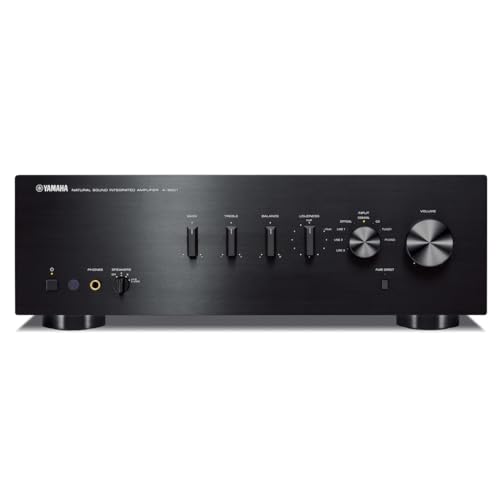
- 85W per channel with low stated THD
- Phono, optical, coaxial, and analog inputs
- Supports A/B speaker configurations
Best For: Vinyl listeners and traditional home stereo systems
Best Modular Power

- Up to 240W at 4 ohms per mono amp
- Balanced XLR/TRS and RCA inputs
- Sold as a flexible two-pack
Best For: Modular stereo and multichannel systems
Best Streamer Companion

- Up to 100W per channel at 8 ohms digitally
- 192 kHz/24-bit optical and coaxial playback
- Direct analog input and compact aluminum chassis
Best For: WiiM streamer owners upgrading passive speakers
Best Connected Stereo Choice
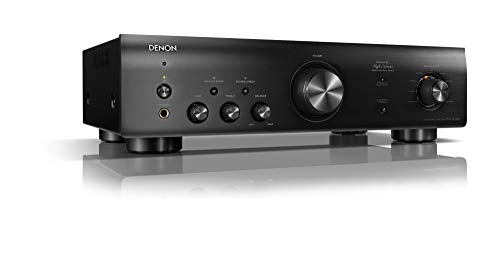
- 70W-per-channel two-channel amplification
- Bluetooth, optical, coaxial, and phono inputs
- Analog mode disengages digital circuits
Best For: Mixed-source stereo listening with vinyl and Bluetooth
Reference-Grade Balance

- 116dB SNR and 0.002% THD+N
- Adjustable 60–200Hz HPF with subwoofer output
- Balanced inputs, bypass, swappable op-amps, and 12V trigger
Best For: Audiophiles building a flexible stereo or 2.1 system
Tube-Style Versatility
Fosi Audio MC331 Tube Integrated Amplifier
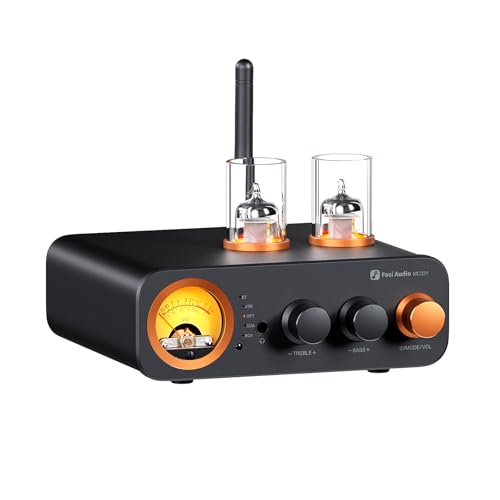
- Integrated DAC, preamp, amplifier, and headphone amp
- Bluetooth, USB, optical, coaxial, and RCA inputs
- Up to 105W x2 at 4 ohms with replaceable tubes
Best For: Compact mixed-source bookshelf and headphone systems
Digital Hi-Fi Hub
AIYIMA A80 Bluetooth DAC Amplifier

- ESS9038Q2M DAC with DSD256 and high-resolution PCM support
- TPA3255 output up to 300W x2 with 109dB SINAD
- Balanced TRS, USB, optical, coaxial, Bluetooth, and subwoofer output
Best For: Modern digital systems with stereo or 2.1 speaker setups
Flexible Balanced Power

- Stereo or mono operation with up to 235W maximum output
- Balanced input, 12V trigger-in, and subwoofer support
- Swappable op-amps and upgraded cooling design
Best For: Audiophiles wanting a scalable, feature-rich mini amplifier
High-Power Simplicity

- Up to 300W per channel for 2–8-ohm speakers
- Bass and treble controls for quick sound shaping
- RCA connectivity for common audio sources
Best For: Straightforward passive-speaker and bass-shaker systems
Clean Compact Power

- Up to 300W per channel for 2–8-ohm passive speakers
- TPA3255 design with stated low-noise performance
- Adjustable pre-out, swappable op-amps, and full-body cooling
Best For: Compact high-output stereo systems and desktop setups
Best Integrated Value – Yamaha A-S501BL
The Yamaha A-S501BL is a practical choice for audiophiles who want an integrated power amplifier for audiophiles with strong everyday connectivity. Its 85 watts per channel, phono input, digital inputs, and A/B speaker support make it well suited to a traditional stereo setup.
Best For: Vinyl listeners and home stereo users who want one versatile integrated amplifier.
Pros:
- 85 watts per channel from 20 Hz to 20 kHz at 0.019% THD
- Includes gold-plated phono, analog, coaxial, and optical inputs
- Supports Speakers A, B, or A+B configurations
Cons:
- It is an integrated amplifier rather than a standalone mono power amp
- Auto standby activates after 8 hours, which may not suit every listening routine
Choose the A-S501BL if you value straightforward operation, broad source compatibility, and a built-in phono connection over a compact or modular design.
Best Modular Power – Fosi Audio V3 Mono
The Fosi Audio V3 Mono is a flexible power amplifier for audiophiles building a modular stereo or multichannel system. Sold as a two-pack, each mono amplifier can deliver up to 240 watts at 4 ohms and accepts both balanced and single-ended inputs.
Best For: DIY system builders, high-power passive speakers, and home theater users expanding an AVR.
Pros:
- Up to 240 watts at 4 ohms per mono amplifier
- Supports XLR/TRS balanced and RCA inputs
- PFFB technology, TPA3255 amplification, and stated THD as low as 0.006%
- Op-amp sockets allow supported component customization
Cons:
- Requires separate source equipment and speaker connections
- Its mono design is less convenient for a simple all-in-one stereo setup
- Performance depends on using the supplied 48V/10A power setup for maximum output
The V3 Mono stands out when scalable power and input flexibility matter more than a traditional receiver layout. Its two-unit configuration also leaves room for future system expansion.
Best Streamer Companion – WiiM Vibelink Amp
The WiiM Vibelink Amp is a compact power amplifier for audiophiles who already use a streamer or digital source. It provides up to 100 watts per channel at 8 ohms through digital inputs, while its direct analog input avoids ADC conversion for analog-focused systems.
Best For: WiiM streamer owners and listeners upgrading passive speakers with compact high-resolution amplification.
Pros:
- Delivers up to 100 watts per channel at 8 ohms and 200 watts at 4 ohms
- Supports optical and coaxial playback up to 192 kHz/24-bit
- Includes 12V trigger, auto standby, and anti-pop circuitry
- Compact 4.5-pound aluminum design with thermal management
Cons:
- Does not include streaming functions
- RCA input output is rated at 60 watts rather than 100 watts
- Its one-year warranty is shorter than some alternatives listed here
Consider the Vibelink Amp when you want a small, modern amplifier to pair with an existing WiiM streamer. It is less suitable as a standalone source because streaming is not built in.
Best Connected Stereo Choice – Denon PMA-600NE
The Denon PMA-600NE combines traditional stereo amplification with convenient digital and Bluetooth connectivity. As a power amplifier for audiophiles who still use turntables and physical sources, it offers a built-in phono preamp, DAC, and analog mode alongside 70 watts per channel.
Best For: Mixed-source listeners who want vinyl, Bluetooth, and digital inputs in one stereo amplifier.
Pros:
- 70 watts per channel at 4 ohms
- Includes two optical inputs, one coaxial input, and a phono input
- Bluetooth connectivity supports convenient smartphone playback
- Analog mode can disengage digital circuits and Bluetooth
Cons:
- It is a two-channel integrated amplifier, not a dedicated standalone power amp
- Bluetooth must be turned off to use the analog-only mode
- Its listed 70-watt output is lower than the highest-powered option in this roundup
The PMA-600NE is a well-rounded pick for systems that mix turntables, digital players, and mobile devices. Its analog mode adds useful flexibility for listeners who want to minimize active digital circuitry.
Reference-Grade Balance – AIYIMA A20 TPA3255 Amplifier
For audiophiles building a clean, high-output stereo or 2.1 system, the AIYIMA A20 is a power amplifier for audiophiles focused on low distortion and flexible system integration. Its balanced XLR/RCA inputs, adjustable high-pass filter, subwoofer output, and 12V trigger make it particularly adaptable.
Best For: Audiophiles pairing a power amp with an external preamp, subwoofer, or AIYIMA T20 tube preamp.
Pros:
- Reports 116dB SNR and 0.002% THD+N for a clean, detailed presentation.
- Adjustable 60–200Hz high-pass filter supports 2.1 speaker and subwoofer setups.
- Includes bypass mode, gain adjustment, swappable op-amps, balanced inputs, and 12V trigger control.
- Uses a 4-layer gold-sunk PCB plus WIMA and Rubycon capacitors.
Cons:
- It is a power amplifier rather than an all-in-one source component, so a separate preamp or source may be needed.
- The supplied notes do not specify a built-in Bluetooth or DAC function.
The A20 is a strong choice when clean amplification and system-building flexibility matter more than integrated streaming features. Its HPF and subwoofer output are especially useful for carefully tuning a compact 2.1 rig.
Tube-Style Versatility – Fosi Audio MC331 Tube Integrated Amplifier
The Fosi Audio MC331 suits listeners who want a power amplifier for audiophiles with source switching, headphone support, and a distinctive tube-era presentation in one compact unit. It combines amplification, DAC, preamp, and headphone functions for a straightforward desktop or bookshelf setup.
Best For: Listeners who want one compact amplifier for digital sources, Bluetooth, bookshelf speakers, and headphones.
Pros:
- Combines a DAC, amplifier, preamplifier, and headphone amplifier.
- Offers Bluetooth, USB, coaxial, optical, and RCA inputs.
- Provides up to 105W x2 at 4 ohms for driving bookshelf speakers.
- Includes a remote, bass and treble controls, pre-out, and replaceable tubes.
Cons:
- Its maximum power specification is stated at 4 ohms, so speaker matching still matters.
- Tube presentation and replaceable tubes may not appeal to listeners seeking a strictly neutral solid-state design.
The MC331 is less about minimalist power amplification and more about convenience with character. Its broad input selection and headphone output make it a practical centerpiece for mixed listening, while the replaceable tubes allow some sound customization.
Digital Hi-Fi Hub – AIYIMA A80 Bluetooth DAC Amplifier
The AIYIMA A80 is a power amplifier for audiophiles who want modern digital connectivity without giving up enthusiast-oriented controls. It combines an ESS9038Q2M DAC, TPA3255 Class D amplification, balanced TRS inputs, subwoofer support, and a digital VU display in a compact component.
Best For: Audiophiles needing one flexible amp for computers, TVs, Bluetooth devices, and balanced home audio sources.
Pros:
- Pairs an ESS9038Q2M DAC with TPA3255 amplification and supports DSD256 and PCM high-resolution audio.
- Provides Bluetooth, USB, optical, coaxial, and TRS balanced inputs.
- Reports up to 300W x2, 0.006% THD, and 109dB SINAD.
- Includes subwoofer pre-out, 12V trigger, tone controls, remote, and configurable 2.0/2.1 output.
Cons:
- The extensive feature set may be unnecessary for buyers who already own a separate DAC or preamp.
- The supplied notes do not identify the supported Bluetooth codec.
The A80 is a compelling all-in-one option for a modern digital listening system. Balanced TRS connectivity, broad digital inputs, and 2.1 flexibility make it easier to integrate varied sources while retaining useful audiophile-focused specifications.
Flexible Balanced Power – Fosi Audio ZA3
For audiophiles who want a compact power amplifier that can adapt as a system grows, the Fosi Audio ZA3 combines stereo and mono operation with balanced connectivity, a 48V power supply, and support for passive speakers or a subwoofer.
Best For: Audiophiles building a flexible desktop, bookshelf-speaker, or scalable home theater system.
Pros:
- Switches between stereo output up to 180W and mono output up to 235W.
- Balanced XLR/1/4-inch TRS input and 12V trigger-in help support cleaner, integrated setups.
- Uses a TPA3255 amplifier chip and premium capacitors and inductors, with low-noise performance specifications.
- Swappable op-amps and upgraded cooling provide room for experimentation and sustained operation.
Cons:
- Its advanced features may be more than needed for a simple two-channel setup.
- Mono operation requires a second ZA3 for a paired system.
- Op-amp rolling requires compatible components and additional setup.
The ZA3 is the most adaptable option here, especially if balanced inputs, trigger control, mono expansion, or op-amp experimentation matter to you. It is a strong fit for listeners who want a compact amplifier with a clear upgrade path.
High-Power Simplicity – Fosi Audio TB10D
The Fosi Audio TB10D is a straightforward power amplifier for audiophiles who need substantial output in a compact package. Its TPA3255 Class-D design, bass and treble controls, and RCA input make it practical for passive-speaker, home theater, gaming, and desktop systems.
Best For: Users who want an easy-to-connect amplifier with tone controls for passive speakers or bass-shaker applications.
Pros:
- Rated for up to 300W per channel and designed to drive 2–8-ohm bookshelf speakers.
- Bass and treble knobs allow quick sound adjustments without external controls.
- RCA input and passive-speaker output support common audio sources and setups.
- Built-in protection circuits and a dedicated power switch support convenient operation.
Cons:
- Connectivity is simpler than the ZA3, with RCA input rather than balanced input.
- The supplied notes do not specify a bundled power supply or detailed noise measurements.
- Its tone controls may be unnecessary for listeners seeking a minimal signal path.
The TB10D prioritizes accessible operation and strong stated output over enthusiast-oriented customization. Choose it when you want a compact, powerful amplifier with direct tone adjustment and broad everyday compatibility.
Clean Compact Power – Fosi Audio V3
For audiophiles seeking a compact power amplifier with high output and a clean feature set, the Fosi Audio V3 delivers up to 600W through its TPA3255 Class-D design. It is suited to desktop, bookshelf, tower-speaker, and home theater applications with 2–8-ohm passive speakers.
Best For: Listeners who want high-output stereo amplification with a compact chassis and adjustable pre-out.
Pros:
- Provides up to 300W per channel and is designed for 2–8-ohm speakers.
- Premium capacitors and inductors, plus stated SINAD, SNR, and low-noise specifications, support a clean signal.
- Top-and-bottom vents and a full-body heatsink promote heat dissipation.
- Swappable op-amps and volume-controlled pre-out add tuning and system-integration flexibility.
Cons:
- The compact power amp is intended for passive speakers and does not replace a full-featured receiver.
- Op-amp swapping is an enthusiast feature that requires extra components and handling.
- The supplied notes do not list balanced inputs or trigger control.
The V3 is a balanced choice for a minimalist system: it offers substantial output, thoughtful cooling, and useful pre-out functionality without a large chassis. It is particularly appealing when clean amplification and compact placement matter more than extensive connectivity.
How We Picked the Best Power Amplifier for Audiophiles
We evaluated these amplifiers by looking at the features that matter most in a real two-channel system: output capability, connection options, amplifier design, source compatibility, size, and overall versatility. The selection spans integrated stereo amplifiers and dedicated power-oriented models so shoppers can compare simple living-room systems with more specialized desktop, bookshelf, and home-theater setups.
We also considered practical details such as Bluetooth or digital inputs, balanced connectivity, subwoofer suitability, headphone support, tone controls, and whether an amplifier can serve as the foundation for a future upgrade. Published power figures are useful, but they should always be interpreted alongside speaker sensitivity, impedance, and the manufacturer’s testing conditions.
Quick Comparison
| Best For | Look For | Recommended Type |
|---|---|---|
| Traditional stereo listening | Reliable inputs, tone controls, stable speaker output | Integrated stereo amplifier |
| Compact high-power systems | Efficient Class D design and a capable external power supply | Mini power amplifier |
| Streaming and wireless sources | Bluetooth or network-enabled source support | Connected integrated amplifier |
| Separates and long cable runs | XLR inputs and a balanced signal path | Balanced power amplifier |
| Headphones or digital sources | Built-in DAC and headphone output | Integrated DAC amplifier |
Key Buying Factors for a Power Amplifier for Audiophiles
Power, Impedance, and Speaker Matching
Choose an amplifier that can comfortably drive your speakers at the impedance they present. Higher power can improve headroom and dynamics, but excessive emphasis on headline wattage can be misleading. Speaker sensitivity, room size, listening distance, and desired volume are equally important. If your speakers dip to a low impedance, prioritize an amplifier known for stable operation with that load.
Inputs and System Compatibility
Check whether you need RCA, XLR, optical, coaxial, USB, Bluetooth, or a built-in phono stage. Balanced XLR inputs are particularly useful with compatible sources and longer interconnects. If you already own a DAC or preamplifier, a straightforward power amplifier may be the cleanest choice; otherwise, an integrated model can reduce cost and cable clutter.
Features, Size, and Expandability
Class D amplifiers often provide substantial output in a compact, efficient enclosure, while traditional designs may offer a familiar control layout and broader analog functionality. Consider ventilation, external power-supply size, subwoofer connections, mono operation, headphone listening, and whether the amplifier can remain useful as your system grows.
Who Should Buy Which Power Amplifier for Audiophiles?
Choose a conventional integrated amplifier if you want dependable controls and an easy all-in-one stereo setup. A compact Class D model is a strong fit for desktop systems, bookshelf speakers, secondary rooms, and buyers who want high output without a large chassis. Select a balanced amplifier when your system already uses XLR sources or when installation demands longer signal cables.
Buy a model with Bluetooth, DAC functionality, or other digital inputs if convenience is central to your listening routine. Tube-equipped or hybrid designs suit listeners who specifically want that presentation and appreciate additional source or headphone flexibility. Finally, focus on the amplifier’s real connection layout and speaker compatibility—not just its advertised wattage—before completing your purchase.