
Finding the best synthesizer under $300 means balancing sound, controls, portability, and whether you want hands-on analog synthesis or flexible digital presets. This roundup covers compact instruments for beginners, beatmakers, performers, and curious sound designers.
The lineup includes semi-modular and bass-focused analog synths, pocket instruments, FM keyboards, and highly portable options. Use the guide below to narrow the choices by workflow, connectivity, and learning curve.
Best 10 Synthesizers Under 300 Picks for 2026
Best Semi-Modular Value

- Pure analog VCO, VCF, and VCA signal path
- Resonant ladder filter with multiple modes
- 32-step sequencer and 16-voice poly chain
Best For: Hands-on analog patching and warm bass or lead sounds
Best Pocket Synth

- Pocket-sized, battery-powered design
- Three-octave touch-sensitive playing surface
- Built-in speaker, headphone socket, and computer connection
Best For: Beginners and portable retro-style music making
Best Bassline Synth

- True analog circuitry for bass and groove sounds
- Resonant four-pole low-pass filter
- 16-step sequencer, distortion, and MIDI USB
Best For: Acid-style basslines and groove-focused hardware setups
Best Portable Sound Design

- Portable synth with built-in speaker and battery operation
- LFO, resonant filter, envelope, PWM, and analog delay
- CV/Gate outputs for modular and semi-modular gear
Best For: Expressive mobile performance and compact hardware rigs
Compact Analog-Inspired Pick

- Compact 9.21 x 6.1 x 2.56-inch format
- Lightweight alloy-steel construction
- MIDI connectivity for compatible setups
Best For: Space-conscious MIDI sound design
Portable FM Feature Pick
M-VAVE Wireless FM Synthesizer

- Six-operator FM engine with 32 algorithms
- 128 presets, effects, arpeggiator, and sequencer
- Battery power, speaker, and three MIDI options
Best For: Mobile FM sound creation and practice
Portable Analog Polyphonic Pick

- Analog polyphonic design inspired by the OB-Xa
- Three VCOs and dual-slope low-pass filter
- Motion sequencer with 10 memory slots
Best For: Hands-on analog tone shaping and sequencing
Portable FM Powerhouse

- Six-operator FM engine with 128 presets
- Sequencer, arpeggiator, and six effects
- 251g body with up to 12-hour battery
Best For: Portable FM sound design and mobile music making
Chord-Creation Specialist
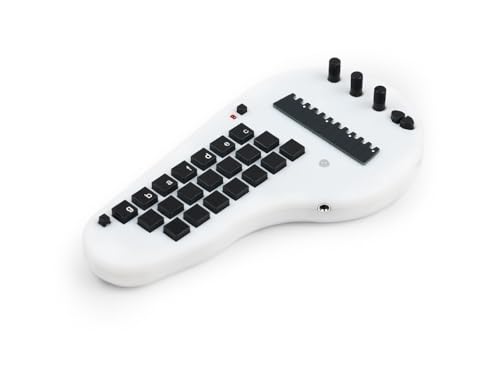
- 21 dedicated chord-selection buttons
- 12-section harp touch zone
- USB MIDI and open-source design
Best For: Chord-driven composition and customizable touch performance
Guitar-Rig FM Companion

- Six-operator FM with 128 factory presets
- Three MIDI connection options
- Portable, battery-powered 27-key design
Best For: Guitarists and producers expanding compact mobile rigs
Best Semi-Modular Value – Behringer CRAVE
For shoppers comparing synthesizers under 300, the Behringer CRAVE is a strong choice when hands-on analog sound design matters. Its semi-modular layout combines a VCO, classic ladder filter, VCA, patching flexibility, and a 32-step sequencer in a compact metal-bodied instrument.
Best For: Creating warm basses, leads, and experimental patches with an affordable analog semi-modular synth.
Pros:
- Pure analog signal path with VCO, VCF, and VCA circuitry
- Pulse and sawtooth oscillator outputs provide a broad sound palette
- Resonant 24 dB ladder filter with switchable low- and high-pass modes
- Includes a 32-step sequencer and supports 16-voice poly chain operation
Cons:
- Compact dimensions may feel limiting for extensive live controls
- Uses a 2.5mm jack connector
The CRAVE is particularly appealing if you want authentic, warm analog tone and sequencing features without moving into a larger studio instrument. It is a practical entry point for exploring semi-modular synthesis.
Best Pocket Synth – Stylophone Original
Among synthesizers under 300, the original Stylophone stands out for portability and unusual playability. Its touch-sensitive metal surface and stylus create a distinctive retro experience, while the built-in speaker, headphone socket, and battery operation make it easy to use almost anywhere.
Best For: Beginners, casual players, portable music-making, and musicians who want an iconic vintage-style sound.
Pros:
- Compact, pocket-friendly design under 12 cm wide
- Three octaves with optional vibrato effect
- Built-in speaker and headphone socket for flexible practice
- Can connect to a computer through a 3.5mm stereo cable
Cons:
- Touch-surface control is less conventional than a standard keyboard
- Runs on three AA batteries
The Stylophone is less suited to complex synthesis than the other options here, but its compact format and instantly recognizable retro character make it an engaging first synth or a fun addition to an existing setup.
Best Bassline Synth – Behringer TD-3-AM
If your priority when shopping for synthesizers under 300 is an acid-style bassline instrument, the Behringer TD-3-AM is purpose-built for the job. It uses a true analog signal path with a sawtooth and square-wave VCO, resonant low-pass filter, sequencer, and distortion effects.
Best For: Basslines, groove-focused productions, acid-inspired sequences, and compact hardware setups.
Pros:
- True analog VCO, VCF, and VCA circuitry
- Sawtooth and square waveforms with transistor wave shaping
- Four-pole resonant filter with cutoff, resonance, envelope, decay, and accent controls
- Includes a 16-step sequencer, distortion effects, and MIDI USB connectivity
Cons:
- Its bassline-focused design is less versatile for broad polyphonic parts
- Plastic body construction
The TD-3-AM makes the most sense when you want dedicated analog bass and groove sounds rather than an all-purpose keyboard synthesizer. Its sequencer and filter controls support an immediate, performance-oriented workflow.
Best Portable Sound Design – Stylophone GENX-2
The Stylophone GENX-2 is a versatile option for anyone comparing synthesizers under 300 and wanting portable sound design rather than a simple preset instrument. It adds an LFO, resonant low-pass filter, envelope, pulse-width modulation, analog delay, sub-octave switches, and CV/Gate outputs to its stylus-based interface.
Best For: Mobile sound creation, expressive performance, and connecting a compact synth to modular or semi-modular gear.
Pros:
- Battery operation, built-in speaker, headphone output, and audio output
- Flexible LFO, filter, attack/decay envelope, and PWM controls
- CV and Gate outputs can control external modular equipment
- Analog delay, dual sub-octave switches, and expression strip expand performance options
Cons:
- Stylus-based keyboard may require adjustment for players used to full-size keys
- Its compact two-octave format is less suitable for traditional keyboard parts
The GENX-2 offers a deeper synthesis toolkit than a basic pocket instrument while retaining a highly portable format. It is a particularly interesting pick for experimental performers and users building a small hardware rig.
Compact Analog-Inspired Pick – PHARA-O MINI
For shoppers comparing synthesizers under 300, the Behringer PHARA-O MINI is a compact option focused on portable sound design. Its alloy-steel construction, MIDI connectivity, and small footprint make it practical for space-conscious setups.
Best For: Beginners and producers who want a small, straightforward synth for compact MIDI-based work.
Pros:
- Compact 9.21 x 6.1 x 2.56-inch design
- Lightweight 0.65 kg build
- MIDI connector for integration with compatible equipment
- Alloy-steel body with a polished finish
Cons:
- The supplied notes do not specify built-in effects, sequencing, or presets
- Its compact format may not suit users seeking full-size keys or extensive controls
The PHARA-O MINI stands out primarily for its portability and sturdy-feeling metal construction. It is a sensible choice when a compact MIDI synthesizer matters more than a long list of documented features.
Portable FM Feature Pick – M-VAVE Wireless FM Synthesizer
Among synthesizers under 300, the M-VAVE FM Synthesizer offers an unusually broad portable feature set. It combines battery operation, a built-in speaker, 128 presets, six-operator FM synthesis, effects, sequencing, and several MIDI connection options.
Best For: Mobile creators who want an all-in-one FM instrument for practice, sound exploration, and portable production.
Pros:
- Battery-powered design with a built-in speaker
- Six operators, 32 algorithms, and 128 factory presets
- Six built-in effects, arpeggiator, and 16-step sequencer
- USB, Bluetooth wireless, and 3.5mm MIDI connectivity
Cons:
- The silicone 27-key layout may feel different from traditional keyboard keys
- Plastic construction may be less rugged than a metal-bodied instrument
- The small 6.4 x 3.8 x 1.2-inch format may limit hands-on control space
This is the most feature-packed option in the group for portable use. Its FM engine, effects, looping tools, and flexible MIDI connections make it versatile, especially for users who value creativity away from a desktop setup.
Portable Analog Polyphonic Pick – UB-Xa MINI
For buyers searching synthesizers under 300 with an analog character, the Behringer UB-Xa MINI is designed around the Oberheim OB-Xa sound. Its three VCOs, dual-slope analog low-pass filter, ring modulator, and motion sequencer provide a focused toolkit for hands-on tone shaping.
Best For: Producers who want portable analog polyphonic synthesis with oscillator, filter, modulation, and sequencing tools.
Pros:
- Portable analog polyphonic design
- Three VCOs with saw, rectangular wave, and PWM options
- 12/24dB dual-slope analog low-pass filter
- 16-step motion sequencer with 10 memory slots
Cons:
- The supplied notes do not specify dimensions, weight, or connector types
- Its feature set is centered on analog synthesis rather than documented presets or effects
The UB-Xa MINI is a strong fit for players who prioritize classic analog signal flow and movement-based sequencing. The ring modulator adds metallic sound possibilities, while the three-VCO architecture supports substantial tonal shaping in a portable format.
Portable FM Powerhouse – M-VAVE FM-1 Orange
For shoppers comparing synthesizers under 300, the M-VAVE FM-1 Orange stands out as a compact workstation with a six-operator FM engine, 128 presets, sequencing, effects, and flexible MIDI connectivity. Its rechargeable battery and built-in speaker make it practical for portable practice, travel, and casual live creation.
Best For: Producers, beginners, synth hobbyists, and performers who want portable DX-style FM sounds with integrated production tools.
Pros:
- Six-operator FM synthesis with 32 algorithms, 128 presets, and DX7 SysEx patch import.
- Includes a 16-step sequencer, seven-mode arpeggiator, and six built-in effects.
- Supports USB-C, Bluetooth BLE MIDI, and 3.5mm MIDI connections.
- Lightweight 251g design with a speaker, headphone output, and up to 12 hours of battery life.
Cons:
- The 27-key silicone keyboard is compact rather than a full-size playing surface.
- The small 1.54-inch display may feel limited for detailed editing.
The FM-1 Orange packs an unusually broad set of FM synthesis and performance features into a travel-friendly format. It is a strong option when portability, onboard tools, and classic digital tones matter more than a larger keyboard.
Chord-Creation Specialist – Minichord Synthesizer
Among synthesizers under 300, the Minichord takes a different approach by focusing on quick chord selection and expressive touch control rather than a conventional keyboard. Its chord buttons, harp-style touch zone, USB MIDI support, and open-source design make it an inventive tool for harmony and experimentation.
Best For: Creators who want fast chord-based composition, touch performance, MIDI control, and hardware they can customize.
Pros:
- Twenty-one chord buttons provide direct access to major, minor, and seventh chords.
- A 12-section harp touch zone enables expressive note triggering.
- Includes 12 internal presets and supports custom presets.
- USB MIDI compatibility and fully open-source hardware and software encourage customization.
Cons:
- It is specialized for chord and touch-based performance rather than traditional keyboard playing.
- The supplied details do not specify a built-in battery, speaker, or wireless MIDI.
The Minichord is best viewed as a compact chord instrument and MIDI controller with a distinctive performance workflow. Its open-source foundation is particularly appealing to technically minded musicians who value modification and experimentation.
Guitar-Rig FM Companion – M-VAVE FM-1 Synthesizer
For musicians searching synthesizers under 300, the M-VAVE FM-1 combines classic six-operator FM synthesis with a compact keyboard, onboard sequencing, effects, and connections suited to guitar rigs and DAWs. Its portable battery-powered design makes it useful for expanding a setup without adding much bulk.
Best For: Guitarists, producers, and performers who need portable FM tones, MIDI integration, and quick sound shaping.
Pros:
- Six-operator FM engine, 32 algorithms, 128 presets, and FM SysEx import deliver broad digital sound options.
- Built-in arpeggiator, 16-step sequencer, and six effects support immediate performance and production.
- USB-C, Bluetooth BLE MIDI, and 3.5mm MIDI support integration with guitar gear and DAWs.
- Compact 251g body, built-in speaker, headphone muting, and up to 12 hours of battery life.
Cons:
- The 27-key silicone keyboard may not suit players seeking full-size keys.
- Its feature set may be more specialized than needed for simple preset playback.
The FM-1 is a practical bridge between portable synthesizer and guitar-friendly MIDI sound module. It offers deep FM capability and useful performance tools while remaining small enough for a guitar case or backpack.
How We Picked the Best Synthesizers Under 300
We selected instruments across several affordable synthesis styles rather than treating every keyboard as interchangeable. The lineup considers analog and digital sound engines, sequencing, effects, portability, built-in speakers, battery operation, MIDI or CV connectivity, and the amount of hands-on control available. We also considered whether each model suits a beginner, a producer adding a specialized voice, or a performer needing a compact instrument.
At this price, specifications can vary substantially. Some models prioritize authentic analog circuitry and patching, while others offer many presets, FM algorithms, or unusual performance features. The best choice depends on how you plan to make and control sound.
Quick Comparison
| Best For | Look For | Typical Strength |
|---|---|---|
| Learning synthesis | Dedicated knobs, clear signal path, sequencer | Immediate hands-on experimentation |
| Bass and acid lines | Analog oscillator, resonant filter, step sequencing | Focused, punchy monophonic parts |
| Portable practice | Battery power, speaker, compact controls | Making sounds anywhere |
| Digital versatility | FM operators, algorithms, presets, effects | Broad tonal range in a small package |
| Modular setups | CV and gate connections | Integration with compatible gear |
Key Buying Factors for Synthesizers Under $300
Sound Engine and Controls
Analog synths often excel at direct, characterful basses, leads, and sequences, while FM instruments can produce metallic, bell-like, electric-piano, and evolving tones. Check whether the controls match your preferred workflow: knobs and patch points encourage experimentation, whereas presets and menus can provide faster variety.
Polyphony, Sequencing, and Playing Style
Many affordable instruments are monophonic or designed for one note at a time. That is ideal for bass and lead lines but limiting for chords. If you build loops without a separate controller, prioritize a useful sequencer, arpeggiator, or phrase workflow. Also verify the keyboard size and whether the instrument responds to external MIDI.
Connectivity and Portability
Built-in speakers and battery power are useful for practice, but they do not replace proper outputs for recording or live use. Check for USB, MIDI, CV/gate, audio output, and headphone connectivity before buying. Compact models are easy to carry, although smaller keys and touch surfaces may be less comfortable for extended playing.
Learning Curve and Expansion
Beginners usually benefit from visible signal-flow controls and straightforward documentation. More advanced users may value patching, modulation options, or unusual synthesis architecture. Consider the rest of your setup as well: a specialized synth can be a better purchase than a general-purpose keyboard if you already own a controller and effects.
Who Should Buy Which Synthesizers Under 300?
Choose a semi-modular analog model if you want to learn synthesis through patching and create expressive basses, leads, and sequences. Choose a dedicated bass-line synth if your main goal is acid, techno, or repetitive rhythmic patterns. Choose a pocket or mini synth for casual exploration, travel, and quick sketching.
Choose an FM synth if you want a wide palette of digital tones, built-in presets, and compact sound design. Choose a model with CV/gate if you plan to connect it to modular or semi-modular equipment. Finally, check the actual key layout, power requirements, outputs, and included accessories before ordering, since these practical details can matter as much as the sound engine.