
Cutting the cord does not mean giving up local news, sports, weather, or major broadcast networks. The right TV antenna can provide free over-the-air channels, but performance depends on your location, nearby towers, obstructions, and installation.
This roundup compares 10 indoor and outdoor options, including amplified models and antennas designed for smart TVs, older televisions, and multi-TV households. Use the buying guide below to narrow the choices by reception needs, setup, and budget.
Best 10 TV Antennas Picks for 2026
Best Flexible Indoor Pick

- Indoor/outdoor placement options
- 16.5-foot cable included
- Supports local HD broadcasts
Best For: Flexible antenna placement and everyday local-channel reception
Best for Multiple TVs
200-Mile Rotating Outdoor Antenna
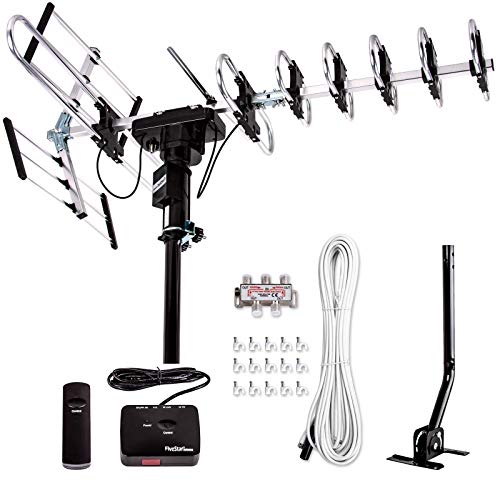
- Supports up to five TVs
- 360-degree rotation
- Installation kit included
Best For: Households distributing local broadcasts across multiple televisions
Best Attic Installation
GE 70-Mile Outdoor HDTV Antenna

- Attic or outdoor mounting
- VHF/UHF reception
- J-mount included
Best For: Permanent, weather-resistant attic or outdoor antenna installations
Best for Flexible Placement

- 33-foot coaxial cable
- Indoor/outdoor weather-resistant design
- Portable, subscription-free setup
Best For: Travelers and homes needing flexible antenna placement
Best Simple Setup

- 16-foot coaxial cable
- Supports compatible 4K and HD broadcasts
- Includes setup guidance and online support
Best For: Smart-TV users seeking an easy indoor installation
Best Compact Design

- Compact magnetic-base design
- Omni-directional indoor reception
- 10-foot cable and two-year warranty
Best For: Small rooms and discreet indoor antenna placement
Best Overall
Channel Master FLATenna Indoor HDTV Antenna
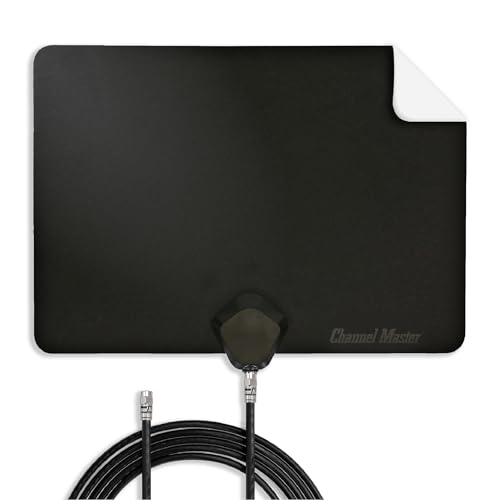
- Realistic 35-mile range for indoor use
- Supports ATSC 3.0 and 4K broadcasts
- Slim reversible design with 12-foot cable
Best For: Urban and suburban homes wanting a reliable, low-profile antenna
Best Budget Flexibility

- 360-degree omnidirectional indoor reception
- 16.5-foot cable supports flexible placement
- Works with smart and older TVs
Best For: Shoppers prioritizing easy setup and positioning flexibility
Best for Long Cable Runs
URIIU Amplified Indoor TV Antenna

- Includes an extra-long 33-foot coaxial cable
- 360-degree amplified VHF/UHF reception
- Supports smart, HDTV, and older TVs
Best For: Rooms needing extensive placement flexibility or distant window positioning
Best Flexible Indoor Pick – 50-Mile HDTV Antenna
If you want a versatile option among tv antennas, this indoor model supports local HD broadcasts and can be placed on a table, wall, or window. Its 16.5-foot cable gives you more flexibility when testing different positions, while the included amplifier is designed for compatible 4K and 1080p signals.
Best For: Shoppers seeking an indoor antenna that can also be used outdoors and offers flexible placement.
Pros:
- Supports local channels including ABC, CBS, NBC, PBS, and Fox where available.
- Includes a 16.5-foot cable for easier placement.
- Can be mounted on a table, wall, or window and is suitable for indoor or outdoor use.
- Includes interchangeable blue and orange decorative accessories.
Cons:
- Assembly is required before use.
- Reception may require repositioning and rescanning channels.
- The decorative rubber rings do not improve antenna performance.
This is a practical choice for homes that need flexible placement rather than a permanently mounted antenna. Check your local tower coverage and be prepared to rescan after moving it.
Best for Multiple TVs – 200-Mile Rotating Outdoor Antenna
For households connecting several televisions, this outdoor option stands out among tv antennas with a supplied 4-way splitter, 40-foot coaxial cable, and mounting pole. Its directional 360-degree rotation, amplifier, and VHF/UHF support are designed for broader installation flexibility and local broadcast reception.
Best For: Families that want to distribute antenna reception to up to five TVs.
Pros:
- Supports up to five TVs with the included installation kit.
- Includes a 40-foot coaxial cable, 4-way splitter, cable clips, and J-pole.
- Offers 360-degree rotation for adjusting reception direction.
- Supports 4K, 1080p, 1080i, 720p, and FM broadcasts where available.
Cons:
- Outdoor installation requires more setup than an indoor antenna.
- Reception performance depends on local conditions and antenna positioning.
- The advertised range is a product specification, not a guarantee of available channels.
This kit is the more complete choice for a multi-TV setup. Its included mounting hardware and splitter reduce the need to purchase core installation accessories separately.
Best With Reception Modes – Smart Indoor Digital Antenna
This indoor model adds selectable short-range and long-range modes, making it a useful option when comparing tv antennas for different tower distances. It includes an upgraded Smart IC chip, a 16.5-foot cable, and placement guidance that emphasizes windows, height, and rescanning after adjustments.
Best For: Users who want adjustable reception modes and clear troubleshooting guidance for indoor placement.
Pros:
- Provides short-range and long-range modes based on tower distance.
- Includes a Smart IC chip intended to filter cellular and FM interference.
- Comes with a 16.5-foot cable, amplifier, and manual.
- Supports available 4K, UHD, and 1080p broadcast signals.
Cons:
- Using the wrong reception mode may reduce performance.
- The amplifier may not noticeably improve reception in weak-signal areas.
- Some low-VHF channels may require an additional compatible antenna.
The mode selection is a helpful feature, but it does not replace careful placement. Check local tower distance, position the antenna near a window when possible, and rescan channels after every adjustment.
Best Attic Installation – GE 70-Mile Outdoor HDTV Antenna
If you prefer a more permanent setup, this GE antenna is designed for attic or outdoor mounting and supports VHF and UHF broadcasts. Among tv antennas, it offers a weather-resistant build, included J-mount, compatibility with standard coaxial connections, and support for ATSC 3.0 broadcasts where available.
Best For: Homeowners seeking a weather-resistant antenna for attic or outdoor installation.
Pros:
- Designed for attic installation or outdoor mounting.
- Receives VHF and UHF signals with a listed range of up to 70+ miles.
- Includes a J-mount for installation flexibility.
- Supports 4K, 8K, and ATSC 3.0 broadcasts where available.
Cons:
- Its larger outdoor form factor requires more installation planning.
- It may be less convenient than an indoor antenna for renters or temporary setups.
- Available channels still depend on local broadcast conditions.
This is a solid fit when you want to keep the antenna out of sight in an attic or mount it outdoors. Its weather-resistant design and limited-lifetime replacement pledge add appeal for a longer-term installation.
Best for Flexible Placement – 2026 Long-Range TV Antenna
This versatile option among tv antennas combines a long 33-foot coaxial cable with a lightweight design, making it easier to test different indoor locations or use it in an RV, cabin, rental, or temporary living space. It supports 8K, 4K, and 1080p output for compatible broadcasts and requires no monthly subscription.
Best For: Households and travelers who want a portable antenna with extra cable length for flexible placement.
Pros:
- 33-foot coaxial cable helps reach windowsills, balconies, or attics.
- Compact, lightweight design suits RV travel, camping, and rentals.
- Weather-resistant shell is designed for indoor or outdoor placement.
- Supports 8K, 4K, and 1080p broadcast output.
Cons:
- The advertised range is not a guarantee of reception; results depend on location and conditions.
- Its longer cable may be unnecessary for TVs positioned close to a window.
The standout feature is placement flexibility: the 33-foot cable gives you more room to find a suitable signal position than many basic indoor tv antennas. Consider this model if portability and cable reach matter more than a minimal setup.
Best Simple Setup – DAANT Indoor TV Antenna
The DAANT is a straightforward choice among tv antennas for receiving local broadcasts on compatible smart or digital TVs. Its 16-foot coaxial cable offers useful placement flexibility, while the included setup process involves connecting the cable, pointing the antenna toward local towers, and scanning for channels.
Best For: Smart-TV owners who want an uncomplicated indoor antenna with a moderately long cable.
Pros:
- 16-foot coaxial cable supports placement away from the TV.
- Designed to receive local ABC, CBS, NBC, FOX, CW, ION, and other broadcasts where available.
- Supports 4K, UHD, and 1080p broadcast signals on compatible equipment.
- Includes online after-sales support.
Cons:
- Not suitable for older analog televisions.
- Reception depends on tower location, orientation, and local conditions.
- Its three-month warranty is shorter than some competing options.
This model keeps the buying decision simple: it offers a useful 16-foot cable and clear setup guidance without adding complicated installation requirements. Check local tower availability before buying and be prepared to test placement and orientation.
Best Compact Design – HIDB Indoor TV Antenna
The HIDB is a compact option among tv antennas, with an unobtrusive design, magnetic base, and 10-foot cable for indoor use. Its omni-directional reception design can simplify positioning, although the manufacturer still recommends placing it high and near a window facing local broadcast towers for the best results.
Best For: Apartment dwellers and space-conscious users who want a small indoor antenna with a stable base.
Pros:
- Compact 2.76-by-2.76-by-6.3-inch design is easy to position discreetly.
- Magnetic base supports convenient placement on suitable metal surfaces.
- Omni-directional reception design may reduce the need for frequent repositioning.
- Includes a 10-foot cable and a two-year manufacturer warranty.
Cons:
- The 10-foot cable provides less reach than the longer-cable alternatives here.
- Actual channel reception varies with terrain, weather, interference, and tower distance.
- Moving the antenna requires rescanning channels.
The HIDB’s main advantage is its compact footprint, making it easier to integrate into a small room or TV stand. It is a practical pick when appearance and convenient indoor placement are priorities, provided your local broadcast conditions are favorable.
Best Overall – Channel Master FLATenna Indoor HDTV Antenna
For shoppers comparing tv antennas, the Channel Master FLATenna is a straightforward indoor option with a realistic 35-mile range, a slim reversible design, and support for local HD broadcasts.
Best For: Urban and suburban households seeking a dependable, low-profile indoor antenna from an established manufacturer.
Pros:
- Designed for a realistic 35-mile reception range in the presence of common obstructions and interference.
- Supports ATSC 3.0 NextGen TV and 4K broadcasts.
- Includes a 12-foot shielded RG6 coaxial cable for flexible placement.
- Reversible black-and-white finish with wall, window, or tabletop mounting options.
Cons:
- Its 35-mile range may be less suitable for homes far from broadcast towers.
- As an indoor antenna, reception can still depend on building layout and signal obstructions.
The FLATenna emphasizes credible everyday performance rather than inflated distance claims. Its compact design, included cable, and NextGen TV compatibility make it a balanced choice for local over-the-air viewing.
Best Budget Flexibility – BEIMQN 360° Indoor TV Antenna
This BEIMQN model is one of the more flexible tv antennas for indoor placement, combining 360-degree reception, VHF/UHF support, and a long 16.5-foot coaxial cable for positioning near a window or higher location.
Best For: Smart TV and older-TV owners who want simple installation, flexible placement, and an included signal amplifier.
Pros:
- 360-degree omnidirectional design helps reduce the need to aim the antenna.
- Supports both VHF and UHF frequencies and is described as compatible with smart and older TVs.
- Built-in smart chip and signal booster are designed to reduce interference and strengthen weak signals.
- Includes a 16.5-foot shielded coaxial cable and a 12-month warranty.
Cons:
- The advertised 4,500-mile range is not a practical measure of local broadcast distance and should not replace checking tower proximity.
- Amplification cannot guarantee reception where local signals are blocked or unavailable.
Its strongest practical advantage is placement flexibility: the long cable lets you experiment with window and elevated positions. Treat the range figure cautiously, but consider this antenna if easy setup and broad TV compatibility are priorities.
Best for Long Cable Runs – URIIU Amplified Indoor TV Antenna
The URIIU antenna stands out among tv antennas for its 33-foot coaxial cable, amplified 360-degree pickup, and stated support for VHF/UHF broadcasts, making it easier to test multiple indoor locations.
Best For: Homes, offices, RVs, or basements where a long cable and flexible antenna placement are especially useful.
Pros:
- Includes a 33-foot coaxial cable for positioning on a window, wall, or shelf.
- Uses a stated smart signal amplifier with anti-interference and noise-filtering technology.
- Supports Smart TVs, HDTVs, and older TVs when used with a converter box.
- Described as weather-resistant, waterproof, and dustproof for indoor or outdoor use.
Cons:
- The advertised 5,000-mile range is not a reliable substitute for checking local tower distance and obstructions.
- Older TVs require a converter box, according to the product notes.
- Amplifiers may not overcome severe blockage or unavailable local signals.
The long cable is the clearest practical differentiator here, giving you more freedom to search for a stronger signal. Its amplifier and stated ATSC 3.0 compatibility add useful features, though actual results will depend heavily on location.
How We Picked the Best TV Antennas
We focused on the factors that matter most for reliable over-the-air viewing: reception design, indoor or outdoor placement, cable length, amplification, installation flexibility, and support for current HD and 4K televisions. We also included a range of styles, from simple flat indoor antennas to directional outdoor models built for households farther from broadcast towers.
Advertised mileage claims can be inconsistent, so they should be treated as rough marketing estimates rather than guaranteed performance. Your actual results depend on tower distance, terrain, building materials, antenna height, and local interference.
Quick Comparison
| Best For | Look For |
|---|---|
| Apartment or bedroom setup | Compact indoor antenna, included coaxial cable, and USB-powered amplifier if needed |
| Weak or obstructed signals | Higher placement, directional design, amplification, and careful channel scanning |
| Rural or distant locations | Outdoor installation, larger reception range, rotor or directional adjustment, and weather resistance |
| Multiple televisions | Multi-TV support, a suitable splitter, and enough signal strength for each connection |
| Smart or older TVs | Standard coaxial output; the television must include a digital tuner or use a compatible converter |
Key Buying Factors for TV Antennas
Indoor Vs. Outdoor Placement
Indoor models are easiest to install and work well near windows or on exterior-facing walls when towers are relatively close. Outdoor antennas generally provide better height and fewer obstructions, making them preferable for rural homes, wooded areas, or locations with weak signals.
Amplification and Reception
An amplifier can help compensate for long cable runs or signal loss caused by splitters, but it cannot create a missing signal. In areas with strong broadcasts, excessive amplification may introduce problems. Try the antenna without amplification when possible, then use the amplifier if channels drop out.
Direction, Cable, and Installation
Directional antennas may improve reception when broadcast towers are concentrated in one direction, but they need accurate positioning. Before mounting, check local tower locations and test several window or roof positions. Keep coaxial cable runs as short as practical and rescan for channels after every major position change.
Compatibility
Most modern televisions can connect directly through coaxial cable. “Smart” capability is not required for antenna reception, and an older TV may work if it has a digital tuner or a separate converter box. Confirm the connector, included cable length, power requirements, and whether a mounting kit is supplied.
Who Should Buy Which TV Antennas?
- Choose a basic indoor antenna if you live near broadcast towers and want the simplest low-cost setup.
- Choose an amplified indoor model if your home has moderate signal loss, a longer cable run, or limited placement options.
- Choose a flat, reliable indoor design if discreet installation and easy repositioning matter more than maximum range.
- Choose an outdoor directional antenna for rural areas, substantial obstructions, or weak reception that an indoor model cannot overcome.
- Choose a multi-TV outdoor model if one antenna will serve several televisions; verify that the signal remains strong after splitting.
For the best result, check local broadcast coverage before buying, install the antenna as high and unobstructed as practical, and run a fresh channel scan after installation. Those steps usually matter more than the largest range number printed on the package.