
The best XLR condenser microphones can give vocals, podcasts, streams, and instruments a detailed, polished sound—but the right choice depends on your room, interface, and recording goals.
We’ve compared 10 popular options across sound quality, included accessories, connectivity, and value to help you choose a microphone that fits your setup.
Best 10 Xlr Condenser Microphones Picks for 2026
Trusted Home-Studio Standard
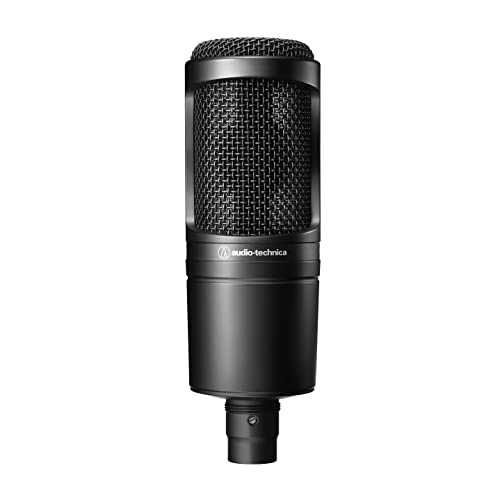
- Cardioid pattern helps isolate the source
- Handles high SPL and wide dynamics
- Designed for project and home studios
Best For: Budget-conscious home and project-studio recording
Affordable Studio Starter

- Large-diaphragm condenser capsule
- Cardioid pattern reduces room ambience
- Includes shock mount and XLR cable
Best For: Entry-level studio vocals and instruments
Flexible High-SPL Performer

- Includes 80 Hz high-pass filter
- 10 dB pad supports loud sources
- Shock mount improves isolation
Best For: Studio, podcasting, streaming, and live performance
Complete Low-Noise Vocal Kit
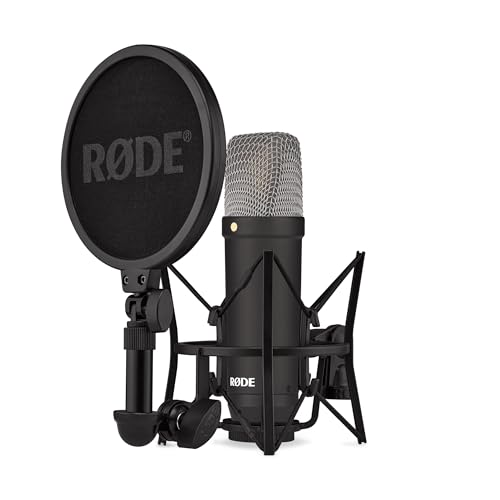
- Very low self-noise for clean recordings
- Tight cardioid pattern focuses on vocals
- Includes shock mount, pop filter, and XLR cable
Best For: Vocalists and streamers wanting a complete setup
Balanced Studio Detail
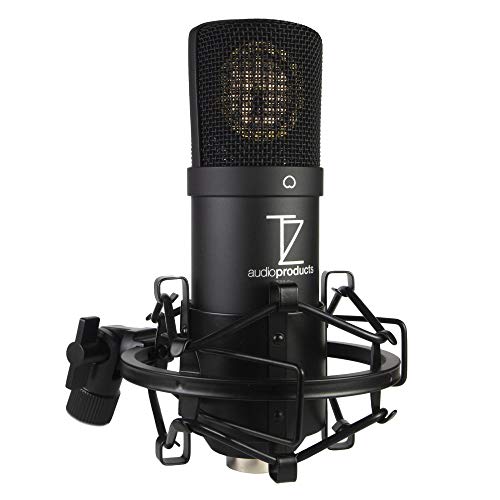
- Balanced, neutral sound
- Low-noise transformerless circuit
- Includes shock mount and flight case
Best For: Home-studio vocals and instruments
Flexible Creator Kit

- USB and XLR connectivity
- Software controls in USB mode
- Includes arm stand and pop filter
Best For: Podcasting, streaming, and voiceover
Proven Recording Value

- Handles SPL up to 150 dB
- Includes pad and bass-cut filter
- Durable metal construction
Best For: Home recording and project studios
Best Value Starter Kit

- Complete kit with boom arm and XLR cable
- 16mm cardioid condenser capsule
- Requires 48V phantom power
Best For: Entry-level podcasting, streaming, and home recording
Premium Voice Detail

- 34mm gold-plated large-diaphragm capsule
- Includes shock mount, pop filter, and bag
- 144dB maximum SPL rating
Best For: Studio vocals, podcasting, and polished speech recording
Best Complete Boom-Arm Setup

- Includes steel T20 suspension boom arm
- Cardioid capsule with low-noise FET preamp
- Requires 48V phantom power
Best For: Desk-based streaming, podcasting, and voice-over recording
Trusted Home-Studio Standard – Audio-Technica AT2020
The Audio-Technica AT2020 is a practical entry point for anyone comparing xlr condenser microphones for project studios, home recording, voice work, or instruments. Its cardioid pattern helps reduce side and rear pickup, while high SPL handling and a wide dynamic range support varied recording situations.
Best For: Home and project-studio recording on a budget.
Pros:
- Cardioid pattern improves isolation from unwanted room sound.
- High SPL handling and wide dynamic range add versatility.
- Low-mass diaphragm supports extended frequency response and transient detail.
- Uses an integral three-pin XLRM output.
Cons:
- Requires phantom power and a compatible audio interface or recording setup.
- Does not include a shock mount or XLR cable in the supplied product notes.
The AT2020 remains a straightforward choice when you want a capable wired XLR condenser without unnecessary extras. It is especially appealing for building a first home-studio microphone collection.
Affordable Studio Starter – Mackie EM-91C
The Mackie EM-91C is an affordable large-diaphragm option among xlr condenser microphones, aimed at both home and larger studio environments. Its cardioid pattern reduces ambient pickup, and the package includes a shock mount and XLR cable to help simplify setup.
Best For: First-time studio users who want useful accessories included.
Pros:
- Large-diaphragm condenser capsule is suited to studio vocals and instruments.
- Cardioid pattern helps reduce room ambience.
- Rugged construction is designed for reliable use.
- Includes a shock mount and XLR cable.
Cons:
- The supplied notes provide less feature detail than some competing models.
- Requires an audio mixer or compatible XLR setup.
The EM-91C makes a sensible starter package for users who want an affordable studio condenser and basic mounting accessories in one box. It is a practical fit for uncomplicated vocal or instrument recording.
Flexible High-SPL Performer – Audio-Technica AT2035
The Audio-Technica AT2035 is a versatile pick among xlr condenser microphones for studio recording, podcasting, streaming, and live performance. Its large diaphragm is designed for smooth, natural sound, while the switchable high-pass filter and 10 dB pad provide useful control over low-frequency buildup and loud sources.
Best For: Creators who need one microphone for vocals, streaming, and louder sources.
Pros:
- Large diaphragm delivers smooth, natural sound with low noise.
- Switchable 80 Hz high-pass filter adds recording flexibility.
- 10 dB pad and high SPL handling suit louder sources.
- Custom shock mount improves isolation.
Cons:
- Requires a compatible XLR audio setup and phantom power.
- The supplied notes mention a protective pouch but do not list an XLR cable.
Choose the AT2035 when adjustment options matter more than the simplest possible setup. Its filter, pad, and shock mount make it a strong all-purpose option for varied recording environments.
Complete Low-Noise Vocal Kit – RØDE NT1 Signature
The RØDE NT1 Signature is a polished choice among xlr condenser microphones for vocals, streaming, and home recording. Its tight cardioid pattern focuses on the voice and rejects room sound, while the package includes an SM6 shock mount with pop filter and an XLR cable.
Best For: Vocalists and streamers who want a ready-to-record package.
Pros:
- Very low self-noise helps keep quiet passages clean.
- Tight cardioid pattern focuses on the voice and rejects room sound.
- Includes shock mount, pop filter, six-meter XLR cable, and dust cover.
- Backed by a 10-year warranty with registration.
Cons:
- Still requires an audio interface and phantom-powered XLR connection.
- Its large-diaphragm studio design may be more than needed for basic casual recording.
The NT1 Signature stands out for buyers who want to avoid assembling a microphone setup piece by piece. With low self-noise and key accessories included, it is particularly convenient for vocal-focused recording.
Balanced Studio Detail – TZ Stellar X2
The TZ Stellar X2 is one of the more studio-focused xlr condenser microphones here, emphasizing a balanced, neutral response for vocals and a range of recording sources. Its cardioid pattern and low-noise transformerless circuit make it a practical choice for an audio-interface-based setup.
Best For: Home-studio vocals, acoustic instruments, and detailed recording with an audio interface that provides 48V phantom power.
Pros:
- Balanced, neutral frequency response designed to avoid harshness and listening fatigue.
- Large-diaphragm capsule is built to capture subtle sounds with high sensitivity.
- Low-noise circuit has a stated noise floor below 13 dBA.
- Includes a spring shock mount, foam wind cover, leather pouch, and aluminum flight case.
Cons:
- Requires an audio interface with 48V phantom power for computer recording.
- An XLR-to-XLR cable is required but is not listed among the included accessories.
The Stellar X2 is a focused pick for buyers who want a neutral, detailed XLR microphone and already have the necessary phantom-powered interface. Its included protection and mounting accessories add value for a dedicated recording setup.
Flexible Creator Kit – MAONO A04 Gen2
The MAONO A04 Gen2 stands out among xlr condenser microphones because it also supports USB for plug-and-play recording. The included arm stand, shock mount, pop filter, and windscreen make it especially convenient for podcasting, voiceover, streaming, and other desktop content-creation setups.
Best For: Podcasters, streamers, voiceover creators, and users who want both USB convenience and XLR compatibility.
Pros:
- Offers both XLR and USB connections for interface-based or direct computer recording.
- USB mode supports up to 192 kHz/24-bit sampling, according to the supplied specifications.
- MAONO Link software provides gain, noise-reduction, EQ, compressor, and limiter controls in USB mode.
- Includes an adjustable arm stand, shock mount, pop filter, and foam windscreen.
Cons:
- XLR mode requires phantom power.
- An XLR cable is not included.
- Software controls are available only in USB mode.
The A04 Gen2 is the most flexible option of the three for creators who may switch between a computer and an audio interface. Its bundled desktop accessories also reduce the need for immediate add-on purchases.
Proven Recording Value – AKG P120
The AKG P120 is a straightforward cardioid xlr condenser microphone for home recording and project studios. Its low-mass diaphragm is designed for clear vocal, speech, and instrument detail, while high SPL handling and switchable filtering add useful flexibility for louder or bass-heavy sources.
Best For: First project studios, home-recording vocals, speech, and instruments that connect through an audio interface.
Pros:
- Cardioid pickup pattern suits focused vocal and instrument recording.
- Handles sound pressure levels up to 150 dB for loud sources.
- Includes a -20 dB preattenuation pad and a 300 Hz bass-cut filter.
- Metal construction is designed for long-lasting performance.
Cons:
- Requires phantom power and an XLR-compatible setup.
- The box includes the microphone and stand adapter, with fewer accessories than the MAONO kit.
- Its stated equivalent noise level is 19 dB-A, higher than the Stellar X2’s supplied figure.
The P120 is a practical, established choice for buyers who want a simple XLR condenser with useful recording controls. Its pad and bass-cut filter make it more adaptable than a bare-bones microphone for varied home-studio sources.
Best Value Starter Kit – MAONO PM320S
The MAONO PM320S is a practical entry point for shoppers comparing xlr condenser microphones. Its 16mm condenser capsule, cardioid pickup pattern, and included boom-arm setup make it suitable for vocals, podcasts, streaming, voice-over work, and home recording. It requires 48V phantom power through an audio interface, mixer, or preamp.
Best For: New streamers, podcasters, and home-studio users who want a complete XLR setup with useful accessories.
Pros:
- Includes a boom arm, shock mount, pop filter, windscreen, and XLR cable.
- Cardioid pattern helps reduce off-axis room noise.
- 16mm condenser capsule supports detailed vocal and recording capture.
- All-metal housing is designed for regular studio use.
Cons:
- Requires a separate 48V phantom-power source.
- The included accessories may be more basic than premium studio hardware.
Choose the PM320S when value and a ready-to-assemble recording setup matter most. It offers a straightforward path into XLR recording, provided your equipment supplies phantom power.
Premium Voice Detail – 512 Audio Skylight
The 512 Audio by Warm Audio Skylight is aimed at buyers who want a more substantial studio microphone for speech and singing. Among xlr condenser microphones, it stands out with a 34mm gold-plated large-diaphragm capsule, a custom-tuned response, and a stated maximum SPL of 144dB. It includes a shock mount, metal pop filter, and carry bag.
Best For: Vocalists, podcasters, and creators seeking a polished large-diaphragm microphone for studio-style recording.
Pros:
- 34mm gold-plated capsule is designed for warmth, clarity, and detail.
- Cardioid pattern focuses on sound from in front of the microphone.
- Includes a metal pop filter and low-profile shock mount.
- Carry bag adds convenient protection and portability.
Cons:
- At 2.2 pounds, it is heavier than many compact microphones.
- Its XLR connection requires compatible interface or mixer equipment.
The Skylight is a strong fit for users prioritizing vocal character and included studio accessories over an ultra-light setup. Its large capsule and high SPL rating give it flexibility for speech and singing applications.
Best Complete Boom-Arm Setup – TONOR TC20
The TONOR TC20 combines an XLR condenser microphone with a steel T20 suspension boom arm, making it a convenient choice for recording desks and streaming stations. Its upgraded capsule, low-noise FET preamplifier, cardioid pattern, and high-SPL handling target vocals, podcasts, voice-over, and home-studio use. A 48V phantom-power source is required.
Best For: Streamers, YouTubers, and home-studio users who want an adjustable desk-mounted microphone package.
Pros:
- Includes T20 boom arm, shock mount, pop filter, cover, and 2m XLR cable.
- Steel arm uses a large-contact-area clamp for desks up to 2.4 inches thick.
- Cardioid pickup helps suppress sound from the sides and rear.
- Two-year warranty is included.
Cons:
- Needs 48V phantom power through an interface, mixer, or preamp.
- The complete arm-and-microphone package weighs about 1.9kg.
The TC20 is especially appealing if you need both the microphone and desk hardware in one purchase. It is a practical all-in-one option for fixed streaming or recording stations, assuming you already have compatible XLR equipment with phantom power.
How We Picked These Xlr Condenser Microphones
We focused on microphones with standard XLR connectivity and condenser designs suited to recording, podcasting, streaming, voice-over work, and home studios. Our selection includes established studio models, flexible XLR/USB options, and kits that bundle useful accessories.
We considered pickup pattern, diaphragm design, stated frequency response, included mounts or cables, ease of integration with audio interfaces, and overall value. Because a microphone’s sound depends heavily on the room, preamp, placement, and performer, no single model is best for everyone.
Quick Comparison
| Best For | Look For | Potential Advantage |
|---|---|---|
| Home studio vocals | Cardioid pattern and low self-noise | Focused capture with useful detail |
| Podcasting and streaming | Shock mount, pop filter, or USB backup | Quicker setup and easier control |
| Instruments | Wide, balanced frequency response | More natural detail and transients |
| Budget recording | Included cable and accessories | Lower total setup cost |
Key Buying Factors for Xlr Condenser Microphones
Connection and Phantom Power
An XLR condenser microphone normally requires 48-volt phantom power from an audio interface, mixer, or compatible preamp. Check that your equipment supplies phantom power and has enough clean gain. XLR models are a strong choice for expandable setups, but they are not plug-and-play with a computer unless you add an interface.
Pickup Pattern and Room Quality
Most microphones here use a cardioid pattern, which emphasizes sound from the front and reduces pickup from the rear. This helps with speech and vocals, but it cannot eliminate room reflections. In untreated spaces, use close placement, soft furnishings, and careful positioning to reduce echo.
Sound, Sensitivity, and Noise
Large-diaphragm condensers often capture nuanced detail and vocal presence, making them useful for studio work. That sensitivity also picks up fans, keyboard noise, and room ambience. Compare stated self-noise and frequency response, but treat specifications as a starting point rather than a guarantee of how a microphone will sound with your voice.
Accessories and Total Cost
A shock mount can reduce stand and desk vibrations, while a pop filter helps control plosive sounds. A boom arm, cable, carrying bag, or included mount may save money, especially for new creators. Remember to budget for an interface, stand, XLR cable, headphones, and acoustic improvements if they are not included.
Who Should Buy Which Xlr Condenser Microphones?
Choose an affordable studio microphone if you are starting a home recording setup and already own an interface. Models such as the AT2020, Mackie EM-91C, AKG P120, and TZ Stellar X2 are worth comparing for basic vocals and instruments.
Choose a more feature-rich studio option if you want refined vocal recording, a bundled shock mount, or a microphone you can keep as your setup grows. The AT2035, RØDE NT1 Signature Series, and 512 Audio Skylight are natural candidates to investigate.
Choose a complete kit if you need a boom arm, pop filter, or cable immediately. The MAONO and TONOR kits can simplify setup, while an XLR/USB model such as the MAONO A04 Gen2 offers more connection flexibility.
Before buying, confirm the connector, accessory package, phantom-power requirements, and return policy. The best match is the microphone that suits your voice, room, and workflow—not necessarily the one with the longest specification list.